
Chimpanzee Trekking in Uganda: 4 Best Parks to See Wild Chimps
Explore Uganda's Best Chimpanzee Trekking Parks & Tours
Chimpanzee trekking in Uganda or Chimpanzee tracking in Uganda ranks among the most memorable wildlife safaris in Africa. Imagine an adventure of tracking these great apes on foot through a dense rainforest. Though it does not get the same attention as a gorilla trekking safari tour, observing wild chimpanzees at close proximity is an awesome wildlife encounter, almost on par with a gorilla trek.
As we share 98.8% of our DNA with them, they are our closest relatives. Chimps live in communities of up to 150 members. Like humans, they tend to have strong personalities. Their intelligence and social behaviour are endlessly fascinating to observe. And if you're lucky, you may hear their chorus of vocalizations, called pant-hooting – a spine-tingling experience you will never forget. Fortunate visitors get to witness them hunting colobus monkeys.
Want a full day-by-day itinerary? Our detailed Kibale Forest chimp trek guide walks you through exactly what to expect on Uganda's most popular chimp trekking route, from park entry to that first face-to-face encounter.
What Is Chimpanzee Trekking?
Chimpanzee trekking entails hiking into the dense tropical rainforests to see chimpanzees in their natural habitats. You hike in the company of experienced local ranger guides who are familiar with the behavior of chimps and the forest environment. Your guides follow established trails.
They use their expertise in tracking wildlife and their local knowledge to find a fully habituated community of wild chimps. Once you have found chimpanzees, you have an hour to observe and photograph them quietly without disturbing them, before you head back to where you started.
If you love wildlife, is really breathtaking to see these intelligent tailless primates up close in the wild – an experience as thrilling as any Tanzania or Kenya safari.
UGANDA CHIMPANZEE TREKKING
Looking for chimpanzee trekking tours in Uganda?
The chimpanzee trekking tours below showcase just some of what is possible. Use them as starting points, or to draw inspiration. Then you can get in touch, and let our Uganda safari expert team help craft the perfect tour itinerary for you.
What Is Chimpanzee Habituation?
Chimpanzees are wild animals of Africa and usually attack or run away when they see humans. But in Uganda, you can get close to them thanks to a scientific process known as habituation. Chimpanzee habituation is a slow and gentle process of getting chimpanzees in the wild used to the presence of human beings in their natural habitat. This lets the researchers (and tourists!) observe them with nominal disruption to their natural behaviour.
For researchers, this means that they can study the chimpanzees and learn more about them. For the tourists (and the chimpanzees), this means the national parks can offer chimpanzee trekking tours and raise money to conserve these endangered great apes.
The habituation process of Chimpanzees is done gradually over 2 -10 years. It entails frequent visits by researchers and national park guides, who maintain a safe distance and avoid any actions that might frighten or upset the chimps. Over time, the chimpanzees get to know that humans are not a threat to them, and they become less fearful and more tolerant of the presence of human beings, allowing us to visit them.
There are 4 major destinations for chimpanzee trekking in Uganda: Kibale Forest, Kalinzu Forest Reserve, Budongo Forest Reserve, and Kyambura Gorge in Queen Elizabeth National Park. Kibale National Park is the best place for chimpanzee trekking in Uganda, offering a 95% chance of seeing them.
Best Place For Chimpanzee Trekking In Uganda
There are 4 major destinations for chimpanzee trekking in Uganda: Kibale Forest, Kalinzu Forest Reserve, Budongo Forest Reserve, and Kyambura Gorge in Queen Elizabeth National Park. Kibale National Park is the best place for chimpanzee trekking in Uganda, offering a 95% chance of seeing them.
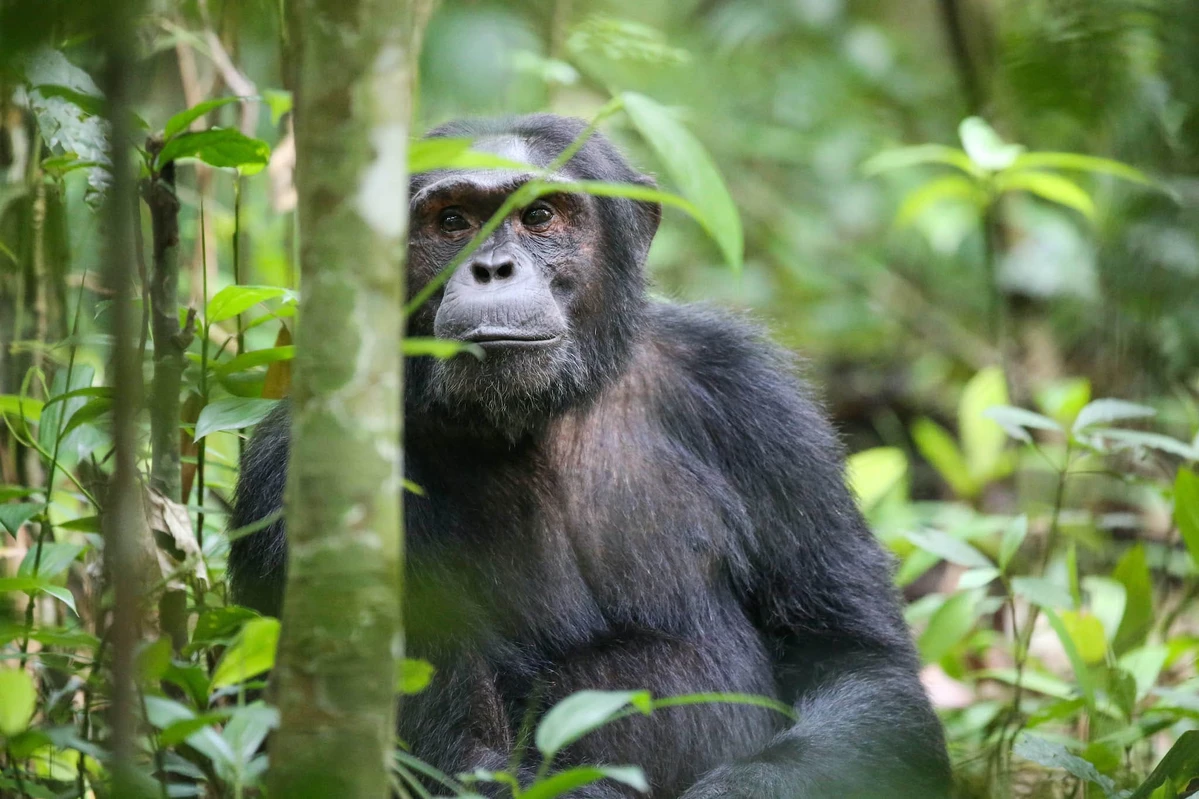
Kibale Forest National Park in Uganda
Kibale Forest National Park is a beautiful tropical rainforest in the western region of Uganda. Established in 1993, this vast forest park of 776km2 is famous for having the greatest variety and concentration of primates in all of Africa. Kibale Forest
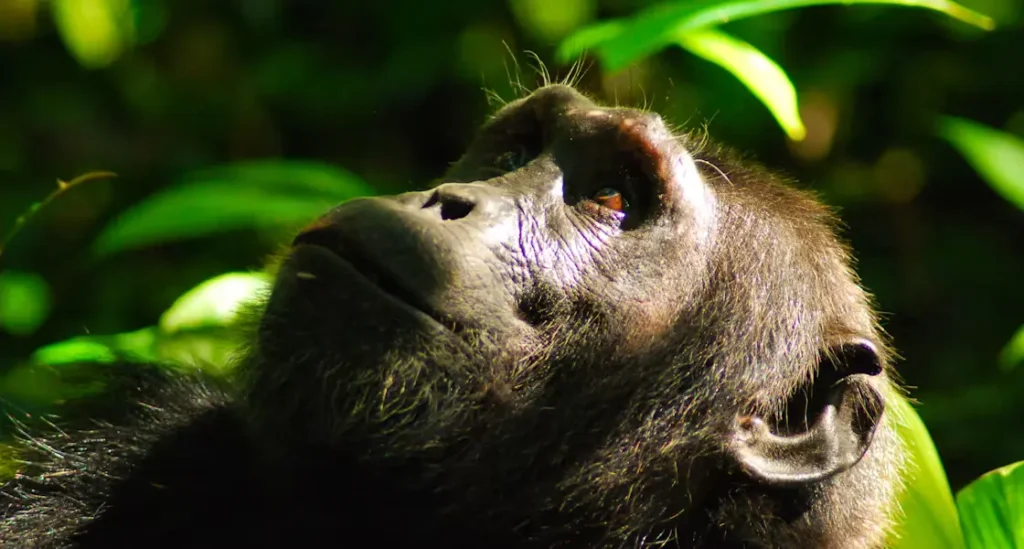
Chimpanzee Trekking in Budongo Forest
Chimpanzee trekking in Budongo Forest is an exciting and active Uganda wildlife adventure that takes you on a hike deep into the heart of the rainforest. Budongo Forest is a southern extension of the famous Murchison Falls National Park. The forest
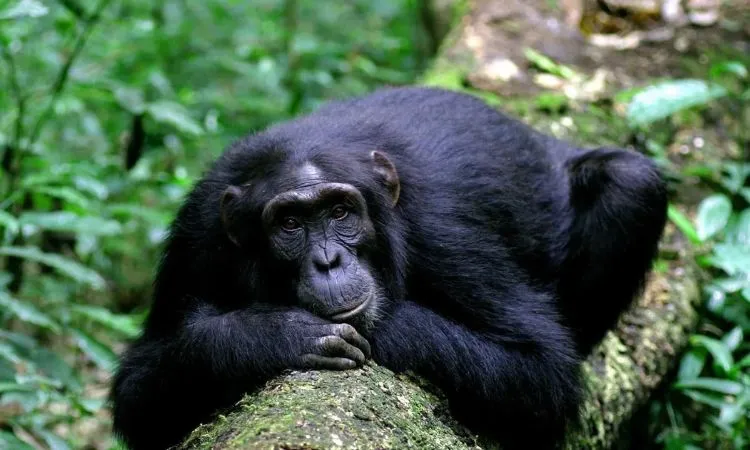
Situated on the western border of Queen Elizabeth National Park, the 137km² Kalinzu Forest Reserve protects a tropical rain-forest that rises from the Great Rift Valley floor to the Kichwamba Escarpment. About 300 wild chimpanzees roam its pristine jungle and two communities have been
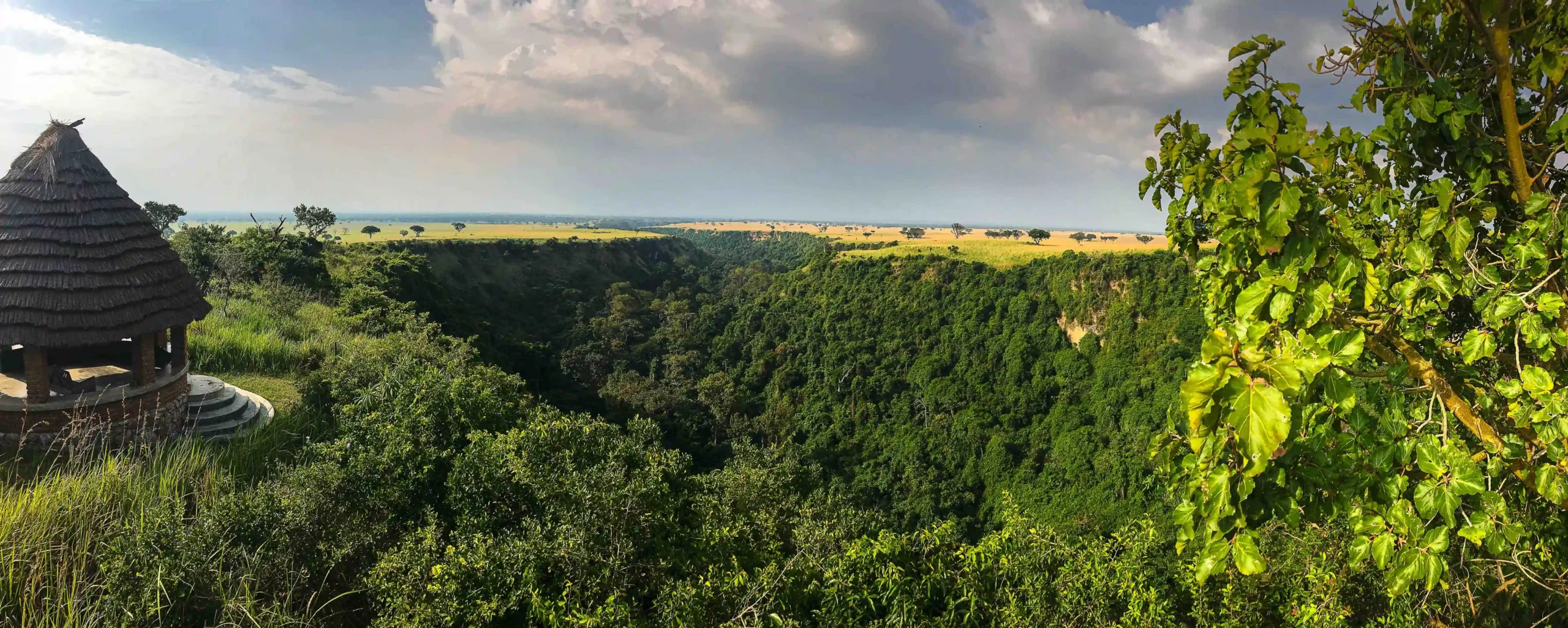
Kyambura Gorge in Queen Elizabeth National Park
Kyambura Gorge is a crack of 11 km long in the Earth’s crust inside Queen Elizabeth National Park, the most biodiverse protected area in Uganda. Situated south of the Kazinga Channel, this beautiful gorge was named after Kyambura River which runs
5 Fascinating Facts About Chimpanzees
- Chimpanzees, also simply known as the chimps are our closest genetic ancestors. We share 98.8% of our DNA with them.
- Chimpanzees can fashion and use tools. They have been observed using sticks and stones to crack open nuts, leaves as sponges to soak up water, and even spears to hunt small prey.
- Although they don’t have spoken language, chimpanzees use a sophisticated communication system including barks and hoots to express various emotions and warnings. Like humans, they also use body language and facial expressions to communicate.
- Chimps also show self-awareness, a trait previously believed to be unique to only a few other animals (as well humans of course).
- Besides being intelligent, chimpanzees are also emotional creatures. They experience many emotions, including sadness, fear, anger, joy and even empathy.
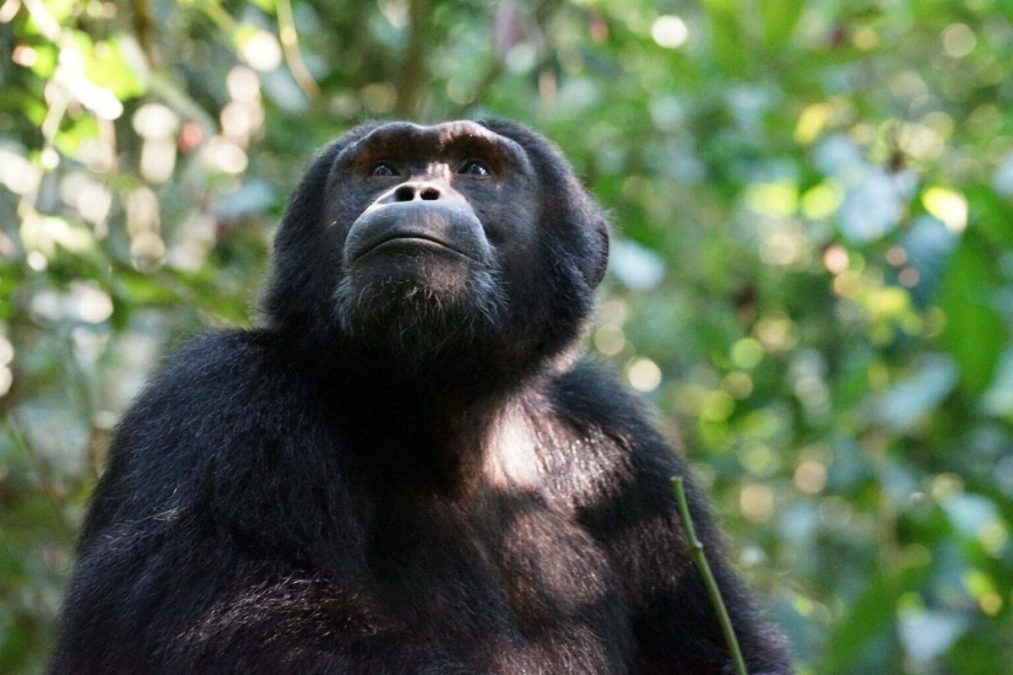
Gorilla vs chimpanzee: Can You Tell the Difference
Gorilla vs chimpanzee: How often do you mistake a gorilla for a chimpanzee or vice versa? I am sure we have all made this mistake once or twice. While they
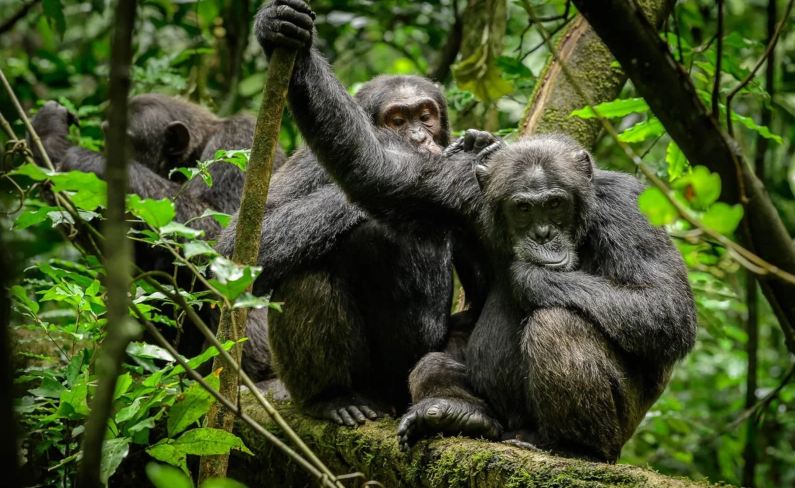
What Should You Expect on Kibale Forest Chimp Trek?
Living with the dense rainforest jungle of Kibale National Park is humanity’s closest relative: the chimpanzee, one of the planet’s most iconic, endangered primates. Kibale Forest National Park is home to
FAQs About Chimpanzee Trekking In Uganda
If you would like to know more about chimpanzee trekking tours, here are some answers to the most common questions about chimpanzee tracking in Uganda.
1. Is Chimpanzee Trekking Good For Conservation?
Chimpanzees are highly endangered. As of 2023, around 170,000 chimps are believed to exist in the wild, a decrease from over 1,000,000 chimpanzees in the early 1900s!
Their populations are rapidly declining due to habitat loss, poaching, and disease. In Uganda, conservation efforts play a vital role in protecting these magnificent creatures and their habitat.
National parks and reserves are established to provide a safe space for chimps to thrive, while local communities are involved in sustainable tourism initiatives that benefit both people and wildlife. By going chimpanzee trekking in Uganda, you actively support these conservation efforts.
The revenue generated from chimpanzee trekking tourism helps fund research, anti-poaching patrols, and community development projects. It is a golden opportunity to make a positive impact and contribute to the long-term survival of chimpanzees and their ecosystems.
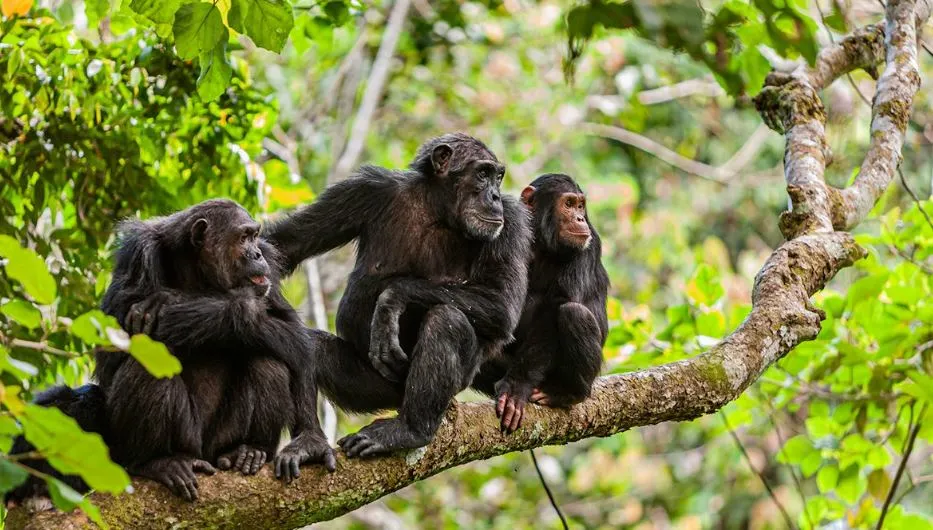
2. Where can I see chimpanzees in Uganda?
Here are the best places to visit if you want see chimpanzees in Uganda:
- Kibale National Park: This is the most popular place to see wild chimpanzees in Uganda. It is home to 1,500 chimps, and there are 4 habituated communities that can be visited.
- Kalinzu Forest: This forest is situated on the western of Queen Elizabeth National Park. It is home to around 300 wild chimpanzees. It is a less publicized than other Uganda chimpanzee trekking destinations, but it is in fact the second-best place to see chimps in Uganda.
- Budongo Forest: This forest reserve is located in northwestern Uganda near Murchison Falls National Park, and it is home to around 800 wild chimpanzees. The chimpanzees here are also habituated, and we chimpanzee trekking in the forest.
- Kyambura Gorge: This is a stunning gorge located in Queen Elizabeth National Park, which has smaller population of isolated chimpanzees often known as lost chimps.
- Ngamba Island Chimpanzee Sanctuary: In 1998, Dr. Jane Goodall and a small group of pioneering leaders rescued 13 chimpanzees and started the Ngamba Island Chimpanzee Sanctuary in Lake Victoria. The island is now home to over 50 chimps. It consists of about 100 acres, of which 95 acres is forested.
- Uganda Wildlife Education Centre: Also known as Entebbe Zoo, this is one of the most popular attractions in Entebbe City. It has also been named the best zoo in east Africa and recommended by Lonely Planet, which describes it as a world-class animal refuge.
Read More: Best Places To See Wild Chimpanzees in Uganda.
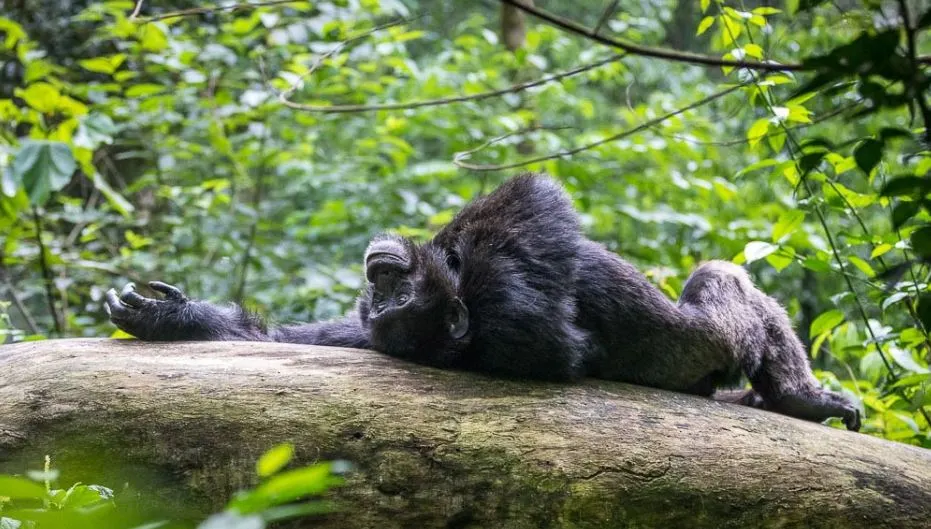
3. When is The Best time to go chimpanzee trekking?
The best time for chimpanzee trekking in Uganda is during the dry seasons, which typically occur from December to February and from June to September.
During these months, the weather is more predictable, and the trails are less muddy, making it easier to navigate through the forests. But, Uganda’s climate is generally mild throughout the year, so even if you visit during the rainy season, you can still enjoy a rewarding chimpanzee trekking experience.
It’s important to note that the rainforest jungles can be humid and receive occasional showers even during the dry season. So packing appropriate gear is essential. Read more: best time to visit Uganda.
4. What Fitness Level Required For Chimp Trekking?
You’ll need to be relatively fit to go chimpanzee trekking in Uganda, though every day is different. Some days, the trek is more difficult than other days.
Chimpanzees have big territories. And you might be lucky to find them after one or it might take 6 hours. You get to spend a maximum of one hour with them. They might be stationary, feeding or resting or they might be on the move.
Contrary to gorillas, chimpanzees move very fast through the forest undergrowth. And trying to keep up with them can be a great challenge. The unpredictability adds to the adventure. Most people walk away with an amazing experience. Whatever your fitness, you will need to pack proper gear for chimpanzee trekking. These include good hiking shoes, a lightweight rain jacket, long trousers, etc.
5. How Close Can I Get To Chimpanzees in Uganda?
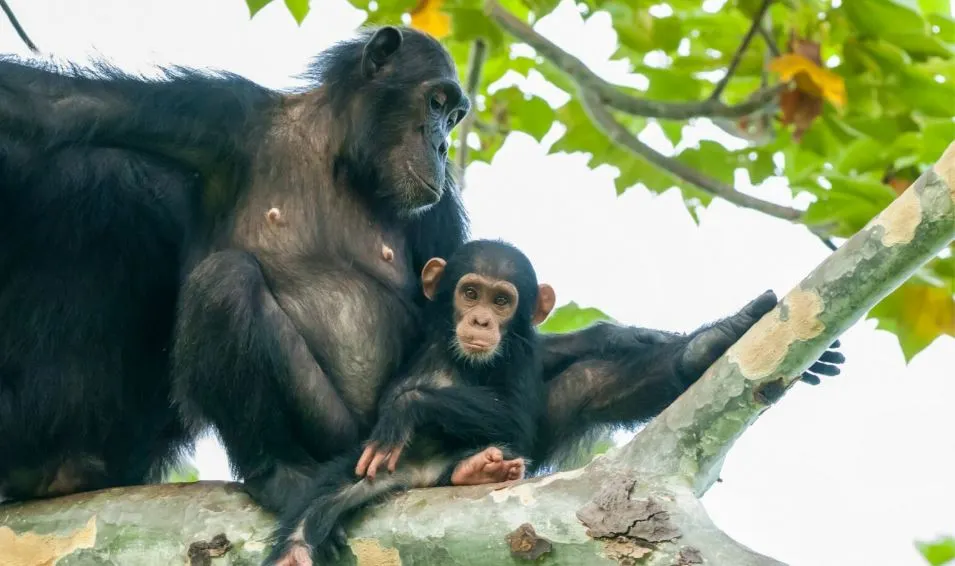
Chimpanzees are humankind’s closest relatives. They share 98.8% of our DNA. That implies that they can catch our illnesses easily. For this reason, as well as your own safety, you are advised to keep a reasonable distance of about 7 to 10 meters when observing chimps. You will track chimpanzees in a small group of up to 6 people.
Your trekking guide will give you very specific instructions on where to stay when you get close to the chimpanzees. Despite this, chimpanzees themselves are much habituated and they do not follow the rules.
On top of that, it might occasionally be challenging to back off due to the dense forest growth. Therefore, it is very likely that a chimpanzee will approach you within a meter.
6. How much is chimpanzee trekking in Uganda?
Chimp trekking in Kibale Forest National Park costs USD 250, Kyambura Gorge (USD 100), Kalinzu Forest Reserve (USD 50) and Budongo Forest USD 130. When booking an organized Uganda safari tour, these fees are included in the overall safari price. A 3-day chimpanzee trekking safari in Kibale costs approximately USD 850 per person.
And a 10-day Uganda safari tour, including chimp and gorilla trekking, as well as savannah safaris in Murchison Falls and Queen Elizabeth Parks, costs around USD 4,300 per person. These prices are only guidelines because they vary depending on the level of accommodation on your Uganda tour.
These include select budget, mid-range, and luxury Uganda safari lodges/accommodation options.
7. How Does Treks In Uganda Compare To Other Countries?
While several African countries offer chimp trekking, the activity is best done in Uganda. Many visitors go chimp trekking at least once on their wildlife safaris in Uganda.
Great chimpanzee is trekking in Tanzania in the Gombe and Mahale Mountains National Parks, on the shore of Lake Tanganyika. Gombe is well-known for being the site of Dr. Jane Goodall’s chimpanzee research, making chimpanzee trekking in these remote areas special. But getting there is either very expensive or time-consuming. Because of this, chimp trekking is much less common on Tanzania safaris.
In Rwanda, Nyungwe Forest is a less-known chimpanzee trekking location. This ancient forest is remarkably accessible. And it is home to 13 primate species. Nyungwe is worth visiting for its natural beauty, forest hikes, canopy walks, and biodiversity alone. And the opportunity to trek for chimps is a bonus. Chimpanzee trekking in Rwanda is recommended, but sightings are more hit-and-miss than in Uganda.
8. Are Chimp Sightings Guaranteed In Uganda?
Your success rate of finding the Uganda Chimpanzees depends on where you go on a chimpanzee trekking tour.
Though habituated, the chimps are totally wild. They move daily in search of food. Also, they make a new nest every night wherever they end up. All in all, these agile primates are less sedentary than gorillas. So, the sightings are altogether more variable. In Kibale Forest National Park, sightings are almost guaranteed (95%).
With a lot of visitor activity and research groups operating here, the guides usually have a good idea of where the chimps are at any time. Kalinzu is the next best alternative with about a 90% chance. Budongo Forest offers around 70% chances and in Kyambura Gorge, the chances are around 60%.
9. Is chimpanzee trekking In Uganda safe?
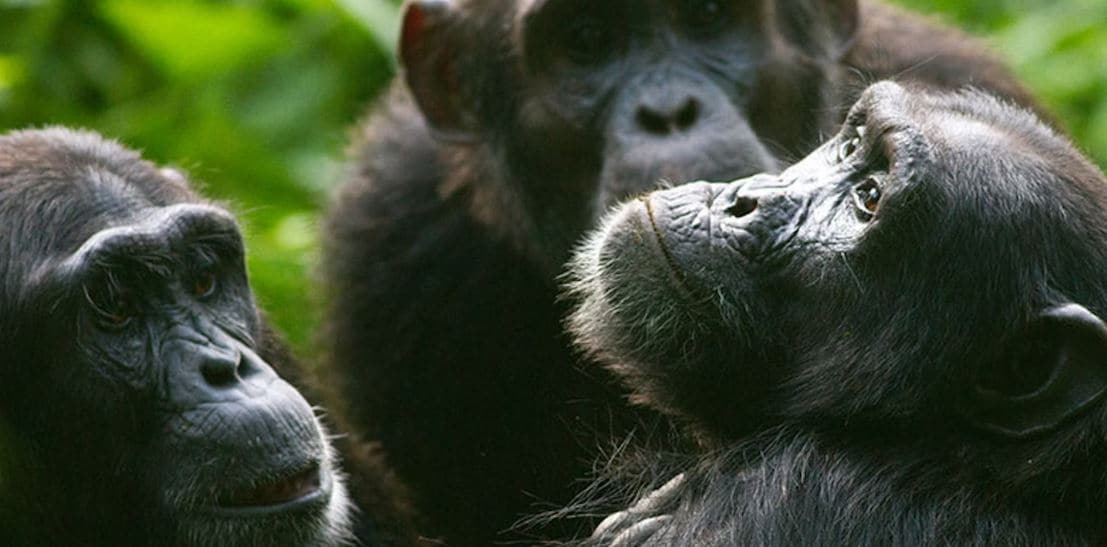
Chimpanzee trekking in Uganda is widely regarded to be safe. The chimps are habituated. They know that humans pose no threat to them. In fact, we have never heard of a guest being injured by a chimpanzee on a trekking tour. However, a large chimpanzee is comparable in size to an adult human.
And chimps are far stronger than humans. Therefore, it is very important to follow the instructions of the trekking guide to ensure your safety. Children below the age of 12, being smaller and more vulnerable than adults, are not permitted to go for Kibale Chimpanzee trekking tours in Uganda.
Also, for both your safety and comfort, we recommend that you wear good walking or hiking shoes/boots, long trousers/pant, and long-sleeved shirt. By tucking your trouser legs into your long socks, you reduce the likelihood of getting bitten by safari ants (harmless insects with a nasty bite).
Neutral colors that blend into the forest environment such as khaki, green, and gray are recommended on the Chimpanzee trekking tour. And a walking stick may be useful for maneuvering across difficult terrain.
Here’s the complete section, ready to paste in:
10. How Do Gorilla and Chimpanzee Trekking in Uganda Compare?
In comparison to trekking gorillas in Uganda, chimpanzee trekking is vastly underrated.
This might be a result of gorillas’ enormous size, which makes these gentle giants so overwhelming to be around. But the experiences are almost similar. Before you set out with a small group of guests on either activity, your local ranger guide will brief you. You will have an entire hour to observe the primates once you’ve located them.
The primary distinction is that gorillas are overall less active. The young ones may play, but the adults typically eat or sleep. Also, gorillas live in families of up to 20 individuals. While gorilla families always stay together, chimp communities are more fluid, as documented extensively by the Jane Goodall Institute, whose decades of research first revealed just how complex chimpanzee social structures really are. They often split into subgroups, which spend time apart to reunite later.
There always seems to be something going on in a chimpanzee community. For example, you may see an alpha male trying to take over, a youngster chimp throwing a tantrum, males patrolling their territory, and, occasionally, a hunt for colobus monkeys. Although this makes chimpanzee trekking and watching very rewarding, it also makes it trickier than spending time with mountain gorillas.
When on the move, chimps are difficult to follow. Their nimble bodies move easily through thick vegetation while you may struggle to get through. Chimpanzees spend most of their time high up in trees compared to gorillas.
That can make watching more difficult too. Despite this, your guide will work really hard to ensure you get a good sighting and great photo opportunities. Last but not least is the price difference; chimp trekking costs $200 in Kibale and less in other parks, while gorilla trekking costs $800 per person.
Ready to see for yourself? Browse our chimpanzee trekking tour packages, explore our sample safari itineraries, use our Build My Safari tool to create a custom trip, or contact us to start planning your Uganda primate safari today.
Want to combine both primates in one trip? Check out our 7-Day Uganda Gorilla & Chimpanzee Safari, our 10-Day Big Five Safari in Uganda featuring gorillas, chimps, and big game, or browse our 5-Day Uganda Safari, Best Uganda Gorilla Safaris guide, and 7 Best Uganda Safari Packages for more itinerary options.
Have Questions?
Chat with Us on WhatsApp
Our local safari team is ready to help you plan your Uganda or Rwanda safari. Send us a message for quick answers, a free quote and a personalised itinerary.
Meet William Mutebi
Founder and CEO (MBA), Tulambule Uganda Safaris
Planning safaris across Uganda and East Africa since 2014
© 2026 Tulambule Uganda Safaris