The DRC Ebola Outbreak Is 600km Away — Here Is What It Means for Your Gorilla Safari.
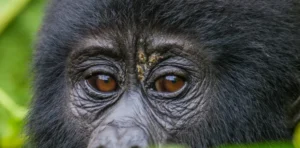 If you have been following the news this week, you already know about the new Ebola outbreak in the Democratic Republic of Congo. The World Health Organization declared it a Public Health Emergency of International Concern on May 17, 2026, and travellers planning a gorilla safari are understandably asking one question above all others: is gorilla trekking safe during the Ebola outbreak?
At Tulambule Uganda Safaris, we believe you deserve a straight answer — not marketing dressed up as reassurance. So here it is: yes, gorilla trekking is safe during the Ebola outbreak. The outbreak is real, serious, and receiving the international response it warrants. But the geography separating the outbreak zone from every gorilla trekking destination in Uganda and Rwanda tells a completely different story from what the headlines suggest. Let us explain.
Is Gorilla Trekking Safe During the Ebola Outbreak — What the Geography Shows
The single most important piece of information for any traveller asking this question is where the outbreak is actually happening.
The Ebola outbreak is confirmed in Ituri Province, northeastern DRC — more than 600 kilometres away from Uganda's gorilla trekking parks. Gorilla trekking in Uganda takes place in Bwindi Impenetrable National Park and Mgahinga Gorilla National Park, both in the far southwest of the country, near the borders with Rwanda and DRC's South Kivu Province — an entirely separate region of the country from Ituri, with no shared population corridor connecting the two.
Rwanda's gorilla trekking destination, Volcanoes National Park, sits in the country's northwest — also hundreds of kilometres from Ituri, with no shared border or direct route linking it to the outbreak zone.
To answer the question directly: is gorilla trekking safe during the Ebola outbreak in Uganda and Rwanda? Yes — because the parks where trekking takes place are not in, near, or connected to the Ituri outbreak zone.
What Is the 2026 Ebola Outbreak in DRC?
The current outbreak involves the Bundibugyo strain of Ebola, confirmed in Ituri Province in northeastern DRC. As of May 16, 2026, the WHO reports 246 suspected cases and 80 suspected deaths, spread across at least three health zones — Rwampara, Mongwalu, and Bunia.
What makes this outbreak unusual is the strain. Unlike the Zaire strain that caused most of DRC's 16 previous Ebola outbreaks, the Bundibugyo strain has no licensed vaccine and no approved treatment. That has driven a strong international response — WHO, Africa CDC, the US CDC, and multiple governments have activated emergency protocols, and response teams are already on the ground in Ituri.
Two cases were also confirmed in Uganda's capital Kampala — both in travellers who had journeyed directly from the Ituri outbreak area. Uganda's Ministry of Health acted immediately. No local transmission has been confirmed, and cross-border surveillance systems are operating at heightened intensity.
The situation is serious. The response is appropriate. But none of this activity is happening anywhere near Bwindi, Mgahinga, or Volcanoes National Park — the three places where gorilla trekking actually takes place.
Is Gorilla Trekking Safe During the Ebola Outbreak in Uganda?
Yes. Is gorilla trekking safe during the Ebola outbreak in Uganda? Absolutely. Both Bwindi Impenetrable National Park and Mgahinga Gorilla National Park are fully open and operating normally. There are no Ebola cases in or near either park. The Uganda Wildlife Authority has issued no restrictions on trekking activities. The UK FCDO does not advise against travel to Uganda's southwestern national parks.
Uganda holds a US State Department Level 2 travel advisory — the same rating as France, Germany, Italy, and Japan. That rating has not changed as a result of the current outbreak. What has changed is Uganda's border health activity, which has been significantly strengthened. Health screening at entry points, contact tracing, and cross-border surveillance between Uganda and DRC are all running at elevated intensity — exactly the kind of response you want to see from a government with real experience managing Ebola.
Uganda has faced Ebola before, multiple times, and has contained it every time. The two confirmed Kampala cases — both imported from DRC — were identified quickly, contact tracing was launched within hours, and the public was informed transparently. This is what a functioning outbreak response looks like.
For over 25 years, there has been no recorded security or health incident involving tourists at Bwindi Impenetrable National Park. That record remains intact.
Is Gorilla Trekking Safe During the Ebola Outbreak in Rwanda?
Yes. Is gorilla trekking safe during the Ebola outbreak in Rwanda? Without question. Volcanoes National Park is fully operational, permits are available, and no cases of Ebola have been reported anywhere in Rwanda.
Rwanda holds a Level 1 travel advisory from the US State Department — the safest possible rating. It is widely regarded as one of the most stable and well-governed countries in Africa, with a public health infrastructure that ranks among the strongest on the continent. The Rwanda Development Board, which oversees all gorilla tourism at Volcanoes National Park, operates with rigorous health protocols that have been in place long before this outbreak began.
For travellers still asking is gorilla trekking safe during the Ebola outbreak with Rwanda as your destination — the answer is yes, clearly, and without reservation. The gorilla families at Volcanoes National Park are active, the rangers are ready, and the park remains as safe as it has always been.
How Gorilla Trekking Already Protects Against Disease Transmission
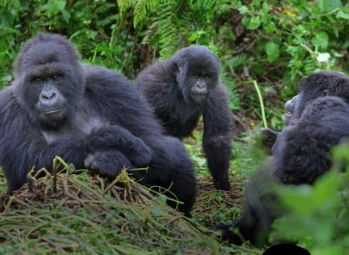
One of the most reassuring parts of answering this question comes from understanding how gorilla trekking has always operated. The health protocols built into every trek in Uganda and Rwanda are among the most rigorous of any wildlife tourism experience in the world — not introduced because of the current outbreak, but standard practice for decades.
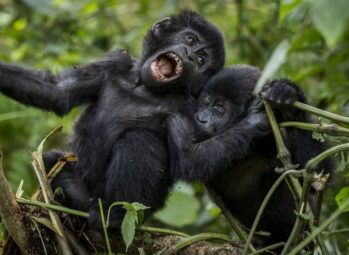
These measures exist primarily to protect the gorillas themselves. Mountain gorillas share approximately 98% of human DNA and are dangerously vulnerable to human illness. Here is what those protections look like on the ground:
Health screening before every trek
Every visitor is checked for fever and respiratory symptoms before the morning briefing. Anyone showing signs of illness is not permitted to enter the forest — no exceptions. This is enforced at every gorilla trekking site in Uganda and Rwanda, every single day.
Mandatory masking near gorilla families
All trekkers are required to wear masks whenever they are in the presence of gorilla families. Uganda Wildlife Authority rangers and Rwanda Development Board guides enforce this without exception during the one-hour visit.
Strict minimum distance rules
Gorilla trekking in Uganda requires a minimum distance of 10 metres from the gorilla families at all times. Rwanda requires 7 metres. Rangers actively enforce these distances throughout every trek.
Controlled group sizes
A maximum of eight visitors per gorilla family per day is the rule at all gorilla trekking sites in Uganda and Rwanda. No exceptions are made, and no crowds form inside the parks.
Armed ranger escorts throughout
Every trek is led by experienced UWA or RDB rangers, professional wildlife guides, and trackers in radio contact with park headquarters. Visitors are never in the forest without an expert, trained escort.
These protocols are precisely why gorilla trekking is safe during the Ebola outbreak — the safeguards that would matter most in a disease-risk scenario have been standard practice for years.
Practical Advice if You Have a Gorilla Safari Booked
If you have a gorilla trekking trip booked — or are planning one — here is what we recommend right now:
Check your government's travel advisory. The UK FCDO, US State Department, and WHO all publish real-time updates. For Uganda's national parks and Rwanda, those advisories are not recommending against travel. Check them directly, not through a third-party news report.
Talk to your tour operator before making any decision. A good, licensed operator is monitoring conditions daily and can give you an honest, on-the-ground assessment. At Tulambule Uganda Safaris, we tell clients the truth — including when something genuinely warrants concern. Today, gorilla trekking is safe during the Ebola outbreak, and we are confident saying so.
Review your travel insurance. Make sure your policy includes medical evacuation and ideally a Cancel for Any Reason option. This is good practice for any international gorilla safari, not just in the current situation.
Do not cancel based on headlines alone. A news headline saying "Ebola spreads to Uganda" without explaining that the two cases are 600+ kilometres from any gorilla trekking park — and are imported, not locally transmitted — is technically accurate and practically misleading. Read beyond the headline.
Why Continuing to Trek Matters for the Gorillas
There is something that rarely gets said plainly enough in conversations like this one, and it deserves to be said here.
Mountain gorilla conservation is funded by gorilla tourism. The $800 gorilla trekking permit in Uganda and the $1,500 permit in Rwanda are not just access tickets — they fund anti-poaching patrols, ranger salaries, veterinary care for gorilla families, and community development projects that give local people a direct financial reason to protect rather than encroach on gorilla habitat.
When gorilla safari bookings drop — whether because of a pandemic, a conflict, or a misread headline — that funding drops too. Anti-poaching capacity weakens. Community support weakens. The gorillas feel the consequences directly.
Mountain gorillas are one of the only great ape populations in the world that is actually growing in numbers. That growth is the direct result of sustained conservation investment made possible by responsible gorilla tourism. When gorilla trekking is safe during the Ebola outbreak — as it is right now — continuing to visit is one of the most meaningful things a traveller can do for this species.
Frequently Asked Questions
Is gorilla trekking safe during the Ebola outbreak in DRC?
Yes. Is gorilla trekking safe during the Ebola outbreak? Absolutely — in both Uganda and Rwanda. The outbreak is centred in Ituri Province, northeastern DRC, more than 600 kilometres from any gorilla trekking destination. Bwindi Impenetrable National Park, Mgahinga Gorilla National Park, and Volcanoes National Park in Rwanda are all fully open, fully operational, and unaffected by the outbreak.
Is Bwindi Impenetrable National Park open during the Ebola outbreak?
Yes. Bwindi Impenetrable National Park is fully open as of May 2026. There are no Ebola cases in or near the park. The Uganda Wildlife Authority has not restricted trekking activities, and international travel advisories do not advise against visiting Bwindi.
Can I still go gorilla trekking in Uganda in 2026?
Yes. Gorilla trekking in Uganda continues normally at both Bwindi Impenetrable National Park and Mgahinga Gorilla National Park. The Ebola outbreak is in northeastern DRC — more than 600 kilometres from southwestern Uganda where gorilla trekking takes place.
Is the Ebola outbreak near gorilla trekking areas in Uganda or Rwanda?
No. The 2026 Ebola outbreak is in Ituri Province, northeastern DRC. Gorilla trekking in Uganda takes place in the far southwest — over 600 kilometres away. Gorilla trekking in Rwanda at Volcanoes National Park is similarly hundreds of kilometres from the outbreak zone, with no direct population corridor connecting the two.
What is the Bundibugyo strain of Ebola?
The Bundibugyo strain is one of four types of Ebola that cause illness in people. Unlike the Zaire strain responsible for most previous DRC outbreaks, there is currently no licensed vaccine or approved treatment for Bundibugyo. It is transmitted through direct contact with the bodily fluids of infected individuals — not through casual contact or air — and does not spread more easily than other Ebola strains.
How far is the DRC Ebola outbreak from Rwanda's Volcanoes National Park?
The outbreak is in Ituri Province in northeastern DRC. Rwanda's Volcanoes National Park is in the northwest of Rwanda near the Ugandan border — several hundred kilometres away, with no shared population movement corridor connecting the two areas. Gorilla trekking in Rwanda is safe and completely unaffected by the outbreak.
The Answer Is Clear: Is Gorilla Trekking Safe During the Ebola Outbreak?
Yes. Is gorilla trekking safe during the Ebola outbreak in Uganda and Rwanda? The answer, supported by geography, official travel advisories, on-the-ground conditions, and over two decades of incident-free gorilla tourism, is yes.
The outbreak in Ituri Province is real and serious, and the international response is entirely appropriate. But gorilla trekking takes place more than 600 kilometres away, inside parks that have always operated with the kind of health protocols that make gorilla trekking safe during the Ebola outbreak and any other disease scenario. The parks are open. The gorilla families are in the forest. Uganda and Rwanda's governments are managing the regional situation with proven experience.
If you want an honest, current, on-the-ground assessment before you book or before you travel, our team is here. We have been running gorilla safaris in Uganda since 2014, and we will always give you the truth. Contact Us.
Always check the latest guidance directly from official sources: WHO Ebola Outbreak Notice · CDC Uganda Travel Notice · Uganda Wildlife Authority
Affordable 3-Day Gorilla Trekking Uganda Safari tour
5 Days Uganda Safari Gorillas, Chimps, Wildlife & Culture
7 Days Uganda Birding Tour | Shoebills, Chimps, Gorillas, & More
10 Days Big 5 Safari in Uganda | gorillas, Chimps,Big Game & Culture
12 Days Uganda Safari, Big Five, Chimps, Gorillas and Culture