Day 1: Arrive In Entebbe Visit Entebbe Botanical Gardens
Welcome To Uganda!
On arrival at Entebbe International Airport, you will be met by a Tulambule Uganda Safaris representative and transferred to nearby hotel in Entebbe city for your overnight accommodation.
Entebbe is in central Uganda, about 40 km southwest of the capital city Kampala, stunningly located on the shores of Lake Victoria (the world’s largest tropical lake) on the magical Entebbe peninsula. The fresh air, relaxed pace of life and the warm tropical weather will make you feel instantly at home in the Pearl of Africa.
The small city of Entebbe used to be the governmental seat of power before it transferred to Kampala. In fact, the word Entebbe in the local Luganda language actually means a seat. And the Ugandan president still has his official office and residence in Entebbe city.
Birding Entebbe Botanical Gardens
After settling into your hotel room, your Uganda birding tour begins with an excursion to the Entebbe Botanical Gardens. This lakeside haven, brimming with vibrant blossoms, lush vegetation, and ancient trees, is also home to troops of Colobus Monkeys.
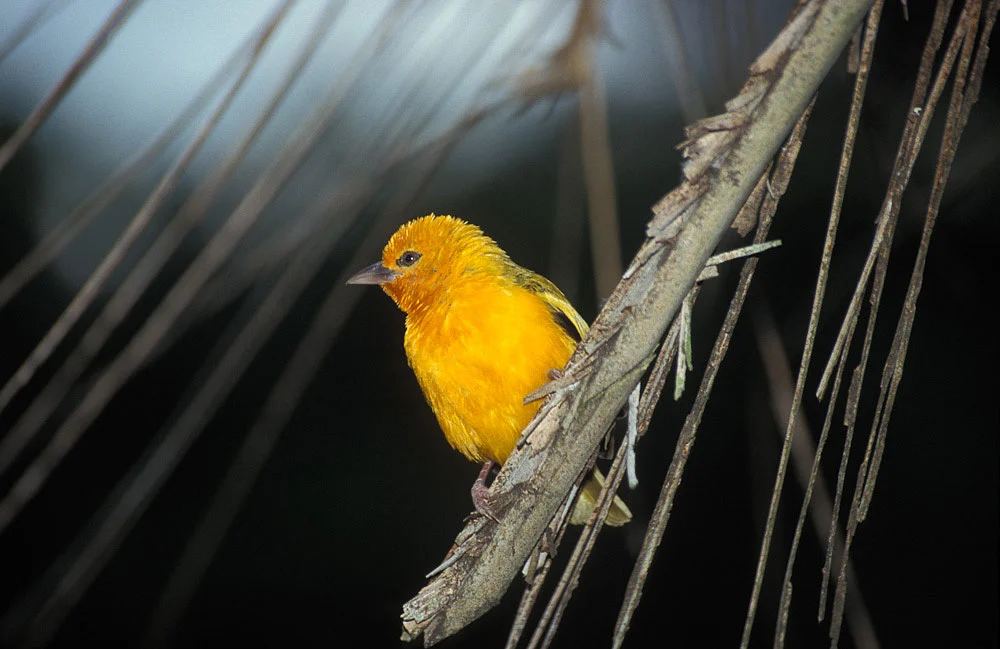
Start your birding adventure by spotting Verreaux’s eagle owls in tall trees near the entrance. As you move towards the lake’s edge, keep an eye out for red-chested and orange-tufted sunbirds, along with the orange weaver. The shores of Lake Victoria host a variety of weavers, including northern brown-throated, Jackson’s, golden-backed, and Vieillot’s black weavers.
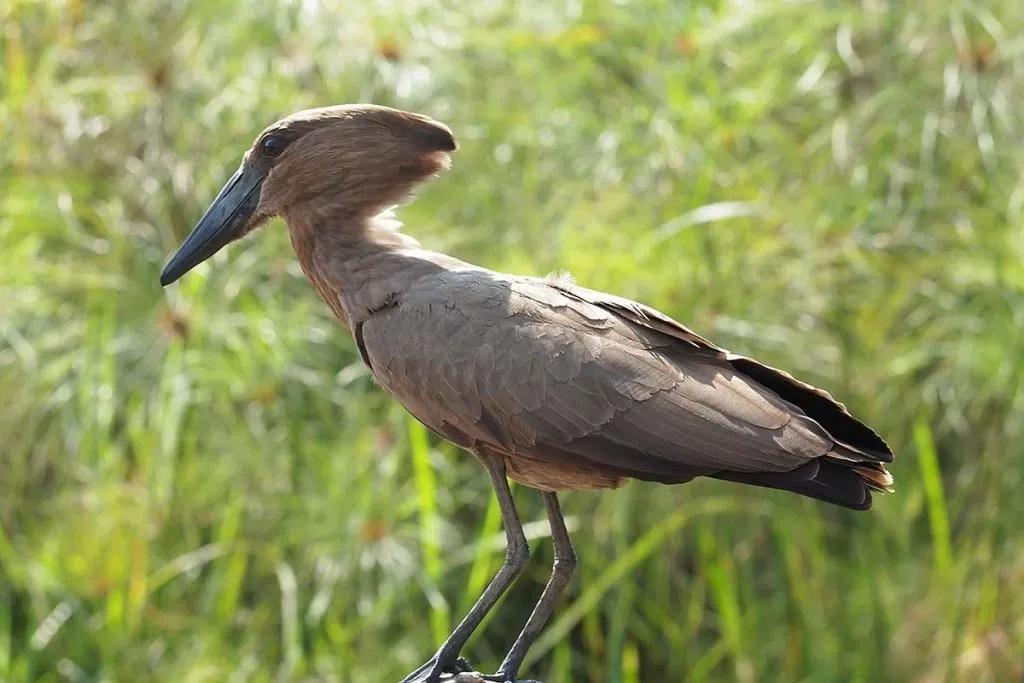
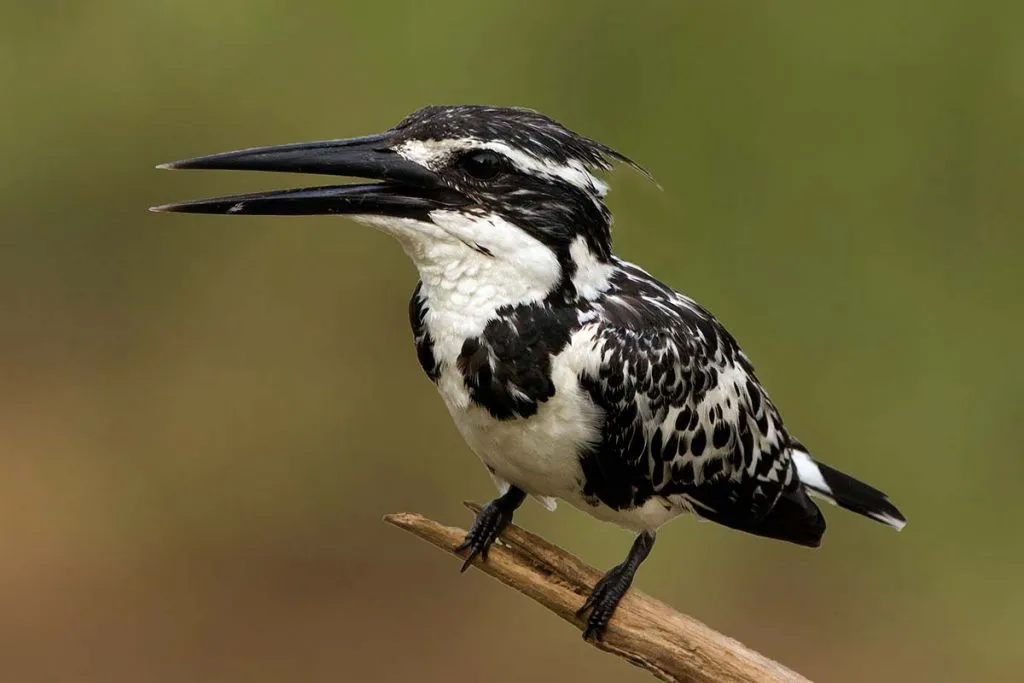
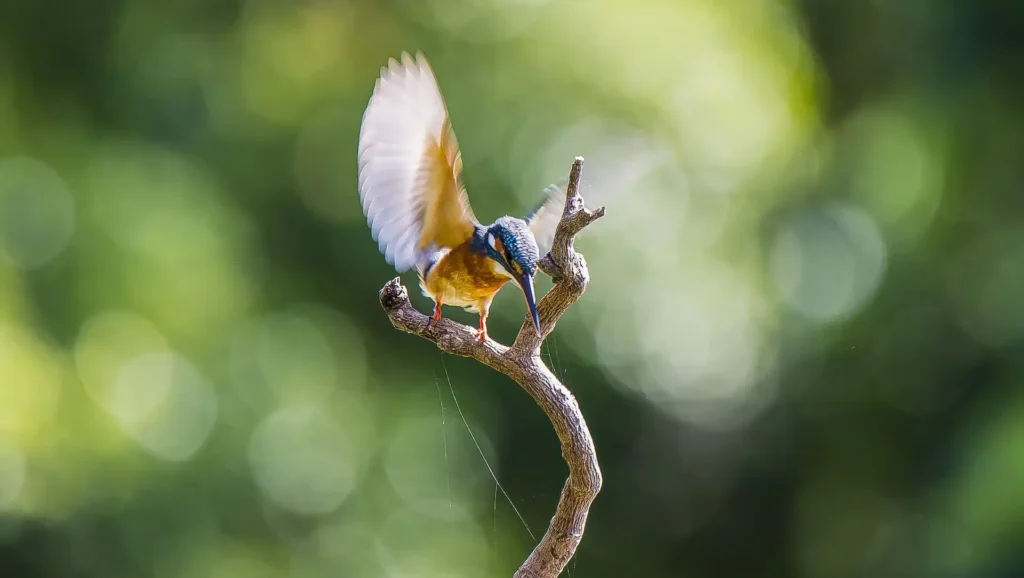
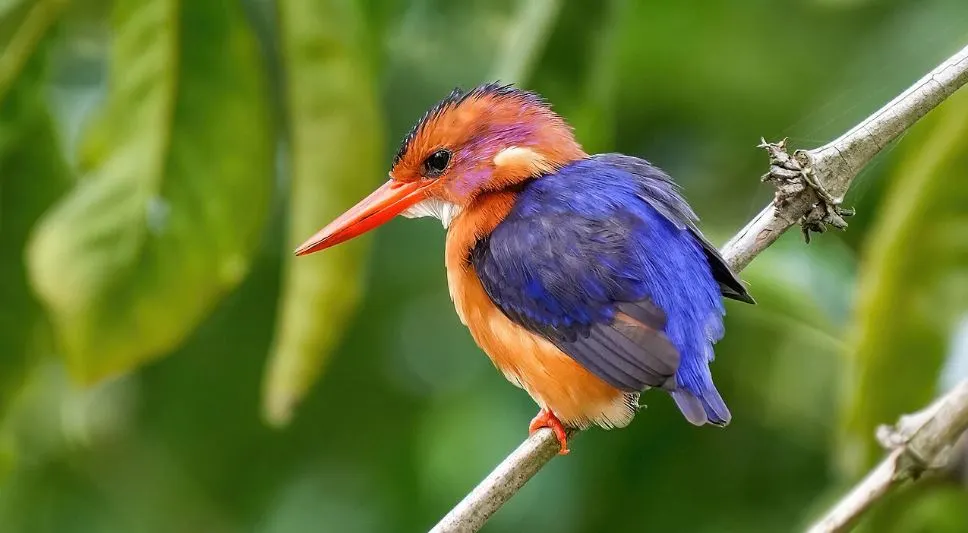
By the water, marvel at species like African open-billed storks, black-headed herons, Hamerkop, giant and pied kingfishers, and swamp flycatchers. In the dense scrub, the red-chested sunbird and striking black-headed Gonolek are often spotted.
In the evening, your guide will join you for dinner to review plans for the next leg of your Uganda birding tour—a thrilling expedition to Mabamba Swamp to find the shoebill.
Accommodation Options:
Luxury: Hotel No.5/Lake Victoria Serena Resort/Protea Hotel Entebbe
Midrange: Boma Hotel/Lake Victoria Hotel/2 Friends Beach Hotel
Budget: Airport Guest House
Meal Plan: Dinner
Day 2: Search For The Shoebill And Transfer To Kibale Forest
Birding Mabamba Swamp
After an early breakfast in the hotel, we will check out and set off. Our first stop is the legendary Mabamba Swamp on the shores of Lake Victoria.
Mabamba is a highlight of any Uganda birding tour, located about an hour’s drive from Entebbe. It is one of the most reliable places to spot the shoebill, Africa’s most sought-after bird. This vast wetland, spanning 16,500 hectares, is crisscrossed by channels that create an ideal habitat for countless waterbirds, including the iconic shoebill stork.
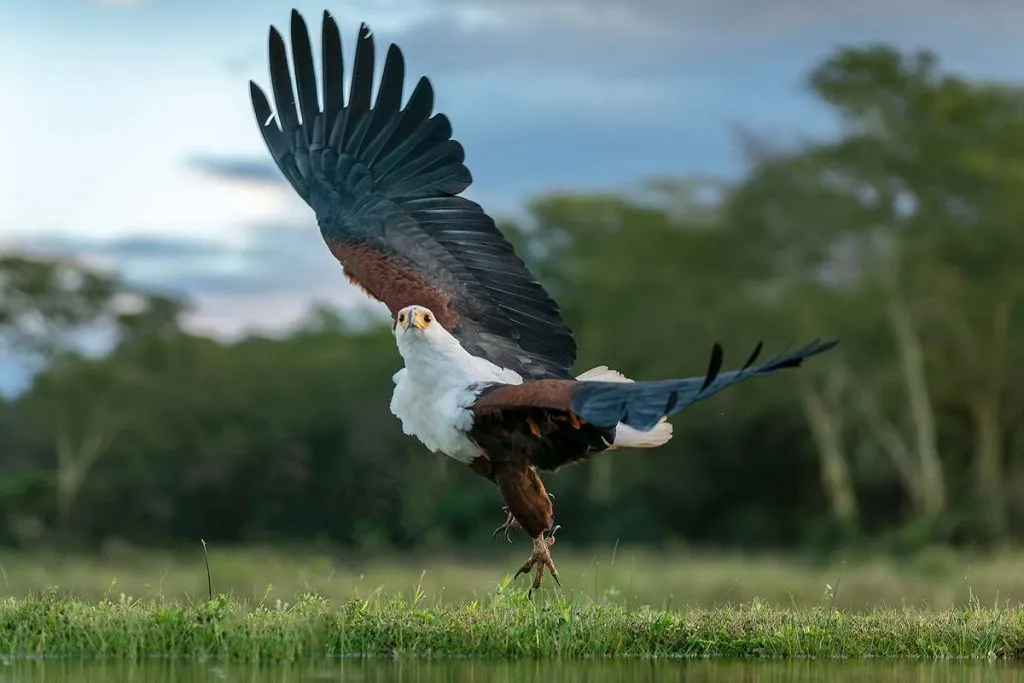
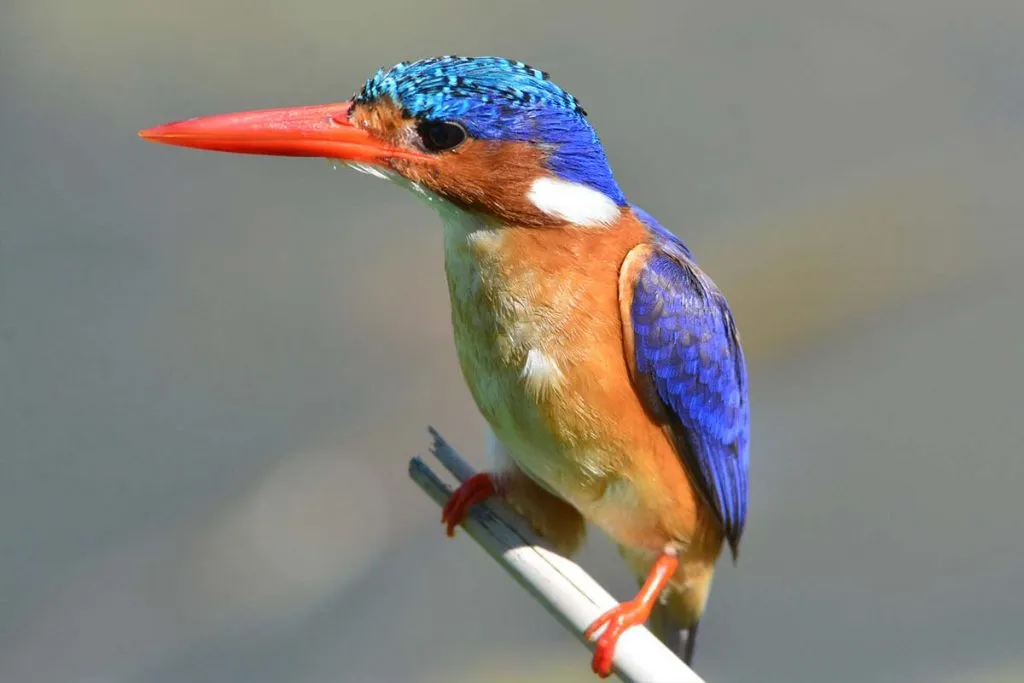
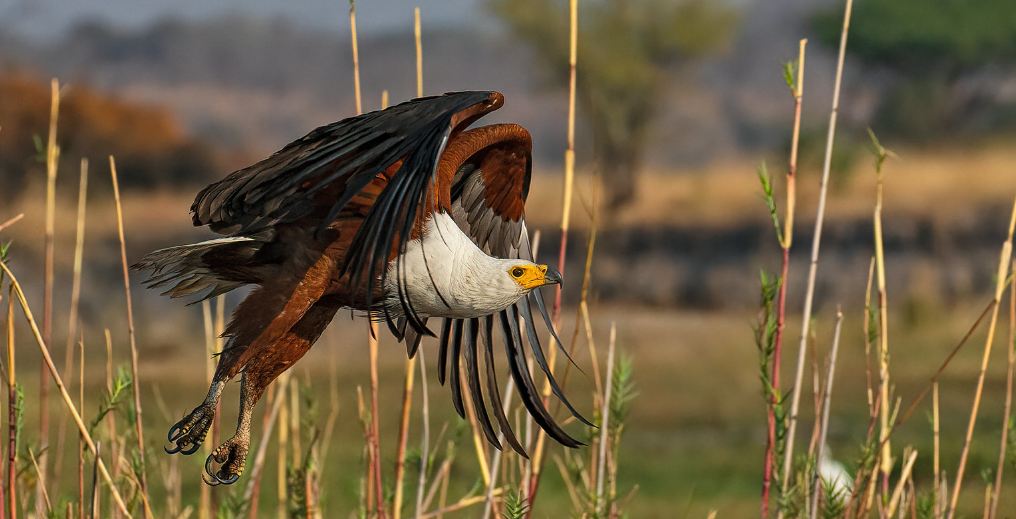
Birding in Mabamba is conducted from a large canoe paddled by an experienced local guide. Navigating through the narrow swamp channels opens up opportunities to encounter various bird species such as Papyrus Gonolek, African Fish Eagle, malachite kingfisher, and winding cisticola.
Other remarkable sightings may include African jacana, blue-breasted bee-eater, rufous-bellied heron, and even the rare and endangered blue swallow.
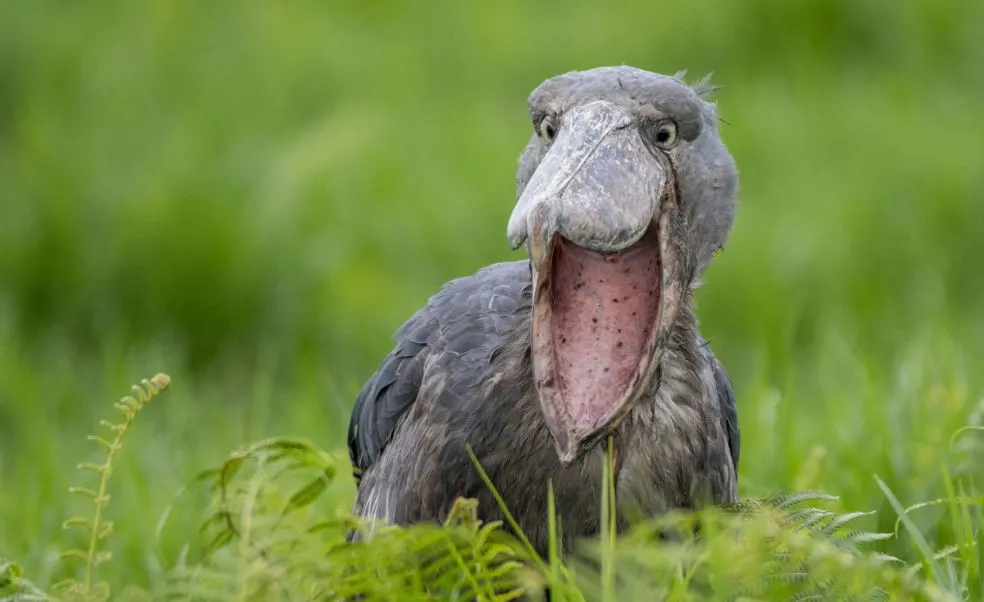
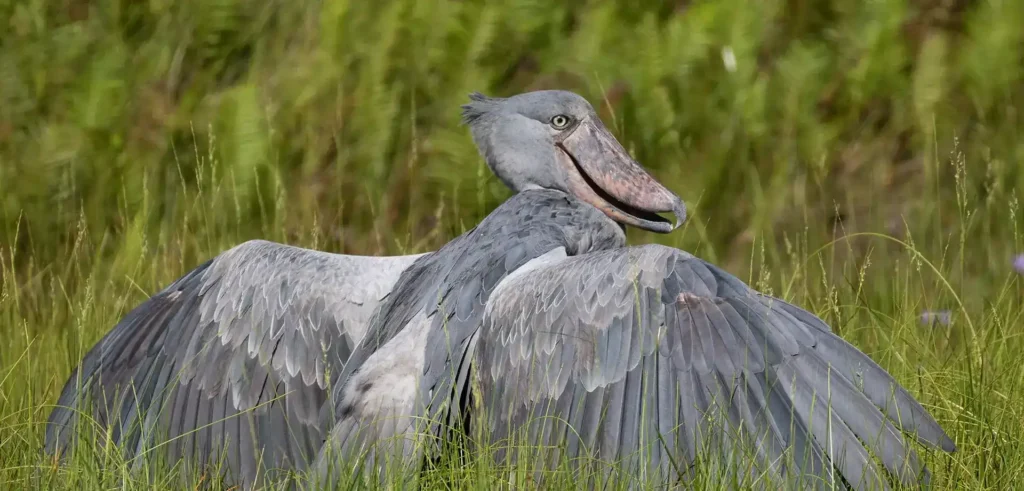
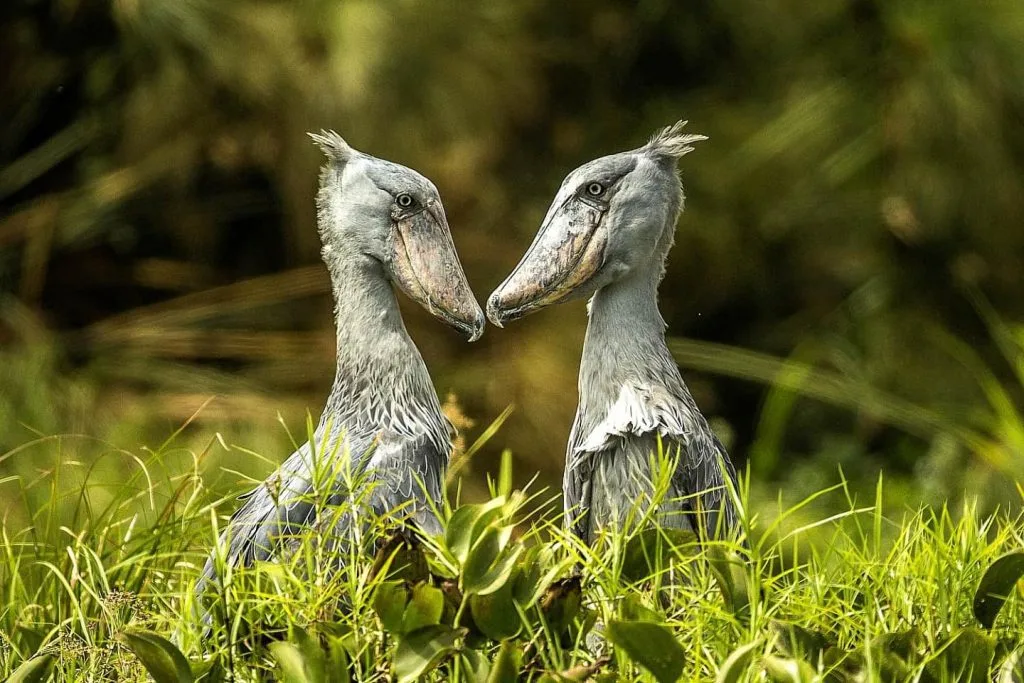
The pinnacle of the Uganda birding tour experience in Mabamba is observing the enigmatic shoebill. With its massive shoe-shaped bill and piercing yellow eyes, this prehistoric-looking bird is truly fascinating and unforgettable.
Transfer to Kibale
After our morning adventure in Mabamba Swamp, we will proceed on a drive west towards Kibale Forest National Park. We will spend most of the afternoon getting there but will be able to bird along the way.
We will travel through the central part of the country, passing the rural towns of Mityana, Mubende and Kyenjojo on the way. Arrive at the town of Fort Portal, situated at the base of the sweeping Ruwenzori Mountains.
From Fort Portal, continue along the rolling hillside past scenic Crater Lakes to Kibale. We’ll arrive in the late afternoon or early evening at the lodge near or inside Kibale Forest.
Kibale Forest National Park is Uganda’s premier chimpanzee trekking destination – adjoining the northern edge of Queen Elizabeth National Park. This 776km2 patch of evergreen rainforest marks a transition from typical high-altitude Afromontane to lowland forest and protects a diverse array of Uganda wildlife, including over 1,500 chimpanzees and 375 bird species.
Beneath the thick canopy of the forest, the winding paths are widely recognized as some of the most picturesque on African continent, lined with a thick layer of shrubby undergrowth.
The forest tracts are scattered with patches of grassland and swamp. On the fringes of the park, the community-run Bigodi Wetland Sanctuary is a popular attraction for primate lovers and birders.
Day 3: Birding & Chimpanzee Trekking In Kibale Forest
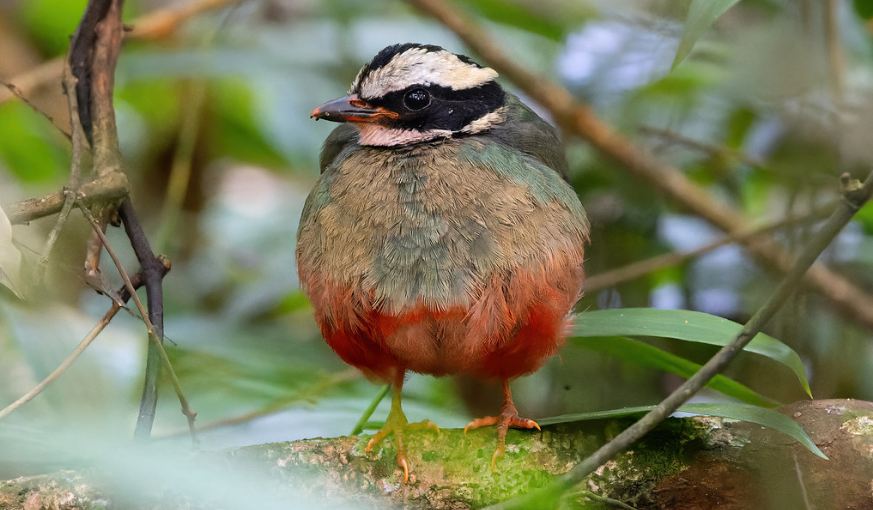
Search For Green-Breasted Pitta
Our start today in Kibale Forest Park will be pre-dawn essential as we have to listen for the first territorial calls of gorgeous green-breasted pitta.
Breeding pittas are easier to find, as they call often, but non-breeding birds require much harder work. We will search the best territories and nesting areas, hoping to find one feeding on the forest floor.
Please note that the BEST months to search for green-breasted pitta is February, March and early April and when breeding, mid-June, July and August.
More Birding In Kibale
Later in your Uganda birding tour, you’ll venture into Kibale Forest National Park to uncover its spectacular birding opportunities. This vibrant destination features a rich forest edge and nearby birding spots, making it a haven for bird enthusiasts.
Kibale’s medium-altitude forests host extraordinary mixed-species flocks. You can spot unique birds like Afep pigeon, white-naped pigeon, red-chested owlet, and Narina trogon. Other notable sightings may include black bee-eater, white-headed wood hoopoe, dusky-blue flycatcher, and shrike-flycatcher.
With its diverse avian population, Kibale offers endless birding delights, such as blue-throated roller, purple-headed starling, superb sunbird, green-headed sunbird, chestnut wattle-eye, and the yellow-mantled weaver, among others. This stop in Kibale is guaranteed to leave you in awe of Uganda’s birdlife treasures.
Chimpanzee Tracking
The towering Kibale Forest has the highest primate concentration and species diversity of any reserve in East Africa. Primate highlights might include sightings of red colobus, red-tailed monkeys, olive baboons, blue monkeys, handsome L’Hoest’s monkey and the scruffy grey-cheeked mangabey.
You will embark on a chimpanzee trek while in Kibale Forest, where the chances of finding our closest living relatives are excellent. You will see chimps in their natural environment and marvel at how similar they are to humans.
Optional Activity:
In the early evening, you can do a night search for the potto, Africa’s equivalent of the sloth. This is the best place in Africa to see potto. This unique night forest safari may also reveal 3 species of bush baby (galagos) and various small carnivores and ungulates.
Day 4: Birding In Kibale Forest, Bigodi Swamp, And Afternoon Departure Back To Entebbe.
Today provides another chance during your Uganda birding tour to spot the elusive green-breasted pitta if it remained unseen the previous day. Should you have already encountered it, your focus shifts to discovering other delightful species in the area.
The morning includes a birding walk through Bigodi Wetland Sanctuary, an award-winning community initiative. This project protects the environment while supporting local health, education, and economic growth. The boardwalk through the marsh offers sightings of species like yellow-spotted barbet, white-spotted flufftail, and western nicator.
Additional highlights may include grey-winged robin-chat, superb sunbird, and brown-throated wattle-eye. After lunch, your Uganda birding tour concludes with a scenic return drive to Entebbe, birding en route.
Optional Activity:
You can choose to go for a guided cultural walk in Bigodi Village – (home of two tribes). Here, you will discover the Uganda rural village accompanied by a professional English-speaking local guide.
You will also visit traditional healer who happily shares his knowledge about herbs, plants and local medicines. You can also visit the homes of elderly men and women who tell interesting stories about birth, marriage, ceremonies, clans and traditional rural life.
En route, you are given the chance to experience the Ugandan school system and tour Bigodi’s trading centre, a hub of rural life and activity.
Accommodation Options:
Luxury: Hotel No.5/Lake Victoria Serena Resort/Protea Hotel Entebbe
Midrange: Boma Hotel/Lake Victoria Hotel/2 Friends Beach Hotel
Budget: Airport Guest House
Meal Plan: Breakfast, Lunch & Dinner
Note: Anyone departing on a late flight tonight (after 21h00) will be transferred to Entebbe International Airport
Day 5: Departure Day
After your final breakfast, you will be driven to Entebbe International Airport to continue your African adventures or start heading back home. Thanks you for choosing us
End Of The Tour
Note: Our Uganda safari prices include all services rendered by us, and we only generate revenue if you book a safari with us. Going directly to the lodges will not save you money because we earn volume-based discounts from them and can always access the best prices – for your benefit.
Day 1: Arrive In Entebbe
When you arrive at Entebbe International Airport, Tulambule Uganda Safaris will be there to welcome you to the country. From there, you will be taken on a drive-by tour of the city en route to your guest house/hotel in Entebbe.
Entebbe city is located in central Uganda, about 40km southwest of the capital city Kampala. It is stunningly situated on the shores of Africa’s largest lake, Lake Victoria. The tropical sun, fresh air, and relaxed pace of life will make you feel instantly at home in “the Pearl of Africa”. You’ll have some time to refresh and relax.
Time permitting, you may tour Entebbe Botanical Gardens. The primary target here is the gorgeous Orange Weaver – small, loose breeding colonies are usually present in the trees at the edge of Lake Victoria.
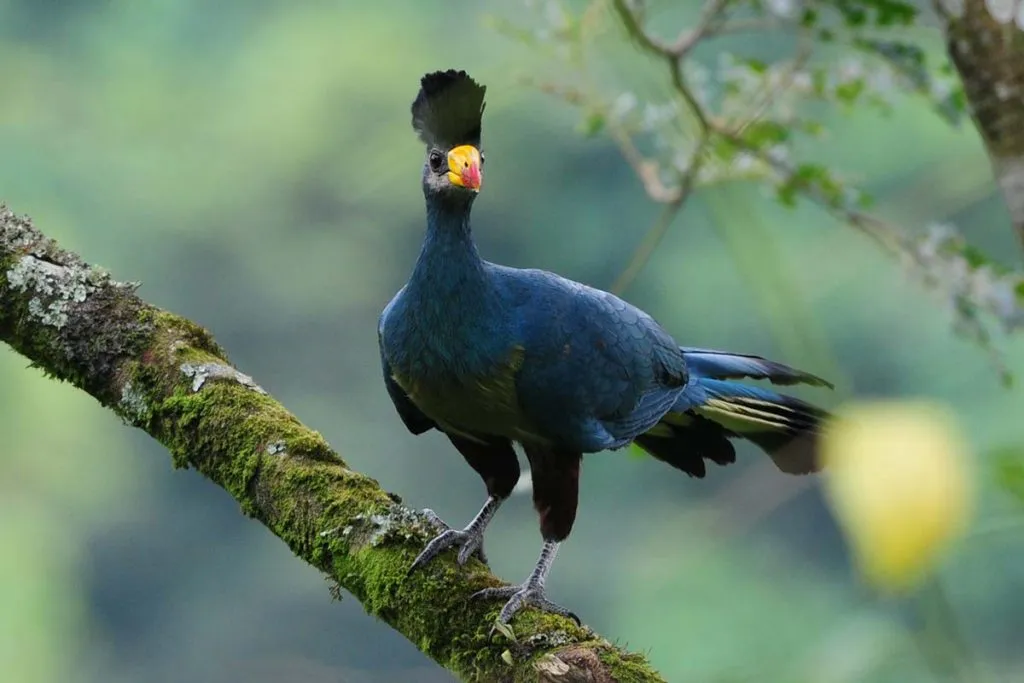
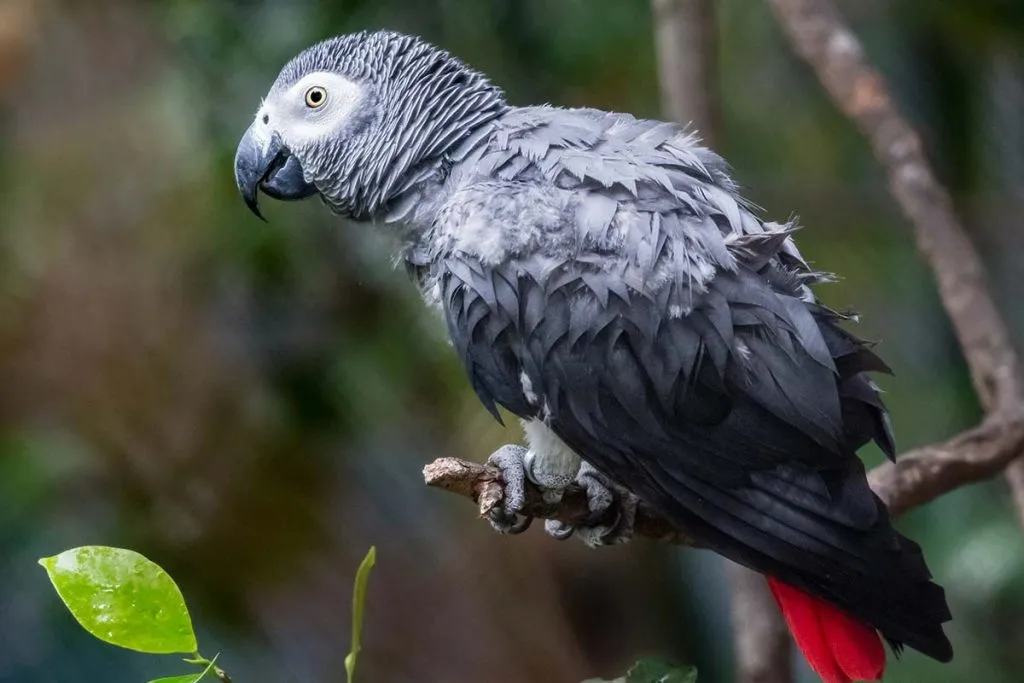
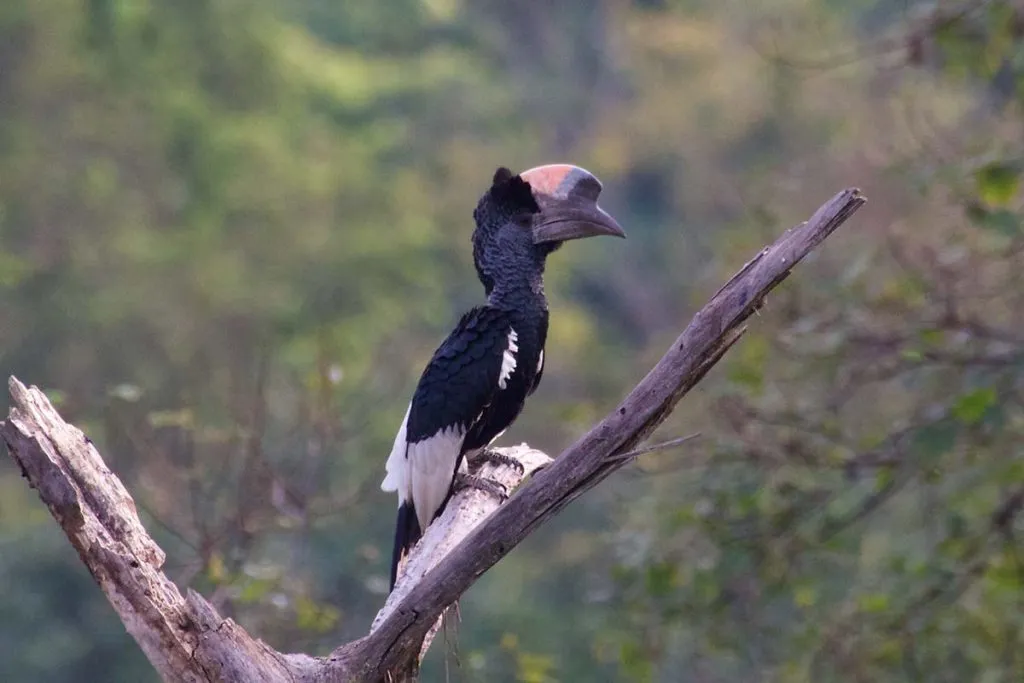
Other conspicuous bird species in the gardens include African Grey Parrot, Ross’s Turaco, Great Blue Turacos, Black-and-white Casqued Hornbill, the scarce Orange-tufted Sunbird, Eastern Plantain-eater, and the Woodland Kingfisher.
Overhead you will watch for Yellow-billed Kites, Hooded Vulture, and Pied Crows and you will certainly find the grotesque-looking Marabou Stork. In a small remnant patch of forest, you may also spot Guereza colobus – an incredibly beautiful black-and-white colobus monkey with a long bushy tail.
From there, you drive back to the hotel or guesthouse for the evening and a scrumptious welcoming dinner.
Accommodation Options:
Luxury: Hotel No. 5/Protea Hotel Entebbe/ Lake Victoria Serena Resort
Midrange: Boma Hotel Entebbe/ 2 Friends Beach Hotel/ Lake Victoria Hotel
Budget: Airport Guest House
Meal Plan: Dinner
Day 2: Birding In Mamba Wetland And Transfer Kibale
Day two of your 7 days Uganda birding tour will start with an early breakfast in the hotel/guest house. You will then check out and set off. The first stop is the legendary Mabamba Swamp, about a one-hour drive to the north.
This extensive 16,500-hectare wetland is situated on the shores of Lake Victoria and is a Ramsar Wetland of International Importance. It is home to several pairs of Shoebills, the most famous and iconic avian residents of Uganda.
This prehistoric-looking bird is very high on most world birders – wish lists, and for good reason. It is just unique, with huge yellow, human-like eyes and that enormous bill that looks like a shoe. You will do your bird-watching adventure from a big traditional canoe paddled by an expert local bird guide.
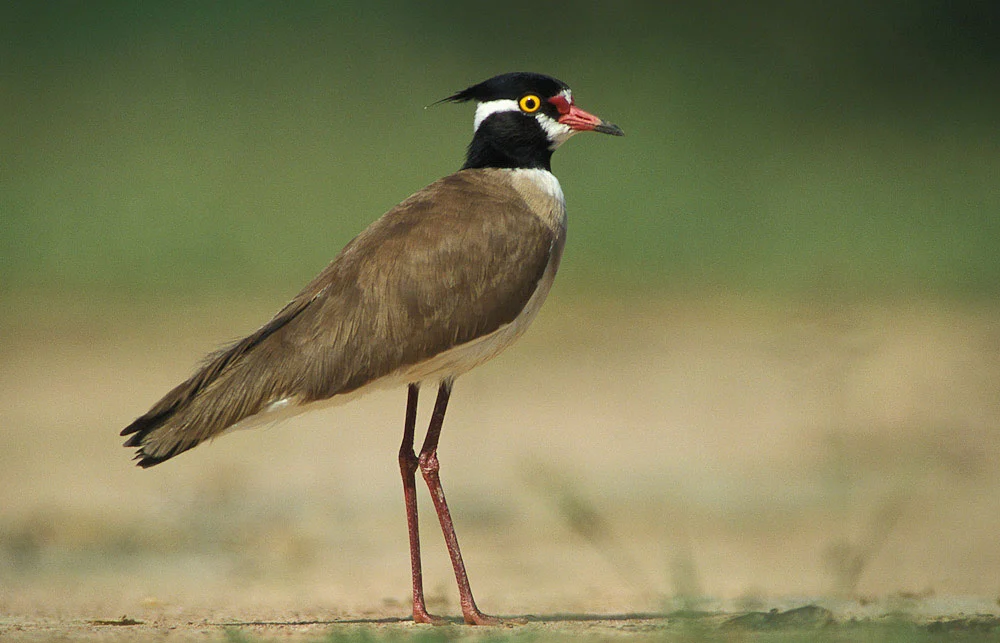
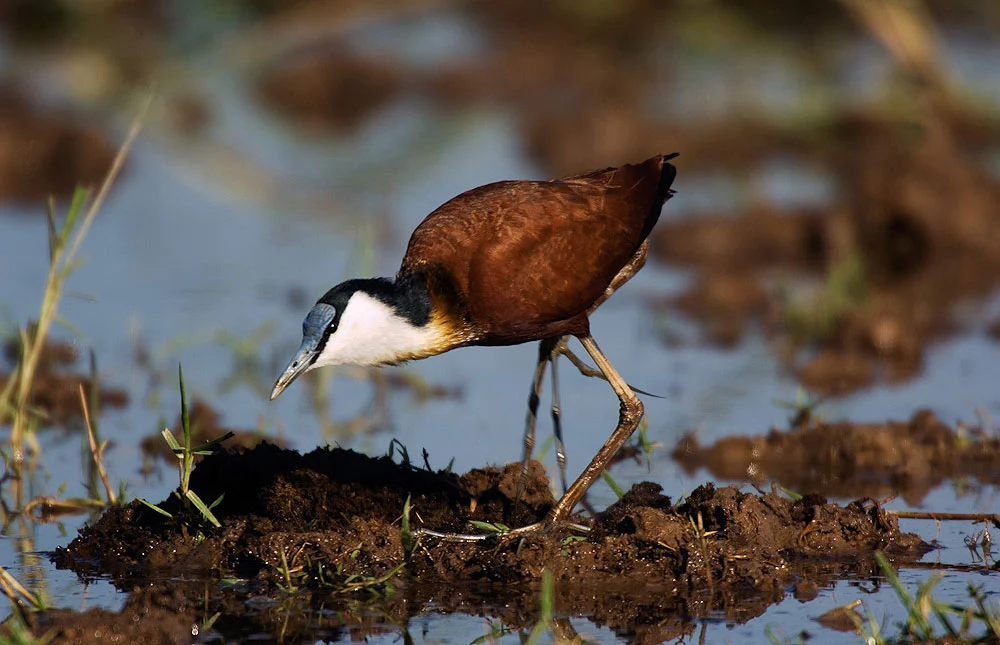
You will search the maze of channels in an attempt to find this special species. Other water birds abound and you should find several species of egrets, waterfowl, and herons, Long-toed Lapwing, the ever-present African Fish Eagle, Blue-breasted Bee-eater, Purple Swamphen, African and the tricky Lesser Jacanas, African Marsh Harrier, Malachite Kingfisher, and African Pygmy Goose.
The papyrus hosts the endearing Swamp Flycatcher, Blue-headed Coucal, White-winged Swamp Warblers, the indescribable Papyrus Gonolek, and the nomadic and unpredictable Weyn’s Weaver. If you’re very lucky, you may also see the rare Sitatunga, an elusive swamp-dwelling antelope.
From there, you’ll begin a fairly long journey of about 5 hours west to Kibale Forest National Park. You will stop for lunch en route as you continue on your drive. Expect to arrive at your overnight accommodation in the late afternoon.
Budget: Chimpanzee Forest Lodge – Main House/Kibale Forest Camp
Meal Plan: Breakfast/Lunch/Dinner
Day 3: Kibale Forest – Chimp Tracking & Birding
The towering Kibale Forest National Park has the highest primate density and diversity of any reserve in Africa, including over 1500 chimpanzees – our closest living relatives.
Other primate highlight includes sightings of localized Central African Red Colobus, handsome L’Hoest’s Monkey, and the scruffy Ugandan Grey-cheeked Mangabey. You will embark on a Chimpanzee trek and our chances of finding these, one of our closest living relatives, are excellent!
Birds are typical of the medium-altitude forest, with excellent mixed species flocks and specials such as Afep and the rare and globally threatened White-naped Pigeon, Red-chested Owlet, Blue-throated Roller, Narina Trogon, African Shrike-flycatcher, Scaly-breasted illadopsis, Brown Illadopsis, Chestnut Wattle-eye, and Blackand-white Mannikin.
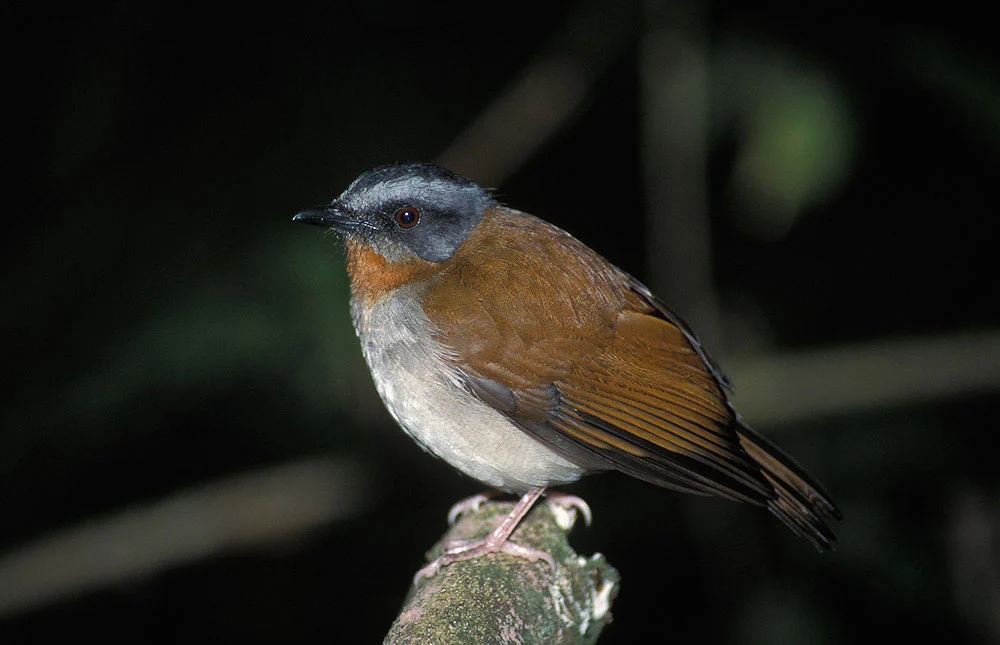
The stunning Green-breasted Pitta also occurs in this forest; however, a pre-dawn start and a good deal of luck and perseverance will be needed to locate this mythical low-density understory inhabitant! At night you may encounter bushbabies and African Wood owls.
Today, you depart Kibale National Park and head south for the famous Bwindi Impenetrable Forest National Park, a gorilla conservation stronghold and a hotspot for Albertine Rift Endemics.
En route, you drive through the beautiful savannah grasslands of Queen Elizabeth National Park, a UN Biosphere Reserve that is home to over 600 bird species and 95 species of mammals including rare tree-climbing lions.
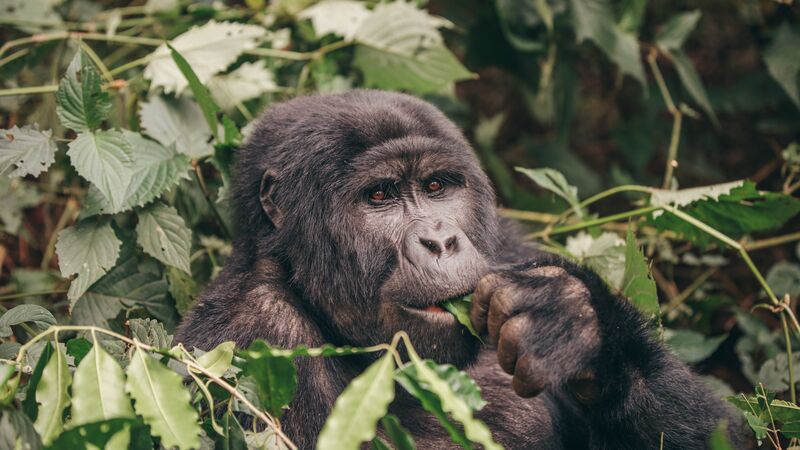
After a slow drive through Queen, you’ll continue to Bwindi, where you’ll be based for 3 nights. Bwindi is a UNESCO Natural World Heritage Site and is home to about half of the world’s population of endangered Mountain Gorillas.
This 32 km2 park offers arguably some of the most productive montane forest birding in Africa and supports 23 of the 24 Albertine Rift endemic bird species. Excellent forest birding, not least the prospect of numerous rare and localized Albertine Rift endemics, makes this a true birding Mecca.
Budget: Trekkers Tavern Cottages/Buhoma Community Restcamp
Meal Plan: Breakfast/Lunch/Dinner
Day 5: Buhoma, Bwindi Impenetrable National Park – Birding And Optional Gorilla Trekking
From your comfortable base, if you are departing on an optional gorilla trekking adventure will search for a habituated family of Mountain Gorillas. Spending an hour with these gentle giants of the forests is, undoubtedly, one of the greatest wildlife experiences on Earth!
You will spend the balance of your time here birding the trails leading out from the camp. Special species you will look for include Bar-tailed Trogon, Dusky Tit, Olive Long-tailed Cuckoo, Kivu Ground Thrush, White-bellied Robin-Chat, Equatorial Akalat, rare Grey-chested Babbler, Red-throated Alethe, White-bellied Crested Flycatcher, White-eyed Slaty Flycatcher, Northern Double-collared Sunbird, Willcocks’s Honeyguide, Black-billed Weaver, Magpie Mannikin and the newly described Willard’s Sooty Boubou.
High exposed perches in the open forest are favoured by African Goshawk, the dazzling Black Bee-eater, Sooty Flycatcher, and forest starlings including Narrow-tailed and Waller’s, Stuhlmann’s.
One of Bwindi Forest’s star avian attractions is the little, pitta-like Neumann’s Warbler, a vocal yet very secretive bird! You will need patience and luck to see this skulker – one of the Albertine Rift endemics.
Other understorey birds you will look for include displaying African Broadbill, Black-faced Prinia, and the handsome but shy Black-faced Rufous Warbler.
The mid-story and forest canopy support Elliot’s and Tullberg’s Woodpeckers, Cabanis’s, Ansorge’s Greenbuls, the enigmatic Chapin’s Flycatcher, White-browed Crombec and the rare Jameson’s Antpecker
Birding at Buhoma is a truly magical experience! Other wildlife that we may be fortunate enough to find here includes Duikers, Colobus, L’Hoest’s, and Blue Monkeys.
Budget: Trekker’s Tavern Cottages/Buhoma Community Restcamp
Meal Plan: Breakfast/Lunch/Dinner
Day 6: Bwindi To Lake Mburo
Day six of your 7 days Uganda birding tour will start with an early breakfast and then check out of your accommodation, saying goodbye to the wonderful staff.
You will then head northeast towards your final park of this fantastic birding safari, the Lake Mburo National Park. The drive to Mburo will take about 5 hours, but you will still look for birds, and make rest stops as needed.
You will enter Mburo through the Sanga Gate. Just outside the park, you’ll come across some of the world-famous long-horned Ankole cattle of the Bahima people that live in the area -always a highlight and worthy of a few photos.
The 260km2 park is a superb wetland and Acacia savanna sanctuary that is a famous spot for serious birders. Together with 13 other lakes in the area, Lake Mburo forms part of a 50 km-long wetland system linked by a swamp. Five of these lakes lie within the park’s borders.
You will reach you and check-in, followed by a superb late lunch. You will end your day with an afternoon/early evening game drive in the park. Lake Mburo is home to 350 bird species as well including Plains Zebra, Impala, Common Eland, African Buffalo, Oribi, Waterbuck, Leopard, Hippos, Hyena, Topi, Reedbuck, and Banded, Slender, and Dwarf Mongoose.
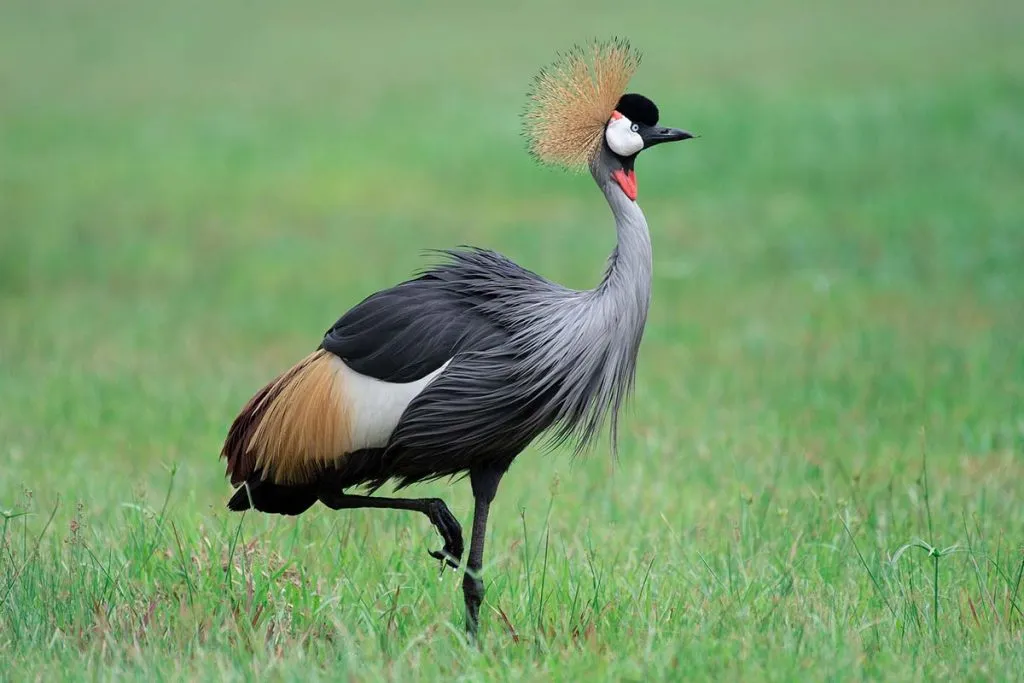
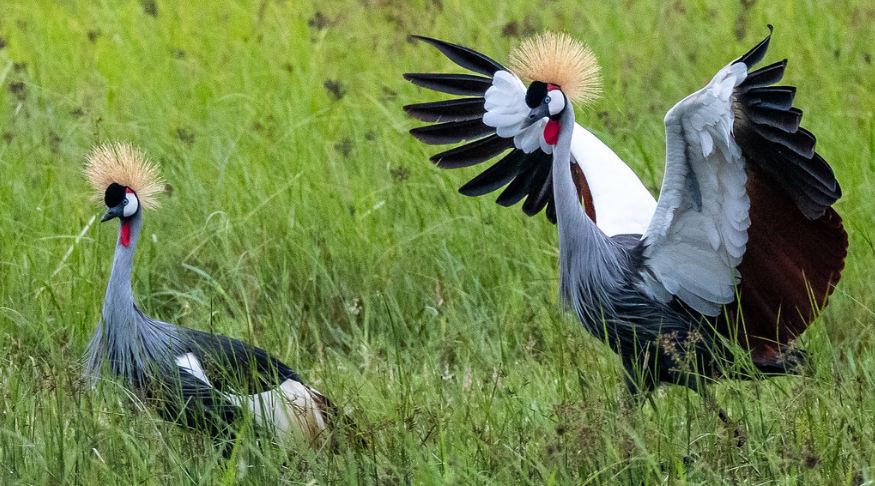
Some of the avian gems of the park you will look for include the localized Red-faced Barbet, African Marsh Harrier, Rufous-bellied Heron, White-backed, Lappet-faced and White-headed Vulture, African Hawk-eagle, Bare-faced Go-away-bird, Bateleur, Coqui Francolin, Grey Crowned Crane, Brown Snake Eagle, Black-bellied Bustard, Red-headed Lovebird, Ross’s Turaco, Green Wood Hoopoe, Common Scimitarbill, White-headed Barbet, Nubian Woodpecker, Tropical Boubou, Woodland Kingfisher, Long-tailed Cisticola, Yellow-breasted Apalis, Green-capped Eremomela, and Meyer’s Parrot.
You will then return to your lodge in time to freshen up. Then you will have your excellent farewell dinner after an amazing tour through the Pearl of Africa.
Accommodation Options:
Luxury: Mihingo Lodge
Midrange: Rwakobo Rock
Budget: Eagles Nest Mburo
Meal Plan: Breakfast/Lunch/Dinner
Day 7: Lake Mburo National Park To Entebbe
After your early morning breakfast, you will undertake a short private boat cruise on the lake, your last safari activity of this 7 days Uganda birding tour
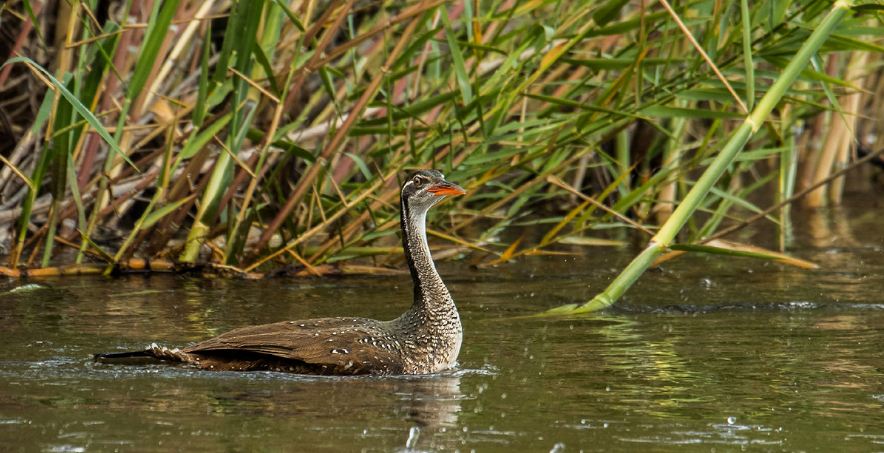
This is one of the most beautiful, tranquil boat cruises you can imagine. Apart from the stunning scenery, you will hope to tick some special final species for your trip, including African Finfoot, African Fish Eagle, Squacco Heron, Water Thick-knee, Pied and Giant Kingfisher, and loads of Hippopotamus.
After the boat cruise, you will embark on the transfer to Entebbe, about 4 hours away. However, there is one more surprise in store!
You will make a stop at the Ugandan Equator Monument at Kayabwe, where you can stand with one leg in the Northern hemisphere while the other remains in the Southern! It makes for great photographs and memories.
It is also an impressive site for purchasing souvenirs to take back home as a memento of this incredible birding tour in Uganda.
Accommodation: Not Included
Meal Plan: Breakfast
Day 1: Arrival in Entebbe and Birding the Shore Of Lake Victoria
Great blue turaco
We will pick you from Entebbe International Airport and transfer to a nearby guest house before starting the birding. The striking Double-toothed Barbet as well as the dazzling Black-headed Gonolek are both common around Entebbe. African Hobby and Bat Hawk are sometimes seen around town.
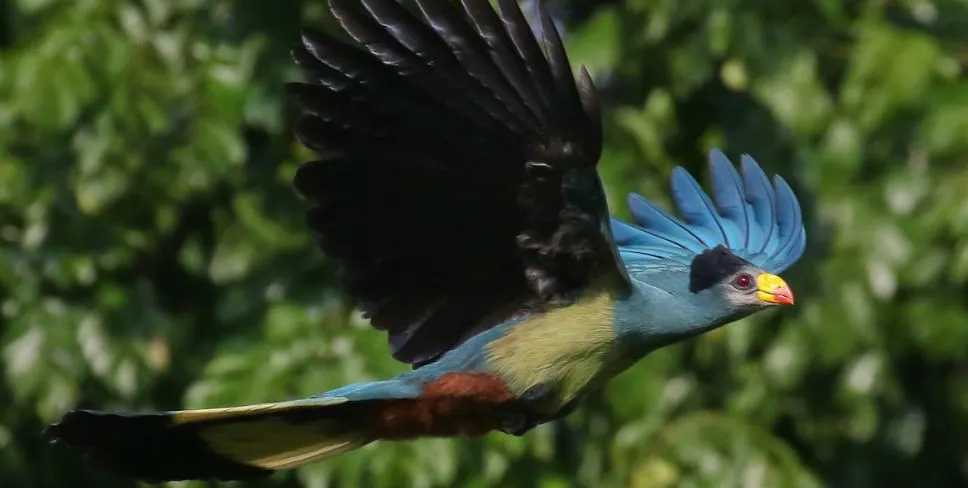
Palm-nut Vulture, Broad-billed Roller, numerous weavers, and perhaps our first Great Blue Turaco might be seen as we bird the Entebbe Botanical Garden on the shore of Africa’s largest lake.
Overnight: The Boma, or similar, Entebbe
Meal Plan: Dinner
Days 2: Shoebill and transfer to Masindi
Shoebill
Our day will start with an early breakfast in the hotel. After that, we will visit the legendary Mabamba Swamp, about an hour drive to the north.
This 16,500-hectare wetland on the shores of Lake Victoria is an essential stop on any Uganda birding tour, recognized as a Ramsar Wetland of International Importance.
It is Africa’s most accessible site for spotting the iconic Shoebill, Uganda’s most famous bird. With its prehistoric appearance, large yellow eyes, and a bill resembling a shoe, it’s no surprise that this bird is high on every birder’s wish list.
During this segment of your Uganda birding tour, we’ll also search for papyrus swamp specials, including the Red-chested Sunbird, several weaver species known for their intricately neat nests, coucals, and tropical waterbirds like the Lesser Jacana. The wetlands are also teeming with Swamp Flycatchers, adding to the excitement of our dugout canoe trip into the expansive swamp.
After encountering the Shoebill, we’ll embark on a scenic 5-hour drive northwest, pausing for lunch en route. Our destination is Masindi, a charming rural town and a popular stopover on the journey to Murchison Falls National Park, where the next leg of your Uganda birding tour awaits.
We will rest, enjoy a delicious dinner and stay overnight at our comfortable lodge after a great first day in Uganda.
Day 3: Birding at Budongo Forest’s beautiful Royal Mile, transfer to Murchison Falls.
Chocolate-backed Kingfisher
Budongo Forest is exceptional for many special birds. Chestnut-capped Flycatcher is a star bird. There is also a trio of small warbler-like flycatchers that are taxonomically enigmatic. Fraser’s Forest Flycatcher is another prized bird in Budongo.
The Budongo Royal Mile is a must-visit destination on any Uganda birding tour, renowned for its dazzling variety of kingfishers. While not all of these vibrant birds are associated with water, the Chocolate-backed Kingfisher steals the spotlight as the most sought-after species.
Other stunning kingfishers you may encounter include the African Dwarf Kingfisher and the Blue-breasted Kingfisher, ensuring a memorable experience.
Forest-floor birding reveals treasures like Fire-crested Alethe, Red-tailed Ant Thrush, and the elusive Nahan’s Partridge, while the canopy offers sightings of species such as the charming Rufous-crowned Eremomela and White-thighed Hornbill. The forest is also alive with fantastic barbets, woodpeckers, and tinkerbirds.
An intriguing feature of the Budongo Royal Mile during your Uganda birding tour is the presence of numerous greenbul species. These fascinating birds inhabit varying levels of the forest, from the undergrowth to the canopy, making them a delight to observe and identify.
The Royal Mile is a awesomely beautiful forest to spend time in and surely boasts an extremely rich birdlife. From here we will transfer to Murchison Falls, Uganda’s largest and oldest national park.
Overnight: Murchison River Lodge or Similar
Meal Plan: Breakfast, Lunch & Dinner
Days 4: Murchison Falls National Park
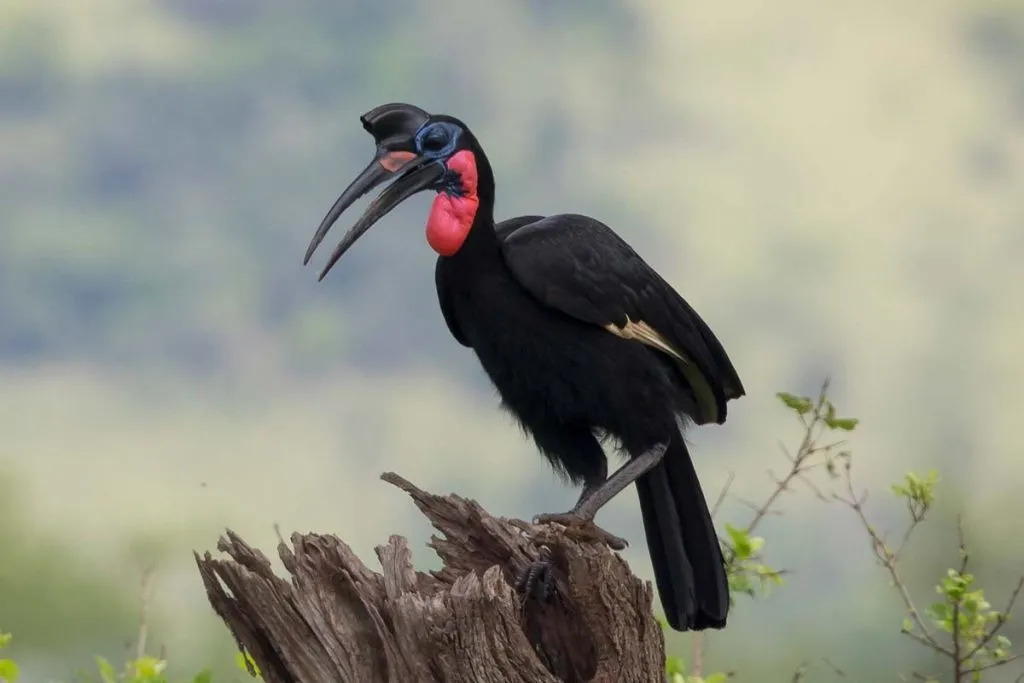
Abyssinian ground hornbill
As part of your Uganda birding tour, we’ll embark on a scenic boat cruise to the base of the majestic Murchison Falls. This thrilling excursion not only offers breathtaking views but also allows us to add numerous bird species to our growing list.
The area is excellent for spotting mammals of all sizes, including Giraffes, Elephants, Buffalos, Lions, Leopards, Oribi, Hartebeests, Warthogs, Waterbucks, and the rare Patas Monkeys.
Birding enthusiasts on the Uganda birding tour can look forward to sightings of remarkable avian species, such as Silverbird, Speckle-fronted Weaver, Black-headed Lapwing, Abyssinian Ground Hornbill, Red-throated Bee-eater, Rock Pratincole, White-headed Barbet, Swallow-tailed Bee-eater, Black-billed Barbet, Meyer’s Parrot, and Bateleur.
The dramatic Murchison Falls, where the massive Nile River is forced through a narrow 8-meter gap before plunging 45 meters below, is a highlight of this experience. While enjoying the stunning view, there’s a chance to spot elusive species such as Pel’s Fishing Owl or Bat Hawk.
Additionally, if possible, a night drive can be arranged to seek nightjar and owl species, including Long-tailed, Plain, and Pennant-winged Nightjars, as well as the Greyish Eagle-Owl.
This segment of your Uganda birding tour promises unforgettable wildlife and birding encounters amid spectacular natural scenery
Overnight: Murchison River Lodge or Similar
Meal Plan: Breakfast, Lunch & Dinner
Day 6: Murchison Falls to Masindi – Kaniyo Pabidi Forest
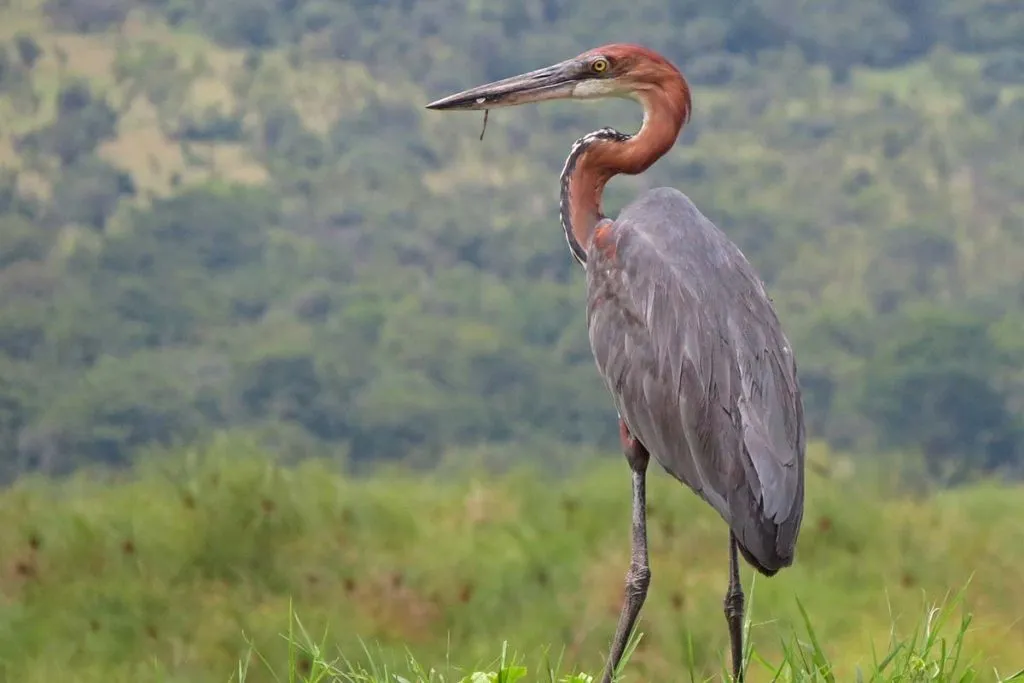
Goliath heron
Our Uganda birding tour begins with an early breakfast, followed by a thrilling boat cruise to the delta area of the park. As we sail along the legendary Nile River’s tranquil waters toward the Albert Delta, you’ll have the chance to spot iconic species, including the elusive Shoebill.
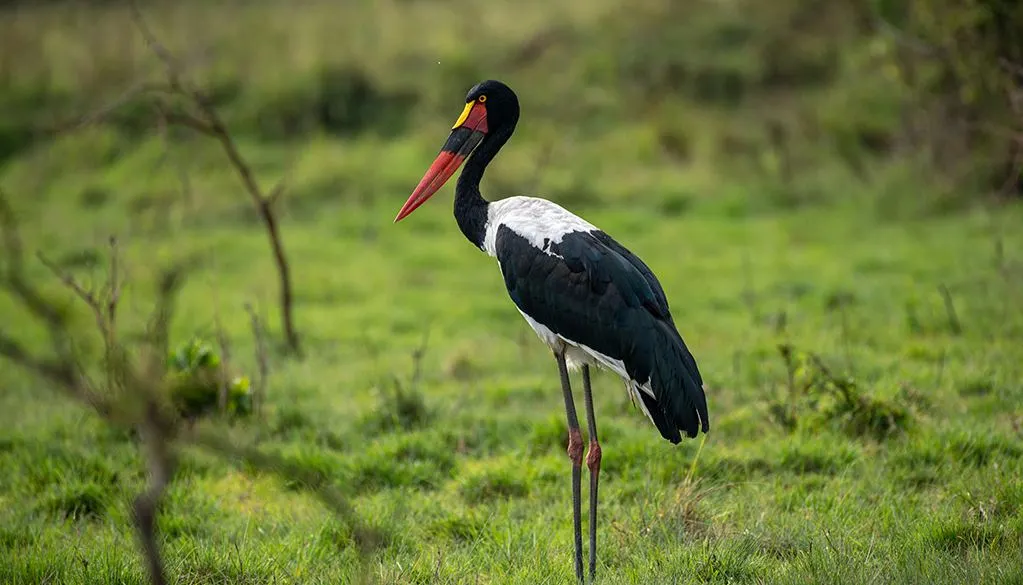
Other exceptional birds to look out for include Pel’s Fishing Owl, Long-toed Lapwing, Saddle-billed Stork, Red-throated Bee-Eater, Western Banded Snake Eagle, Goliath Heron, and African Darter.
Along the way, you’ll encounter hippos swimming in the water and elephants and crocodiles lounging on the shores. The boat trip concludes at the confluence of the Victoria and Albert Nile, a remarkable location where the Victoria Nile flows south into Lake Albert before continuing to South Sudan and onward to the Mediterranean Sea in Egypt.
After the boat tour, our Uganda birding tour continues with exciting game drives, culminating in a packed picnic lunch on the banks of the Nile. A visit to the top of Murchison Falls adds yet another highlight to the day.
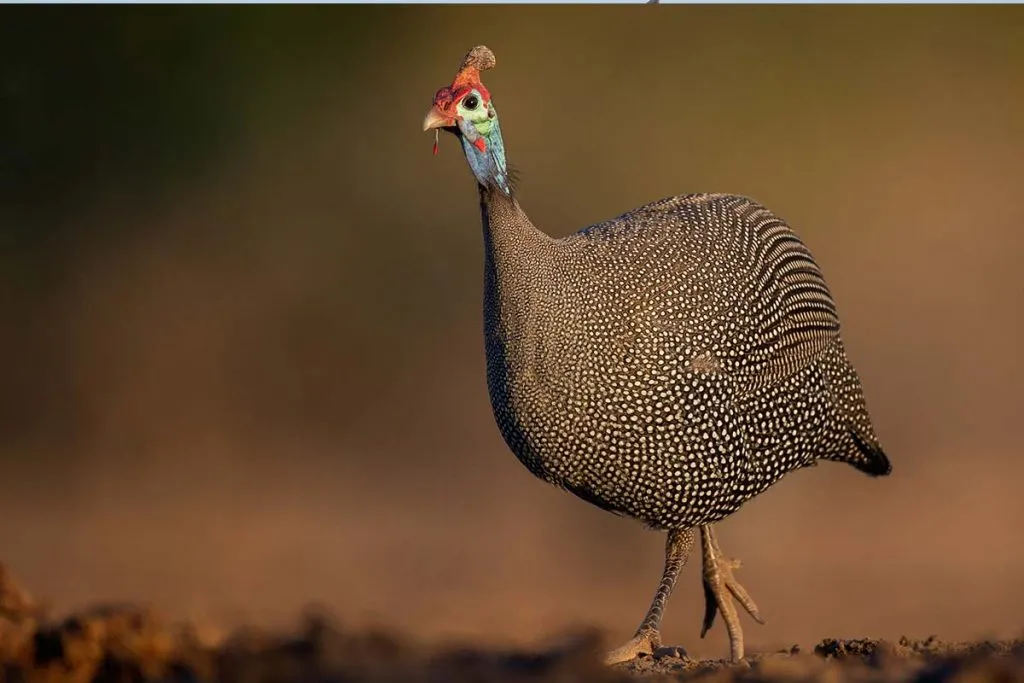
If time permits, we’ll stop in the Kaniyo Pabidi section of the Budongo Forest to search for the rare Puvel’s Illadopsis, the only known East African site for this elusive forest dweller. Here, we may also find other lowland forest specials, such as the Western Crested Guineafowl, Spotted Greenbul, African Dwarf Kingfisher, Blue-breasted Kingfisher, Forest Robin, and Yellow-mantled Weaver.
We will then proceed to the guesthouse where we stayed two nights ago, enjoying dinner and some well-earned relaxation after a busy and rewarding birding day.
Overnight:
Meal Plan: Breakfast, Lunch & Dinner
Day 7: Masindi to Kibale National Park
Chimpanzees in Kibale Forest
We start the day with a hearty breakfast before setting off on a picturesque drive south to the Albertine Rift area.
This 5 to 6-hour journey is sure to pass quickly, thanks to the breathtaking landscapes along the way. Around lunchtime, we will arrive in Fort Portal, a charming town in one of the most scenic regions of Uganda.
Although the fort that gave Fort Portal its name no longer stands, the town remains a highlight of any Uganda birding tour due to its natural beauty and unique surroundings.
We will enjoy lunch at one of best restaurants in town. After lunch we’ll transfer to Kibale Forest National Park, about an hour to the south.
Overnight: Kibale Forest Lodge or Similar
Meal Plan: Breakfast, Lunch & Dinner
Days 8– 9: Kibale National Park/Fort Portal – the Chimpanzee/Green-breasted Pitta combo
Green-breasted pitta
During this part of your Uganda birding tour, our primary focus will be locating the elusive Green-breasted Pitta, a remarkable bird best spotted at dawn.
Its unique display call helps us pinpoint its whereabouts—otherwise, despite its jewel-like colors, finding it amidst the forest floor can feel like searching for a needle in a haystack.
As we navigate the forest in search of this avian gem, the atmospheric and somewhat eerie sounds of large chimpanzee troops echo through the trees, adding a thrilling element to this unforgettable segment of your Uganda birding tour.
There is also the chance for optionally trekking for Chimpanzees. We should also find some other primates such as Uganda Red Colobus, Blue monkeys, Black-and-white Colobus, Red-tailed Monkey, and other monkeys (not to mention the well-built Olive Baboon, which wanders around in massive groups, usually on the ground).
We also have a lot of good birds to see, which might include Narrow-tailed Starling, Black-billed Turaco, White-headed Wood Hoopoe, and Chestnut Wattle-eye.
Overnight: Kibale Forest Lodge or Similar
Meal Plan: Breakfast, Lunch & Dinner
Day 10: Kibale to Semuliki National Park and back to Fort Portal
White-thighed hornbill
After an early breakfast, we’ll grab our binoculars and head west to a very special park. We are going to have a full birding day in Semuliki National Park. It is a 2 hour drive with incredibly scenic views along the way.
The Semuliki National Park is a highlight of any Uganda birding tour, offering a unique extension of the West African jungle into East Africa. This 219 km² forest park is contiguous with the DR Congo’s great Ituri Forest, creating a rare habitat for Guinea-Congo biome species found nowhere else in East Africa.
Renowned for its incredible biodiversity, the park boasts over 440 bird species, including 50 species exclusive to this region. The Semuliki National Park is also home to primordial hot springs, adding a mystical charm as we navigate its trail networks in search of avian wonders.
On this part of the Uganda birding tour, we’ll target Guinea-Congo biome specialties, including the Congo Serpent Eagle, Oberländer’s Ground Thrush, and the elusive Nkulengu Rail.
Other treasures include the Spot-breasted Ibis, Long-tailed Hawk, and forest gems like the Lyre-tailed Honeyguide, Crested Malimbe, and African Piculet.
Forest-edge birding reveals even more species, including the striking Red-rumped Tinkerbird, Blue-billed Malimbe, and the endemic Pale-fronted Nigrita. For bird enthusiasts on the Uganda birding tour, the diversity of Semuliki’s birdlife ensures an unforgettable experience.
After our amazing day in this very special patch of forest we will drive back to our hotel in Fort Portal for relaxation, dinner and overnight.
Day 11: Fort Portal to Queen Elizabeth National Park
African fish eagle
We will have a leisurely breakfast today, before we depart and head south to Queen Elizabeth National Park. It is a drive of approximately 2 to 3 hours, depending on how many stops we make along the way to spot some more birds.
We’ll arrive at our lodge in time for lunch. Afterward, we will embark on a short game drive, immersing ourselves in the wonders of this iconic location as part of the Uganda birding tour.
Officially opened by England’s queen in 1954, this park is renowned for its tree-climbing lions and boasts an incredible diversity of 100 mammal species and 612 bird species.
A major highlight of this leg of the Uganda birding tour is the opportunity to explore the Kazinga Channel by boat. Here, you’ll encounter crocodiles, hippos, and a wide array of waterbirds.
Other wildlife sightings typically include warthogs, buffalo, the graceful Uganda Kob, and many other fascinating mammals. The Forest Hog, however, often steals the spotlight with its impressive presence.
Day 12: Queen to Bwindi Impenetrable National Park
Mountain Gorilla
After an early breakfast, we will depart Queen Elizabeth National Park and head even further south as part of the Uganda birding tour.
Before leaving the park, we will embark on a thrilling game drive through the Ishasha sector in the Rukungiri District, searching for the renowned tree-climbing Lions.
These majestic lions, known for their unique black-maned males, are often spotted resting on fig tree branches while scanning the open plains for prey.
We will enjoy lunch somewhere along the route as we continue to Africa’s richest forest for primates and birds, Bwindi Impenetrable National Park, and stay in its high-altitude Sector of Ruhija.
Overnight: Gorilla Forest Camp or Similar
Meal Plan: Breakfast, Lunch & Dinner
Days 13: Ruhija, Bwindi Impenetrable Forest
We’ll start birding the forest-covered hills of Ruhija during this remarkable Uganda birding tour, searching for the striking Black Bee-eater and the elusive Grauer’s Swamp Warbler, which can be found in the lower reaches of Mubwindi Swamp. This warbler can often be spotted at a roadside site, helping to shorten the walk. Along the way, the Mountain Yellow Warbler might also be seen, offering an interesting comparison with the Papyrus Yellow Warbler.
The walk down to Mubwindi Swamp cannot be skipped, as it provides an opportunity to encounter the sought-after Grauer’s Broadbill, one of Africa’s most desired species. The beautiful and localized Yellow-eyed Black Flycatcher also inhabits the bottom reaches of the forest, adding to the excitement.
This part of the Uganda birding tour is considered one of the best days for birdwatching, with participants often spotting a constant stream of life birds, especially Albertine Rift endemics. Highlights include Banded Prinia, Mountain Masked Apalis, Rwenzori Apalis, Chestnut-throated Apalis, the peculiar Grey-throated Barbet, Red-faced Woodland Warbler, and several vivid crimsonwings, showcasing the colorful forest finches of the region.
Other exciting species you may encounter on this Uganda birding tour are the Olive-breasted Greenbul, the exceptionally long-tailed Blue-headed Sunbird, the radiant Regal Sunbird, and restricted-range birds like the Stripe-breasted Tit and Rwenzori Batis. Additionally, more widespread yet equally spectacular birds such as the magnificent Bar-tailed Trogon and the Rwenzori Hill Babbler further elevate the experience.
Overnight: Gorilla Forest Camp or Similar
Meal Plan: Breakfast, Lunch & Dinner
Days 14-15: Buhoma, Bwindi Forest: birds and optional gorilla trekking
As part of your Uganda birding tour, we’ll explore the area between Ruhija’s high-altitude forests and Buhoma’s lower-elevation sections, with an exciting birding stop at “The Neck.”
This location offers the chance to spot species unique to this region, such as the stunning Black Bee-eater, Chubb’s Cisticola, and Cinnamon-chested Bee-eater, which are quite easy to find.
During this stop on the Uganda birding tour, we may also encounter the charismatic Black-and-white Shrike-flycatcher, recognizable by its striking crest and contrasting plumage. Additionally, Mackinnon’s Shrike, Brown-throated Wattle-eye, and Bronzy Sunbird could make an appearance, along with the African Grey Woodpecker and the soaring Augur Buzzard.
Delving into the deep forest, our search will focus on localized endemics, such as Grauer’s Warbler, Bar-tailed Trogon, Petit’s Cuckooshrike, Lühder’s Bushshrike, Brown-capped Weaver, and Red-throated Alethe. These avian treasures are an integral part of the Uganda birding tour experience, showcasing the area’s biodiversity.
We’ll also seek out slightly more widespread species, like the elusive White-spotted Flufftail, Red-shouldered Cuckooshrike, Olive-bellied Sunbird, and vibrant forest barbets such as the impressive Yellow-billed Barbet. The dazzling African Emerald Cuckoo and the striking Black-billed Turaco add even more excitement to this journey.
The Uganda birding tour offers equally rewarding forest-edge birding opportunities, perfect for photography. Here, specials like Dusky Long-tailed Cuckoo, Great Blue and Ross’s Turaco, Black-necked Weaver, Northern Double-collared Sunbird, and Grey-headed Nigrita can be found. Over two full days, we’ll immerse ourselves in birding across forest trails, edges, and nearby agricultural zones.
At Buhoma itself, there is the chance for one day optionally gorilla trekking.
Overnight: Haven Lodge Buhoma or Similar
Meal Plan: Breakfast, Lunch & Dinner
Day 16: Bwindi to Lake Mburo National Park
After an early breakfast, we will head northeast towards our final park of this fantastic 17 Days Uganda birding tour, Lake Mburo National Park. The drive to the northeast will take about 5 hours, but we will still look for birds, and make rest stops as needed.
We will enter the Lake Mburo National Park through the Sanga Gate. Just outside the park we will come across some of the world-famous long-horned Ankole cattle of the Bahima people that live in the area – always a highlight and worthy of a few photos.
We eventually arrive at Lake Mburo National Park (where we’ll spend two nights), which breaks the journey between Entebbe and Bwindi. Lake Mburo is home to over 300 bird species and 68 species of mammals.
We will reach our lodge and check in, followed by a superb late lunch. We will end our day with an afternoon/early evening game drive in the park.
Overnight: Rwakobo Rock or Similar
Meal Plan: Breakfast, Lunch & Dinner
Day 17: Lake Mburo to Entebbe and Departure
Today, as part of your Uganda birding tour, we will embark on an exciting boat cruise on the lake, one of the best spots to find the elusive African Finfoot.
During this journey, we may also spot overwintering species like the Malagasy Pond Heron and the vibrant Papyrus Gonolek, along with an impressive variety of kingfishers.
These include the beautiful Malachite Kingfisher, the majestic Giant Kingfisher, the common yet striking Pied Kingfisher, and the rare and exquisite Shining-blue Kingfisher.
The park provides incredible opportunities to encounter arid-country birds, such as the Blue-naped Mousebird and the unique Bare-faced Go-away-bird.
Birders will be thrilled to seek out the highly localized Red-faced Barbet, considered “thin-on-the-ground,” as well as the widespread yet captivating Spot-flanked Barbet.
This day promises memorable sightings and adds immense value to your Uganda birding tour, leaving you with an unforgettable birding experience.
Nubian Woodpecker is often heard before it is seen. Like in most arid-habitat parks in East Africa a large bird list can be accumulated very fast, and the above species are just a few of the many goodies we expect to find.
This is the only place where we’re likely to see Plains Zebra during our Uganda birding tour, and there are a lot of other mammals as well, such as Hippopotamus, African Buffalo, Defassa Waterbuck, Bohor Reedbuck, Topi, and Common Eland.
After the boat cruise we will embark on the transfer to Entebbe, about 4 to 5 hours away.
We will make a photo stop at the Ugandan Equator crossing at Kayabwe, where you can stand with one leg in the Northern hemisphere while the other remains in the Southern! It is also an impressive site for buying souvenirs to take back home as a memento of this incredible 17 days Uganda birding tour.
Transfer From Kampala Or Entebbe
You will set off early in the morning at around 6.00 am. Your drive from Kampala or Entebbe to Mabamba Swamp will take approximately 1 hour and 30 minutes.
Boat Tour In Search Of Shoebills
On reaching the swamp, you’ll embark on birding adventure in search of a very special bird. The birding tour will be done on wooden engine powered fishing boat.
You will be accompanied by a local birding guide who has expertise in paddling through the narrow water channels surrounded by dense swamp vegetation.
The prime target is the legendary Shoebill (Balaeniceps rex). This scarily prehistoric-looking Uganda bird captures the imagination because it really does look like the dinosaurs.
The shoebill is huge – measuring up to 1.5 metres tall and with a wingspan of up to 2.5 metres. It’s named after its massive bill which some say looks like a shoe and which can grow up to 24cm long and 20cm wide.
Although they are mostly silent, they use this huge bill to make loud, scary clattering sounds to communicate with other birds.
The shoebill (also known as the shoebill stork) is a solitary bird, living alone in marshy swap areas where it can sit still, waiting for fish, frogs and water snakes, for long periods without moving. This charismatic species, the only representative of its family, is certainly amongst the most highly prized birds in the world!
Other water birds abound and you should find several species of herons, egrets and waterfowl, the ever-present African Fish Eagle, Blue-breasted Bee-eater, African Marsh Harrier, Purple Swamphen, Long-toed Lapwing, African and the tricky Lesser Jacanas, Malachite Kingfisher, and African Pygmy Goose.
The papyrus holds the endearing Swamp Flycatcher, Blue-headed Coucal, Greater and White-winged Swamp Warblers, Grey-capped Warbler, the indescribable Papyrus Gonolek, and the nomadic and unpredictable Weyn’s Weaver. If you are exceptionally fortunate, you may also see the rare Sitatunga, a shy swamp-dwelling antelope with splayed hooves.
Birding the Surrounding
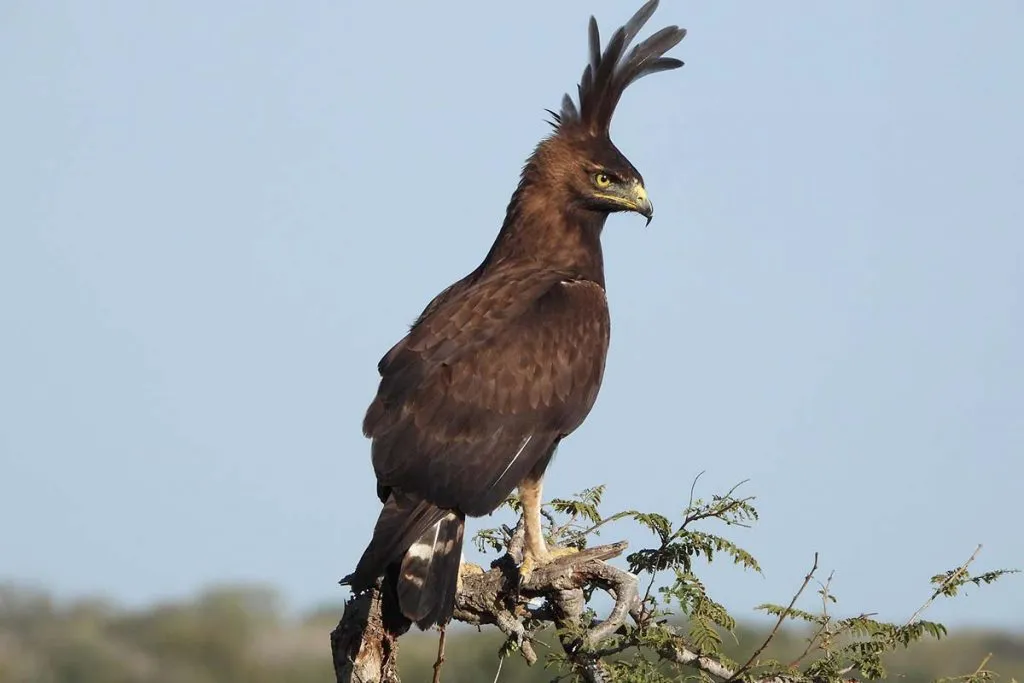
Thereafter, you will bird the surrounding grasslands, papyrus swamps and farm bush. Here you might expect to see the funky-looking Long-crested Eagle perched atop telephone poles, Wahlberg’s Eagle;
Palm-nut Vulture, hovering Black-winged Kite, African Harrier-Hawk, Lizard Buzzard, the truly impressive Great Blue Turaco, raucous Eastern Plantain-eater, seemingly awkward Black-and-white Casqued Hornbill and floppy-flighted Crowned and African Pied Hornbills, dazzling-blue Woodland Kingfisher;
Broad-billed Roller, Brown throated Wattle-eye, Angola and the endangered Blue Swallows, Splendid and Ruppell’s Starlings, African Thrush, Northern Black Flycatcher, Sooty Chat, gregarious Grey-backed Fiscal, Scarlet-chested, Superb and Red-chested Sunbirds as well as the comical Pin-tailed Whydah. Should you have missed it in the swamps, we have another chance to find the scare and nomadic Weyn’s Weaver.
Lunch at Nkima Forest Lodge
After the birding adventure, you will enjoy lunch at the nearby Nkima Forest Lodge. The lodge is named in Luganda after the many red-tailed monkeys which leap about in the trees. After lunch, you’ll return to Entebbe or Kampala for your onward travels.