Sixty Minutes That Will Stay With You for the Rest of Your Life
If you have been researching gorilla trekking in Uganda or Rwanda, you have probably come across a number that seems surprisingly small: 8 visitors per day per gorilla family. This is perhaps the single most important of all gorilla trekking rules — and understanding it changes how you plan your entire trip. Eight. Not eighty, not eight hundred — eight people, per gorilla group, per day.
For many travellers, this is the moment the trip starts to feel complicated. Why so few? Does that mean permits are almost impossible to get? And what happens if I cannot get one for my dates?
This guide answers all of those questions — and explains why the eight-person daily limit is one of the most important conservation decisions ever made in African wildlife tourism. Once you understand it fully, the permit scarcity stops feeling like an inconvenience and starts feeling like exactly the right thing.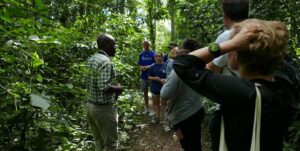
What Is the 8 Visitors Per Day Gorilla Trekking Rule?
The 8 visitors per day gorilla trekking rule is a strict, non-negotiable regulation enforced by wildlife authorities in both Uganda and Rwanda. It means that for every single habituated gorilla family in any national park, a maximum of eight people may visit that family on any given day.
In Uganda, this rule is set and enforced by the Uganda Wildlife Authority (UWA), which governs gorilla trekking in Bwindi Impenetrable National Park and Mgahinga Gorilla National Park. In Rwanda, the same limit applies in Volcanoes National Park under the authority of the Rwanda Development Board (RDB).
The rule applies regardless of who you are, who your operator is, or how much you are willing to pay. There are no exceptions, no upgrades and no workarounds. Eight is the number — and it has been since systematic gorilla tourism began.
Each visitor must hold a valid gorilla trekking permit for a specific gorilla family on a specific date. Since only eight permits are issued per family per day, those eight slots represent the absolute daily limit for human contact with that gorilla group. Once sold, they are gone.
Why Are Only 8 Visitors Per Day Allowed for Gorilla Trekking?
The 8 visitors per day gorilla trekking limit exists for three deeply interconnected reasons: disease prevention, behavioural protection and management effectiveness. Each one is serious enough to justify the rule on its own. Together, they make it one of the most scientifically grounded regulations in wildlife tourism.
Reason 1: Mountain Gorillas Are Dangerously Vulnerable to Human Disease
This is the most urgent reason behind the 8 visitors per day gorilla trekking rule, and it cannot be overstated.
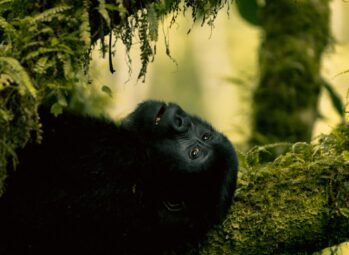
Mountain gorillas share approximately 98% of human DNA. That extraordinary genetic closeness means they are highly susceptible to the diseases we carry — including illnesses that are trivial for a healthy adult human but potentially fatal for a gorilla. A common cold, a seasonal flu, a mild respiratory infection — any of these can spread through an entire gorilla family and cause serious illness or death.
Mountain gorillas have no natural immunity to most human pathogens because they evolved in isolation, with minimal historical exposure to humans. Their immune systems simply have not developed the defences that human populations have built up over millennia of contact with these diseases.
This is why every single gorilla trekking rule — the one-hour time limit, the minimum distance requirement (10 metres in Uganda, 7 metres in Rwanda), the mandatory health screening at the trailhead, the rule that anyone with cold or flu symptoms must stay behind — all traces back to the same fundamental concern: keeping human disease away from mountain gorillas.
Limiting group size to 8 visitors per day directly reduces the volume of potential disease exposure each gorilla family faces. Eight people generate far less respiratory aerosol, make far less physical contact with vegetation and introduce far fewer potential pathogens into the gorilla's environment than a group of twenty or thirty would. Every additional person is an additional disease risk — and with fewer than 1,100 mountain gorillas remaining on the planet, every individual animal matters enormously to the survival of the species.
Reason 2: Larger Groups Cause Stress and Behavioural Disruption
Even setting disease aside, large groups of human visitors cause measurable stress to gorilla families — and that stress has real consequences.
Mountain gorillas are highly intelligent, socially complex animals with strong family bonds and sensitive emotional lives. Their behaviour is finely tuned to their environment. When human presence becomes excessive — too many people, too much noise, too much movement — gorillas respond. They may abandon their normal feeding areas, disrupt their social interactions, display signs of agitation or move away from areas they would otherwise use. Over time, repeated disturbance of this kind can alter foraging patterns, affect reproduction and erode the naturalness of the habituated families' behaviour.
This strict group size limit keeps human presence small enough that habituated gorilla families can largely continue their normal lives during the visit. With a well-managed group of eight people moving quietly through the forest under expert guidance, gorillas typically remain calm — feeding, grooming, playing and socialising as they would without visitors present. That is the experience travellers travel thousands of miles to see, and it is only possible because the group size is kept this small.
A larger group would also be louder, harder to control and more spatially spread out in dense forest — making it far more difficult for guides and rangers to maintain the safety distances and behavioural protocols that the encounter requires.
Reason 3: Small Groups Are Safer and More Manageable on the Trail
The eight-person group cap also has a direct practical safety dimension — for the visitors themselves.
Gorilla trekking takes place in genuinely challenging terrain. In Uganda's Bwindi Impenetrable Forest, trails climb steep volcanic slopes through dense undergrowth, cross streams and navigate some of the most complex forest environments in Africa. Group movement must be controlled, deliberate and responsive to changing conditions — both on the trail and once the gorillas are found.
A group of eight people, led by a certified guide and accompanied by armed park rangers, can be managed safely and efficiently. Everyone can hear the guide's instructions. Everyone can be positioned correctly around the gorilla family to maintain proper viewing distances. Every person can be accounted for and assisted if terrain becomes difficult.
Scale that group up significantly and these functions become exponentially harder. Rangers cannot effectively monitor thirty people in dense forest. Guides cannot ensure everyone maintains the correct distance from the gorillas. The risk of someone stumbling into a gorilla's personal space — triggering a defensive response — increases with every additional person in the group.
The 8 visitors per day gorilla trekking rule is as much a safety protocol for the humans as it is a protection for the animals.
How the 8 Visitors Per Day Rule Shapes Permit Availability
Understanding this rule immediately explains why gorilla permits are scarce and why they sell out so far in advance.
Uganda's Permit Capacity
Gorilla trekking in Uganda takes place primarily in Bwindi Impenetrable National Park, which has over 22 habituated gorilla families approved for tourism across its four sectors — Buhoma, Ruhija, Rushaga and Nkuringo. Mgahinga Gorilla National Park has two additional habituated families.
With 8 permits per family per day, Uganda can issue roughly 192 to 200 gorilla trekking permits daily across both parks combined. That sounds like a large number — and by gorilla tourism standards, it is. Uganda has the largest daily gorilla trekking permit capacity of any country in the world, which is one of the strongest arguments for choosing gorilla trekking in Uganda over other destinations.
UWA also issues Gorilla Habituation Experience (GHE) permits — a separate category that allows only 4 visitors per day (not 8) to spend up to four hours alongside a gorilla family that is still in the habituation process. The GHE costs USD 1,500 and represents one of the most immersive wildlife encounters available anywhere in Africa.
Rwanda's Permit Capacity
Gorilla trekking in Rwanda takes place in Volcanoes National Park, which is home to 12 habituated gorilla families available for tourism. At 8 permits per family per day, Rwanda can issue a maximum of 96 gorilla trekking permits daily — significantly fewer than Uganda.
This lower capacity, combined with Rwanda's global reputation as a premium gorilla trekking destination and the shorter drive from Kigali, means demand for Rwanda permits is intense. During peak season, Rwanda gorilla permits can sell out six months or more in advance.
What This Means for Your Booking
The mathematics of eight permits per family per day have a direct implication for how you plan your trip:
Book early — especially for peak season. The months of June through September and December through February are the busiest gorilla trekking seasons in both Uganda and Rwanda, coinciding with the drier weather that makes trekking conditions more comfortable. During these months, gorilla permits regularly sell out three to six months in advance for both countries.
Work with a registered local operator. Tour operators who work regularly with UWA and RDB know which gorilla families have availability, how to navigate the booking system efficiently and how to secure permits even during high-demand periods. Trying to book independently without this knowledge often leads to missed dates and wasted time.
Be flexible with your gorilla family. In Uganda especially, different gorilla families are located in different sectors of Bwindi — some requiring shorter treks, others significantly longer. A flexible approach to which family you visit dramatically increases your chances of securing a permit on your preferred date.
Consider the low season. Gorilla trekking in Uganda during April, May and November is quieter, permits are easier to secure and UWA currently offers gorilla trekking permits at USD 600 (discounted from the standard USD 800) during these months. Accommodation rates also drop significantly. The trekking experience is equally extraordinary — and the forest, freshly washed by rain, is at its most lush and alive.
Gorilla Trekking Rules: The Complete Framework for 2026
The 8 visitors per day gorilla trekking rule is the most well-known of all gorilla trekking rules — but it sits within a comprehensive framework of regulations designed to protect both gorillas and visitors. Understanding the full set of gorilla trekking rules before you travel means no surprises on the morning of your trek. Here is the complete picture for 2026.
Group Size and Permit Rules
- Maximum 8 visitors per gorilla family per day — enforced without exception in Uganda and Rwanda
- Gorilla Habituation Experience in Uganda: maximum 4 visitors per day
- Permits are non-transferable, assigned to a specific person, family and date
- All foreign non-residents in Uganda must book permits through a licensed tour operator
Age and Health Rules
- Minimum age for gorilla trekking: 15 years in Uganda and Rwanda (strictly enforced)
- Anyone showing symptoms of cold, flu, respiratory infection, diarrhoea or any contagious condition must not trek — no exceptions, and in most cases no refund for late cancellations
- Visitors are health-screened at the morning briefing before entering the forest
- COVID-19 vaccination cards are currently required alongside your permit and ID in Uganda
Distance and Behaviour Rules
- Minimum distance from gorillas: 10 metres in Uganda, 7 metres in Rwanda
- If gorillas approach closer on their own — which they sometimes do — step back calmly to re-establish the gap; your guide will direct you
- No flash photography under any circumstances — flash startles gorillas and is strictly prohibited
- Speak quietly and move slowly at all times near the gorilla family
- No eating, drinking or smoking during the visit with the gorillas
- No leaving litter in the forest — carry everything you bring in back out
- Coughing or sneezing near gorillas: turn away, cover your mouth and nose immediately
Time Rules
- Maximum time with the gorilla family: one hour, strictly enforced
- The one-hour clock starts when you make first contact with the gorillas — not when you enter the forest
- No extensions are granted under any circumstances
Photography Rules
- Photography is permitted and encouraged — without flash
- Drones are strictly prohibited in all gorilla national parks in Uganda and Rwanda
- Large tripods are impractical in dense forest and generally discouraged
How the 8 Visitors Per Day Rule Has Contributed to Gorilla Conservation
It is worth stepping back to appreciate what the eight-person daily limit — alongside the broader framework of regulated gorilla tourism — has achieved for mountain gorilla conservation.
In the 1980s, mountain gorilla conservation was in crisis. The population had collapsed to fewer than 300 individuals. Poaching, habitat destruction and human encroachment had pushed the species to the very edge of extinction. Scientists were openly discussing the possibility that mountain gorillas would not survive the twentieth century.
Tourism revenue dedicated to mountain gorilla conservation has funded anti-poaching patrols, community development and habitat protection, and in Uganda, gorilla permits directly support UWA and local communities, creating jobs for guides, porters and rangers. This model has driven the mountain gorilla population from fewer than 300 in the 1980s to over 1,000 today.
The 8 visitors per day gorilla trekking rule was central to that recovery. By keeping human contact carefully limited and medically supervised, wildlife managers prevented the disease outbreaks that could have devastated habituated gorilla families during the decades when the population was most fragile. By making each gorilla encounter genuinely rare and exclusive, the rule created the permit revenue that funded conservation — because scarcity made the experience worth paying significantly for.
In both Uganda and Rwanda, a percentage of permit revenue — 20% in Uganda — is shared with local communities, funding schools, health clinics and clean water projects, turning former poachers into protectors by giving them a financial stake in the gorillas' survival.
This strict daily limit is not bureaucratic conservatism. It is one of the pillars of one of the most successful wildlife recovery programmes in history.
Gorilla Trekking in Uganda vs Rwanda Under the 8 Visitors Per Day Rule
Both countries enforce the same limit — but the practical experience of the rule differs meaningfully between the two destinations.
Gorilla trekking in Uganda gives you access to the largest number of habituated gorilla families of any single destination in the world. With 22 habituated families in Bwindi and 2 in Mgahinga, Uganda's total daily permit capacity of roughly 192 to 200 slots means you have a significantly better chance of securing your preferred dates — particularly when booking through an experienced local operator. The terrain in Bwindi is steeper and more physically demanding than Rwanda, which many experienced trekkers consider a feature rather than a drawback. The experience of pushing through genuinely wild, ancient rainforest to find your gorilla family feels earned in a way that resonates deeply.
Gorilla trekking in Rwanda is the premium choice for short-itinerary travellers. Gorilla trekking in Rwanda offers fewer habituated families and a lower daily permit capacity (96 slots across 12 families in Volcanoes National Park), which means permits are harder to secure and the premium positioning of Rwanda's gorilla trekking product is more keenly felt. The trek in Volcanoes National Park is generally shorter and less physically demanding than Bwindi — the park sits closer to the forest edge and the slopes, while volcanic and steep in places, are often more accessible. Rwanda's infrastructure advantage — just 2.5 hours from Kigali's international airport versus Uganda's 8 to 10 hour drive from Entebbe — makes it the logical choice for travellers on tighter schedules.
For both destinations, the 8 visitors per day rule means your gorilla encounter will be intimate, quiet and genuinely exclusive. You will not share the forest with crowds. You will have space to watch, absorb and feel what it is like to stand a few metres from a wild silverback in his ancient home. That intimacy is a direct gift of the rule — and it is worth every effort required to secure a permit.
Practical Tips for Getting a Gorilla Trekking Permit Under the 8-Per-Day Limit
Knowing that only 8 visitors per day are allowed per gorilla family, here is how to give yourself the best possible chance of getting the permit you want:
Start planning six months ahead for peak season travel (June–September, December–February). For low season travel (April–May, November), three months is usually sufficient — though earlier is always safer.
Choose gorilla trekking in Uganda if permit availability is a concern. Uganda's larger number of habituated families gives you more options and more flexibility on dates and gorilla family allocation.
Book through a trusted registered operator. Tulambule Uganda Safaris maintains active relationships with UWA and monitors permit availability closely. We secure permits efficiently for our clients, including during high-demand periods when independent booking becomes difficult. Working with a local operator who knows the system is the single most effective thing you can do to protect your permit booking.
Be open to different gorilla families. In Bwindi, different families are located in different sectors of the park and vary in trek duration and difficulty. Being flexible about which family you visit dramatically widens your options and increases your booking success.
Consider the Gorilla Habituation Experience if standard permits are unavailable on your dates. The GHE in Uganda's Bwindi offers four hours with a gorilla family (compared to one), at USD 1,500, with a maximum of only 4 visitors — making it even more exclusive than a standard trek.
Never try to book last-minute during peak season. With only 8 permits per family per day, the arithmetic is unforgiving. Waiting until a few weeks before your travel dates in June or July and expecting availability is almost always a disappointment.
Ready to Book? Let Tulambule Secure Your Gorilla Permit
The 8 visitors per day gorilla trekking rule makes the permit the most important and time-sensitive part of planning your trip. Everything else — accommodation, transport, guides — can be arranged around a confirmed permit. Without one, nothing else matters.
At Tulambule Uganda Safaris, we have been securing gorilla trekking permits and building complete gorilla safari itineraries in Uganda and Rwanda since 2014. We know the permit system, we know Bwindi, and we know how to make sure you get to the forest on the day you have planned for.
Contact us today to check gorilla permit availability for your travel dates and receive a personalised quote for your gorilla trekking safari.
Get in touch here — let us handle the permits, logistics and planning so you can focus on the experience ahead.
3 Days Gorilla and Golden monkeys Tour in Rwanda
Affordable 3-Day Gorilla Trekking Uganda Safari tour
5 Days Uganda Safari Gorillas, Chimps, Wildlife & Culture
10 Days Big 5 Safari in Uganda | gorillas, Chimps,Big Game & Culture
12 Days Uganda Safari, Big Five, Chimps, Gorillas and Culture