Uganda Adventure Safari: Mountain Gorillas, Chimps & White-Water Rafting (Ultimate Guide)
Uganda adventure safari offers mountain gorillas trekking, chimps, white-water rafting, quad biking, bungee jumping, hiking, zip lining & the Source of the Nile experience.
Uganda Adventure Safari offers Mountain Gorillas, Chimps & White-Water Rafting.
Why Uganda is Africa’s Ultimate Adventure Playground
When travelers search for Uganda adventure safaris, most pictures show misty volcanoes and silverback gorillas. That image is accurate – Uganda protects nearly half of the world’s remaining mountain gorillas. But a true Ugandan adventure safari offers far more than wildlife tracking.
Here you can spend your morning white-water rafting on the Nile, your afternoon quad biking through sugarcane fields, and your evening watching chimpanzees nest in Kibale Forest. You can bungee jump 44 meters above raging rapids, hike equatorial snow on the Rwenzori Mountains and zip line through the canopy of Mabira Forest – all in one trip.
And there’s a fact that surprises many first time visitors: the Source of the Nile – the exact spot where the world’s longest river begins its 6,650 km journey to the Mediterranean – lies in Jinja, Uganda. You can stand at that historic landmark, then leap off a bridge right next to it.
This Uganda adventure safari guide covers seven adrenaline activities:
• Mountain gorilla trekking (Bwindi Impenetrable Forest)
• Chimpanzee habituation (Kibale National Park)
• White water rafting (Jinja, Nile River)
• Quad biking (Jinja countryside)
• Bungee jumping (Nile Source Bridge)
• Hiking (Rwenzori Mountains or Sipi Falls)
• Zip lining (Mabira Forest)
You will get practical tips, permit costs, a 10 day sample itinerary, a month by month weather breakdown, and a packing list. By the end, you will understand why no other African destination packs so much adventure into one small country.
The Crown Jewel: Mountain Gorilla Trekking in Bwindi
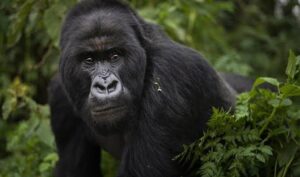 No trip here is complete without tracking mountain gorillas in Bwindi Impenetrable National Park. This UNESCO World Heritage Site shelters an estimated 459 gorillas – roughly half the global population. Trekking Bwindi is the single most requested activity on any Uganda adventure safari.
Most itineraries allocate one full day to gorilla trekking, though some travellers add a second trek for deeper immersion. The trek itself can last anywhere from one to seven hours, depending on where the gorillas built their nests the previous night.
You will hike through dense, mist covered jungle with a trained guide, trackers, and armed guards (for forest elephants, not gorillas). Once you locate the family, you get exactly one hour with them – a strict rule to protect the gorillas from stress and disease.
Best Time for Gorilla Trekking
The best time for gorilla trekking is during the two dry seasons: June to September and December to February. Trails are less muddy, visibility is better, and the hike is physically easier. That said, Bwindi is a rainforest – rain can fall any day. A well prepared traveller always packs a waterproof jacket and gaiters.
The wet seasons (March–May and October–November) have advantages: fewer tourists, lower accommodation prices, and lush green landscapes. However, trekking becomes slippery and more challenging. If you choose a wet season visit, book a lodge close to the trailhead to minimize driving on muddy roads.
Permit Costs & Booking
As of 2026, a standard gorilla permit for foreign non residents costs $800 per person (reduced from $1,500 pre 2024 to boost tourism). East African citizens pay less. Each permit grants you one hour with a specific gorilla family. Permits are limited – only 8 visitors per group per day – so you must book months in advance, especially for dry season dates.
You can book directly through the Uganda Wildlife Authority (UWA) or through a local tour operator. We recommend booking at least three to six months ahead. Last minute permits sometimes appear, but never risk it for gorilla trekking – it is the centrepiece of any Uganda adventure safari.
What to bring:
• Sturdy hiking boots (ankle support essential)
• Gardening gloves (for gripping vegetation)
• Long sleeves and trousers (against stinging nettles)
• Rain jacket and waterproof backpack cover
• Insect repellent and sunscreen
• Plenty of water and high energy snacks
One final tip: hire a porter at the trailhead for $15–20. They carry your daypack and literally pull you up steep slopes. It supports local employment and makes your trek far more enjoyable.
Chimpanzee Habituation in Kibale National Park
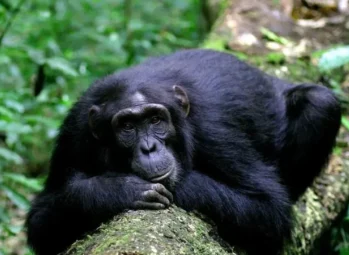
Kibale National Park protects the highest density of primates in Africa – over 1,500 chimpanzees along with red colobus, L'Hoest's monkeys, and grey-cheeked mangabeys.
For anyone on a Uganda adventure safari, Kibale offers two ways to see chimps: the standard half day trek or the full day habituation experience. Both are unforgettable, but the habituation option is truly special.
The standard chimpanzee trekking permit costs $250 per person (2026 rates). You join a guided group, hike into the forest, and spend one hour with a semi habituated chimp community.
This works well for travellers on a tight schedule. However, the habituation experience ($300) lets you spend an entire day – up to eight hours – with a chimp group that is still being accustomed to human presence. You watch them wake up, feed, groom, mate, fight, and build evening nests.
Researchers and trackers accompany you, explaining individual personalities and social dynamics. For a serious Uganda adventure safari, this is the gold standard.
Kibale is located near the town of Fort Portal, about a five hour drive from Kampala. Most itineraries combine Kibale with Queen Elizabeth National Park or Bwindi.
The dry seasons (June–September, December–February) offer easier hiking, but the forest is beautiful year round. Bring waterproof boots, long pants, and a camera with good low light capability – chimps move fast under the canopy.
Key tips for chimp habituation:
• Start early (depart lodge by 6:00 AM)
• Wear neutral colors (brown, green, khaki)
• Keep at least 10 meters from the chimps
• Do not eat near them (they will steal your food)
Adding chimpanzee habituation to your trip doubles your primate encounters without needing an extra travel day.
Many travelers say the chimps are more active and entertaining than gorillas – constant motion, loud pant hoot calls, and dramatic branch swinging displays. Kibale delivers that show daily.
White-Water Rafting on the Nile & The Source of the Nile.
Jinja, Uganda, is the adrenaline capital of East Africa. Here, the Nile River crashes through a series of Grade 3 to Grade 5 rapids just downstream from its source. For any Uganda adventure safari, a day of white-water rafting on the Nile is non negotiable.
Operators like Nile River Explorers and Adrift offer full day trips covering 25 kilometres of continuous action. You will paddle through rapids with names like “The Bad Place,” “Overtime,” and “The Nile Special” – the latter being a Grade 5 monster that flips most rafts.
Safety is taken seriously. Each raft carries a trained guide, and kayakers follow the group to rescue anyone who goes overboard. You do not need previous rafting experience, but you must be able to swim. The minimum age is usually 16, though some operators allow younger participants on tamer sections.
A full-day rafting trip costs $150–180 per person including lunch, equipment, and return transport from Jinja town.After surviving the rapids, you float through calm sections where local children wave from the banks and kingfishers dive for fish.
Most Uganda adventure safari travelers describe this as the most fun they have ever had with their clothes on. The combination of raw nature, genuine risk, and stunning scenery is hard to beat anywhere in the world.
The Source of the Nile – Where the World’s Longest River Begins
Less than 10 minutes from the rafting put in point lies a small, unassuming spot: the Source of the Nile. Water bubbles up from underground springs, forming the Victoria Nile that then flows north to Lake Kyoga, Lake Albert, and eventually to the Mediterranean. Standing here connects you to history, geography, and adventure all at once.
You can visit the Source by taking a short boat trip from Jinja. Local guides explain how Speke and Burton explored the region, and you can even dip your hand into the exact point where the Nile begins. Combine this with bungee jumping from the nearby Source Bridge (coming in Step 6) for a full morning of Nile themed thrills.
Practical info for the Source:
• Boat tours cost $20–30 per person
• Best visited early morning or late afternoon (less heat)
• Combine with a visit to the nearby Itanda Falls for photography
Adding the Source of the Nile to your rafting day makes for a perfect Jinja itinerary. No other adventure destination offers this unique blend of extreme sport and geographical pilgrimage.
Quad Biking Through Jinja’s Countryside
After conquering the Nile’s rapids, stay in Jinja for another land based thrill: quad biking (ATV riding) through rural villages, sugarcane plantations, and red dirt tracks. This activity fits perfectly into any Uganda adventure safari because it requires no special skills – just a sense of adventure and a willingness to get dusty.
Several operators near Jinja offer guided quad biking tours, including Nile River Explorers and Quad Adventures Uganda. Tours last between one and three hours, with prices ranging from $80 to $150 depending on duration and group size.
You ride a semi automatic quad (no gear shifting needed) behind a local guide who knows the best trails. The terrain varies from smooth farm tracks to rocky descents and shallow river crossings. Helmets, gloves, and brief training are always included.
What makes quad biking special on a Uganda adventure safari is the cultural immersion. You will pass through authentic villages where children run out to wave, women pound millet outside their homes, and goats scatter in every direction. Guides stop at viewpoints overlooking the Nile and explain local farming practices.
Unlike a traditional wildlife safari where you stay inside a vehicle, quad biking puts you right in the middle of everyday Ugandan life.
Tips for quad biking in Jinja:
• Wear closed toe shoes and long pants
• Bring a bandana or buff (dust is inevitable)
• Apply sunscreen and insect repellent before riding
• Book morning trips to avoid afternoon heat
Most operators also offer sunset quad biking, which adds golden light over the Nile valley. For travellers short on time, combine quad biking with bungee jumping or zip lining on the same day. Jinja is compact enough to pack multiple activities into 24 hours – a huge advantage for any itinerary.
Quad biking is suitable for ages 16 and up, though some operators allow younger passengers on the back of a guide’s quad. No driver’s license is required. The quads are automatic and easy to handle even for first time riders. Add this to your trip and you will leave Jinja with mud spattered clothes and a huge smile.
Bungee Jumping from the Nile Source Bridge
Just a few hundred meters from the Source of the Nile stands the Nile Source Bridge – home to East Africa’s most thrilling bungee jump. At 44 meters (144 feet), this jump is not the highest in the world, but the setting is unforgettable. You leap off a bridge that spans the very beginning of the Nile, with rapids churning directly below. For any Uganda adventure safari, this is the ultimate test of nerve.
Operated by Adrift (the same company that runs white-water rafting), the bungee jump costs $50 per person (2026 rates). You can jump solo or tandem with a friend.
The “water touch” option lets you dip your head or hands into the Nile on the rebound – a bragging right few travelers earn. Safety is rigorous: the harness is double checked, the cord is inspected before each jump, and the retrieval boat waits underneath. No prior experience needed, just a willingness to step off a ledge.
Many Uganda adventure safaris combine the bungee with rafting on the same day. You can jump in the morning (when light is best for photos), then raft the rapids in the afternoon. The two activities share the same base location, so logistics are simple. Alternatively, make bungee your Jinja highlight if you are short on time.
What to know before you jump:
• Minimum age 14 (parental consent required under 18)
• Maximum weight 120 kg (265 lbs)
• Wear comfortable, secure clothing (no loose hats or sunglasses)
• Jump video costs an extra $30 – worth every shilling
This jump also supports local conservation. A portion of each fee goes toward protecting the Nile’s riverbanks and cleaning plastic waste from the water. You get an adrenaline rush and a clear conscience.
After you jump, celebrate at the on site bar overlooking the river.
Watch others take the leap while you recover your heartbeat. The atmosphere is electric – part adventure sport, part party. No other African country offers bungee jumping at the Source of the Nile. That alone makes it a must add to your itinerary.
8. Zip Lining in Mabira Forest
Between Jinja and Kampala lies Mabira Forest – a 300 square kilometer tropical rain forest that offers the best zip lining in Uganda. For any Uganda adventure safari, this canopy experience is a refreshing break from driving. You will glide between platforms up to 200 meters long, with monkeys swinging below and butterflies floating past your harness.
Griffin Falls Camp within Mabira Forest runs the main zip line tour. It includes 6 to 8 lines, two suspension bridges, and a final descent next to a beautiful waterfall. The entire experience takes 2–3 hours and costs $60 per person (2026 rates).
No previous experience is needed – guides attach you to each line and control your speed. The forest canopy is dense, so the activity runs even in light rain (though thunderstorms will pause operations).
What makes zip lining special on a Uganda adventure safari is the perspective.
You see the forest from above – colobus monkeys jumping between branches, horn bills taking flight, and the distant sound of the Sezibwa River. Unlike rafting or bungee, zip lining is calm and meditative, yet still thrilling. It is also family friendly: minimum age is 6 (accompanied by an adult), and maximum weight is 120 kg.
Practical tips for zip lining:
• Wear closed toe shoes (no sandals or flip flops)
• Tie back long hair and remove dangling jewelery
• Bring a GoPro or ask the guide to film you
• Combine with a visit to Griffin Falls for swimming afterward
Mabira Forest is a 45 minute drive from Jinja and 1.5 hours from Kampala. Most travelers add zip lining on their transfer day between the capital and Jinja. It breaks up the journey and adds a memorable activity without requiring a full extra day.
Sample 12 Day Flexible Uganda Adventure Safari Itinerary
Below is a 12 day Uganda adventure safari that includes all seven activities plus the Source of the Nile. Day 1 is transfer only – no activity. The itinerary is flexible: you can swap days, add rest days, or remove activities.
Day Activity
1 Arrive Entebbe, transfer to Jinja
2 White-water rafting + Source of the Nile boat trip
3 Quad biking (morning) + bungee jumping (afternoon)
4 Zip lining at Mabira Forest, then transfer to Kibale
5 Chimpanzee habituation (full day)
6 Scenic drive to Bwindi via Queen Elizabeth NP
7 Mountain gorilla trekking
8 Rest day or community visit (or second gorilla trek)
9 Drive to Sipi Falls – afternoon hike to 3 waterfalls
10 Morning abseiling (optional) + coffee tour, then transfer to Jinja
11 Buffer day – choose any activity you loved most
12 Morning souvenir shopping, then drive to Entebbe for departure
Only a handful other Uganda adventure safari offers this much flexibility while covering gorillas, chimps, rafting, quad, bungee, zip, hiking and the Source of the Nile.
Best Time for a Uganda Adventure Safari (Month by Month)
Dry seasons (June–September, December–February) are best for trekking and rafting. Wet seasons (March–May, October–November) mean greener landscapes, fewer tourists, and lower prices, but muddy trails.
Packing List for Your Uganda Adventure Safari
Sturdy hiking boots, waterproof jacket, long trousers, gardening gloves (for gorilla trekking), quick dry clothes, headlamp, insect repellent, sunscreen, swimwear, and a GoPro for rafting and bungee.
You now have everything needed to plan the ultimate Uganda adventure safari – gorillas, chimps, white water rafting, quad biking, bungee jumping, hiking, zip lining, and the Source of the Nile. This small country delivers more adrenaline per square kilometer than anywhere else in Africa.
Ready to stop planning and start packing? Tulambule Uganda Safaris specializes in custom adventure itineraries exactly like the one above.
We handle permits, transport, lodging, and guides – you just show up and jump.
Contact Tulambule Uganda Safaris today to build your personal Uganda adventure safari.
Let’s make it happen.
Rhino Tracking in Kidepo National Park: 7 Best Lodges & Camps to Stay
Tulambule. A philosophy behind authentic, organic, and localised Travel
Uganda Is Eden: 12 Incredible Reasons Why Uganda Mountain Gorillas Live in Eden
The Ultimate Best Uganda Tours Guide: Step-by-Step Safari Planning for 2026–2027
Discover Uganda: A Strategic Call to Boost Domestic Tourism in Uganda 2026 and Beyond