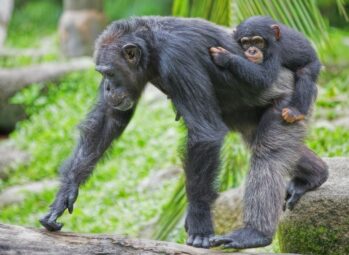
A chimpanzee civil war has broken out in Uganda's Kibale National Park, with 28 deaths recorded since 2018. This safari blog explains what happened, why it matters, and why your trek remains safe.
Headlines That Demand Attention
 If you have been following wildlife news recently, you have likely seen alarming headlines. "Chimpanzee civil war." "Lethal primate conflict." "Once-in-500-years violence."
These stories refer to events unfolding deep inside Kibale National Park, Uganda—one of Africa's most treasured primate destinations and a cornerstone of our safari itineraries.
As a safari company that has guided hundreds of travelers to Kibale, we have received numerous inquiries from concerned clients. Is the park safe? Will treks be affected? Should trips be postponed?
This blog provides a comprehensive, factual update. We draw directly from recent scientific research and our ongoing communication with the Uganda Wildlife Authority.
The chimpanzee civil war is real. It is scientifically unprecedented. But it is also highly localized. And it does not change the fundamental safety or value of visiting Kibale National Park.
Let us explain everything you need to know.
What Is the Chimpanzee Civil War?
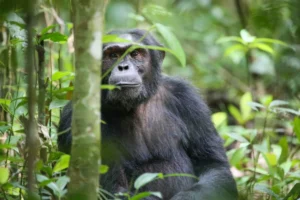
The term "chimpanzee civil war" refers to a permanent, violent split within the Ngogo community of wild chimpanzees in Kibale National Park. Researchers have documented the first clearly observed case of a once-unified chimpanzee group fracturing into two hostile factions, with one side launching sustained, coordinated attacks against the other.
This is not a war between different chimpanzee communities—which has been observed before. This is violence between former groupmates. Individuals who grew up together, groomed together, and cooperated for decades have turned on one another.
Lead researcher Aaron Sandel described the attacks in stark terms: "Biting, pounding the victim with their hands, dragging them, kicking them—mostly adult males, but sometimes adult females participate in the attacks."
Senior researcher John Mitani expressed the emotional difficulty of witnessing this conflict: "It is hard for me to wrap my head around the fact that yesterday's friend turned into today's foe. Males in the two groups grew up with each other, knew each other their entire lives, and cooperated and collaborated with each other."
The Ngogo Community: A Primate Superpower
 To understand the significance of this event, you must understand the Ngogo community.
Located in Kibale National Park, the Ngogo chimpanzees have been studied continuously for decades. At its peak, the community numbered approximately 200 individuals. For context, most wild chimpanzee groups range between 30 and 80 members.
Ngogo was a primate superpower. Its size provided protection against neighboring groups. Its males cooperated effectively. Its females raised infants successfully. For decades, Ngogo was considered a stable, successful chimpanzee society.
That stability made the subsequent collapse all the more shocking to researchers.
A Timeline of Collapse and Violence
The chimpanzee civil war did not erupt overnight. It unfolded over years, with distinct phases that researchers have carefully documented.
2014: The First Cracks
Seven chimpanzees died amid signs of illness. Among the dead were several key adult males who had served as "social bridges" between different subgroups within Ngogo. These individuals had maintained connections across the community. Their deaths weakened the social fabric.
2015: Leadership Change and Polarization
A male chimpanzee named Jackson deposed the existing alpha male, taking control of the group's highest-ranking position. Around the same time, researchers began observing strange behavior.
When members of different subgroups met in the forest, instead of mingling as they always had, one group ran away while the other chased them. A six-week period of avoidance followed.
Two distinct social clusters began to emerge, which researchers labeled the Western faction and the Central faction.
2017: The Disease Outbreak
A severe respiratory illness swept through Kibale, killing 25 chimpanzees, mostly infants. This outbreak proved catastrophic for social cohesion. The dead included the last remaining individuals who still moved between the Western and Central factions.
Once those connectors died, the two groups stopped interacting almost entirely. Later that year, members of one faction attacked and severely injured Jackson, the alpha male of the larger Central cluster.
2018: The Permanent Split
By the end of 2018, researchers confirmed that the Ngogo community had fissioned permanently. The Western and Central factions no longer recognized each other as members of the same community. Females and offspring would not even feed at the same fig tree. Young chimpanzees became visibly nervous just hearing distant calls of mature males from the other faction.
2021 to Present: Lethal Violence
Beginning in 2018 but escalating significantly in 2021, the Western faction launched sustained, coordinated attacks against the Central faction. These raids targeted adult males and, increasingly, infants.
The violence has been entirely one-sided. The Western faction has initiated every attack. Every casualty has come from the Central faction.
The Death Toll: Updated Numbers
Recent scientific observations documented 24 confirmed deaths: 7 adult males and 17 infants.
However, the violence has continued. According to updated reporting, killings have occurred in 2025 and 2026, raising the confirmed death toll to 28. This includes one additional adult male, one adolescent male, and two more infants.
Many other chimpanzees have disappeared without clear cause, their bodies never recovered. Researchers believe these individuals were likely also killed, suggesting the true toll is higher than confirmed numbers.
Senior researcher Mitani described the brutality of the attacks: "They just beat and jump on the victim relentlessly. I've witnessed cases that take less than 15 minutes... I've always thought that mature victims die due to internal injuries."
For infants, the violence is even more direct: "A single mature chimpanzee can snatch an infant from its mother and kill it quickly with a few bites or via blunt force trauma. The latter might include slamming it to the ground."
Why Did This Happen? Researchers' Theories
Scientists do not have a single explanation for the chimpanzee civil war. Instead, they point to a convergence of factors that destabilized the Ngogo community.
Unusually Large Group Size
 The Ngogo community was simply too big. At over 200 members, it exceeded the normal range for wild chimpanzee groups. This large size intensified competition for food and mating opportunities.
Mitani offered a poignant summary: "Perhaps they became a victim of their own success when the group grew to an intolerable large size."
Loss of Social Bridges
The 2014 deaths of seven chimpanzees—likely from disease—removed key individuals who had maintained connections across subgroups. Without these "bridges," the community began to fragment.
Leadership Instability
Jackson's takeover of the alpha position coincided with the initial polarization in 2015. Leadership changes always create winners and losers. In a community already showing signs of strain, this change accelerated the divide.
The 2017 Disease Outbreak
The respiratory illness that killed 25 chimpanzees was likely the final blow. It eliminated the last individuals who maintained cross-faction relationships. After 2017, there was no one left who knew both sides as friends.
Challenging Old Assumptions
One of the most striking findings is that abundant resources did not prevent conflict. Some theorists had assumed that plentiful food would lead to more tolerant relationships between groups. The Ngogo split debunks this idea. Despite abundant resources supporting rapid population growth, the community still descended into violence.
How Rare Is This? Once Every 500 Years
Scientific models estimate that permanent, violent splits in wild chimpanzee communities occur approximately once every 500 years.
That means the last time a chimpanzee civil war happened, the printing press was still a new invention. European colonization of the Americas had barely begun. Most of our ancestors lived in small villages and had never seen a map of the world.
We are alive for a statistical anomaly. A once-in-five-centuries event is unfolding right now in Kibale National Park.
The only previous documented case of a similar split occurred in Gombe, Tanzania, in the 1970s, observed by the renowned primatologist Jane Goodall. That event, later called the "Four-Year War," involved a splinter group being largely wiped out by former groupmates.
However, the Gombe chimpanzees had been regularly fed by researchers, altering natural behavior. The Kibale conflict is considered more scientifically valuable because it occurred in a completely natural environment without human food provisioning.
What This Means for Safari Travelers
 Now for the information you actually need.
Is Kibale National Park Safe?
Yes. Kibale National Park remains completely safe for tourists.
The chimpanzee civil war is confined to the Ngogo community. This group lives deep in the forest interior, far from the main tourist trekking areas. Tourist treks do not go there. They never have.
The communities that travelers visit—primarily Kanyawara and Sebitoli—are geographically separated from Ngogo. They have their own stable social structures and are not involved in the conflict.
Will I See Any Violence?
No. Tourist treks are carefully managed by the Uganda Wildlife Authority. Rangers accompany every group. You will observe chimpanzees from a respectful distance of at least 8 meters. You will see grooming, feeding, resting, and play. You will not see lethal aggression.
Should I Cancel My Safari?
Absolutely not.
Canceling your safari would not help the chimpanzees. It would harm them. Tourism permit fees directly fund anti-poaching patrols, primate health monitoring, habitat protection, and the research programs that are documenting this historic event.
The researchers who discovered the chimpanzee civil war rely on this funding. When you visit Kibale, you are supporting their work. When you cancel, you are reducing resources for conservation.
If you care about chimpanzees, the best thing you can do is show up.
What You Should Do Differently
While the chimpanzee civil war does not change trekking safety, it does highlight one critical issue: disease transmission.
Researchers believe the 2017 respiratory outbreak that killed 25 chimpanzees was likely a human virus—a cold or flu carried into the forest by a tourist, researcher, or local farmer.
This is a sobering reminder that human health and chimpanzee health are connected. Here is what responsible travelers should do:
Before You Travel
-
Do not trek if you are sick. If you have a cough, fever, or runny nose, reschedule your permit. The Uganda Wildlife Authority allows date changes with advance notice.
-
Ensure your routine vaccinations are up to date. Consult a travel health specialist.
During Your Trek
-
Wear a mask if you have any symptoms, even mild ones.
-
Use hand sanitizer before entering the forest and after any contact with surfaces.
-
Do not eat near the chimpanzees. Finish snacks before you reach the group.
-
Maintain the required 8-meter distance at all times.
These are simple actions. They protect the chimpanzees. They protect future travelers. And they cost you nothing but a moment of attention.
Other Primate Destinations in Uganda
If you want to diversify your primate experience, Uganda offers excellent alternatives to Kibale. Adding one of these destinations to your itinerary enriches your safari and reduces dependency on any single forest.
Bwindi Impenetrable National Park
-
Primate: Mountain gorillas
-
Permit cost: Approximately $800 for foreign non-residents
-
Travel time from Kibale: 6–7 hours by road
-
Why go: Bwindi is a UNESCO World Heritage Site and home to nearly half of the world's remaining mountain gorillas.
Kyambura Gorge (Queen Elizabeth National Park)
-
Primate: Chimpanzees
-
Permit cost: $100
-
Travel time from Kibale: 3–4 hours
-
Why go: Trekking in a dramatic underground forest gorge is a unique experience. Kyambura's chimpanzees remain stable.
Budongo Forest (Murchison Falls National Park)
-
Primate: Chimpanzees
-
Permit cost: Approximately $150
-
Travel time from Kibale: 5–6 hours
-
Why go: Budongo's chimpanzee community has shown no aggression or fission. You also gain access to Murchison Falls, one of Africa's most spectacular waterfalls.
Planning Your Chimpanzee Trekking Safari
For those ready to book, here is a practical planning guide.
Best Time to Visit for Chimpanzee trekking in Uganda.
-
Dry seasons: December to February, June to September
-
Wet seasons: March to May, October to November
Dry seasons offer easier hiking and higher visibility. Wet seasons offer greener forests and fewer tourists.
Trekking Options
| Option | Duration | Time with Chimps | Permit Cost |
|---|---|---|---|
| Standard Trek | 2–4 hours | 1 hour | $250 |
| Habituation Experience | 6–8 hours | Full day | $300 |
The Habituation Experience allows you to follow researchers as they accustom chimpanzees to human presence. It is a full-day immersion recommended for serious primate enthusiasts.
What to Pack
-
Waterproof hiking boots with good ankle support
-
Long sleeves and long trousers (protection from stinging nettles)
-
Neutral-colored clothing (no bright colors or camouflage)
-
Rain jacket (Kibale is a rainforest)
-
Insect repellent and sunscreen
-
Binoculars (optional but helpful)
-
Camera with extra batteries (cold mornings drain them fast)
Where to Stay
Luxury
-
Primate Lodge Kibale (inside the park)
-
Papaya Lake Lodge (views of the Rwenzori Mountains)
Mid-Range
-
Kibale Forest Camp (tented camp)
-
Chimpanzee Forest Lodge (newer property)
Budget
-
Kibale Guest House (basic, near Fort Portal)
-
Rwenzori View Guest House (good value)
We recommend a minimum of two nights in Kibale. The forest rewards patience.
Frequently Asked Questions
Q: Is the chimpanzee civil war ongoing?
A: Yes. Additional killings were reported in 2025 and 2026. The conflict remains contained within the Ngogo community.
Q: Can I visit the Ngogo community to see the conflict?
A: No. Ngogo is not habituated for tourism. It is a research-only site.
Q: Could the violence spread to trekking communities?
A: Unlikely. The trekking communities are geographically separated and socially stable.
Q: Are chimpanzee permits still available?
A: Yes. Availability is currently good. Booking in advance is still recommended.
Q: Will the Uganda Wildlife Authority close Kibale if violence escalates?
A: The UWA monitors all primate groups continuously. Any risk to tourists would trigger immediate action. No such action has been taken.
Q: Is it ethical to visit Kibale given the conflict?
A: Yes. Your visit funds conservation and research. Staying away would reduce resources for the very people protecting the chimpanzees.
What you should know as a tourist!
The chimpanzee civil war in Kibale Forest is a rare and difficult event. It has captured global attention for good reason. Twenty-eight chimpanzees have died. A once-stable community has torn itself apart. Researchers are witnessing something that may happen only once every 500 years.
But this event is not a reason to cancel your safari.
Kibale National Park remains open. The trekking communities remain stable. The Uganda Wildlife Authority remains vigilant. And your visit—your responsible, informed, health-conscious visit—directly supports the researchers and conservationists working to protect these animals.
Lead researcher Aaron Sandel noted that understanding this conflict may help us understand something about ourselves: "How do we have this seeming contradiction within us where we are able to cooperate, but then also very quickly turn on one another?"
The chimpanzee civil war is a chapter in a very long book. It is not the whole story. The forest endures. The pant-hoot still echoes at dawn. And your safari still awaits.
We have been guiding travelers to Kibale for years. We know the trails, the rangers, and the chimpanzees. We will be there when you are ready.
Ready to Book Your Chimpanzee Safari?
Tulambule Uganda Safaris specializes in professional, responsible primate safaris in Uganda. We handle permits, accommodation, transport, and expert guiding. Our local guides have walked Kibale's trails for generations.
Contact us today to start planning.
Permit note: We recommend booking chimpanzee permits at least three months in advance. Peak seasons fill faster. Contact us for current availability on any of the following Uganda Primate Safaris including chimps, Mountain Gorillas, Golden Monkeys and more.
2-Day Chimp Trekking Adventure in Kibale Forest
3-Day Kibale Chimp Trekking Tour, Uganda
4-Day Affordable Uganda Safari: Gorillas, Chimps & Lake Bunyonyi
5 Days Uganda Safari Gorillas, Chimps, Wildlife & Culture
6 Day Uganda Safari, Chimps, Gorillas and Wildlife
8 Days Uganda Safari, Big 5, gorillas, Chimps and Tree-Climbing Lions
10 Days Big 5 Safari in Uganda | gorillas, Chimps,Big Game & Culture
Rhino Tracking in Kidepo National Park: 7 Best Lodges & Camps to Stay
Tulambule. A philosophy behind authentic, organic, and localised Travel
Uganda Is Eden: 12 Incredible Reasons Why Uganda Mountain Gorillas Live in Eden
The Ultimate Best Uganda Tours Guide: Step-by-Step Safari Planning for 2026–2027
Discover Uganda: A Strategic Call to Boost Domestic Tourism in Uganda 2026 and Beyond