Gorilla trekking Africa is widely regarded as one of the greatest wildlife experiences on earth. There is simply nothing else like it. You hike deep into ancient rainforest, following the trail of a wild gorilla family through some of the most biodiverse terrain on the planet — and then, suddenly, there they are.
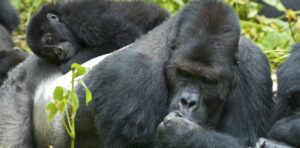 A silverback, resting in a shaft of morning light. A mother nursing her infant. Juveniles wrestling and tumbling without a care in the world. And you are standing just a few metres away, watching it all unfold in complete silence.
It is the kind of moment that rewires how you see the natural world. People who have done it describe it as transformative, emotional, and profoundly humbling. Many call it the best single experience of their entire lives.
In this complete 2026 guide to gorilla trekking in Africa, we cover everything you need to know — where to go, how much it costs, which country is right for you, the best time to visit, what to pack, and how to book. At Tulambule Uganda Safaris, we have been helping travellers experience gorilla trekking Africa for years, and this guide reflects everything we know about making it work perfectly.
Where Can You Go Gorilla Trekking in Africa?
Mountain gorillas live in only one place on earth — a narrow band of high-altitude rainforest straddling the borders of three African countries: Uganda, Rwanda, and the Democratic Republic of Congo (DRC). These are the only three countries in the world where you can go gorilla trekking in Africa. Nowhere else — not Kenya, not Tanzania, not South Africa — has wild mountain gorillas.
There are currently just over 1,060 mountain gorillas left in the wild. They live in two separate populations: one in the Virunga volcanic mountain range that spans all three countries, and the other exclusively in Bwindi Impenetrable Forest in Uganda. Their survival is one of conservation's greatest success stories — numbers have grown steadily over the past two decades thanks to intensive protection and community-based conservation programmes.
Here is a quick overview of each gorilla trekking destination in Africa:
Uganda – The Best Overall Destination for Gorilla Trekking Africa
Uganda is home to approximately 460 mountain gorillas — nearly half of the world's entire remaining population. It has two gorilla trekking parks: Bwindi Impenetrable National Park and Mgahinga Gorilla National Park. Bwindi alone has 17 habituated gorilla families open for trekking across four sectors, making it the most diverse gorilla trekking destination in Africa. Uganda is widely considered the best overall country for gorilla trekking Africa — offering the most affordable permits, the greatest number of gorilla families, and the widest range of safari extensions.
Rwanda – The Most Accessible Gorilla Trekking in Africa
Rwanda's gorilla trekking takes place entirely in Volcanoes National Park in the northwest of the country, just 2–3 hours from Kigali International Airport. Rwanda has 12 habituated gorilla families and positions itself as a premium, luxury gorilla trekking destination. Permits cost $1,500 per person — almost double Uganda's rate — but the accessibility, infrastructure, and luxury lodge options are unmatched. For travellers with limited time or a higher budget, Rwanda is an excellent choice.
Democratic Republic of Congo – Remote and Adventurous
The DRC offers gorilla trekking in Virunga National Park and Kahuzi-Biega National Park — the latter being the only place in Africa where you can trek eastern lowland gorillas, a different subspecies from the mountain gorillas of Uganda and Rwanda. Congo gorilla permits are significantly cheaper at around $400 per person, and the experience is more remote and adventurous. However, security concerns in parts of eastern DRC mean that travellers should check current travel advisories carefully before booking. Congo is best suited to experienced Africa travellers who are comfortable with a degree of unpredictability.
Gorilla Trekking Africa: Uganda vs Rwanda vs Congo
When planning gorilla trekking in Africa, the most common question is which country to choose. Here is an honest breakdown of all three:
Gorilla Permit Costs
- Uganda: $800 per person peak season / $600 low season (April, May, November)
- Rwanda: $1,500 per person year-round
- Congo (DRC): approximately $400 per person
Uganda offers the best value for gorilla trekking Africa. For the price of a single Rwanda permit, you could buy two Uganda permits and still have money left over. Congo is cheapest, but the additional costs of getting there safely and the limited infrastructure mean it is not necessarily a budget destination overall.
Number of Gorilla Families Available
- Uganda (Bwindi): 17 habituated families across 4 sectors — the most in Africa
- Uganda (Mgahinga): 1 habituated family (Nyakagezi group)
- Rwanda (Volcanoes NP): 12 habituated families
- Congo (Virunga NP): several habituated families, availability varies
Accessibility and Travel Time
- Rwanda: 2–3 hours from Kigali airport to Volcanoes NP — the most accessible
- Uganda: 8–10 hours drive from Entebbe, or 1.5 hours by domestic flight to Kihihi/Kisoro
- Congo: 4 hours from Kigali to Goma, then 2 hours to Virunga NP
Trek Difficulty
- Rwanda: generally shorter, more open bamboo forest terrain
- Uganda: dense, steep, ancient rainforest — more physically demanding but more dramatic
- Congo: variable — can be very short or very long depending on gorilla movement
Safari Extensions
- Uganda: chimpanzee tracking (Kibale), game drives (Queen Elizabeth NP, Murchison Falls), Nile experiences
- Rwanda: golden monkey trekking, Akagera Big Five safari, Kigali cultural tours, Dian Fossey grave site
- Congo: lowland gorilla trekking (Kahuzi-Biega), Nyiragongo volcano hike, forest elephant viewing
Safety
- Uganda: very safe and politically stable — one of Africa's most reliable safari destinations
- Rwanda: extremely safe — widely regarded as one of the safest countries in Africa
- Congo (DRC): security situation in eastern DRC requires careful monitoring — always check current travel advisories
Where Does Gorilla Trekking Africa Take Place? The Parks Explained
Bwindi Impenetrable National Park, Uganda
Bwindi Impenetrable National Park is the crown jewel of gorilla trekking Africa. A UNESCO World Heritage Site, it is one of the oldest and most biodiverse tropical rainforests on earth — largely unchanged for over 25,000 years. Situated in the Albertine Rift in southwestern Uganda, Bwindi covers 331 square kilometres of dense, layered forest at elevations between 1,160 and 2,607 metres.
Bwindi is home to approximately 460 mountain gorillas — the single largest concentration of mountain gorillas on earth. Trekking here is divided across four sectors: Buhoma in the north, Ruhija in the east, Rushaga in the south, and Nkuringo in the southwest. Each sector has multiple habituated gorilla families and its own distinct character in terms of terrain, accommodation options, and atmosphere.
Beyond the gorillas, Bwindi harbours over 350 bird species, 90 mammal species, and 11 primate species. A gorilla trek here feels like stepping into one of the last truly wild places on earth. Many travellers describe the forest itself — ancient, dense, alive with sound — as almost as powerful as the gorilla encounter.
Mgahinga Gorilla National Park, Uganda
Mgahinga Gorilla National Park is Uganda's smaller gorilla park, perched on the slopes of the Virunga volcanoes at the Uganda-Rwanda-DRC tri-border. It is home to one habituated gorilla family — the Nyakagezi group — and is considerably less visited than Bwindi, making it ideal for travellers seeking a quieter, more intimate gorilla trekking experience. Mgahinga also offers golden monkey trekking and the opportunity to climb the Virunga volcanic peaks, including Mount Muhavura and Mount Gahinga.
Volcanoes National Park, Rwanda
Volcanoes National Park sits in northwestern Rwanda, within the same Virunga mountain range as Mgahinga. It covers five extinct volcanoes — Karisimbi, Bisoke, Muhabura, Gahinga, and Sabyinyo — and is the historic site of Dian Fossey's groundbreaking mountain gorilla research. The park has 12 habituated gorilla families available for trekking, with all treks departing from a central visitor centre near Kinigi.
Rwanda has invested heavily in its gorilla trekking infrastructure, and the result is a seamlessly organised, beautifully managed experience. The luxury lodges around Volcanoes NP — Bisate Lodge, Singita Kwitonda, Sabyinyo Silverback Lodge — are among the finest eco-lodges in Africa. Visitors can also add golden monkey trekking, the Dian Fossey tomb hike, and a visit to the Ellen DeGeneres Campus of the Dian Fossey Gorilla Fund.
Virunga National Park, DRC
Virunga National Park in the Democratic Republic of Congo is Africa's oldest national park and a UNESCO World Heritage Site. It is home to mountain gorillas in the Virunga massif as well as the extraordinary Nyiragongo active volcano — one of the world's most spectacular geological phenomena. Gorilla trekking in Virunga offers a genuinely off-the-beaten-path experience, with smaller groups and a raw, remote atmosphere that Uganda and Rwanda simply cannot replicate.
Kahuzi-Biega National Park in South Kivu, DRC, is the only place in Africa where you can trek eastern lowland gorillas — a different, larger subspecies from the mountain gorillas. These encounters are equally moving and even rarer. Again, travellers to DRC should check current security advisories before booking.
What to Expect on a Gorilla Trek in Africa
Understanding what actually happens on a gorilla trek helps you prepare properly and get the most out of the experience.
The Morning Briefing
Every gorilla trek in Africa begins with an early morning briefing at the park headquarters or visitor centre, usually at 7:30 AM. Rangers brief your group on the rules of gorilla trekking — maintaining a minimum distance of seven metres from the gorillas, no flash photography, no eating or drinking in front of the animals, and what to do if a gorilla approaches or charges. Groups are a maximum of eight people per gorilla family, keeping the experience intimate and minimising disturbance to the animals.
The Trek
Once briefed, you set off into the forest with your ranger-guide, accompanied by armed rangers for safety and advance trackers who have been monitoring your assigned gorilla family since dawn. The trek can take anywhere from 30 minutes to six hours or more — you simply cannot predict it. The gorillas move freely through their habitat, and your guides follow their trail using radio communication with the advance trackers.
The terrain varies by destination. In Bwindi, expect steep, dense, ancient rainforest with challenging paths. In Volcanoes NP Rwanda, the bamboo forest is more open and the terrain generally gentler. In Virunga DRC, conditions are variable and highly dependent on where the gorillas have moved.
The Encounter
When you find the gorillas, everything changes. The noise of the forest fades. Your guide signals you to stop. And there they are — wild mountain gorillas in their natural world. You have exactly one hour with them, though it passes faster than almost anything you have ever experienced.
During that hour you will watch a complex, intelligent family going about their lives. A silverback — the dominant male, weighing 160–220 kilograms — holds the centre of the group with absolute authority. Females nurse and groom their infants. Young gorillas play, climb, and occasionally fall spectacularly out of trees. Adolescent males test their boundaries. It is like watching a human family, just set against a backdrop of ancient forest and volcanic mountains.
The gorillas are habituated to human presence, meaning they are accustomed to seeing small groups of visitors and go about their behaviour naturally. They may glance at you with curious dark eyes. They may move closer on their own terms. Occasionally a silverback will beat his chest or make a short charge — a display of dominance rather than genuine aggression, and a moment that will live in your memory forever.
After the Trek
Once your hour is up, you hike back out of the forest. Most parks issue a gorilla trekking certificate — a small but meaningful memento of what you have done. Back at the lodge, over lunch and a very well-earned cold drink, you will find that everyone in your group is buzzing. The conversation rarely goes anywhere other than what you just experienced.
Gorilla Trekking Africa Permit Costs and How to Book
Uganda Gorilla Permits 2026
The Uganda Wildlife Authority sets the gorilla trekking permit at $800 per person during peak season and $600 per person during low season months of April, May, and November. This is an official, government-set rate. The permit covers one hour with a habituated gorilla family, a professional ranger-guide, armed ranger escort, and park entry fees. Uganda also offers the exclusive Gorilla Habituation Experience (GHEX) at $1,500 per person — a four-hour encounter with a semi-habituated gorilla family, available only in the Rushaga sector of Bwindi. This is the longest gorilla encounter available anywhere in Africa.
Rwanda Gorilla Permits 2026
Rwanda's gorilla permits cost $1,500 per person year-round, set by the Rwanda Development Board. There is no low-season discount. Rwanda's pricing reflects its deliberate positioning as a luxury, premium gorilla trekking destination. The permit covers one hour with a habituated gorilla family with expert ranger-guides.
Congo Gorilla Permits 2026
Congo gorilla permits cost approximately $400 per person for mountain gorilla trekking in Virunga National Park. Eastern lowland gorilla permits in Kahuzi-Biega National Park are similarly priced. Congo offers the most affordable gorilla permits in Africa, though the overall trip cost when factoring in logistics, security, and accommodation can be comparable to Uganda.
How to Book Gorilla Permits
Gorilla permits in Uganda and Rwanda can be booked directly through the respective wildlife authorities — Uganda Wildlife Authority (UWA) and Rwanda Development Board (RDB) — or through a licensed tour operator. Booking through a licensed operator like Tulambule Uganda Safaris is strongly recommended. We handle the permit reservation in your name, match your permit to the right trekking sector and gorilla family for your fitness level, and combine it seamlessly with your accommodation, transport, and full itinerary.
How far in advance should you book? For peak season travel in June, July, August, and December, book your gorilla permits 5–6 months in advance. For shoulder and low season, 3–4 months is sufficient. Permits sell out quickly during peak periods — do not leave it until the last minute.
Best Time for Gorilla Trekking Africa
Gorilla trekking in Africa is a year-round activity. Mountain gorillas do not migrate and habituated families can be visited in every month. However, conditions vary significantly by season.
Peak Season: June to August and December to January
The dry seasons are the most popular and most comfortable time for gorilla trekking Africa. Trails are drier, forest navigation is easier, and the morning light during these months is ideal for photography. June, July, and August in particular are the busiest months — global tourism peaks for East Africa coincide with the main dry season. Book well in advance.
Low Season: April, May, and November
The wet season months bring heavier rainfall and muddier trails in Uganda and Rwanda, but they also reward travellers with a lushly green, dramatically atmospheric forest. There are significantly fewer tourists on the trails, and Uganda's confirmed low-season permit rate of $600 per person during April, May, and November represents a meaningful saving — especially for families or larger groups. Gorilla sighting success rates remain around 98% year-round.
February and March
February and March offer a pleasant middle ground — a brief dry spell with good trekking conditions, manageable crowds, and easier permit availability than the main peak season. This is an excellent window for travellers who want comfortable trekking without the pressure of June to August.
What to Pack for Gorilla Trekking Africa
Packing correctly makes a significant difference to your comfort and enjoyment on a gorilla trek. Here is what you need:
Clothing
- Long-sleeved shirt and long trousers — protects against insects, nettles, and dense vegetation
- Waterproof hiking boots with ankle support — essential for steep, muddy terrain
- Rain jacket or poncho — forest rain can come at any time
- Gardening or thick gloves — useful for grabbing branches on steep sections
- Gaiters — keeps debris and insects out of your boots
- Warm layer for evenings — high altitude parks get cold after dark
Gear
- Small daypack for the trek — leave larger luggage at the lodge
- 1–2 litres of water and light snacks
- Insect repellent — apply before entering the forest
- Camera — no flash photography permitted near the gorillas
- Walking stick — usually available at the lodge or ranger station
- Small first aid kit with blister plasters
One tip worth emphasising: hire a porter. At $20 per trek in Uganda, a porter carries your bag, assists you on steep sections, and directly supports the local community around the park. It is one of the best $20 you will spend on your entire trip.
Tips for Getting the Most Out of Gorilla Trekking Africa
- Get reasonably fit before you go — regular walking in the weeks before your trek pays dividends on the day
- Arrive at your lodge the evening before the trek — never try to trek on the same day as a long drive
- Follow your ranger's instructions at all times — especially regarding distance and behaviour near the gorillas
- Put your phone on silent before entering the forest — the experience deserves your full, undistracted attention
- Stay calm if a gorilla approaches closer than seven metres — crouch, look away, and let the ranger handle it
- Charge your camera the night before and bring spare batteries or a fully charged power bank
- Wear muted, dark clothing — avoid bright colours that may disturb the gorillas
- If you feel unwell before your trek, inform your guide — anyone showing symptoms of illness should not trek, to protect the gorillas from human-transmitted disease
Why Uganda Is the Best Base for Gorilla Trekking Africa
While all three African gorilla trekking destinations have their merits, Uganda stands out as the best overall base for gorilla trekking Africa — and here is why.
Uganda has the largest gorilla population, the most habituated families, the most diverse trekking sectors, and the most affordable permits. It also offers the widest range of safari extensions — from chimpanzee tracking in Kibale Forest to game drives in Queen Elizabeth National Park, boat safaris on the Kazinga Channel, the dramatic Murchison Falls, and the tree-climbing lions of Ishasha. No other country combines gorilla trekking Africa with such a breadth of wildlife experiences.
Uganda is also home to the Gorilla Habituation Experience — the only place in Africa where you can spend four hours with a gorilla family rather than the standard one hour. For anyone who wants to go deeper than a standard gorilla trek, this exclusive experience is simply unavailable anywhere else.
And Uganda is genuinely beautiful. The Pearl of Africa — as Winston Churchill called it — is a country of rolling green hills, shimmering lakes, ancient forests, and one of the warmest, most welcoming cultures in East Africa. A gorilla safari in Uganda is not just about the gorillas. It is an immersion in one of the continent's most extraordinary places.
Book Your Gorilla Trekking Africa Experience with Tulambule Uganda Safaris
At Tulambule Uganda Safaris, gorilla trekking Africa is what we do. We are a licensed Uganda tour operator with direct access to Uganda Wildlife Authority gorilla permits and strong relationships with Rwanda Development Board agents. We design custom gorilla safaris for every type of traveller — budget, mid-range, and luxury — and we handle every detail from permit booking to lodge reservations, 4x4 transport, and professional guiding.
Whether you want a focused 2-day gorilla tour, a week-long Uganda wildlife safari, a combined Uganda-Rwanda gorilla itinerary, or something entirely bespoke, we build it around your schedule, your budget, and the experience you want to have.
Contact Tulambule Uganda Safaris today to start planning your gorilla trekking Africa adventure. Visit us at www.tulambule.com. Gorilla permits sell out fast — especially during peak season — so get in touch early to secure your dates.
Frequently Asked Questions: Gorilla Trekking Africa
Where can you go gorilla trekking in Africa?
Gorilla trekking in Africa is only possible in three countries: Uganda, Rwanda, and the Democratic Republic of Congo. These are the only places in the world where wild mountain gorillas live. Uganda's Bwindi Impenetrable Forest and Mgahinga Gorilla National Park, Rwanda's Volcanoes National Park, and Congo's Virunga National Park and Kahuzi-Biega National Park are the specific destinations.
How much does gorilla trekking in Africa cost?
Gorilla permit costs vary by country. In Uganda the permit costs $800 per person in peak season and $600 in low season (April, May, November). In Rwanda the permit is $1,500 per person year-round. In the DRC, permits cost approximately $400 per person. Total gorilla safari packages range from around $1,200 for a budget Uganda trip to $15,000+ for a luxury Rwanda experience.
Which African country is best for gorilla trekking?
Uganda is widely considered the best overall country for gorilla trekking Africa. It has the largest gorilla population, the most habituated families, the most affordable permits, and the widest range of safari extensions. Rwanda is best for luxury travellers and those with limited time. Congo suits experienced Africa adventurers comfortable with remote travel.
How long does a gorilla trek take in Africa?
The gorilla trek itself can take anywhere from 30 minutes to six or more hours, depending on where the gorilla family has moved within the forest. Once you find the gorillas, you spend exactly one hour with them. Plan for a full day — departing by 7:30 AM and returning to your lodge by early to mid afternoon.
Is gorilla trekking in Africa safe?
Yes. Gorilla trekking in Uganda and Rwanda is very safe. Both countries have excellent security records and well-managed national park systems. Treks are conducted with professional ranger-guides and armed rangers. The gorillas themselves are habituated to human presence and are not aggressive. The DRC requires careful monitoring of current travel advisories, but organised gorilla tours operate safely through reputable operators.
What is the best time of year for gorilla trekking Africa?
The best time for gorilla trekking Africa is during the dry seasons: June to August and December to January. These months offer the most comfortable trekking conditions with drier trails. However, gorilla trekking is possible and successful year-round, with sighting rates around 98% in all seasons. The wet season months of April, May, and November offer Uganda's discounted $600 permit rate and significantly fewer crowds.
How do I book a gorilla trekking safari in Africa?
The easiest and most reliable way to book gorilla trekking Africa is through a licensed tour operator like Tulambule Uganda Safaris. We secure your gorilla permits directly with Uganda Wildlife Authority or Rwanda Development Board, match you to the right trekking sector and gorilla family, and handle your full itinerary — accommodation, transport, meals, and guiding. Contact us at www.tulambule.com to get started.
Can I see gorillas in Africa without a permit?
No. A gorilla trekking permit is mandatory for all gorilla visits in Uganda, Rwanda, and the DRC. It is a legal requirement and an essential conservation measure — permit revenues fund the protection of gorillas and support local communities around the parks. Gorilla trekking without a permit is not possible through any legitimate operator.
What is the Gorilla Habituation Experience?
The Gorilla Habituation Experience (GHEX) is an exclusive Uganda-only encounter available in the Rushaga sector of Bwindi Impenetrable National Park. Instead of the standard one hour with a habituated gorilla family, the GHEX allows you to spend up to four hours with a semi-habituated family. The permit costs $1,500 per person and is the longest and most immersive gorilla encounter available anywhere in Africa. It is particularly popular with wildlife photographers and serious nature enthusiasts.
Final Word on Gorilla Trekking Africa
Gorilla trekking Africa is not just a wildlife activity. It is a reminder of what the natural world is still capable of offering — raw, unscripted, and breathtaking. Standing in front of a wild mountain gorilla family, in one of the oldest forests on earth, is a privilege that relatively few people in the world have experienced. If it is on your bucket list, stop waiting.
Uganda, Rwanda, and the DRC each offer something different. But all three deliver the same core truth: that gorilla trekking Africa is one of the most extraordinary things a human being can do.
We are ready to make it happen for you. Contact us today.
Idi Amin No More: Let’s go Mountain gorilla trekking in Bwindi Forest 2026
Booking a Gorilla Trekking Safari in Uganda: A Life-Changing Journey Awaits 2026
Gorilla Trekking in Bwindi 2026: Ultimate Guide for an Unforgettable Experience
Mountain Gorilla Trekking Permits Uganda: Your 2026 Insider Guide for an Unforgettable Safari