The Gentle Giants Who Build the Forest Around Them
The mountain gorillas ecosystem of Bwindi Impenetrable Forest is one of the most intricate, biologically rich and scientifically significant environments on earth. When most people think of mountain gorillas, they think of conservation — saving an endangered species from extinction. What fewer people realise is that the gorillas themselves are doing the conservation work, actively shaping, maintaining and sustaining the ancient forest they inhabit.
Mountain gorillas are not simply residents of Bwindi Impenetrable Forest. They are its architects. Every day, through feeding, moving, nesting and defecating, they perform ecological functions that keep the forest alive — functions that no other species in this ecosystem can replace.

This blog explores the full scope of what mountain gorillas do for their ecosystem — from seed dispersal and vegetation management to carbon sequestration and climate regulation — and why losing them would trigger a collapse that extends far beyond the gorillas themselves.
Understanding the Mountain Gorillas Ecosystem: Where They Live
Mountain gorillas (Gorilla beringei beringei) inhabit two specific, geographically isolated landscapes on earth. The first is the Virunga Massif — a chain of volcanic mountains straddling Uganda, Rwanda and the Democratic Republic of Congo. The second is Bwindi Impenetrable National Park in south-western Uganda, which is the subject of this blog.
Bwindi — the primary gorilla habitat Uganda relies on — sits at altitudes between 1,160 and 2,607 metres above sea level in the Albertine Rift — one of the most biologically diverse regions on the African continent. The forest has existed largely unchanged for approximately 25,000 years, having survived the last Ice Age as a glacial refuge when most of the surrounding landscape was transformed.
This ancient, unbroken history has allowed Bwindi to develop extraordinary ecological complexity. The park holds over 200 tree species, 120 mammal species, 350 bird species — including 23 Albertine Rift endemics found nowhere else on earth — 310 butterfly species and 27 amphibian species. As of 2024, the mountain gorilla population across both habitats has grown to 1,063 individuals, with approximately 460 residing within the Bwindi-Sarambwe ecosystem.
This is the environment in which mountain gorillas live — and where mountain gorilla conservation has achieved one of the most remarkable wildlife recoveries in history. It is also the environment they help create.
Role 1: Seed Dispersal — Gorillas as Forest Gardeners
One of the most important ecological functions mountain gorillas perform within their ecosystem is mountain gorillas seed dispersal. As they move across large home ranges — covering between 3 and 15 square kilometres depending on the season and group — they consume fruits and other vegetation, then deposit seeds through their faeces in entirely different locations from where they fed.
This mountain gorillas seed dispersal process is fundamental to forest regeneration. Seeds that pass through a gorilla's digestive system are often scarified — their outer coating softened or broken by stomach acids — which actually improves germination rates. The gorilla's droppings also provide a nitrogen-rich fertiliser that gives the deposited seeds a nutrient advantage as they begin to grow.
In Bwindi Impenetrable Forest, where the mountain gorillas seed dispersal function is most critical, certain fruit trees are widely spaced and seed dispersal distances matter enormously for population connectivity, gorillas serve as mobile gardeners moving viable plant material across the landscape. Without this dispersal function, the genetic diversity of many plant populations would decline and the forest's capacity to regenerate after disturbance would weaken significantly.
Unlike many tropical rainforests where other large frugivorous animals drive mountain gorillas seed dispersal, Bwindi's mountain gorilla ecosystem is unusual. Gorillas here consume more foliage and less fruit than their lowland relatives — eating up to 30 kilograms of vegetation daily — but the seed dispersal function remains critical for the fruit-bearing species they do consume seasonally.
Role 2: Vegetation Management — Pruning the Forest from Within
Mountain gorillas do not simply pass through the forest. They feed heavily, and their feeding behaviour has a measurable impact on vegetation structure throughout the mountain gorillas ecosystem.
By consuming large volumes of leaves, stems, shoots and bark, gorillas function as natural pruners. They selectively feed on fast-growing pioneer plants — the species that rush to fill gaps in the canopy after a tree falls or a section of forest is disturbed. By keeping these fast-growing species in check, gorillas prevent any single plant type from dominating and reduce the vegetation crowding that would otherwise shade out the slower-growing, more diverse understorey species.
This selective pruning creates a more diverse, structurally complex forest. Research in Bwindi has confirmed that vegetation structure in areas regularly used by gorilla groups shows greater species diversity than areas with less gorilla activity. Gorillas are, in ecological terms, keystone consumers — animals whose feeding behaviour has an outsized effect on the structure of the entire plant community around them.
Their nest-building behaviour contributes to this function as well. Every evening, mountain gorillas construct fresh sleeping nests from bent branches and vegetation — and these nests, used once and abandoned, gradually decompose and return nutrients to the forest floor. A single gorilla group of 10 to 20 individuals creates and abandons 10 to 20 nests per night across their range, contributing a steady stream of organic material to the forest's nutrient cycle.
Role 3: Nutrient Cycling — Feeding the Forest Floor
The mountain gorillas ecosystem depends on efficient nutrient cycling, and gorillas are central to that process. As large herbivores consuming enormous quantities of plant material daily, they process and redistribute nutrients on a scale that no smaller primate can match.
Gorilla faeces are extraordinarily nutrient-rich. They contain partially digested plant matter, seeds, nitrogen compounds and a diverse community of gut microorganisms that inoculate the forest soil with biological complexity. Deposited across a wide range, this organic material feeds the soil food web — the bacteria, fungi, invertebrates and decomposers that underpin forest productivity.
Research across tropical forest ecosystems has demonstrated that the removal of large herbivores leads to measurable declines in soil fertility, particularly in areas of high rainfall where leaching quickly strips nutrients from the surface. Mountain gorillas, moving across their range and defecating consistently throughout the day, perform a continuous redistribution of nutrients that maintains the fertility gradients the forest depends on.
This function is particularly significant at the higher altitudes of Bwindi, where soils are thinner, rainfall is heavy and nutrient leaching is a constant challenge. The gorillas' daily movement through these environments is not incidental to forest health — it is part of the mechanism that sustains it.
Role 4: Umbrella Species — Protecting Everything Beneath Their Range
In conservation science, an umbrella species is one whose protection automatically shelters a large number of other species that share its habitat. Mountain gorillas are among the most effective umbrella species on earth.
Because gorillas require large, intact, high-quality forest, protecting their habitat means protecting the entire complex ecosystem of Bwindi. The rangers who patrol against poaching, the veterinary teams who monitor gorilla health, the conservation infrastructure funded by gorilla tourism revenue — all of this protection extends to the hundreds of other species that share the forest.
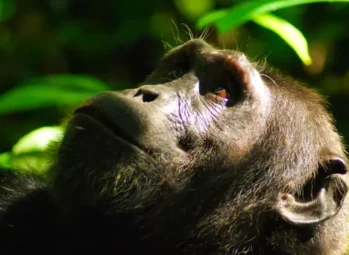
Bwindi's 426 chimpanzees — confirmed by a landmark 2025 census conducted by Uganda Wildlife Authority in partnership with the Jane Goodall Institute — benefit directly from the conservation apparatus built around mountain gorillas. The park's forest elephants, L'Hoest's monkeys, black-and-white colobus, olive baboons and the extraordinary diversity of Albertine Rift endemic birds are all protected under the umbrella of gorilla conservation.
Gorillas are crucial for carbon sequestration; protecting gorilla habitats is crucial to fighting climate change. The forests that gorillas inhabit store vast quantities of carbon in their biomass and soil — carbon that would be released into the atmosphere if these forests were cleared. By making these forests worth protecting through tourism and conservation investment, mountain gorillas are indirectly helping to stabilise the global climate.
Role 5: Carbon Sequestration — Gorillas and the Climate
The mountain gorillas ecosystem of Bwindi Impenetrable Forest is not only a biodiversity hotspot. It is a significant carbon store, and the gorillas play a direct role in maintaining its capacity to sequester atmospheric carbon dioxide.
Ancient tropical forests store carbon in several forms: in the living biomass of trees, in dead wood and leaf litter, and in the soil organic matter built up over thousands of years. Bwindi, having been an intact forest for 25,000 years, has accumulated extraordinary quantities of carbon across all three pools. Any significant disturbance — logging, encroachment, fire — would release this stored carbon rapidly.
Mountain gorillas contribute to carbon storage in two ways. First, through seed dispersal, they help maintain the forest's tree diversity and regenerative capacity — ensuring that cleared or damaged areas are recolonised by the full suite of tree species, including slow-growing large trees that store disproportionate quantities of carbon. Second, through their role as an umbrella species, they generate the conservation revenue and political will that keeps the forest protected.
Gorillas serve as umbrella species whose protection benefits entire mountain forest ecosystems that provide crucial environmental services, including carbon sequestration, watershed protection and climate regulation. A forest without gorillas is a forest without the economic and political justification for its protection. And an unprotected forest is a forest that loses its carbon.
This link between gorilla conservation, gorilla tourism and climate stability is one of the most compelling arguments for maintaining gorilla trekking Uganda as a high-value, carefully managed tourism product. Every gorilla permit purchased is, in a direct and measurable sense, a contribution to global climate stability.
Role 6: Watershed Protection — Gorillas and Clean Water
Bwindi Impenetrable Forest sits at the headwaters of several river systems that supply clean water to hundreds of thousands of people in south-western Uganda. The forest's ability to capture, filter and slowly release rainfall into these rivers depends entirely on its ecological integrity — and that integrity is sustained, in part, by the gorillas.
Dense forest canopy intercepts rainfall, reducing the erosive force of heavy rain on the forest floor. Tree roots and the rich soil food web maintained by gorilla nutrient cycling create a porous, absorbent soil layer that allows water to percolate slowly into the groundwater system rather than running off rapidly into rivers. This slow filtration removes sediment and contaminants, delivering clean water to downstream communities and maintaining river flows during the dry season.
When forests are degraded — by encroachment, logging or loss of large herbivores — this hydrological function collapses. Rivers become flashy and sediment-laden during rains and run dry faster during dry seasons. For the farming communities surrounding Bwindi, the clean water that flows from the forest is not a luxury. It is a survival resource, and mountain gorillas are part of the system that delivers it.
The Mountain Gorillas Ecosystem Under Threat: Climate Change
Understanding the ecological importance of mountain gorillas makes the emerging threat of climate change all the more urgent. The mountain gorillas ecosystem of Bwindi is being reshaped by rising temperatures, erratic rainfall and increasingly unpredictable weather in ways that affect the gorillas directly and the ecosystem functions they perform.
A warming of 2.1°C has been documented across the Virunga-Bwindi landscape over the past 50 years. Research in Bwindi confirms that fruiting patterns have declined significantly, with young fruits withering before maturity at increasing rates. This affects food availability for gorillas and reduces the seed dispersal function they perform.
Higher temperatures are forcing gorillas to seek water more frequently, reducing their foraging time and placing additional physiological stress on key individuals. Rangers in the Virunga landscape have documented fatal lightning strikes on gorillas — a phenomenon described as previously unheard of before recent decades. Warmer, wetter conditions are expanding the range of disease vectors and increasing the risk of respiratory illness transmission — a particularly serious concern given the gorillas' 98.4% genetic similarity to humans.
These climate-driven changes do not affect gorillas in isolation. They ripple through the mountain gorillas ecosystem, affecting the vegetation the gorillas eat, the water systems the forest sustains and the communities whose livelihoods depend on both. Addressing climate change in the context of mountain gorilla conservation is not a peripheral concern. It is central to the entire system.
Conservation Response: How Gorilla Tourism Sustains the Ecosystem
The most effective conservation tool in the mountain gorillas ecosystem has been responsible gorilla tourism. A gorilla trekking permit in Uganda costs USD 800 per person for foreign non-residents — and that money flows directly back into the conservation system.
20% of every permit fee goes to communities surrounding Bwindi and Mgahinga, funding schools, health centres and economic alternatives to forest encroachment. The remainder funds Uganda Wildlife Authority ranger salaries, anti-poaching patrols, veterinary care through the Gorilla Doctors programme and ecological monitoring systems that track the health of the mountain gorillas ecosystem in real time.
In 2022 and 2023 alone, UWA recruited 820 additional rangers — partly funded by gorilla tourism revenue. Five of Uganda's national parks now have their own wildlife crime prosecutors. A permanent ranger training academy has been established at Murchison Falls. These are not abstract conservation statistics. They are the concrete outcomes of the decision by thousands of travellers every year to pay for one hour with mountain gorillas in Bwindi.
Gorilla trekking Uganda is also driving the expansion of community-based conservation models. In Nkuringo and other buffer zone communities, former poachers now work as guides, trackers and porters — earning a direct income from gorilla tourism that gives them a financial stake in the gorillas' survival. The transformation of human-wildlife relationships around Bwindi over the past three decades is one of conservation's most remarkable success stories, and it has been funded almost entirely by gorilla tourism revenue.
The Population Recovery: A Conservation Success Story
The mountain gorillas ecosystem story is, against all odds, a story of recovery. In the 1980s, fewer than 300 mountain gorillas remained alive. The species was widely expected to be extinct by the end of the twentieth century.
As of 2024, the confirmed global mountain gorilla population has grown to 1,063 individuals — a more than threefold increase driven by the combination of anti-poaching enforcement, veterinary intervention, community conservation and gorilla tourism revenue. The IUCN changed the mountain gorilla's Red List status from "Critically Endangered" to "Endangered" in 2018 — the first great ape to see its conservation status improve in recent decades.
A new mountain gorilla census was launched in May 2025 across the Bwindi-Sarambwe ecosystem, led by the Greater Virunga Transboundary Collaboration and supported by conservation organisations across the region. This census will provide updated population estimates, assess changes in group composition, and evaluate the health of the mountain gorillas ecosystem as a whole. The results, expected in 2026, will inform the next generation of conservation planning.
This recovery did not happen by accident. It happened because enough people cared, enough resources were directed at the right interventions and enough local communities saw a future in conservation rather than encroachment. Gorilla trekking Uganda made that possible.
What This Means for Travellers: Your Visit Matters
For anyone planning gorilla trekking Uganda, understanding the mountain gorillas ecosystem context transforms the experience. You are not visiting an attraction. You are entering a living, functioning ecological system of extraordinary complexity — one that mountain gorillas actively sustain.
Your permit fee directly funds the rangers, the veterinary teams, the community programmes and the monitoring systems that keep this ecosystem intact. Your presence signals to the international community that wild mountain gorillas are worth more alive and protected than any alternative use of the land.
Many conservation scientists argue that gorilla trekking Uganda is one of the most efficient forms of conservation finance ever devised — generating significant revenue from a tiny number of visitors, distributed directly into an ecosystem where it is needed most. The strict limits on visitor numbers, the one-hour encounter rule, the seven-metre distance protocol — all of these protections exist to ensure that tourism enhances rather than undermines the ecosystem it depends on.
When you choose to trek gorillas in Bwindi Impenetrable Forest with a responsible, registered operator, you are making a choice that matters. Not just for your own experience — though the experience will be extraordinary — but for the ancient forest, the communities and the mountain gorillas ecosystem that depends on sustained, responsible stewardship.
The Social Structure of Mountain Gorillas and Its Ecological Significance
Mountain gorillas live in cohesive family groups typically led by a dominant silverback male. Group sizes in Bwindi range from 5 to over 30 individuals. The silverback makes all key decisions: when the group moves, where they feed, when they rest.
This decision-making role has direct ecological consequences. A silverback who leads his group to a new feeding area triggers the seed dispersal, vegetation pruning and nutrient deposition that sustains that section of forest. The ranging patterns of different groups create a distributed pattern of ecological impact across the entire Bwindi landscape.
Sub-adult males known as blackbacks are more mobile and exploratory than other group members. They often venture into forest sections that the main group avoids — extending the ecological footprint of the group and ensuring that even less-visited parts of the forest receive the gorillas' ecological contribution.
The stability of these social structures matters enormously. Mountain gorilla conservation scientists have observed that after the loss of a dominant silverback, the resulting disruption reduces the ecological activity of the affected home range for months or years. Stable gorilla groups and a stable mountain gorillas ecosystem are deeply interconnected.
Gorilla Habitat Uganda: The Bwindi-Sarambwe Transboundary Ecosystem
The gorilla habitat Uganda manages in Bwindi does not end at the park's national boundaries. Mountain gorillas move across political borders freely, and the Bwindi-Sarambwe ecosystem — extending into the Democratic Republic of Congo — functions as a single ecological unit requiring transboundary management.
The Greater Virunga Transboundary Collaboration (GVTC) coordinates conservation across this landscape, bringing together wildlife authorities from Uganda, Rwanda and the DRC. Joint ranger patrols, shared monitoring protocols and coordinated veterinary responses ensure that a gorilla group crossing from Bwindi into Sarambwe remains protected throughout its range.
A new census launched in May 2025 across the entire Bwindi-Sarambwe ecosystem will provide the most current population data and assess the ecological health of the gorilla habitat Uganda and the DRC share. Results expected in 2026 will guide the next generation of mountain gorilla conservation planning.
This transboundary model — funded substantially by gorilla trekking Uganda revenue — is one of the most sophisticated examples of collaborative wildlife management in Africa. It recognises that the mountain gorillas ecosystem has no political boundaries, and that protecting it effectively requires cooperation that transcends them.
Trek with Tulambule Uganda Safaris
At Tulambule Uganda Safaris, we have been organising gorilla trekking Uganda safaris since 2014. We know Bwindi Impenetrable Forest, we understand the mountain gorillas ecosystem and we are committed to responsible, community-supporting gorilla tourism that puts conservation first.
We secure your gorilla permit, match you to the right sector and family for your fitness level, arrange comfortable accommodation and build your complete itinerary from Entebbe or Kigali.
Contact us to check permit availability and receive a personalised quote for your gorilla trekking Uganda safari.
Let us take you into the forest.
Affordable 3-Day Gorilla Trekking Uganda Safari tour
5 Days Uganda Safari Gorillas, Chimps, Wildlife & Culture
7 Days Uganda Birding Tour | Shoebills, Chimps, Gorillas, & More
12 Days Uganda Safari, Big Five, Chimps, Gorillas and Culture