Uganda Safari Guide: Everything First-Time Travellers Need to Know
Whether you have dreamed of locking eyes with a mountain gorilla deep in an ancient rainforest, or watching elephants wade through papyrus swamps as the sun sets over the Albertine Rift — Uganda makes it real. This Uganda safari guide covers everything you need to plan your first trip with complete confidence.
Uganda does not get the same headline attention as Kenya or Tanzania. And that, it turns out, is one of the best things about it. Fewer crowds. More intimate wildlife encounters. A landscape so extraordinarily rich that Winston Churchill called it the Pearl of Africa — a name the country has never stopped earning.
If you are planning a Uganda safari for the first time, you are in exactly the right place.
Why Uganda Should Be Your First Safari Destination
A lot of first-time safari travellers default to East Africa's most famous names. That makes sense — but it also means missing one of the continent's most extraordinary wildlife destinations. Uganda is the only country on earth where you can see mountain gorillas, chimpanzees, tree-climbing lions, classic big game, and over 1,000 bird species — often in a single trip.
Here is what makes Uganda stand apart:
- Half the world's remaining mountain gorillas live within Uganda's borders
- Year-round wildlife — Uganda has no single "dead season"; animals are present and active in every month
- Smaller group sizes and far less tourist traffic than Kenya or Tanzania
- Two extraordinary primate forests for chimpanzee tracking — Kibale and Budongo
- Queen Elizabeth National Park offers classic savanna game drives, boat cruises, and tree-climbing lions in a single park
- English is widely spoken, making Uganda one of the most navigable African destinations for first-time solo travellers
Uganda is also one of the safer and more politically stable countries in East Africa, with a well-developed tourism infrastructure and professional, experienced safari guides and operators who know their parks intimately.
Uganda's Top National Parks for First-Time Visitors
Uganda has ten national parks. As a first-time visitor, you will not see all of them in one trip — and you do not need to. These five parks belong on every Uganda safari itinerary.
1. Bwindi Impenetrable National Park
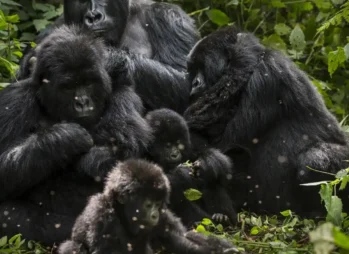
Bwindi is the undisputed crown jewel of any Uganda safari. A UNESCO World Heritage Site, this ancient montane rainforest in south-western Uganda is home to approximately 459 mountain gorillas — nearly half the world's entire remaining population.
The park is divided into four sectors: Buhoma, Ruhija, Rushaga, and Nkuringo. Each sector has its own habituated gorilla families, which means no single entry point gets overwhelmed with visitors. The forest itself is staggeringly beautiful — even on overcast mornings, when mist clings to the canopy and the air smells of wet earth and ancient vegetation.
Gorilla trekking in Bwindi can range from one hour to eight hours depending on where the gorilla family has moved that day. Go physically prepared — the terrain is steep, the trails are often slippery, and the forest is dense. Every minute of the effort is worth it.
2. Mgahinga Gorilla National Park
Often overlooked, Mgahinga sits in the far south-western corner of Uganda where the borders of Uganda, Rwanda, and the DRC converge. It forms part of the larger Virunga Massif — a chain of ancient volcanoes that is one of Africa's most dramatic landscapes.
Here you can track mountain gorillas with the habituated Nyakagezi family and, on a separate day, trek to the summit of one of three dormant volcanoes: Muhabura, Gahinga, or Sabyinyo — the latter offering the extraordinary experience of standing simultaneously in three countries at once.
Mgahinga receives far fewer visitors than Bwindi, which means your trek feels significantly more private. If gorilla permits are fully booked at Bwindi, Mgahinga is always worth checking — availability here is often better.
3. Queen Elizabeth National Park
Queen Elizabeth National Park (QENP) is Uganda's most visited park and the best all-round safari destination in the country. Covering over 1,978 square kilometres across western Uganda, it straddles the equator and packs extraordinary biodiversity into a single landscape.
Key highlights in Queen Elizabeth NP:
- The Kazinga Channel boat cruise — one of Africa's finest boat safaris, with enormous concentrations of hippo, buffalo, and waterbirds along the banks
- Tree-climbing lions in the Ishasha sector — one of only two places in the world where lions regularly climb fig trees
- Elephants, leopards, topi, Uganda kob, and over 600 recorded bird species
- Chimpanzee tracking in Kyambura Gorge — a steep, dramatic gorge known as the Valley of Apes, home to a habituated chimpanzee community
QENP pairs perfectly with Bwindi — the two parks are approximately four hours apart by road.
4. Kibale National Park
If chimpanzees are on your safari wish list — and they should be — Kibale Forest is your park. Home to the highest density of primates in Africa, Kibale National Park is the best place in the world for chimpanzee tracking. On a single morning walk you may encounter red-tailed monkeys, L'Hoest's monkeys, grey-cheeked mangabeys, olive baboons, and the chimpanzees themselves — loud, fast, and endlessly entertaining.
The Bigodi Wetland Sanctuary at the park's southern boundary is a community-managed birding and wildlife hotspot well worth a half-day. It supports local families directly and delivers exceptional wildlife sightings for birdwatchers and general nature lovers alike.
5. Murchison Falls National Park
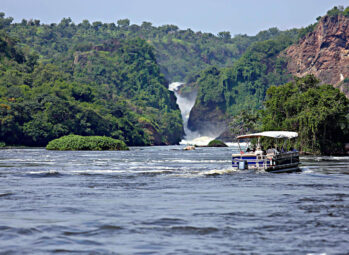
Uganda's largest national park sits in the north-west and is anchored by one of the most powerful waterfalls on earth — the entire volume of the River Nile forces itself through a seven-metre gap in the rocks and drops 43 metres in a thundering curtain of white water. The sight and sound of it, especially from the boat below, is unforgettable.
The park offers classic big game drives with lion, elephant, giraffe, buffalo, Rothschild's giraffe, and large hippo populations. The Nile boat safari to the base of the falls is one of the finest wildlife experiences in Uganda. The park also pairs naturally with a chimpanzee trek in the Budongo Forest, just 30 minutes from the park gate.
Gorilla Trekking in Uganda: The Complete First-Timer's Breakdown
Gorilla trekking is the experience that defines a Uganda safari for most visitors. Spending one hour with a habituated mountain gorilla family in their natural forest habitat is routinely described as one of the most profound and moving wildlife encounters a person can have anywhere in the world. Here is everything you need to know before you go.
How to Get a Gorilla Permit
All gorilla trekking in Uganda requires a permit issued by the Uganda Wildlife Authority (UWA). The permit grants access to one hour with a gorilla family once your ranger team locates them that morning. Only eight people per gorilla family per day are allowed — a strict conservation rule that will not change.
Key permit facts:
- Cost: USD $800 per person (current 2025 price)
- Permits can be booked directly through the Uganda Wildlife Authority or through a licensed safari operator
- Book at least 3–6 months in advance for the June–September peak season; 1–2 months may be possible in the quieter months
- Cancellations are non-refundable — comprehensive travel insurance is strongly recommended
What to Expect on Trekking Day
Your briefing begins at 07:30 at the park headquarters. Rangers assign your group to a gorilla family based on group size, trekking fitness level, and that morning's tracker reports. A lead tracker heads out before dawn to locate where the family has nested and begins guiding them toward you.
Once you reach the gorillas, you have exactly 60 minutes in their presence — no exceptions. During that hour you will see them feeding, playing, nursing infants, grooming, and going about their morning entirely on their terms. The silverback may walk within two or three metres of your group. Stay calm, move slowly, crouch if instructed, and avoid direct eye contact.
A mountain gorilla shares approximately 98% of its DNA with humans. Being in their presence is not merely a wildlife sighting. It genuinely feels like a meeting — and most people who experience it say it changes how they see the world.
Physical Fitness Requirements
Gorilla trekking is a serious hike. The terrain in both Bwindi and Mgahinga is steep, densely vegetated, often muddy, and at altitude. Treks can last anywhere from one to eight hours. Most first-timers manage it comfortably, but you should be genuinely comfortable walking on uneven terrain for several hours.
What to bring: sturdy waterproof hiking boots, long trousers, long-sleeved shirt, lightweight gloves, a daypack with water and snacks, and a rain jacket. Porters are available for hire at the park gate and are strongly recommended — they carry your bag, steady you on difficult sections, and the fee goes directly to supporting local communities.
Gorilla Trekking Uganda vs Rwanda: Why Uganda Wins on Value
Rwanda's Volcanoes National Park is the other major gorilla trekking destination in Africa and it is excellent. But Uganda's gorilla permit costs USD $800 versus USD $1,500 in Rwanda. The gorilla experience itself is comparable — both countries share the same Virunga mountain gorilla population. For first-time travellers focused on value without compromising on quality, Uganda is the clear choice.
Best Time to Visit Uganda for a Safari
Uganda does not have a single "best season" in the way that Botswana or Tanzania does. Wildlife is present and accessible throughout the year. But understanding the seasonal pattern will help you plan around your priorities.
The Two Dry Seasons — Best Overall Conditions
June to September is the longer dry season and Uganda's peak safari period. Gorilla trekking is drier and easier, vegetation thins out to improve game drive sightings, and wildlife gathers around water sources. Expect permit availability to be tightest during this window — book six months or more in advance for gorilla treks.
December to February is the shorter dry season. Conditions are excellent, the parks are noticeably less crowded than June–September, permit availability is better, and many lodges offer lower-season rates. This is an ideal window for first-timers who want great conditions without the peak-season competition for permits.
The Rainy Seasons — Underrated and Worth Considering
Uganda has two rainy seasons: March to May (the long rains) and October to November (the short rains). These are commonly labelled "low season" but they are genuinely worth reconsidering for the right type of traveller.
- Gorilla trekking operates every day of the year regardless of rain — permits are available and rates through many operators are lower
- The forests are extraordinarily lush and atmospheric in wet conditions
- Birdwatching reaches its annual peak — migratory species arrive and the forest comes alive with colour and sound
- Camps and lodges offer lower rates and the parks feel much more private
The main practical downside is that trails in Bwindi and Kibale become very muddy and physically demanding in the rains. Some remote roads require a capable 4WD vehicle, and logistics in more remote parks can be affected. Budget extra travel time and book a reputable operator who knows the roads.
In summary:
| Priority | Best Time |
|---|---|
| Gorilla trekking (best conditions) | June – September |
| Value + fewer crowds | December – February |
| Birding | October – April |
| Budget safari | March – May |
| Chimpanzee tracking | Year-round; best in February and June–July |
Uganda Safari Costs: A Realistic Budget Breakdown
Uganda offers exceptional value compared to most East African safari destinations — but it is still a premium travel experience. Here is an honest breakdown of what to expect.
Gorilla Permits
This is the single largest fixed cost of any Uganda safari. The Uganda Wildlife Authority charges USD $800 per person per trek. If you plan to trek twice — a popular choice for dedicated wildlife lovers — budget USD $1,600 for permits alone. Plan around this cost first and build everything else around it.
Safari Operator and Tour Package Costs
Most first-time visitors book through a licensed local operator, which is strongly recommended. A reputable operator handles permits, 4WD vehicles, accommodation, professional guides, and all the logistics of moving between parks on Uganda's roads.
| Package type | Approximate cost per person per day |
|---|---|
| Budget (camping, shared vehicle) | USD $200 – $350 |
| Mid-range (lodges, private vehicle) | USD $350 – $600 |
| Luxury (premium lodges, private guide) | USD $600 – $1,500+ |
A typical 7-day Uganda safari covering gorilla trekking, Queen Elizabeth National Park, and Kibale Forest costs approximately USD $3,000 – $5,500 per person at mid-range, all-inclusive.
Accommodation
Uganda has accommodation for every budget level:
- Budget guesthouses and bandas near parks: USD $30 – $80 per night
- Mid-range tented camps and lodges: USD $150 – $350 per night
- Luxury eco-lodges (Sanctuary Gorilla Forest Camp, Volcanoes Bwindi Lodge): USD $500 – $1,200+ per night
International Flights to Uganda
Entebbe International Airport (EBB) is the main entry point for Uganda. Direct flights from European hubs (London, Amsterdam, Brussels) average USD $700 – $1,200 return. From North America, expect USD $900 – $1,600 with one stopover. Book three to four months ahead for the best available fares.
Chimpanzee Permits
Chimpanzee tracking permits in Kibale National Park cost USD $250 per person. Budongo Forest at Murchison Falls is more affordable at USD $90 – $150 per person and still delivers consistently excellent chimpanzee sightings.
Sample 7-Day Budget (Mid-Range, Per Person)
| Item | Estimated Cost |
|---|---|
| Gorilla trekking permit (x1) | USD $800 |
| Chimpanzee permit — Kibale | USD $250 |
| Safari package (7 days, mid-range, all-inclusive) | USD $3,000 |
| International flights (round trip) | USD $1,100 |
| Travel insurance | USD $150 |
| Visa and incidentals | USD $200 |
| Estimated total | USD $5,500 |
This is a realistic, honest figure for a comfortable, well-organised first Uganda safari. It is not a budget trip — but for what it delivers, the value is exceptional compared to other safari destinations at a similar price point.
Practical Tips for First-Time Uganda Safari Travellers
Book Through a Registered Local Operator
Uganda's roads outside Kampala are rough, the logistics between parks are complex, and navigating the permit system independently adds significant stress to your trip. A licensed operator handles everything — permits, 4WD vehicles, accommodation, professional guides, and contingency planning when the unexpected happens.
When choosing an operator, look for companies registered with the Association of Uganda Tour Operators (AUTO), the Uganda Tourism Board (UTB), and the Uganda Wildlife Authority (UWA). These memberships indicate a legitimate, accountable business.
Get the Right Vaccinations
Uganda requires proof of Yellow Fever vaccination — you will need your Yellow Card at the border. Other strongly recommended vaccinations include Hepatitis A and B, typhoid, and tetanus. Malaria prophylaxis is advised for most regions of Uganda. Consult a travel medicine clinic at least four to six weeks before departure.
Understand Visa Requirements
Most nationalities can obtain a Uganda tourist visa on arrival or online in advance. The East Africa Tourist Visa (covering Uganda, Kenya, and Rwanda) costs USD $100 and is excellent value for multi-country itineraries. Check the Uganda Directorate of Citizenship and Immigration Control website for the current requirements for your nationality before booking flights.
Carry USD Cash
Uganda's currency is the Ugandan Shilling (UGX), but US dollars are widely accepted at safari camps, lodges, and for permit payments. Carry USD in small denominations — $1, $5, $10, and $20 notes — for tips, markets, and smaller purchases. ATMs in Kampala and Entebbe are reliable; outside the capital, carry sufficient cash for your time in the parks.
Pack for the Forest, Not the Savanna
Packing for a Uganda safari is different from packing for Kenya or Tanzania. You will spend significant time in dense forest, on muddy trails, and at altitude where temperatures drop quickly after dark.
Essential items:
- Waterproof hiking boots with ankle support
- Lightweight, quick-drying long trousers and long-sleeved shirts
- Waterproof jacket (essential — not optional)
- Neutral colours (khaki, olive, brown, grey) — avoid bright colours in gorilla zones
- Insect repellent with DEET
- Sunscreen and sunglasses (UV intensity is higher than most visitors expect)
- A headlamp with spare batteries
- A dry bag to protect your camera and electronics in the rain
Frequently Asked Questions — Uganda Safari Guide
Is Uganda safe for first-time travellers? Yes. Uganda is one of the more stable and safer countries in the East Africa region. The main tourist areas — Kampala, Entebbe, Bwindi, Queen Elizabeth, Kibale, and Murchison Falls — are all well-travelled and considered safe for visitors. As with any destination, use reputable operators, stay aware of your surroundings, and register your travel with your country's foreign office before departing.
Do I need to be physically fit to do gorilla trekking? You do not need to be an athlete, but a reasonable level of fitness makes a significant difference. Gorilla trekking involves hiking on steep, uneven, and muddy terrain for anywhere from one to eight hours. People of all ages successfully complete gorilla treks every day — the minimum age is 15 years. Hiring a local porter at the park gate is always an option and is one of the best ways to support the communities living around the parks.
Can I see both gorillas and chimpanzees on the same Uganda safari? Absolutely — and most 7–10 day Uganda safari itineraries include exactly this combination. The classic route visits Bwindi Impenetrable Forest for gorilla trekking, Kibale National Park for chimpanzee tracking, and Queen Elizabeth National Park for game drives and the Kazinga Channel boat cruise in between.
How many days should I plan for a Uganda safari? A minimum of seven days allows you to cover gorilla trekking and one or two additional parks without rushing. Ten to fourteen days gives you space to add Murchison Falls, explore Kibale's forest trails properly, or visit the remarkable Bigodi Wetland Sanctuary. First-time visitors who rush their Uganda safari consistently say they wish they had stayed longer. Uganda genuinely rewards slow travel.
What is the best national park for a first-time Uganda safari visitor? For a well-rounded first Uganda safari experience, the ideal combination is Bwindi Impenetrable Forest for gorilla trekking and Queen Elizabeth National Park for game drives and the boat safari. Add Kibale National Park for chimpanzees and you have one of the finest wildlife itineraries available anywhere in Africa.
How far in advance should I book a Uganda safari? For the June–September peak season, book your gorilla permits and accommodation a minimum of six months in advance — preferably longer. For the December–February dry season, two to three months ahead is usually sufficient. Do not leave gorilla permit booking to the last minute; they are genuinely limited and high in demand.
Ready to Plan Your Uganda Safari?
There is a reason Uganda consistently appears at the top of serious wildlife travellers' bucket lists — and it is not because it is easy or obvious. It is because the experiences here are genuinely irreplaceable. Mountain gorillas. Chimpanzees. Tree-climbing lions. The thundering Nile forcing itself through a gap in the rock. A thousand bird species singing in a forest that has been standing for over 25,000 years.
As a first-time visitor, you are in the best possible position: you get to experience all of it for the very first time.
At Tulambule Uganda Safaris, we have been designing Uganda safari itineraries for international visitors since 2014. We are 100% Ugandan-owned, fully registered with AUTO, UTB, UWA, TUGATA, and IATA, and we know these parks — and the people who work in them — better than anyone.
Whether you are planning a 5-day gorilla trekking trip or a 14-day grand circuit of Uganda's national parks, we will design an itinerary built specifically around your interests, timeline, and budget.
Get in touch with our team today and let us start planning your Uganda safari.