Luxury safaris in East Africa are defined by one thing more than any other: flying. Not the flight that gets you into Nairobi, Kilimanjaro, Entebbe, or Kigali, but the second and third flights after that, the ones on small bush planes that skip the eight-hour road transfer and put you on the ground at your lodge in under an hour. That single choice, fly or drive, is what actually separates a luxury safari from a standard one.
This guide covers the real airstrips, flight times, and costs behind a fly-in safari across Kenya, Tanzania, Uganda, and Rwanda, along with how the region's most iconic destinations connect to each other by air.
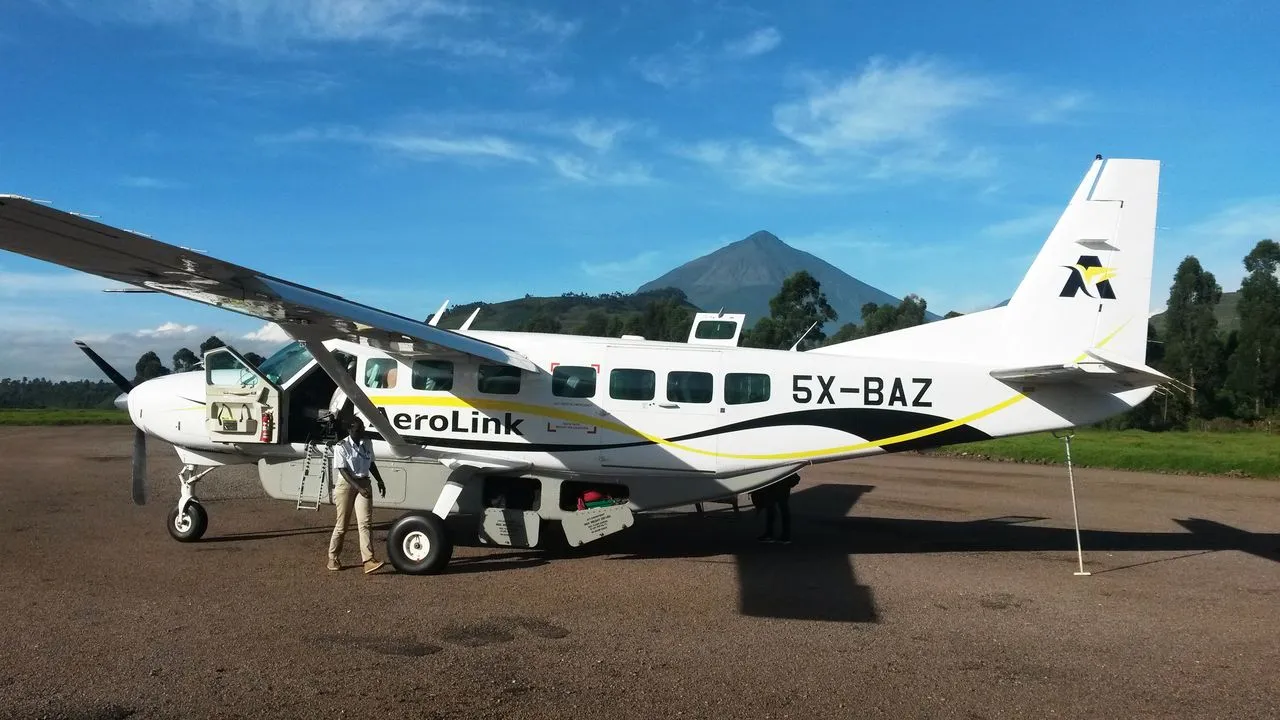
Why Flying Is What Actually Makes a Safari Luxury
Time is the scarcest thing on a short luxury trip, and road transfers in East Africa are long. Nairobi to the Masai Mara by road takes five to six hours, and up to eight in the rainy season. The flight from Wilson Airport takes 45 minutes. Arusha to the Serengeti by road takes five to six hours over rough terrain. The flight takes about an hour. Entebbe to Bwindi by road takes eight to ten hours. The flight takes roughly an hour to an hour and twenty minutes.
Every one of those road transfers is a full day gone. On a seven or ten day trip, that is a meaningful fraction of your entire safari spent in a vehicle instead of in the bush. Luxury safaris in East Africa solve this by treating the small aircraft as part of the itinerary rather than an optional upgrade, which is also why flying safaris tend to visit more destinations in less time than road-based ones.
The Four Flying Hubs That Anchor Luxury Safaris in East Africa
Almost every fly-in safari in East Africa routes through one of four hub airports.
Wilson Airport, Nairobi (WIL). Kenya's domestic and safari aviation hub, located in Langata, about 15 kilometres from Jomo Kenyatta International Airport. Safarilink and AirKenya run the bulk of scheduled flights from here to the Mara, Amboseli, Samburu, and Laikipia. Allow at least three hours between an international arrival at JKIA and a same-day Wilson departure, since immigration, luggage, and the transfer between airports all eat into that window.
Kilimanjaro International Airport (JRO) and Arusha Airport (ARK). Tanzania's two gateways to the northern safari circuit. Kilimanjaro handles international arrivals, while Arusha, about 50 kilometres closer to the parks, handles most domestic departures to Serengeti airstrips. Flight time from Arusha to central Serengeti airstrips like Seronera runs about an hour, while Kilimanjaro adds roughly 25 to 30 minutes on top of that.
Entebbe International Airport and Kajjansi Airfield, Uganda. Entebbe handles international arrivals, while Kajjansi, just outside Kampala, is the smaller domestic hub many charter operators use. Both connect by scheduled and charter flights to Bwindi's Kihihi and Kisoro airstrips, Queen Elizabeth's Mweya and Kasese airstrips, and Murchison Falls' Pakuba, Bugungu, and Chobe airstrips.
Kigali International Airport (KGL), Rwanda. Unlike the other three countries, Rwanda has no scheduled domestic flight network between its national parks, since the country is small enough that road transfers stay short. The drive from Kigali to Volcanoes National Park takes about two and a half hours on well maintained roads, and helicopter charters can cut that to around 30 minutes for travelers who want to skip the drive entirely.
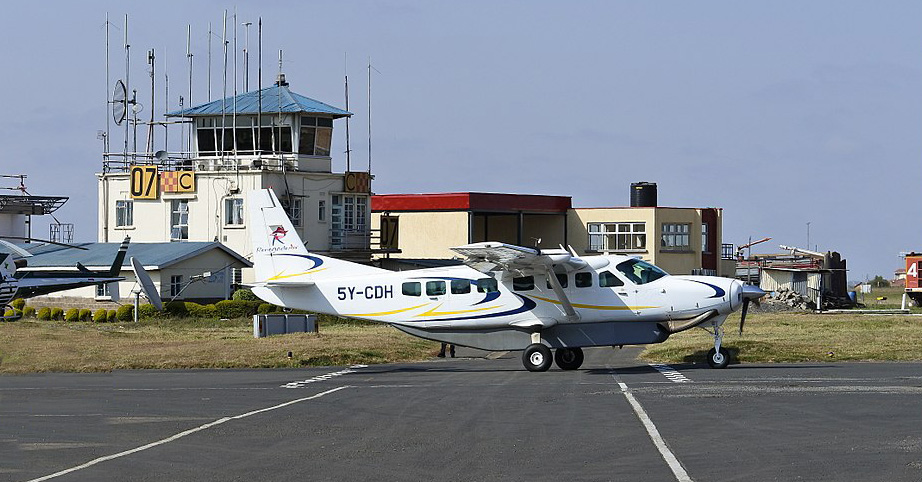
Kenya's Iconic Fly-In Destinations
Masai Mara. The flight from Wilson takes 45 minutes to just over an hour depending on which of the Mara's dozen or so airstrips your lodge uses, Keekorok, Musiara, Olkiombo, and Mara Serena among the busiest. Between July and October, the wildebeest migration is often visible from the air before the plane even lands. According to Kenya Wildlife Service, Kenya's protected areas are managed specifically to balance conservation with the tourism revenue that sustains them, which is part of why airstrip access into reserves like the Mara has expanded steadily.
Amboseli. Set beneath Mount Kilimanjaro, Amboseli connects to Wilson by scheduled flight and is easily combined with the Mara on a single circuit ticket, since several airlines route through both in one day.
Laikipia and Samburu. The private conservancies on the Laikipia Plateau, along with Samburu further north, hold some of the region's most exclusive luxury properties. Both are reachable from Wilson by direct scheduled flight, typically under an hour.
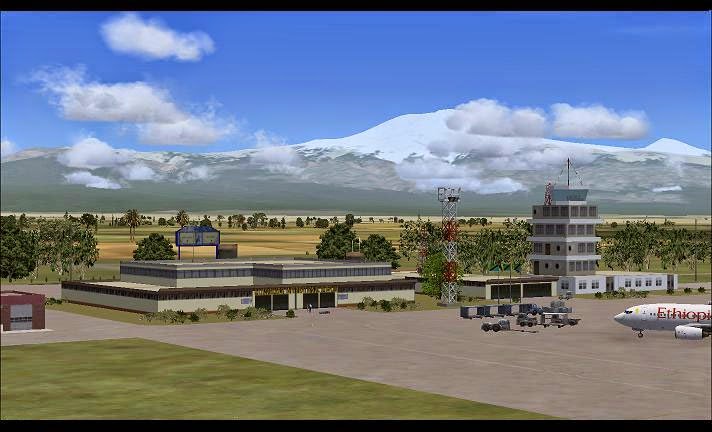
Tanzania's Iconic Fly-In Destinations
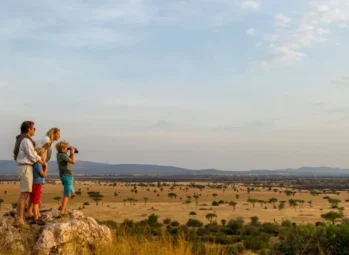
Serengeti. Seven airstrips serve different parts of the park, so which one you fly into depends entirely on your lodge's location. Seronera, in the central Serengeti, is about an hour from Arusha. Kogatende, in the northern Mara sector near the river crossings, and Sasakwa, inside the Grumeti concession where camps like Singita and andBeyond operate, both run around 45 minutes to an hour and 15 minutes from Arusha or Kilimanjaro. A standard luggage limit of 15 kilograms per person in soft bags applies on nearly every route.
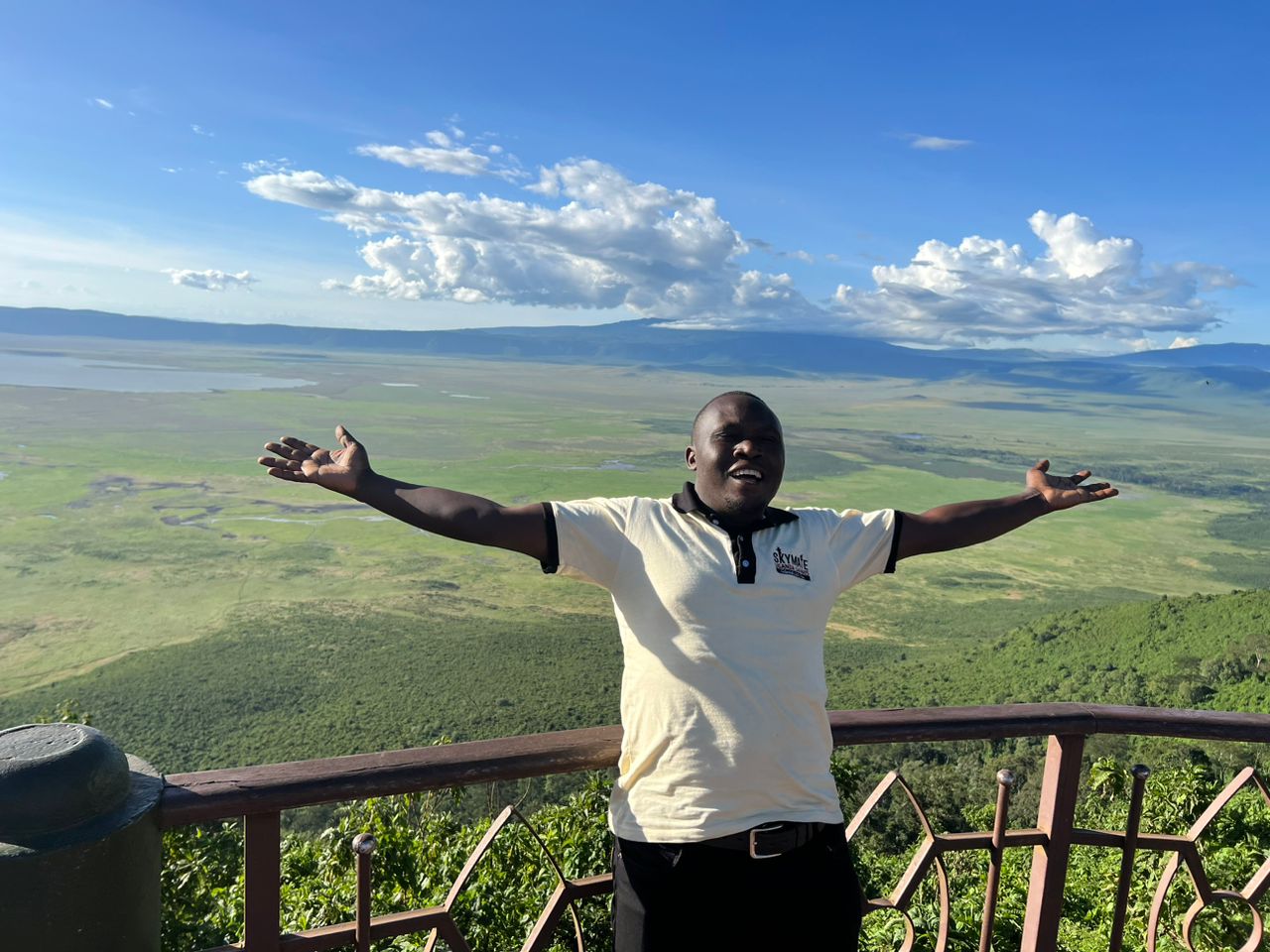
Ngorongoro Crater. Most travelers reach Ngorongoro by road from Arusha or as part of a road segment connecting Serengeti and Lake Manyara, since the crater itself does not have a dedicated airstrip in the way Serengeti does. The drive from Seronera to the crater rim takes about three hours.
Zanzibar. The classic bush-to-beach finish. Flights connect Zanzibar's Abeid Amani Karume International Airport directly to Arusha, Kilimanjaro, and several Serengeti airstrips, making a fly-in safari followed by a few days on the coast a genuinely seamless combination rather than a separate trip bolted on afterward.
Uganda's Iconic Fly-In Destinations
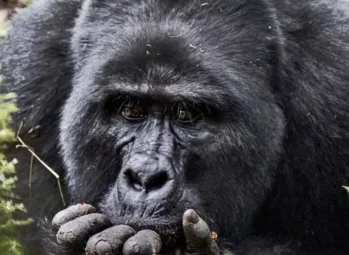
Bwindi Impenetrable National Park. Home to roughly half the world's remaining mountain gorillas. The flight from Entebbe or Kajjansi to Kihihi or Kisoro airstrip takes about an hour to an hour and 20 minutes, against an eight to ten hour road transfer. Which airstrip you use depends on which of Bwindi's four trekking sectors, Buhoma, Ruhija, Rushaga, or Nkuringo, your lodge sits in.
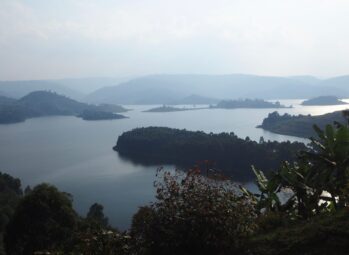
Queen Elizabeth National Park. Flights land at Mweya or Kasese airstrip, roughly an hour and 15 minutes from Entebbe. The park's Kazinga Channel boat cruise and the tree-climbing lions of Ishasha make it a natural pairing with a Bwindi gorilla trek on the same fly-in itinerary.
Murchison Falls National Park. Uganda's largest park, reached by flights into Pakuba, Bugungu, or Chobe airstrip. From any of these, connecting flights run onward to Kasese or Kihihi, which is what makes an all-air, multi-park Uganda circuit genuinely practical rather than theoretical. According to the Uganda Wildlife Authority, which manages all ten of Uganda's national parks, this connected airstrip network is a deliberate part of the country's tourism infrastructure rather than an incidental convenience.
Rwanda's Iconic Fly-In Destination
Volcanoes National Park. Rwanda's gorilla trekking heartland sits about 105 kilometres from Kigali, a two to two and a half hour drive on some of the best roads in the region. Because Rwanda has no scheduled domestic airline network, the "flying" option here means a helicopter charter, which cuts the journey to around 30 minutes and lands guests within a short drive of lodges like One&Only Gorillas Nest and Singita Kwitonda. Visit Rwanda, the country's official tourism board under the Rwanda Development Board, notes that the park protects the steep slopes of the Virunga volcanic range, home to some of the last mountain gorillas on the planet.
Nyungwe Forest. Reached by a 40 to 50 minute flight from Kigali to Kamembe, followed by a short road transfer, or by road directly from Kigali in five to six hours. Nyungwe pairs naturally with Volcanoes National Park on a Rwanda-only luxury circuit, chimpanzee trekking and canopy walks against gorilla trekking and golden monkeys.
A Sample Luxury Fly-In Itinerary Across the Region
This is a starting framework, not a fixed package, and it reshapes around your dates and interests during planning.
Days 1 to 3: Masai Mara, Kenya. Fly Wilson to a Mara airstrip in 45 minutes. Two full days of game drives, ideally timed for the wildebeest migration between July and October.
Days 4 to 6: Serengeti, Tanzania. Fly Mara to Kilimanjaro or Arusha, connecting onward to a Serengeti airstrip the same day or the next morning. Two nights split between the central plains and a private concession camp.
Days 7 to 8: Zanzibar, Tanzania. A direct flight from a Serengeti airstrip to Zanzibar closes the wildlife portion of the trip with two beach days.
Days 9 to 11: Bwindi, Uganda. Fly via Kilimanjaro or Nairobi to Entebbe, then onward to Kihihi or Kisoro for gorilla trekking. This leg works equally well as a standalone extension on a different set of dates.
Days 12 to 13: Volcanoes National Park, Rwanda. A short flight or drive from the Uganda border region into Kigali, followed by a helicopter or road transfer to Musanze for a second gorilla trek with a different habituated family.
A trip built this way rarely touches a road for more than an hour or two at a stretch, which is the entire point of treating luxury safaris in East Africa as fly-in from day one rather than road-based with the occasional flight.
The Grand Intercountry Flying Safari: East Africa's Full Iconic Circuit
Some travelers want more than a two or three country taste. This is the version built for someone who wants to see the region's full roster of icons, the Mara migration, Amboseli's elephants beneath Kilimanjaro, the Serengeti and Ngorongoro, a Zanzibar beach finish to the Tanzania leg, then Uganda's gorillas and Big Five parks, and Rwanda's gorillas and chimpanzees, all connected by air rather than broken into separate trips. It is intercountry flying at its fullest, and it works because every hub in this guide connects directly or near-directly to the next.
Days 1 to 3, Masai Mara, Kenya. Fly Wilson to a Mara airstrip in 45 minutes. Game drives across the reserve and conservancies, timed for the migration if traveling between July and October.
Day 4, Amboseli, Kenya. A short circuit flight back through Wilson or a direct connection, depending on the operator, lands you beneath Kilimanjaro for an afternoon and a night among Amboseli's elephant herds.
Day 5, transfer to Tanzania. Nairobi to Kilimanjaro International Airport is a direct flight of around 50 to 60 minutes on Kenya Airways or Precision Air, one of the shortest and most reliable international hops in the region. From Kilimanjaro or Arusha, a connecting flight the same day or the next morning reaches a Serengeti airstrip.
Days 6 to 8, Serengeti, Tanzania. Two to three nights split between the central plains around Seronera and a private concession camp such as those in the Grumeti or northern Mara sector, depending on where the migration sits that month.
Day 9, Ngorongoro Crater, Tanzania. A road transfer from Seronera to the crater rim, about three hours, since Ngorongoro has no dedicated airstrip of its own.
Days 10 to 11, Zanzibar, Tanzania. A direct flight from Arusha, Kilimanjaro, or a Serengeti airstrip to Zanzibar closes the Kenya-Tanzania wildlife leg with two days on the coast.
Day 12, transfer to Uganda. Uganda Airlines runs a direct flight between Entebbe and Kilimanjaro, so the Zanzibar-to-Uganda leg connects through Kilimanjaro without a Nairobi detour. From Entebbe or Kajjansi, a same-day or next-morning flight reaches Kihihi or Kisoro airstrip for Bwindi.
Days 13 to 14, Bwindi Impenetrable National Park, Uganda. Gorilla trekking in one of Bwindi's four sectors, with a second day free for a forest walk or a Batwa cultural visit.
Day 15, Queen Elizabeth National Park, Uganda. A short domestic flight or a three to five hour road transfer via the Ishasha sector, tree-climbing lions included, connects Bwindi to Queen Elizabeth for game drives and the Kazinga Channel boat cruise.
Day 16, transfer to Rwanda. RwandAir operates the Entebbe to Kigali route, a regional hop of roughly an hour, making Rwanda a natural closing leg rather than a separate trip.
Day 17, Volcanoes National Park, Rwanda. A helicopter charter or the two to two and a half hour road transfer from Kigali reaches Musanze for a second gorilla trek with a different habituated family than the one tracked in Bwindi.
Day 18, Nyungwe Forest, Rwanda. A 40 to 50 minute flight from Kigali to Kamembe, followed by a short drive, closes the circuit with chimpanzee trekking and a canopy walk before departure through Kigali.
Eighteen days is a long trip by most standards, and this framework is meant to be trimmed rather than followed exactly. A traveler short on time might keep the Kenya and Tanzania legs and drop Rwanda, or fly straight from Zanzibar home and treat Uganda and Rwanda as a separate departure later in the year. What makes the full circuit realistic at all is that none of these connections require backtracking through Nairobi, since Kilimanjaro, Entebbe, and Kigali all link to each other directly.
What Luxury Safaris in East Africa Actually Cost
Flight prices vary by season and route, but rough current figures give a useful sense of scale.
- Wilson to Masai Mara: roughly USD 100 to 300 per person one way, depending on season and airstrip
- Arusha to Serengeti: roughly USD 150 to 400 per person one way, with private concession airstrips like Kogatende or Sasakwa at the higher end
- Entebbe to Bwindi (Kihihi or Kisoro): roughly USD 250 to 350 per person one way
- Kigali to Volcanoes National Park by helicopter charter: priced per charter rather than per seat, and considerably more than the road transfer, though it is often bundled into ultra-luxury lodge packages
On top of flights, gorilla trekking permits cost USD 800 per person in Uganda and USD 1,500 per person in Rwanda, while a full luxury lodge stay typically runs USD 800 to over USD 1,500 per person per night across the region's top-tier camps. A ten to fourteen day multi-country luxury fly-in safari commonly totals USD 8,000 to USD 20,000 or more per person, depending on how many countries and premium camps are included.
Practical Fly-In Logistics
Luggage limits. Nearly every route in this guide caps checked luggage at 15 kilograms per person, and bags must be soft-sided duffels rather than rigid suitcases, since bush plane cargo holds are irregularly shaped. Excess luggage can usually be stored at a hotel in Nairobi, Arusha, or Entebbe and collected at the end of the trip.
Scheduled versus charter. Scheduled flights on shared aircraft are cheaper and run daily on the busiest routes, but they often make multiple stops to drop and collect passengers at other airstrips, which adds 10 to 30 minutes per stop. Private charters cost more but fly point to point on your schedule, which matters most for groups traveling together or connecting tight itineraries.
Timing. Morning flights are generally more reliable than afternoon ones, since East Africa's rainy season afternoons can bring localized storms that delay departures. Booking the earliest available flight also means arriving in time for a same-day game drive rather than losing the first afternoon to travel.
Best Time of Year to Fly
Weather affects fly-in safaris more directly than road-based ones, since small aircraft are more sensitive to storms and low cloud than a 4x4 on a wet road.
Dry season, June to October and December to February. The most reliable flying conditions across the region, with the fewest delays and cancellations. This window also overlaps with the wildebeest migration in the Mara and Serengeti between July and October, which is why it is the busiest and most expensive time to fly.
Long rains, March to May. Afternoon storms are common in Kenya, Tanzania, and Uganda during this period, and flights are more likely to be rescheduled to the morning or delayed by an hour or two. Fewer travelers also means better availability on the most sought-after private concession camps.
Short rains, November. Generally lighter and more predictable than the March to May rains, with afternoon showers rather than sustained storms. Many operators treat this as a shoulder season with good flying reliability and lower rates.
Rwanda's Volcanoes National Park sits at higher altitude than the other destinations in this guide, so cloud cover around the Virunga peaks can affect helicopter transfers even outside the main rainy seasons. Morning charters are the more reliable option here year-round.
Which Country to Fly Into First
For travelers combining more than one country, the order matters. Flying into Nairobi first gives easy same-day access to Wilson Airport and the Mara, making it the most efficient opening leg for a Kenya-Tanzania combination. Flying into Kilimanjaro first works better if Tanzania is the priority, since it avoids an extra Nairobi-to-Arusha connection. For an Uganda-Rwanda combination, Kigali is often the more convenient entry point even for an Uganda-focused trip, since Rwanda's roads are better maintained and the drive north to the Uganda border area is more predictable than routing through Entebbe first.
Is flying between parks necessary for a luxury safari, or is it just a nice extra? It depends on the itinerary. A single-park luxury stay does not require flying at all. Multi-park or multi-country trips are where flying stops being optional, since the alternative road transfers can consume entire travel days that would otherwise be spent on safari.
Can international flights connect directly to safari airstrips? No. Every route in this guide requires landing at a hub airport first, Wilson, Kilimanjaro or Arusha, Entebbe, or Kigali, then connecting onward by a separate domestic or charter flight.
How far in advance should flights be booked on a luxury fly-in safari? Scheduled flights on popular routes like Wilson to the Mara or Arusha to the Serengeti can often be booked a few months out. Private charters and helicopter transfers, especially in Rwanda, benefit from booking further ahead since aircraft availability is more limited.
Is a multi-country luxury safari across Kenya, Tanzania, Uganda, and Rwanda realistic in one trip? Yes, and the region's four-hub flying network is specifically what makes it realistic. The main constraint is time rather than logistics, since doing all four countries justice, rather than rushing through, generally needs twelve days or more.
Do children have age restrictions on fly-in safaris? The aircraft themselves have no age restriction, but the activities at the destination often do. Gorilla trekking in both Uganda and Rwanda has a minimum age of 15, so families traveling with younger children typically build an itinerary around game drives and boat cruises instead, saving the gorilla trekking legs for a future trip.
What happens if a scheduled flight is cancelled due to weather? Operators typically rebook passengers onto the next available flight the same day, or arrange a road transfer if the delay would otherwise cost a full day of the trip. Building one buffer day into a multi-leg itinerary, rather than scheduling flights back to back with no slack, is the simplest way to absorb a weather delay without losing planned time at a destination.
Start Planning Your Luxury Safaris in East Africa
Luxury safaris in East Africa run on flight schedules as much as on wildlife seasons. Getting the routing right, which hub connects to which airstrip, how much time each leg actually saves, and where the fly-in advantage matters most, is what separates an itinerary that flows from one spent stuck in transit.
At Tulambule, we build fly-in itineraries across Kenya, Tanzania, Uganda, and Rwanda as a single connected trip, not four separate bookings, with a Zanzibar extension whenever a beach finish makes sense. For the full multi-country picture, our combined East African safaris guide covers how these routes link together in more depth.