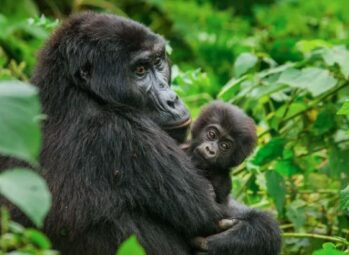
Few questions come up more often among travelers researching a gorilla safari than a simple one: how many mountain gorillas are left in the wild today. It is a fair question, and a genuinely hopeful one, since mountain gorillas are the only great ape subspecies on earth whose population is currently growing rather than shrinking. This guide answers how many mountain gorillas are left in detail, walks through where they live, how conservationists count them, and why the number keeps climbing despite the very real threats these animals still face.
For anyone planning a trip to see these animals in person, understanding the full story behind that number adds a layer of meaning to the trek that a simple statistic alone cannot fully capture, connecting a single face-to-face encounter with wild gorillas to a decades-long conservation effort spanning three countries and countless individual rangers, researchers, and local communities.
How Many Mountain Gorillas Are Left Today
The most recent confirmed census data puts the global mountain gorilla population at approximately 1,063 individuals, a figure drawn from surveys conducted across the species' two isolated habitats and released through the Greater Virunga Transboundary Collaboration. Preliminary results from the 2025 to 2026 monitoring cycle suggest the true number may now have crossed 1,100, though a fully verified census update has not yet been formally published. Whichever figure ultimately proves most accurate, the trend answering how many mountain gorillas are left tells the same story: steady, sustained growth across nearly four decades of dedicated conservation work.
To put that number in perspective, anyone asking how many mountain gorillas are left today is asking about a population that stood at roughly 620 individuals in 1989 and dipped as low as an estimated 250 to 400 individuals during the darkest years of the 1980s. The recovery from those numbers to over 1,063 today represents one of the most significant conservation success stories involving any large mammal anywhere in the world, and it is the reason mountain gorillas were formally reclassified from critically endangered to endangered on the IUCN Red List in 2018.
Where Mountain Gorillas Live Today
Understanding how many mountain gorillas are left also means understanding where they actually live, since the species survives in only two separate, geographically isolated populations anywhere on the planet. The larger of the two, the Virunga Massif, is a chain of volcanoes straddling the borders of Rwanda, Uganda, and the Democratic Republic of Congo, home to roughly 604 individuals according to the most recent survey. This population is shared across Rwanda's Volcanoes National Park, Uganda's Mgahinga Gorilla National Park, and DRC's Virunga National Park, with gorilla families moving freely across these unmarked international borders as they forage through the bamboo and montane forest.
The second population lives entirely separately, in Bwindi Impenetrable National Park in southwestern Uganda and the adjoining Sarambwe Nature Reserve just across the border in DRC, together holding an estimated 459 individuals. Anyone researching how many mountain gorillas are left quickly discovers that Bwindi alone is now home to slightly less than half of the entire global population, making it Uganda's single most important gorilla stronghold and the reason the country markets itself so heavily around gorilla trekking tourism. No mountain gorillas exist anywhere else in the wild, and none have ever survived long-term in captivity, making these two forest ecosystems genuinely irreplaceable for the species' continued existence.
How Conservationists Count Mountain Gorillas
The figure most commonly cited when people ask how many mountain gorillas are left comes from an extraordinarily labor-intensive counting process that cannot simply rely on aerial surveys or camera traps the way many other wildlife censuses do. Field teams from the Uganda Wildlife Authority, the Rwanda Development Board, and DRC's Institut Congolais pour la Conservation de la Nature conduct sweeps on foot through dense, steep, high-altitude forest, searching for fresh gorilla nests, footprints, feeding trails, and dung samples used for genetic analysis to distinguish individual animals and avoid double-counting family groups.
This method, while slow and physically demanding for the survey teams involved, produces genuinely reliable data precisely because it combines direct observation with genetic verification rather than relying on estimates or extrapolation. Census sweeps typically take months to complete across the full Virunga Massif and Bwindi ecosystems, which is why the figure people cite when discussing how many mountain gorillas are left often lags a year or two behind the actual on-the-ground reality, with births and deaths in habituated and unhabituated groups alike continuing between official survey periods.
Why the Population Keeps Growing
The answer to how many mountain gorillas are left would look very different today without decades of deliberate, well-funded conservation intervention. Sustained anti-poaching patrols across all three range countries have dramatically reduced snaring and direct hunting, while veterinary teams under programmes like Gorilla Doctors provide emergency medical care to gorillas injured by snares or suffering from respiratory illness, interventions credited with saving numerous individual animals and, by extension, entire family lines over the decades.
Tourism revenue plays a central role in this recovery story as well. Gorilla trekking permits, priced at eight hundred US dollars in Uganda and fifteen hundred US dollars in Rwanda, generate substantial funding that flows directly into ranger salaries, habitat protection, and community development programmes surrounding the parks. This model gives local communities a direct economic stake in the gorillas' survival, transforming what was once viewed primarily as competition for land and resources into a source of sustainable income, which helps explain why the answer to how many mountain gorillas are left has moved so consistently in the right direction even as human populations in the surrounding districts have grown substantially over the same period.
Threats That Still Face Mountain Gorillas
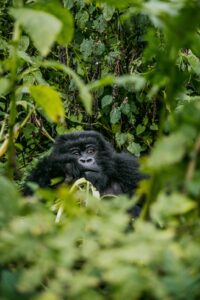
Despite the encouraging trajectory, anyone asking how many mountain gorillas are left should understand the population remains genuinely fragile rather than secure. The Virunga Massif sits within one of the most politically unstable regions in the world, and armed conflict in eastern DRC has repeatedly threatened gorilla habitat and disrupted conservation operations on the Congolese side of the border, even as Rwanda and Uganda have maintained considerably more stable protection efforts on their respective sides.
Disease transmission represents another persistent concern, since mountain gorillas share close to ninety eight percent of human DNA and remain susceptible to many of the same respiratory illnesses that affect people. A serious outbreak, whether introduced through tourism, research activity, or contact with surrounding communities, could spread rapidly through a population confined to such a small, isolated habitat. Strict trekking protocols, including mask requirements during illness and mandatory distance from the gorillas, exist specifically to manage this risk, underscoring just how carefully the answer to how many mountain gorillas are left needs to be protected against a single serious setback.
Habitat pressure adds a slower-moving but equally serious threat. Both the Virunga Massif and Bwindi sit surrounded by some of the most densely populated agricultural land anywhere in Africa, leaving essentially no room for the gorillas' range to expand even as the population grows. Climate change compounds this pressure further, with shifting rainfall patterns and rising temperatures threatening to alter the bamboo and montane vegetation zones mountain gorillas depend on for food, a slow-moving risk that could eventually cap how many mountain gorillas are left regardless of how effective anti-poaching and veterinary programmes remain.
How Gorilla Trekking Supports the Population
For travelers wondering how many mountain gorillas are left and what they can personally do to help, the most direct and effective answer is simple: book a trek. Every gorilla trekking permit sold in Uganda or Rwanda funnels a substantial share of its cost directly into the conservation infrastructure responsible for the population's recovery, from ranger patrols and veterinary care to community development projects that reduce the economic pressure to encroach on gorilla habitat.
Tourism has become so central to the conservation model that a meaningful drop in visitor numbers, as happened briefly during the global disruptions of the early 2020s, translates directly into reduced funding for the protection programmes keeping the answer to how many mountain gorillas are left trending upward.
Habituation itself, the gradual process of acclimating wild gorilla families to human presence so they can be safely visited by trekkers, also plays a direct role in the population's monitoring and protection. Habituated families are tracked daily by rangers, meaning any sign of injury, illness, or distress is identified and addressed far faster than would be possible for entirely wild, unmonitored groups. This daily oversight has become one of the more understated reasons habituated populations have fared so well, adding meaningfully to the overall figure whenever someone asks how many mountain gorillas are left today.
A Timeline of Mountain Gorilla Population Recovery
Tracing how many mountain gorillas are left across the decades tells the recovery story more vividly than any single snapshot figure. When the subspecies was first scientifically documented in 1902, no reliable population estimate exists, but by the time serious conservation attention began in the 1960s and 1970s, numbers had already fallen dramatically due to hunting, habitat clearance, and the early stages of regional conflict. By 1981, surveys suggested as few as 254 individuals remained in the Virunga Massif alone, a low point that prompted Dian Fossey and other researchers to warn openly that the subspecies could disappear entirely within a generation.
The 1989 census, often cited as the modern baseline for tracking how many mountain gorillas are left, recorded approximately 620 individuals across both populations. By 2010, the Virunga Massif alone had recovered to 480 individuals, rising further to 604 by the 2015 to 2016 survey. Bwindi's population climbed in parallel, from around 320 individuals in the late 1990s to 400 by 2011 and 459 by the 2018 census that produced today's most commonly cited global figure of 1,063. This decades-long upward trajectory, sustained through periods of genuine regional instability, remains one of the clearest examples in conservation history of what committed, well-funded protection can achieve even under difficult political circumstances.
How Mountain Gorillas Compare to Other Great Apes

Context matters enormously when discussing how many mountain gorillas are left, since the broader great ape picture makes the mountain gorilla's recovery even more remarkable by comparison. Western lowland gorillas, the more numerous gorilla subspecies found across Central Africa, number in the hundreds of thousands but face steep ongoing declines from disease, particularly Ebola outbreaks, and commercial bushmeat hunting. Eastern lowland gorillas, found primarily in DRC, have suffered catastrophic losses tied to decades of armed conflict, with populations estimated to have fallen by more than half in some regions since the 1990s.
Chimpanzees and bonobos, humanity's closest living relatives, both continue to decline across most of their range due to habitat fragmentation and hunting pressure, despite considerable international conservation investment. Against this backdrop, mountain gorillas stand alone as the only great ape subspecies with a population trend moving consistently upward, a distinction conservationists frequently highlight specifically because it demonstrates that extinction is not an inevitable outcome even for a species that came as close to disappearing as mountain gorillas did in the 1980s. Understanding how many mountain gorillas are left within this wider context of great ape decline underscores just how unusual, and how hard-won, this particular recovery story genuinely is.
The Role of Habituated Versus Wild Family Groups
Not every mountain gorilla counted in the answer to how many mountain gorillas are left belongs to a habituated family available for tourist trekking. Roughly half of the known gorilla population across both the Virunga Massif and Bwindi remains unhabituated, living entirely wild and largely undisturbed by human contact beyond the periodic census sweeps used to count them. These wild groups serve as a genetically important reservoir for the overall population, and researchers deliberately limit the number of families habituated for tourism specifically to avoid overexposing the entire population to human contact and the disease risk that comes with it.
Habituation itself is a slow, multi-year process, requiring daily contact between a dedicated tracking team and a wild gorilla family until the animals grow sufficiently accustomed to human presence to tolerate visits from trekking groups without significant behavioural disruption. Both Uganda and Rwanda continue habituating additional families gradually, expanding permit capacity over time without compromising the welfare of the animals involved, a careful balancing act that directly shapes how many mountain gorillas are left available for the gorilla habituation experience versus standard trekking on any given visit.
Common Questions About Mountain Gorilla Numbers
Travelers researching a gorilla safari tend to ask a related set of questions once they understand the basic answer to how many mountain gorillas are left. Are mountain gorillas still endangered despite the population growth? Yes, the species remains classified as endangered by the IUCN, a step up from critically endangered but still reflecting genuine vulnerability given how small and geographically isolated the total population remains.
How many mountain gorillas are left in Uganda specifically? Uganda hosts the majority of the global population, with roughly 459 individuals in Bwindi Impenetrable National Park and Sarambwe combined, plus a small additional number within the Ugandan portion of the Virunga Massif at Mgahinga Gorilla National Park.
How many mountain gorillas are left in Rwanda? Rwanda's Volcanoes National Park holds a share of the roughly 604 individuals spread across the Virunga Massif, though exact per-country breakdowns within that transboundary population shift somewhat since gorilla families move freely across the Rwanda, Uganda, and DRC borders. Could mountain gorillas go extinct again? While the current trend is positive, conservationists are clear that the recovery remains conservation-dependent rather than self-sustaining, meaning continued funding, political stability, and active protection remain essential to keeping the answer to how many mountain gorillas are left moving in the right direction.
Is it true mountain gorillas cannot survive in captivity? Yes, no mountain gorilla has ever survived long-term outside its natural high-altitude habitat, which is part of why protecting the Virunga and Bwindi ecosystems specifically, rather than relying on any captive breeding safety net, remains so critical to the species' future.
What the Future Holds
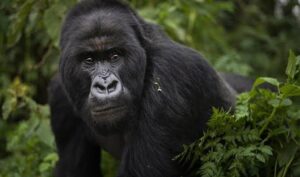
Projections for how many mountain gorillas are left in coming years depend heavily on factors outside conservationists' direct control, particularly regional political stability in eastern DRC and the continued flow of tourism revenue that funds protection efforts across all three range countries. Optimistic scenarios built on current trends suggest the population could continue climbing modestly toward 1,200 or beyond within the next decade, provided anti-poaching funding remains steady and no major disease outbreak or period of sustained armed conflict disrupts the gentle upward trajectory recorded since the late 1980s.
More cautious assessments note that without continued and even increased investment, in the range of hundreds of millions of dollars across the coming decade according to some conservation estimates, the gains achieved so far could stall or reverse, particularly if habitat loss from surrounding agricultural expansion accelerates or if a serious disease outbreak strikes an unvaccinated, geographically confined population.
Some conservation groups have modeled worst-case scenarios in which renewed conflict in eastern DRC, combined with unchecked habitat pressure and a major disease event, could see numbers fall back below 800 within a matter of years rather than decades, a sobering reminder that the current recovery, however impressive, remains reversible under the wrong combination of circumstances. This uncertainty is precisely why every gorilla trekking permit purchased, every conservation donation made, and every informed traveler asking how many mountain gorillas are left continues to matter for the species' long-term survival.
The organizations most directly responsible for tracking and protecting the population, including the International Gorilla Conservation Programme, the Dian Fossey Gorilla Fund, and the Uganda Wildlife Authority, generally frame the current outlook with cautious optimism rather than confident certainty. Their consistent message is that this recovery has improved dramatically because of deliberate, sustained human effort, not despite an absence of threats, and that the same level of commitment will need to continue indefinitely if that trajectory is to hold.
For travelers and conservation supporters alike, this framing reinforces a simple point: the recovery is real, but it is not finished, and it depends on continued engagement rather than treating the current positive numbers as a problem already solved.
Why This Number Matters for Your Uganda or Rwanda Trip
Understanding how many mountain gorillas are left adds real weight to a gorilla trekking experience that already ranks among the most profound wildlife encounters available anywhere on earth. Standing a few metres from a wild silverback in Bwindi or the Virunga Massif means encountering a member of a population that numbered barely 250 individuals within living memory, now recovered to over 1,063 through decades of committed conservation work funded substantially by travelers doing exactly what you are considering.
Every trek booked directly supports the rangers, veterinarians, and community programmes responsible for that recovery continuing into the future. Reach out to Tulambule Uganda Safaris to plan your own gorilla trekking trip to Bwindi, Mgahinga, or Rwanda's Volcanoes National Park, and see firsthand the animals whose population you now know the full story behind.
SUGGESTED PACKAGES
4 Days Safari In Beautiful Queen Elizabeth National Park 2026/27
5 Days Uganda Safari Gorillas, Chimps, Wildlife & Culture
6 Day Luxury Safari Uganda: Gorillas, Wildlife & Culture
6 Day Uganda Safari, Chimps, Gorillas and Wildlife
6-Day Luxury Rwanda & Uganda gorilla Tour
21 Days Uganda Sari: Three Weeks In Uganda