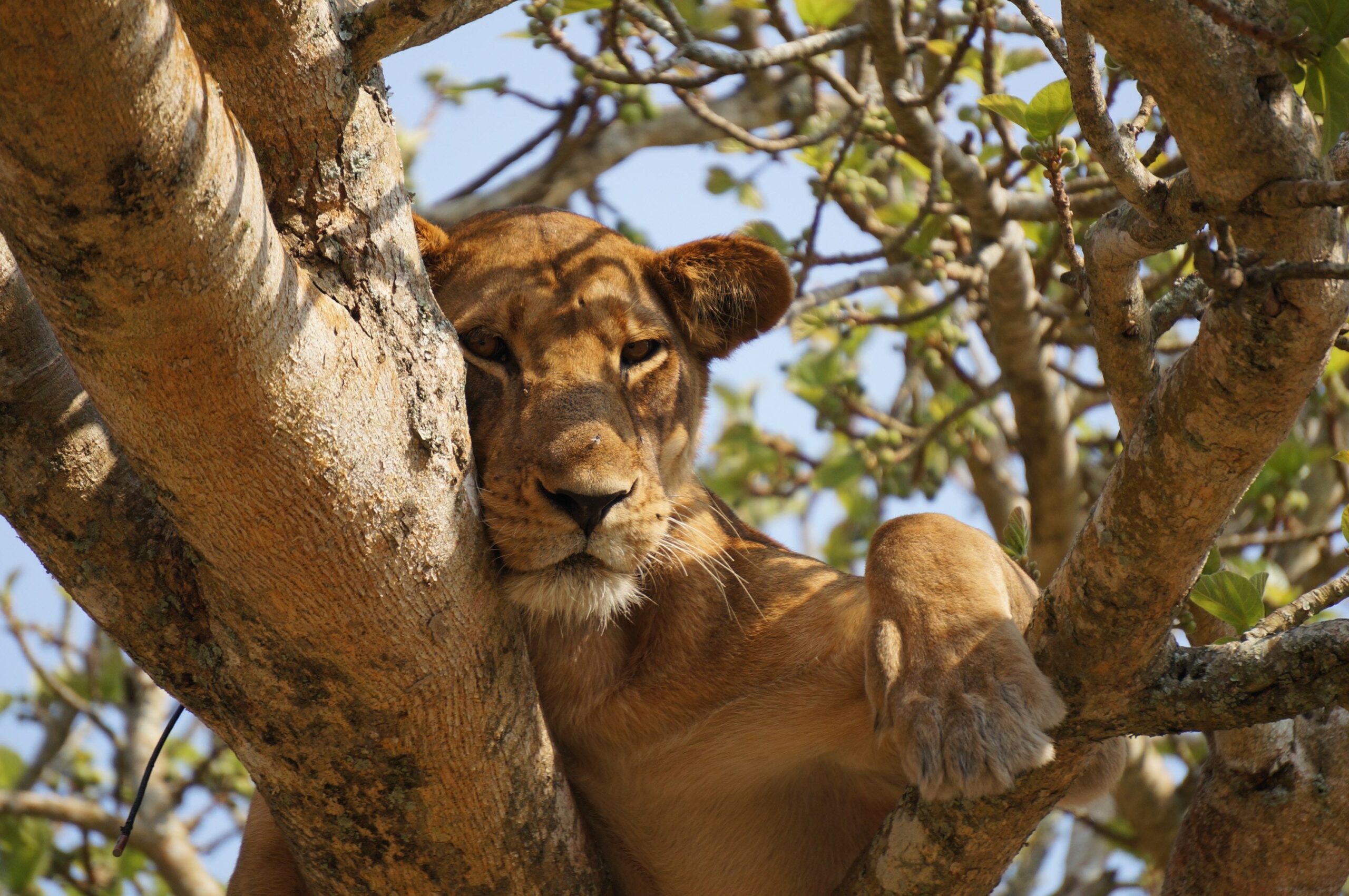
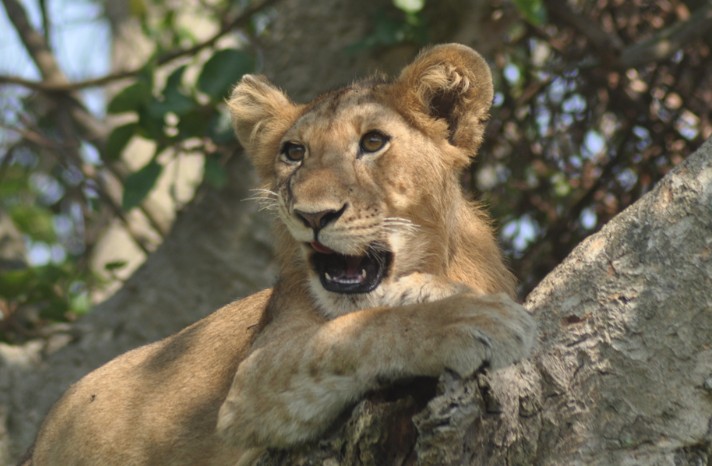
The tree climbing lions of Ishasha are one of the strangest, most photographed sights in African wildlife. Lions are heavy, ground-dwelling cats, not built for climbing, yet the prides of Ishasha spend much of the day draped across the branches of fig and acacia trees, several meters off the ground.
It is a behavior seen in only a handful of places on Earth. Ishasha, in the southern sector of Queen Elizabeth National Park, is one of them.
This guide covers what you actually need to know before chasing this sighting: why the lions climb, where exactly to look, when your odds are best, and how to plan the rest of a Uganda itinerary around it.
In short, here is what this guide covers:
- Why the tree climbing lions of Ishasha do something almost no other lion population does
- Exactly where in the park to look, and which trees are favorites
- The best time of day and season to improve your odds
- How to build Ishasha into a wider Uganda safari route
- What to expect if you do not see them (it happens, and it is worth knowing in advance)
What Are the Tree Climbing Lions of Ishasha?
Ishasha is the remote southern sector of Queen Elizabeth National Park, bordering the Democratic Republic of Congo. It is quieter and less developed than the park's northern sectors, with fewer vehicles and a wilder feel.
What makes it famous is a small number of prides that have taken to resting in trees during the day. Most lions elsewhere in Africa lie in the open or in low shade. Ishasha's lions climb.
The behavior was first widely documented decades ago and has since made Ishasha one of the most sought-after wildlife sightings in East Africa. It is rare enough that even seasoned safari guides still get excited pointing it out.
A Short History of the Ishasha Phenomenon
Tree climbing in lions is not entirely unheard of elsewhere in Africa. Individual lions occasionally climb short distances in various parks, usually just onto a low branch or fallen trunk.
What sets the tree climbing lions of Ishasha apart is consistency. Multiple prides here climb regularly, use the same favored trees for years, and spend hours at a time resting well above ground level.
Researchers and safari guides began documenting the behavior systematically decades ago, and it quickly became one of the defining reasons travelers add Queen Elizabeth National Park to a Uganda itinerary in the first place. Today, the Ishasha sector's entire tourism identity is built around this one unusual habit.
Why Do the Tree Climbing Lions of Ishasha Actually Climb Trees?
Nobody has settled this definitively, and that uncertainty is part of what makes the tree climbing lions of Ishasha so interesting. A few theories are widely accepted, and they are not mutually exclusive.
Escaping tsetse flies and biting insects. Ground level in Ishasha, especially in wetter months, carries heavy insect activity. Climbing a few meters up puts the lions above much of it.
Escaping the heat. Savanna temperatures can climb well past 30 degrees Celsius at midday. Tree branches catch a breeze that the ground simply does not get, and the canopy provides shade.
A better vantage point. From a branch, a lion can watch Uganda kob and topi herds moving across open plains far more easily than from ground level.
Learned, cultural behavior. Some researchers believe cubs simply learn the habit from adults in the pride, which would explain why it shows up reliably in a handful of specific lion populations rather than lions everywhere.
The honest answer is that it is probably a combination of all four. What is clear is that Ishasha's fig trees, with their wide, low, sturdy branches, are unusually well suited to holding a resting lion, and that matters as much as the lion's motivation.
Where Exactly to Find the Tree Climbing Lions in Ishasha
The Ishasha sector sits in the far south of Queen Elizabeth National Park, roughly a two to three hour drive from the park's main northern circuit around the Kazinga Channel.
Within Ishasha, the lions favor a cluster of large, old fig trees scattered across the open plains near the Ishasha River. Guides in the area know these trees well and often check them first on a game drive.
Sightings are not guaranteed. Even experienced local guides put the odds at roughly fifty percent on any given drive, since the lions move between trees, and sometimes stay on the ground entirely for days at a time.
That uncertainty is part of the appeal for many travelers. A confirmed sighting feels earned rather than scheduled.
Best Time to See the Tree Climbing Lions of Ishasha
The dry seasons, roughly June to September and December to February, offer the best combination of accessible roads and predictable lion movement.
Midday tends to be the most reliable window, since heat and insects are exactly the conditions that seem to push the lions up into the branches in the first place. A late morning or early afternoon game drive often beats a dawn one for this specific sighting, even though dawn is usually better for general game viewing.
Multiple game drives across two days meaningfully improve your odds over a single rushed pass through Ishasha. If tree climbing lions are the priority, it is worth building an overnight into the itinerary rather than treating Ishasha as a drive-through stop.
How to Get to Ishasha
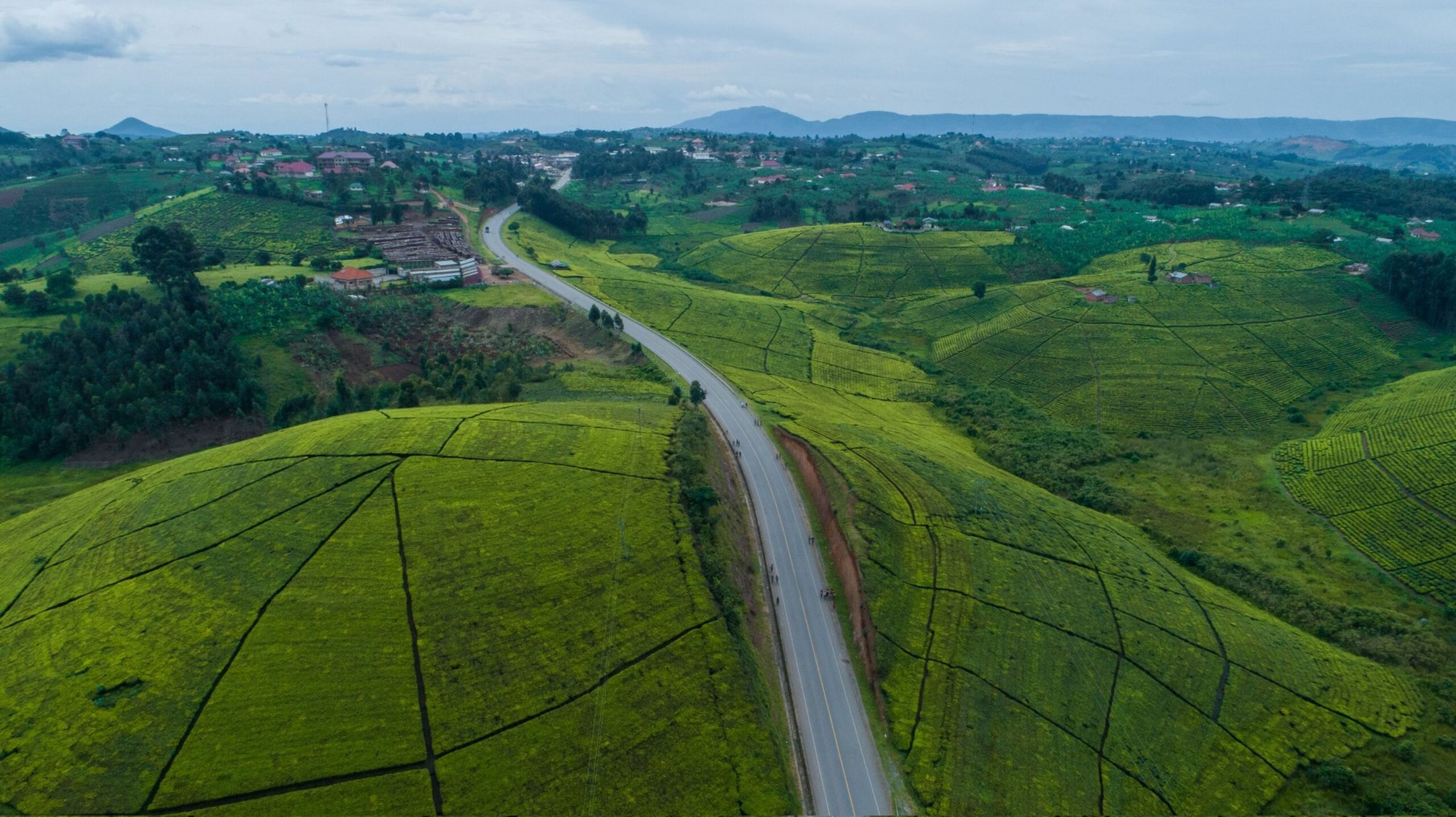
Most visitors reach Ishasha as part of a wider Queen Elizabeth National Park circuit, driving south from the park's Mweya or Kasenyi areas, roughly two to three hours on rougher, quieter park roads.
By road from Kampala, the standard route runs via Mbarara, roughly five to six hours to the park's northern gate, with Ishasha itself another stretch south from there. A second route via Fort Portal and Kasese approaches from the north and works well if you are combining Queen Elizabeth with Kibale chimpanzee trekking beforehand.
Charter flights connect Entebbe to nearby airstrips for travelers short on time, though most itineraries that specifically prioritize the tree climbing lions of Ishasha build in road time deliberately, since the drive itself passes through excellent general game viewing country.
Ishasha also works well as a link between Queen Elizabeth and Bwindi Impenetrable Forest, since the road from Ishasha climbs directly into the Kigezi highlands toward Bwindi's gorilla trekking sectors.
This makes Ishasha a natural stop on any itinerary already built around Uganda's gorilla trekking permits, rather than a separate trip. A short detour through Ishasha adds tree climbing lions to a route you were likely already taking.
Where to Stay Near Ishasha
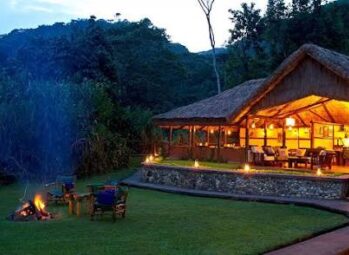
Accommodation in Ishasha is intentionally low-key: a handful of small lodges and tented camps rather than large resorts, chosen for proximity to the lions' favorite trees over anything flashier.
Several of the lodges in Queen Elizabeth National Park sit specifically in or near the Ishasha sector, positioned so morning and late-afternoon game drives can start close to where sightings are most likely.
Staying overnight in Ishasha, rather than day-tripping from further north, gives you two or three separate windows to look rather than one.
What Else to See While You're in Ishasha
Even setting the lions aside, Ishasha holds its own as a wildlife destination in its own right.
Large herds of Uganda kob and topi graze the open plains, drawing predators to the area in the first place. Buffalo and elephant are regularly seen along the Ishasha River, and the sector's quieter roads mean fewer vehicles crowding any given sighting.
Birdlife is strong too, with the riverine forest edge attracting species you are less likely to see on the park's busier northern circuit. Guides who spend the day in Ishasha searching for lions will typically call out plenty else worth stopping for along the way.
Conservation Status of Uganda's Lions
Uganda's lion population, including the prides of Ishasha, is a genuine conservation priority. The African lion overall is classified as Vulnerable on the IUCN Red List, with numbers declining across much of the continent due to habitat loss and human-wildlife conflict.
Queen Elizabeth National Park's lions have faced specific pressures in recent years, including poisoning incidents linked to conflict with communities bordering the park. This makes every sighting, tree climbing or otherwise, part of a population worth actively protecting rather than something to take for granted.
Responsible, well-managed tourism plays a real role here. Revenue from park fees and permits directly funds the ranger patrols and community programs that keep Ishasha's lions safe.
Are Ishasha's Lions the Only Tree Climbing Lions in Africa?
No, though they are one of the most famous populations. Uganda Wildlife Authority, which manages Queen Elizabeth National Park, lists Ishasha as one of the park's signature wildlife experiences precisely because the behavior is so unusual.
The best-known comparison is Lake Manyara National Park in northern Tanzania, where a separate lion population shows the same habit. Smaller, less consistent sightings have also been reported in a few other African parks over the years.
Ishasha and Lake Manyara remain the two places where tree climbing is reliable enough to plan a trip around, rather than a rare, one-off sighting.
Tips for Photographing the Tree Climbing Lions of Ishasha
Bring a longer lens if you have one. Lions in trees are often further from the road than lions resting in the open, and a 200mm-plus lens makes a real difference.
Shoot from a low angle when your vehicle allows it. Looking up into the branches often produces a more dramatic composition than a flat, level shot.
Be patient and quiet. A resting lion in a tree is not going anywhere fast. Give your guide time to position the vehicle rather than rushing the shot.
Protect your gear from dust. Ishasha's roads are rougher than the park's main circuit, and camera bags benefit from a dust cover on the drive in.
Frequently Asked Questions About the Tree Climbing Lions of Ishasha
What are my actual odds of seeing them? Most experienced guides estimate roughly fifty percent on any single game drive. Staying overnight and doing multiple drives improves this considerably.
Is Ishasha worth visiting if I do not see the lions? Yes. Ishasha also has strong general game viewing, Uganda kob, buffalo, elephant, and a quieter, less-visited feel than the park's northern sectors.
Can I combine Ishasha with gorilla trekking in Bwindi? Yes, and it is one of the most popular ways to see it. The drive from Ishasha to Bwindi is a natural continuation of a Queen Elizabeth itinerary.
What time of year gives the best chance of a sighting? The dry seasons, June to September and December to February, generally offer the most predictable conditions and easiest road access.
Do the lions climb trees at night? Rarely. Sightings are almost always during daylight hours, when heat and insects are at their worst on the ground.
Continue Planning Your Trip
Ready to build a Uganda itinerary around Ishasha's tree climbing lions? Browse our full range of Uganda and East Africa itineraries, start building your own trip with Build My Safari, or contact our team directly to talk through the best time to go.