What USD 800 in Uganda and USD 1,500 in Rwanda Actually Buys You!
Find 6 Reasons why is Gorilla trekking so expensive! You have done the research. You have looked up gorilla trekking in Uganda, read about the forests of Rwanda, and then you hit the permit price — USD 800 for Uganda, USD 1,500 for Rwanda — and stopped cold.
That reaction is completely normal. Most travellers ask the same thing: why is gorilla trekking so expensive? It is a fair question, and it deserves a full, honest answer — not a one-line deflection about "supporting conservation."
The truth is that gorilla trekking cost is high for very specific, very defensible reasons. Once you understand each of them, something interesting tends to happen: the price starts to look different. Not cheap, but deeply justified. And for most people who have actually stood in a forest face-to-face with a wild mountain gorilla family, the word "expensive" disappears entirely.
This guide walks you through every factor behind gorilla trekking cost in Uganda and Rwanda, compares both destinations honestly, and gives you practical advice on getting the best value for your money in 2026.
Start Here: What You Are Actually Paying to See
Before any conversation about price makes sense, you need to understand what makes mountain gorillas unlike any other wildlife on earth.
Mountain gorillas (Gorilla beringei beringei) are one of the most endangered animals in the world. As recently as the 1980s, fewer than 300 individuals remained alive. The species was considered to be heading toward extinction within a generation. Today, after decades of intensive conservation work funded almost entirely by gorilla tourism revenue, that number has climbed to just over 1,000.
Every single mountain gorilla on earth lives in one narrow belt of high-altitude forest — split between Uganda, Rwanda and the Democratic Republic of Congo. There is no mountain gorilla in any zoo, anywhere in the world. They cannot survive in captivity. If you want to see one, there is only one option: you travel to them, into their forest, on their terms.
That reality alone — the sheer rarity and inaccessibility of the animal — begins to explain why gorilla trekking is so expensive. But it is only the beginning.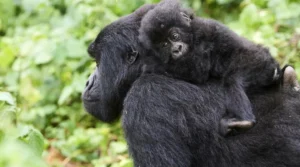
Reason 1: The Gorilla Permit Price Is Government-Set and Conservation-Funded
The largest single component of gorilla trekking cost is the permit. As of 2026, here is what each country charges:
| Country | Park | Gorilla Permit Price | Time with Gorillas |
|---|---|---|---|
| Uganda | Bwindi Impenetrable / Mgahinga | USD 800 | 1 hour |
| Rwanda | Volcanoes National Park | USD 1,500 | 1 hour |
| DR Congo | Virunga National Park | USD 400 | 1 hour |
The first thing to understand is that these gorilla permit prices are fixed by government wildlife authorities — Uganda Wildlife Authority (UWA) and Rwanda Development Board (RDB). No tour operator sets them, adjusts them or earns a margin on them. When you pay for a permit, every dollar goes to the authority managing the national park.
The second thing to understand is where that money actually goes. In Uganda, UWA distributes permit revenue across:
- Daily anti-poaching ranger patrols and field operations across the park
- Salaries for the trackers who locate gorilla families before dawn every morning
- Ongoing veterinary care through the internationally recognised Gorilla Doctors programme
- Ecological monitoring, forest research and long-term habitat management
- Park infrastructure including ranger stations, access routes and communications equipment
- Community revenue sharing — by law, UWA allocates 20% of annual park revenue to communities surrounding the parks, and an additional USD 10 from every single gorilla trekking permit sold goes directly into local community development projects
Rwanda's RDB runs a parallel model. Since 2005, its community development fund has financed over 700 projects in the villages surrounding Volcanoes National Park — schools, health centres, clean water infrastructure and road access that would simply not exist without gorilla tourism revenue.
This is not charity or marketing spin. It is strategic conservation design. When the communities living alongside mountain gorillas receive a direct financial benefit from their survival, those communities become the gorillas' most committed long-term protectors. In both Uganda and Rwanda, former poachers have transitioned into park rangers, trained trackers and conservation guides. That human transformation is one of the most important reasons the mountain gorilla population is growing today — and it is paid for, in part, by every gorilla permit bought.
Reason 2: Scarcity Is Real — Permits Are Strictly Limited
A key reason why gorilla trekking is so expensive is simple supply and demand — but with a conservation purpose behind the supply constraint.
Wildlife authorities in both Uganda and Rwanda enforce a hard limit of eight visitors per day for each habituated gorilla family. That cap is non-negotiable. It exists to protect the gorillas from the cumulative stress of human presence, to minimise disease transmission risk and to ensure the animals can go about their normal social behaviour without disruption.
Gorilla trekking in Uganda has the largest daily capacity of any gorilla destination. Bwindi Impenetrable National Park has over 22 habituated gorilla families available for tourism, and Mgahinga Gorilla National Park has two more, giving Uganda a combined daily permit capacity of roughly 200 slots. Gorilla trekking in Rwanda offers fewer habituated families and therefore fewer permits per day.
But even Uganda's relatively generous permit supply cannot keep pace with global demand. During peak trekking seasons — June through September and December through February — gorilla permits in both countries regularly sell out three to six months in advance. This is not an exaggeration designed to pressure you into booking. It is a documented reality that catches unprepared travellers every year.
The lesson: the scarcity driving gorilla permit prices is genuine and conservation-motivated. And it means that working with a knowledgeable local operator — one who monitors availability and moves quickly when slots open — is not optional if you want to trek on your preferred dates.
Reason 3: Getting There Is Genuinely Difficult and Costly
Remote is not a marketing word when it comes to gorilla trekking in Uganda. Bwindi Impenetrable National Park sits in the far south-western corner of the country, tucked against the borders of Rwanda and the DRC, at altitudes between 1,160 and 2,607 metres above sea level. Reaching it from Entebbe International Airport involves one of two options:
By road: An 8 to 10 hour drive on a mixture of paved highway and mountain dirt roads — beautiful but genuinely demanding. Most itineraries build in an overnight stop along the way.
By charter flight: A one-hour flight to Kihihi or Kisoro airstrip puts you close to the park quickly — but charter flights into remote highland airstrips carry a significant cost premium.
The lodges that operate near Bwindi and Mgahinga face real infrastructure challenges. Many are off-grid, running entirely on solar power. Supply chains for food, materials and equipment are long and expensive. Water comes from mountain sources and must be managed carefully. Whether the lodge is a budget guesthouse or a luxury eco-property, those operational realities are embedded in nightly rates — and they form a genuine part of the overall gorilla trekking cost picture.
Gorilla trekking in Rwanda has a genuine logistical advantage in this respect. The drive from Kigali to Volcanoes National Park takes roughly two and a half hours on good roads. For travellers with limited time, this accessibility is a real selling point. That said, Rwanda's deliberate positioning as a premium destination means that accommodation costs are typically higher than Uganda's, and the overall gorilla trekking cost for a Rwanda safari usually exceeds a comparable Uganda package — despite the shorter transfer.
Reason 4: An Entire Specialist Team Works Every Trek Day
One of the most underappreciated reasons why gorilla trekking is so expensive is the scale and specialisation of the team that makes each trek possible.
Most travellers imagine a guide and a group walking into the forest. The reality is a coordinated operation involving many trained people, all of whom must be present, skilled and paid every single day — whether tourists come or not.
The tracking team sets out before first light every morning to locate the gorilla family. These trackers — many of them former hunters who grew up in or near the forest — follow signs, listen for vocalisations and navigate dense undergrowth to find the gorillas and radio their location to the guide before your group arrives.
Armed park rangers escort every trekking group through the forest. Their presence protects visitors and serves as a safety measure against the extremely rare but real possibility of wildlife incidents. They are fully trained, government-employed and on patrol every day.
Your guide is a government-certified gorilla trekking specialist. A good guide reads gorilla body language in real time, manages your group's movement through difficult terrain, enforces the strict distance rules that protect the animals and interprets everything happening in front of you — turning a wildlife encounter into an education.
Porters are optional but strongly recommended. For USD 15 to 20, a local porter carries your pack, steadies you on steep muddy slopes and shares knowledge about the forest that no guidebook contains. Every porter fee goes directly into the community surrounding the park.
This is not a passive experience. Gorilla trekking is labour-intensive, expertly managed and logistically demanding — and the cost of all those specialists is embedded in the gorilla trekking cost you pay.
Reason 5: Habituation Takes Years Before You Can Visit at All
Here is a cost most travellers never think about: before a gorilla family can be visited by tourists, it must first be habituated — and that process is long, expensive and ongoing.
Habituation means gradually conditioning a completely wild gorilla group to accept close human presence without stress, fear or aggression. Teams of researchers and trackers follow a wild group every single day, slowly reducing the distance between themselves and the gorillas over months — sometimes years. The gorillas must learn to recognise humans as non-threatening before any tourist is allowed near them. A full habituation process typically takes two to three years per family group.
Throughout that entire period, research teams must be in the field daily. Wages must be paid. Logistics must be managed. Veterinary checks must be conducted. Detailed behavioural records must be kept. None of that work generates any revenue — it is entirely an investment that gets recovered over years of subsequent permit sales.
Every gorilla family you can visit today represents years of prior investment. That investment lives inside the gorilla permit price — not as profit, but as the true operational cost of making the encounter possible.
For those who want a deeper experience, gorilla trekking in Uganda offers a unique option: the Gorilla Habituation Experience. This permit — priced at USD 1,500 — allows up to four hours (rather than one) alongside a family that is still in the habituation process. It is one of the most extraordinary and immersive wildlife encounters available anywhere in Africa.
Reason 6: Medical Care for Gorillas Never Stops
Mountain gorillas share roughly 98% of human DNA. That extraordinary genetic closeness brings a serious vulnerability: they catch human diseases with alarming ease. A common cold that a healthy adult shrugs off in a few days can become a life-threatening respiratory infection in a gorilla. It is one of the most significant ongoing risks to the entire population.
This is why the one-hour visit limit exists. It is why the seven-metre distance rule is enforced without exception. It is why anyone showing cold or flu symptoms on the morning of their trek must stay behind — no exceptions, no refunds, no exceptions.
And it is why every habituated gorilla family in Uganda and Rwanda receives continuous medical monitoring from the Gorilla Doctors — an international veterinary team that operates specifically in mountain gorilla habitat. Gorilla Doctors field vets make regular rounds through gorilla territory, treating snare injuries, wounds, respiratory infections and parasites. In serious cases, they intervene directly — entering the forest, sedating individuals and performing procedures that have saved lives and prevented population-level disease events.
Delivering that quality of specialist veterinary care in high-altitude, remote rainforest — every week, year-round — is neither simple nor inexpensive. A significant portion of that programme is funded through gorilla trekking permit revenue. It is one of the key reasons the mountain gorilla population is currently growing rather than declining. And it is part of what you pay for every time you buy a permit.
Gorilla Trekking in Uganda vs Gorilla Trekking in Rwanda: An Honest Comparison
For most international travellers, the natural question after understanding why gorilla trekking is so expensive is: if I have to pay this much, which destination gives me better value — gorilla trekking in Uganda or gorilla trekking in Rwanda?
Here is an honest, practical answer.
Rwanda's approach is deliberate premium positioning. The high gorilla permit price — USD 1,500 — is intentional policy. It limits total visitor numbers, reduces pressure on the forest, and targets travellers who will spend more per day across accommodation, transport and other services. The experience of gorilla trekking in Rwanda, particularly at Volcanoes National Park, is designed to feel exclusive, polished and seamlessly managed. Luxury lodges near the park are among the finest eco-properties in Africa. The drive from Kigali is short — roughly two and a half hours — making Rwanda a strong choice for travellers with limited time who want a high-end, low-friction gorilla experience.
Uganda's approach is broader access. Gorilla trekking in Uganda is priced lower — USD 800 — not because the experience is inferior, but because Uganda has significantly more habituated gorilla families, more permits available and a deliberate policy of keeping gorilla trekking accessible to a wider range of travellers. Bwindi Impenetrable Forest alone hosts more habituated gorilla groups than any other single site on earth. The terrain is steeper and more challenging than Rwanda's — which many experienced trekkers consider an advantage, adding to the sense of genuine wilderness.
| Gorilla Trekking in Uganda | Gorilla Trekking in Rwanda | |
|---|---|---|
| Gorilla permit price | USD 800 (USD 600 low season) | USD 1,500 |
| Habituated families | 22+ in Bwindi, 2 in Mgahinga | Fewer |
| Drive from airport | 8–10 hrs or 1-hr charter flight | ~2.5 hrs |
| Trek character | Steep, wild, immersive | Generally shorter, more accessible |
| Accommodation options | Budget through luxury | Predominantly luxury |
| Low-season permit discount | Yes — April, May, November | None currently |
| Overall package cost | More affordable | Higher |
| Other safari options nearby | Extensive — chimps, big five, Nile | Limited |
For most travellers — especially those combining a gorilla trek with a broader East Africa safari — gorilla trekking in Uganda offers the strongest overall value. The permit costs less, the safari ecosystem around it is richer and more varied, and Uganda's compact geography makes multi-activity itineraries genuinely practical.
For travellers who want speed, luxury and a polished experience with minimal travel friction, gorilla trekking in Rwanda delivers exactly what it promises at its price point.
The best answer, if budget allows? Do both. Trek in Bwindi, cross into Rwanda and trek again in Volcanoes National Park — two entirely different forests, two encounters with different gorilla families in different landscapes. The East Africa Tourist Visa at USD 100 covers Uganda, Rwanda and Kenya, making the combination logistically simple and cost-effective.
So Is Gorilla Trekking Actually Worth the Cost?
Here is a perspective worth considering.
A premium seat at a major international sporting event costs USD 500 to 1,000 for two hours. A business-class flight upgrade can run USD 2,000 or more. A weekend at a luxury European spa hotel easily exceeds USD 1,500 per person. None of those experiences will change how you see the world.
Gorilla trekking gives you something categorically different: one hour in the company of a wild mountain gorilla family — a silverback managing his group, mothers nursing infants, juveniles playing in the undergrowth — in an ancient forest that has existed for millions of years. No fence. No glass. No choreography. The gorillas do as they please. You simply have the privilege of being present.
Travellers who have done it — whether gorilla trekking in Uganda or gorilla trekking in Rwanda — consistently describe the encounter as one of the most profound experiences of their lives. Not just as wildlife tourism, but as something that genuinely shifts perspective. Many rank it alongside the very greatest travel experiences on earth.
And beyond the personal dimension, your gorilla trekking cost contributes directly to a conservation outcome that matters. The mountain gorilla population has grown from fewer than 300 individuals in the 1980s to over 1,000 today. That recovery did not happen by accident. It happened because gorilla tourism created the funding, the community buy-in and the political will to make serious conservation possible. Your permit payment is part of that ongoing story.
How to Get the Most From Your Gorilla Trekking Budget
Now that you understand what makes gorilla trekking so expensive, here is how to approach the cost strategically:
Choose gorilla trekking in Uganda if value is your priority. At USD 800 versus USD 1,500, you save USD 700 per person on the permit alone — without sacrificing the quality of the gorilla encounter one bit.
Travel during low season to access Uganda's permit discount. UWA currently offers gorilla trekking permits at USD 600 during April, May and November — saving USD 200 per person. Trails are quieter, the forest is at its most lush and lodge accommodation rates typically drop 20 to 30% in these months.
Book your gorilla permit at least three to six months in advance for peak season travel between June and September or December and February. Permits genuinely sell out. Missing your window means rebooking flights and losing entire trip dates — a far more expensive outcome than planning early.
Work with a registered local operator. A knowledgeable operator like Tulambule Uganda Safaris handles permit acquisition, transport logistics, lodge bookings and expert guiding as a coordinated package — protecting your investment, saving you hours of complex coordination and giving you access to local knowledge that no online booking platform can replicate.
Always hire a porter. At USD 15 to 20, a porter carries your daypack, assists you on steep terrain and puts money directly into the hands of the community surrounding the park. It is one of the best-value decisions you can make on your entire trip.
Build a broader Uganda itinerary around your gorilla trek. Chimpanzee tracking in Kibale Forest, a big-five game drive in Queen Elizabeth National Park, a boat safari at Murchison Falls — Uganda's compact geography makes it possible to pack multiple world-class wildlife experiences around your gorilla trek at a combined cost that remains significantly more accessible than comparable multi-activity safaris elsewhere in Africa.
Ready to Plan Your Gorilla Trek? Let Tulambule Take Care of Everything
So — why is gorilla trekking so expensive? Because the cost covers ranger salaries, veterinary care, anti-poaching operations, years of gorilla habituation work, community schools, forest research and the entire infrastructure that keeps one of the world's rarest animals alive. Not because anyone is profiting unfairly from your enthusiasm for wildlife.
Is it worth that gorilla trekking cost? Without any reservation at all.
At Tulambule Uganda Safaris, we have been organising gorilla trekking in Uganda and Rwanda since 2014. We secure your gorilla permit, arrange your accommodation and transport, brief you on exactly what to expect and make sure your day in the forest is everything you have imagined. All you have to do is arrive, lace your boots and walk into one of the greatest experiences on earth.
Contact us today to check gorilla permit availability for your travel dates and receive a personalised quote for your Uganda or Rwanda gorilla trek.
Get in touch here — let us plan your gorilla safari together.
Affordable 3-Day Gorilla Trekking Uganda Safari tour
5 Days Uganda Safari Gorillas, Chimps, Wildlife & Culture
7 Days Uganda Birding Tour | Shoebills, Chimps, Gorillas, & More
12 Days Uganda Safari, Big Five, Chimps, Gorillas and Culture
Gorilla Trekking in Bwindi 2026: Ultimate Guide for an Unforgettable Experience
Mountain Gorilla Trekking Permits Uganda: Your 2026 Insider Guide for an Unforgettable Safari
Booking a Gorilla Trekking Safari in Uganda: A Life-Changing Journey Awaits 2026
Idi Amin No More: Let’s go Mountain gorilla trekking in Bwindi Forest 2026