Chimpanzees, Mountain Gorillas and Monkeys on Uganda Safaris: The Complete Primate Safari Guide
Focus Keyword: Chimpanzees, Mountain Gorillas and Monkeys on Uganda Safaris Meta Title: Chimpanzees, Mountain Gorillas & Monkeys on Uganda Safaris | Complete Guide Meta Description: Planning a primate safari in Uganda? This complete guide covers chimpanzees, mountain gorillas and monkeys — where to go, what to expect, permit costs and expert tips from Tulambule Uganda Safaris.
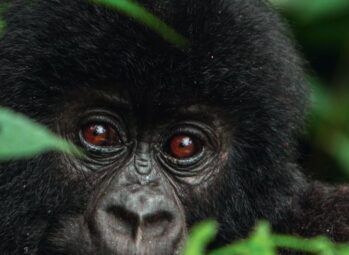
There is a moment on every Uganda primate safari when the reality of what you are witnessing truly sinks in. It might be the steady gaze of a mountain gorilla silverback, calm and utterly unhurried, just metres away in the ancient forest of Bwindi. Or the electric eruption of noise as a chimpanzee community launches into a chorus of hoots and screams through Kibale's canopy. Or the flash of golden fur as a troop of golden monkeys tumbles through bamboo stems in the volcanic highlands of Mgahinga.
Uganda is unlike anywhere else in Africa for primate encounters. The country is home to more than 20 primate species — a staggering concentration of our closest biological relatives in a relatively compact, accessible and extraordinarily beautiful landscape. No other African nation offers such a complete, varied and rewarding primate safari experience.
Known as the Pearl of Africa — a name coined by Winston Churchill after his visit in 1907 — Uganda is home to more than half of the world's remaining mountain gorillas, the highest density of chimpanzees anywhere on the continent, and a remarkable array of monkey species found across its national parks and forest reserves.
This is your complete guide to chimpanzees, mountain gorillas and monkeys on Uganda safaris — covering where to go, what to expect, how much it costs and everything you need to plan an unforgettable primate adventure.
Why Uganda is Africa's Premier Primate Safari Destination
Before diving into the individual primate experiences, it is worth understanding why Uganda occupies such a unique position in the world of wildlife travel.
Uganda sits at the convergence of three great African ecological zones — the East African savannah, the Congo Basin rainforest and the Albertine Rift highlands. This meeting point creates conditions of extraordinary biodiversity. Dense montane rainforests, lowland jungle, volcanic highland forests, crater lakes and open savannah all exist within a country roughly the size of the United Kingdom.
Within this diversity, Uganda's primates have thrived. Uganda is home to more than 15 species of primates, including mountain gorillas, chimpanzees, golden monkeys, colobus monkeys, mangabeys, baboons and bush babies. Every major primate habitat type in Africa is represented here, from the ancient rainforest of Bwindi to the bamboo slopes of the Virunga volcanoes and the lowland mahogany forests of Budongo.
For the safari traveller, this means one thing — Uganda delivers a primate experience that is simply impossible to replicate anywhere else on Earth.
Part One: Mountain Gorilla Trekking in Uganda
The World's Most Extraordinary Wildlife Encounter
Mountain gorillas are the undisputed jewel of Uganda safaris. There are approximately 1,064 mountain gorillas remaining in the entire world, living wild in just three countries — Uganda, Rwanda and the Democratic Republic of Congo. They cannot survive in captivity. There is no zoo on Earth where you can see a mountain gorilla. The only way to encounter them is to travel to their forest home and trek to meet them.
That rarity is part of what makes the encounter so profound. But it is the moment of connection itself that changes people permanently — the silverback's steady gaze, the baby's playful curiosity, the family's utterly natural and unhurried existence — that leaves visitors speechless.
Bwindi Impenetrable National Park — The Heart of Gorilla Country
Uganda's primary gorilla destination is Bwindi Impenetrable National Park in the country's southwest, a UNESCO World Heritage Site and one of Africa's most ancient and biologically rich rainforests. The forests of Bwindi span approximately 79,000 acres across steep ridges and mist-filled valleys, with a 5,000-foot variation in altitude across the park. Among the 120 mammal species found here are gorillas, chimpanzees, L'Hoest's monkeys, African elephants and bushbuck.
Bwindi has four gorilla trekking sectors, each with its own character:
Buhoma — The original and most established sector, located in the north of the park. Buhoma is the most accessible from Kampala and offers excellent infrastructure, lodges across all budgets and a gentle introduction to gorilla trekking for first-time visitors.
Ruhija — Set at higher altitude than the other sectors, Ruhija is quieter and less visited. The higher elevation makes it cooler and often mist-covered, adding to the sense of wilderness. Ruhija is also exceptional for birdwatching, with over 347 bird species recorded in the park, including 23 of the 36 Albertine Rift endemics.
Nkuringo — The most dramatically situated sector, perched on a ridge with sweeping views across the Congo border. The Nkuringo sector offers some of the most scenic gorilla trekking in Africa, though the terrain is steep and the treks can be physically demanding.
Rushaga — The largest sector with the most gorilla families available for trekking, Rushaga is also home to the Gorilla Habituation Experience — the most immersive gorilla encounter available anywhere in the world. Visitors spend up to four hours with a gorilla family still being accustomed to human presence, in groups of just four people. The habituation permit costs $1,500 per person and is extraordinary value for the depth of experience it provides.
What Happens on a Gorilla Trek?
On the morning of your trek, you will gather at the sector's park headquarters at 7:30 AM for a briefing by Uganda Wildlife Authority rangers. You will be assigned to a gorilla family based on your fitness level and the families available that day, then head into the forest with a team of experienced guides and trackers.
Tracking times vary considerably — from as little as one hour to a full day of hiking through steep, dense forest. The trackers have been following your assigned family since dawn and will guide you to them. When you find the gorillas, you have exactly one hour in their presence. Eight visitors maximum. No rush, no noise, no flash photography.
During that hour, you may watch the silverback move through the undergrowth with effortless power. You may see mothers nursing infants, juveniles playing in the branches above, or a teenage male testing his strength against a tree trunk. Gorillas share 98% of human DNA — and in their eyes, their gestures, their family dynamics — you feel that connection viscerally.
Uganda gorilla trekking permit: $800 per person
Mgahinga Gorilla National Park — Uganda's Hidden Gem
Uganda's second gorilla park, Mgahinga Gorilla National Park, sits in the volcanic Virunga mountains on the country's border with Rwanda and the DRC. Smaller and far less visited than Bwindi, Mgahinga offers an intimate, off-the-beaten-path gorilla experience with one habituated family — the famous Nyakagezi family.
Mgahinga is also the only park in Uganda where golden monkey tracking is available, and the towering volcanic peaks of Gahinga, Muhavura and Sabinyo provide a dramatic backdrop unlike anything in Bwindi. For travellers who want to combine gorilla trekking with golden monkey tracking and mountain scenery in a single location, Mgahinga is superb.
Part Two: Chimpanzee Trekking in Uganda
Uganda's Second Great Primate Experience
If gorilla trekking is Uganda's most profound wildlife encounter, chimpanzee trekking is its most exhilarating. While gorilla encounters are quiet, meditative and deeply moving, chimp trekking is loud, fast, energetic and unpredictable — an entirely different kind of primate adventure that surprises almost every visitor.
Chimpanzees share approximately 98.7% of human DNA — making them our closest living relatives. They live in complex social communities, use tools, communicate with sophisticated vocalisations and display a range of emotions that mirror our own in striking ways. Watching a chimpanzee community in full social flow — the disputes, the grooming, the play, the maternal bonds — is a window into something deeply familiar yet entirely wild.
Uganda offers five outstanding locations for chimpanzee trekking, each with its own distinctive character.
Kibale National Park — The Primate Capital of the World
Kibale National Park is the most popular place to see chimpanzees in Uganda, so much so that it is known as the 'primate capital of the world'. Kibale is home to over 1,500 chimpanzees living in four communities.
Located near the town of Fort Portal in western Uganda, Kibale is the gold standard for chimpanzee trekking in Africa. The park offers two daily trekking sessions — morning and afternoon — giving visitors excellent flexibility. The habituated chimp communities in Kibale are well-accustomed to human visitors, and the success rate for seeing them is close to 100%.
Beyond chimpanzees, Kibale supports 13 primate species in total, including black-and-white colobus monkeys, red colobus monkeys, red-tailed monkeys, L'Hoest's monkeys, grey-cheeked mangabeys, blue monkeys and olive baboons. A walk through Kibale is essentially a continuous primate encounter from start to finish.
For the ultimate chimp experience, Kibale also offers the Chimpanzee Habituation Experience — a full day from dawn to dusk spent with a chimp community alongside researchers and trackers. This deeper immersion reveals behaviours you would never see in a standard half-day trek.
Chimpanzee trekking permit (Kibale): $150 per person Chimpanzee Habituation Experience: $250 per person
Kyambura Gorge — Queen Elizabeth National Park
Known locally as the Valley of Apes, Kyambura Gorge is one of Uganda's most dramatic natural features — a deep, forest-filled gorge cut into the floor of Queen Elizabeth National Park. The gorge holds a single habituated chimpanzee community, isolated from the wider chimp population by the surrounding savannah.
Trekking into Kyambura is a strikingly different experience from Kibale. You descend from open grassland into the gorge's sunken forest, where the sounds of the park change completely. The isolation of the chimp community here has created a particularly intense encounter — with fewer visitors and a smaller, tighter group, the experience feels more intimate and raw.
Kyambura is ideally combined with game drives in Queen Elizabeth National Park and the famous Kazinga Channel boat cruise, making it perfect for travellers who want both primate trekking and classic savannah game viewing in one park.
Budongo Forest — Murchison Falls National Park
Budongo Forest Reserve, located near Murchison Falls National Park in northern Uganda, is home to between 600 and 800 chimpanzees across three habituated communities — the Kaniyo-Pabidi Community, the Sonso Community and the Waibira Community.
Budongo offers both standard chimp trekking and the full-day Chimpanzee Habituation Experience. The mahogany trees of Budongo Forest create a distinctive and beautiful setting for trekking, and the area is also excellent for birdwatching with over 360 species recorded. Combining a chimp trek in Budongo with a game drive and Nile River cruise at Murchison Falls creates one of Uganda's most rewarding northern circuit itineraries.
Interestingly, the best time to track chimpanzees in Budongo is between the months of May and August, which are rainy seasons. This is because during the dry season, chimpanzees move deep into the forest looking for scarce food, water and shelter, reducing the chances of seeing them.
Kalinzu Forest — Near Queen Elizabeth National Park
Kalinzu Forest Reserve, situated on the borders of Queen Elizabeth National Park near Ishasha, is a lesser-known but rewarding chimpanzee trekking destination. Kalinzu is particularly appealing for budget travellers and families, as it offers chimpanzee trekking at lower permit costs and has a minimum age of 12 years — compared to 15 years at most other locations. The forest also holds several other primate species and is a convenient stop for travellers driving between Queen Elizabeth and Bwindi.
Part Three: Monkeys on Uganda Safaris
Uganda's Rich Monkey Diversity
Beyond gorillas and chimpanzees, Uganda is home to a remarkable array of monkey species that enrich every primate safari. Many travellers are surprised by how many different monkeys they encounter throughout a Uganda safari — sometimes without even looking for them. Here is a guide to Uganda's most notable monkey species and where to find them.
Golden Monkeys — Mgahinga Gorilla National Park
The golden monkey is one of Africa's most visually striking primates and one of Uganda's most sought-after monkey sightings. Found only in the Virunga Mountain ecosystem, golden monkeys are characterised by their vivid golden-orange fur contrasting dramatically with their black limbs — a colour combination so bold it seems almost unnatural in the wild.
Golden monkey trekking in Mgahinga Gorilla National Park follows a similar format to gorilla trekking — a morning briefing, a guided trek into the bamboo forest and one hour with a habituated troop. Golden monkeys move quickly and energetically through the bamboo, leaping between stems in large troops and filling the forest with movement and sound.
Uganda is one of only a handful of places in the world where golden monkey trekking is available, making it a genuinely rare and special addition to any Uganda primate safari.
Golden monkey permit: $60 per person
Black-and-White Colobus Monkeys
One of Africa's most elegant primates, the black-and-white colobus is instantly recognisable by its flowing white mantle, cape and tail against a jet-black body. These monkeys are remarkably graceful — they move through the forest canopy in long, fluid leaps, their white mantles streaming behind them.
Colobus monkeys are found across multiple Uganda parks, most commonly in Kibale National Park, Queen Elizabeth National Park, Bwindi Impenetrable Forest and Murchison Falls National Park. Unusually, baby colobus monkeys are born completely white and gradually develop their adult colouring as they grow — making mother-and-infant sightings particularly memorable.
Red Colobus Monkeys
The red colobus is another forest-dwelling monkey found widely in Uganda, particularly in Kibale National Park. They are social animals that live in large groups and are often found in association with other monkey species, including red-tailed monkeys and grey-cheeked mangabeys. Red colobus monkeys are a prey species for chimpanzees — so if you hear alarm calls from a colobus group, chimps may not be far away.
Red-Tailed Monkeys
Energetic, colourful and vocal, red-tailed monkeys are among the most commonly encountered primates on Uganda safaris. Named for their distinctive reddish tail and white heart-shaped cheek patches, they are found in Kibale, Bwindi, Queen Elizabeth and many other forest habitats across the country.
Grey-Cheeked Mangabeys
Large, dark and distinctive with their pale grey cheeks and powerful build, grey-cheeked mangabeys are endemic to the forests of the Albertine Rift. They are most commonly seen in Kibale National Park and Bwindi Impenetrable Forest, often in the company of chimpanzees. The presence of mangabeys — along with Uganda mangabeys, another endemic species — makes Kibale's primate diversity truly extraordinary.
L'Hoest's Monkeys
L'Hoest's monkey is a rarely seen and somewhat shy forest monkey found in the montane forests of western Uganda, particularly in Bwindi and Kibale. They are dark brown with a distinctive white beard and tend to spend more time on the ground than most other forest monkeys. Spotting a L'Hoest's monkey is considered a special sighting on any Uganda primate safari.
Olive Baboons and Vervet Monkeys
Two of Uganda's most widespread primate species, olive baboons and vervet monkeys are found across many habitats including savannah areas in Queen Elizabeth and Murchison Falls national parks. While less exotic than forest primates, baboon troops can be fascinating to observe — complex social hierarchies, dramatic interactions and constant movement make them endlessly entertaining subjects for wildlife watchers and photographers.
Planning Your Uganda Primate Safari — Practical Guide
Best Time to Visit
Uganda's primates can be tracked year-round, but the best conditions are during the dry seasons:
- June to September — long dry season, best trail conditions, excellent visibility
- December to February — short dry season, also ideal for trekking
During the wet seasons (March–May and October–November), forests are lush and green. Trekking is possible but trails can be muddy. Gorilla and chimp permits are the same price year-round.
Sample Uganda Primate Safari Itinerary — 8 Days
Day 1 — Arrive Entebbe, transfer to Fort Portal (5 hours) Day 2 — Chimpanzee trekking in Kibale National Park (morning session) Day 2 afternoon — Bigodi Wetland Sanctuary walk — colobus monkeys, red-tailed monkeys, birds Day 3 — Drive to Queen Elizabeth National Park via crater lakes Day 4 — Chimp trek in Kyambura Gorge, afternoon Kazinga Channel boat cruise Day 5 — Drive to Mgahinga Gorilla National Park Day 6 — Golden monkey trekking in Mgahinga Day 7 — Mountain gorilla trekking in Mgahinga or transfer to Bwindi for gorillas Day 8 — Return to Entebbe via Kampala, departure
This itinerary delivers mountain gorillas, chimpanzees in two locations, golden monkeys and encounters with multiple monkey species — the complete Uganda primate safari experience.
Permit Costs Summary
| Primate Experience | Location | Cost Per Person |
|---|---|---|
| Mountain gorilla trekking | Bwindi / Mgahinga | $800 |
| Gorilla Habituation Experience | Bwindi (Rushaga) | $1,500 |
| Chimpanzee trekking | Kibale | $250 |
| Chimp Habituation Experience | Kibale / Budongo | $500 |
| Chimpanzee trekking | Kyambura Gorge | $100 |
| Chimpanzee trekking | Budongo Forest | $100 |
| Golden monkey trekking | Mgahinga | $100 |
What to Pack for a Uganda Primate Safari
- Long-sleeved shirt and long trousers — essential against nettles, insects and thorny vegetation
- Neutral colours — brown, green, khaki or grey
- Waterproof hiking boots with ankle support
- Gardening gloves for gripping vegetation on steep sections
- Rain jacket — forest weather is unpredictable
- Insect repellent — apply before entering any forest
- Camera with extra batteries and memory cards — forest light is challenging
- High-energy snacks and plenty of water
- Walking stick — usually available at the trailhead
- Hire a porter — at $15–20, it is among the best value investments on any Uganda safari
Conservation and Responsible Tourism
Every gorilla and chimpanzee permit purchased in Uganda contributes directly to wildlife conservation. The Uganda Wildlife Authority uses permit revenue to fund ranger patrols, anti-poaching operations, community development programmes and habitat protection across Uganda's national parks.
Uganda's mountain gorilla population has grown steadily over the past two decades — a direct result of conservation-focused tourism. When you trek with Tulambule Uganda Safaris, you are not just witnessing these animals. You are actively contributing to their survival.
Book Your Uganda Primate Safari with Tulambule
Chimpanzees, mountain gorillas and monkeys on Uganda safaris represent some of the most extraordinary wildlife encounters available to any traveller anywhere in the world. At Tulambule Uganda Safaris, we have been designing and operating these safaris since 2014 — securing permits, choosing the right lodges, pairing the right experiences and ensuring every client returns home transformed.
We are a 100% Ugandan-owned company, based in Kampala and deeply connected to the parks, forests and wildlife we share with you. Whether you are planning a 3-day gorilla weekend or a 14-day complete Uganda primate and wildlife safari, we will craft an itinerary that matches your budget, fitness level, interests and travel dates perfectly.
Mountain gorilla permit: $800 per person Gorilla Habituation Experience: $1,500 per person Chimpanzee permit (Kibale): $250 per person
📞 Call/WhatsApp: +256 782 915447 📧 Email: info@tulambule.com 🌍 Website: www.tulambule.com
Contact us today for your free personalised Uganda primate safari quote. The forests of Uganda are waiting.
Tulambule Uganda Safaris — Members of AUTO, UTB, UWA, TUGATA, and IATA Established 2014 | Based in Kampala, Uganda