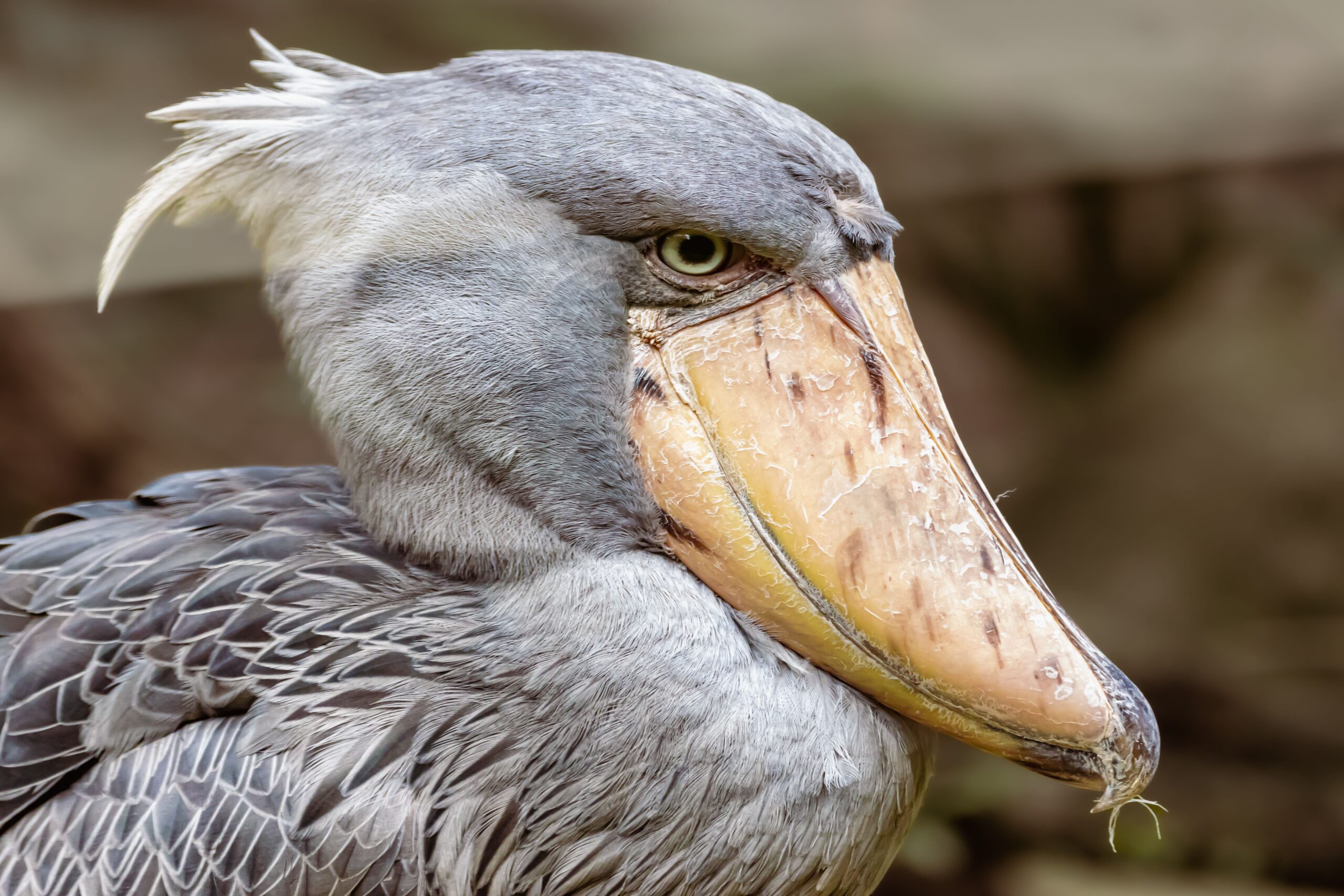
Our Mabamba Swamp birding tour is the easiest way to see the shoebill, one of the most wanted birds in Africa, on a single day from Kampala or Entebbe. You glide through the papyrus channels of Mabamba Bay in a small wooden boat with a local birding guide, searching for this prehistoric-looking giant and dozens of other water birds along the way.
Mabamba Swamp lies on the northern shore of Lake Victoria, west of Entebbe. It is a protected Ramsar wetland and an Important Bird Area, and one of the most reliable places in the world to see a wild shoebill. Learn more about the area in our full Mabamba Swamp guide.
Mabamba Swamp Birding Tour at a Glance
| Duration | 1 day, about 6:00 am to 3:00 pm |
| Start and end | Your hotel in Kampala or Entebbe |
| Drive time | About 1 hour 30 minutes from Kampala, less from Entebbe |
| Main target | The shoebill (Balaeniceps rex) |
| Activities | Guided canoe or motorboat ride, birding walk, lunch at Nkima Forest Lodge |
| Best for | Birders, photographers, families and travellers with a free day |
Your Mabamba Swamp Birding Tour Itinerary
Early Pickup From Kampala or Entebbe
Your Mabamba Swamp birding tour starts early, with pickup from your hotel at around 6:00 am, so you reach the swamp while birds are most active and the light is soft. The drive from Kampala takes about 1 hour and 30 minutes, and it is shorter from Entebbe. If you are new to the city, our guide to things to do in Kampala has ideas for the rest of your stay.
Boat Ride in Search of the Shoebill
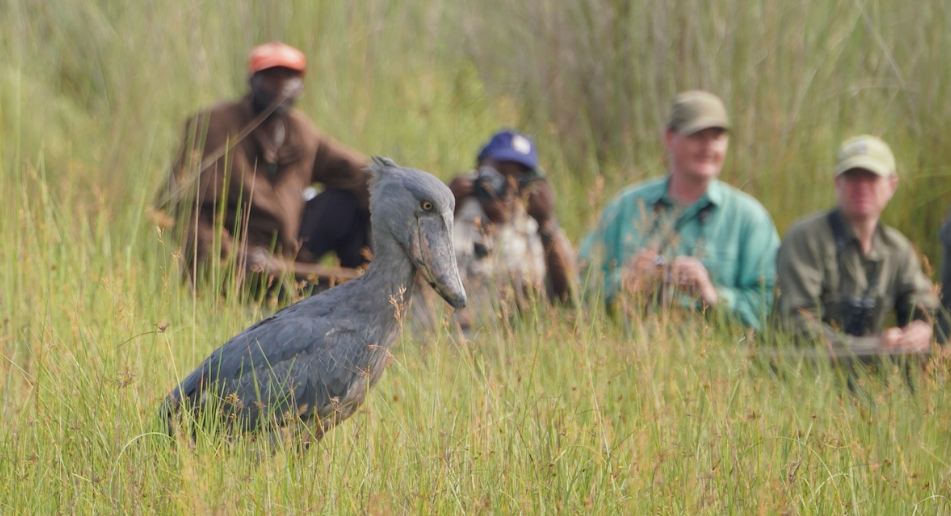
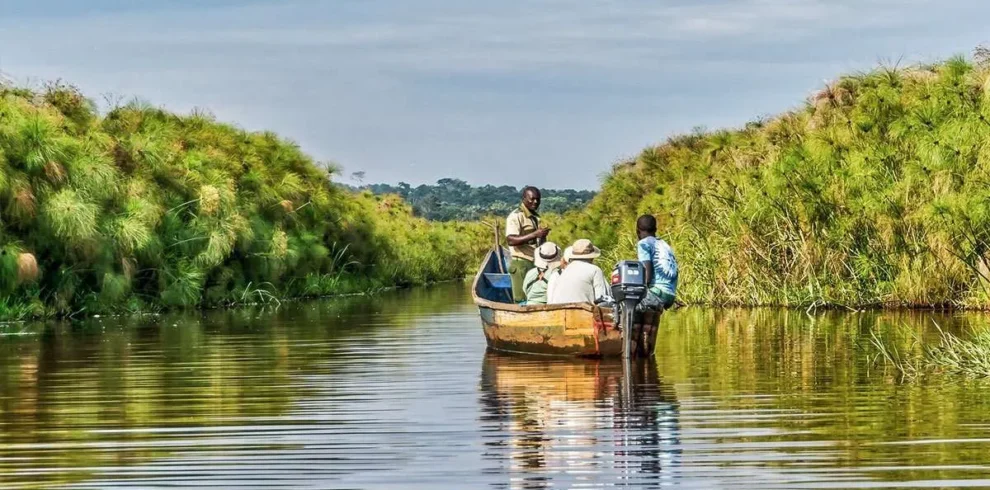
At the swamp, you board a wooden motorised boat with an experienced local birding guide, who steers you quietly through narrow channels lined with dense papyrus.
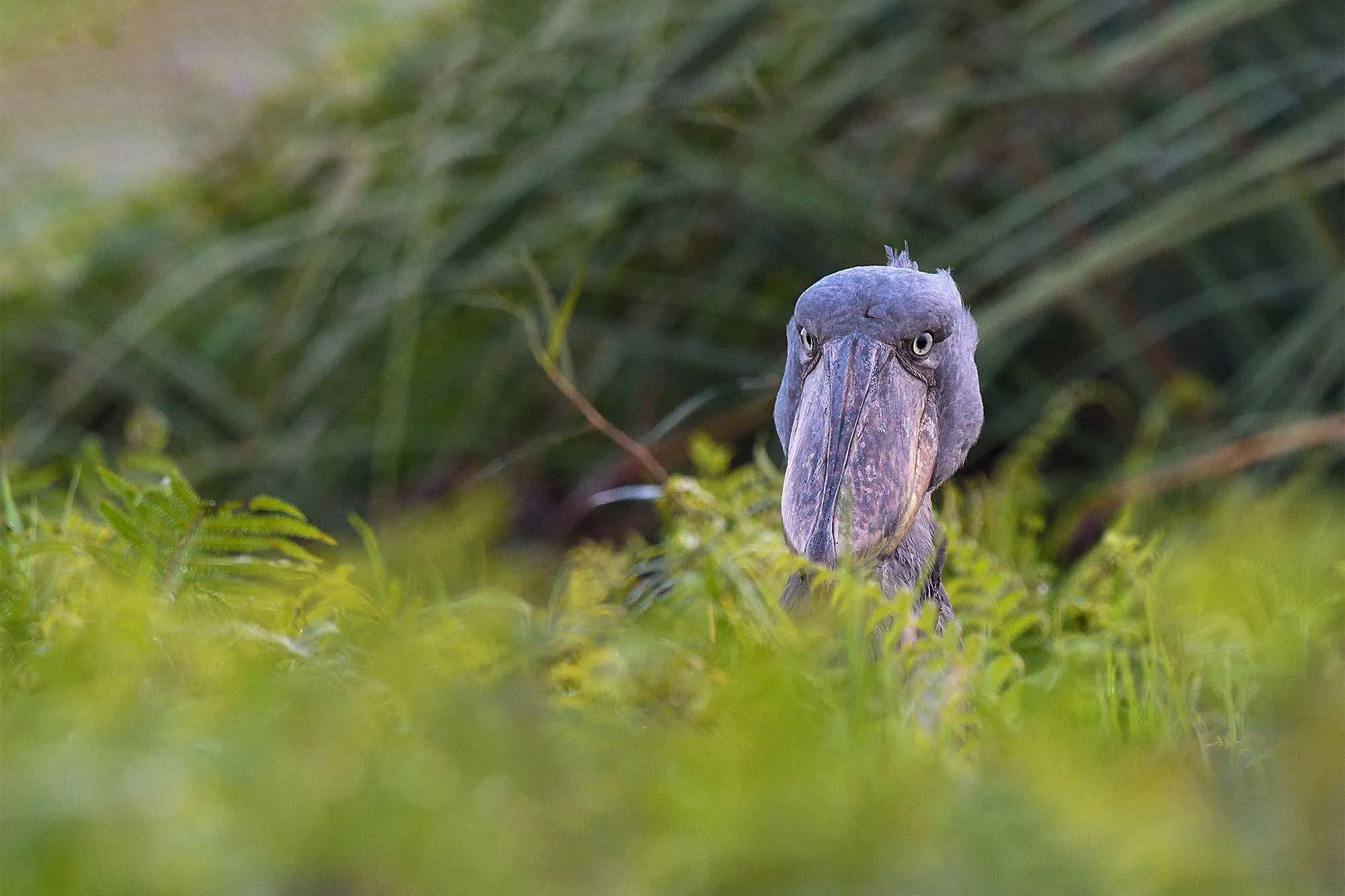
The main target is the legendary shoebill. With its huge bill and prehistoric look, it is easy to see why many people say it looks like a dinosaur. The shoebill stands up to 1.5 metres tall and has a wingspan of up to 2.5 metres. It is named after its massive shoe-shaped bill, which can grow up to about 24 cm long and 20 cm wide. Shoebills are mostly silent, but they clatter their bills loudly to communicate.
The shoebill lives alone in the marshes, standing perfectly still for long periods while it waits for lungfish, catfish, frogs and water snakes. As the only member of its bird family, and listed as Vulnerable by the IUCN, it is one of the most prized sightings in the world for birdwatchers. Discover more places to find it in our guide to the shoebill stork in Uganda.
Other Birds of the Swamp
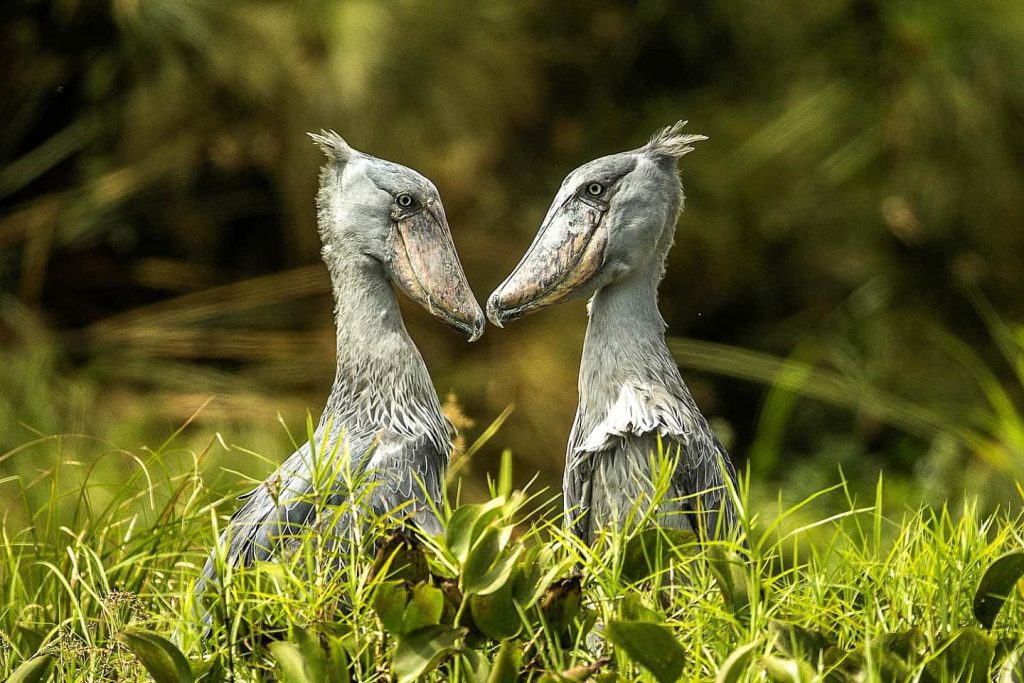
The swamp is full of other water birds. Look out for herons, egrets and waterfowl, the ever-present African Fish Eagle, Blue-breasted Bee-eater, African Marsh Harrier, Purple Swamphen, Long-toed Lapwing, African and Lesser Jacanas, Malachite Kingfisher and African Pygmy Goose.
The papyrus holds the Swamp Flycatcher, Blue-headed Coucal, Greater and White-winged Swamp Warblers, Grey-capped Warbler, the striking Papyrus Gonolek and the nomadic Weyns's Weaver. With luck, you may even spot the sitatunga, a shy swamp antelope with long, splayed hooves made for walking on floating vegetation.
Birding the Surrounding Area
After the boat ride, you explore the nearby grasslands, papyrus edges and farmland on foot. Look for the Long-crested Eagle perched on telephone poles, Wahlberg's Eagle, Palm-nut Vulture, Black-winged Kite, African Harrier-Hawk and Lizard Buzzard.
Other highlights include the Great Blue Turaco, Eastern Plantain-eater, Black-and-white Casqued Hornbill, Crowned and African Pied Hornbills and the bright Woodland Kingfisher.
You may also see the Broad-billed Roller, Brown-throated Wattle-eye, Angola Swallow, Splendid and Rüppell's Starlings, Sooty Chat, Grey-backed Fiscal, Scarlet-chested and Red-chested Sunbirds and the Pin-tailed Whydah. In some months, the threatened Blue Swallow visits the area too. If you missed the scarce Weyns's Weaver in the swamp, this is another chance to find it.
Lunch at Nkima Forest Lodge
The tour ends with lunch at nearby Nkima Forest Lodge, named in Luganda after the red-tailed monkeys that play in its trees. After lunch, we drive you back to Kampala or Entebbe for your onward travel.
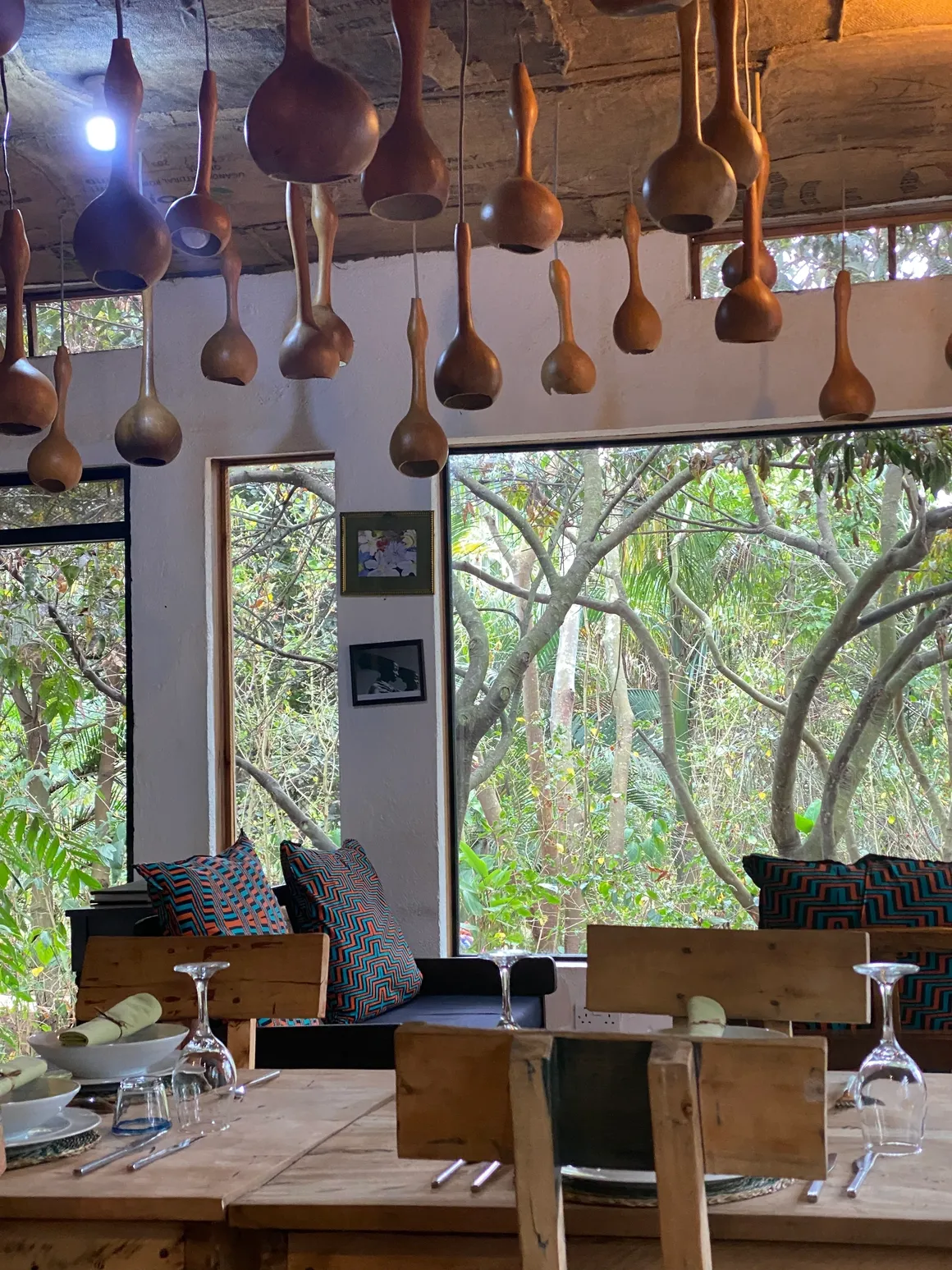
Want to stay the night and go birding again at dawn? See our guide to places to stay in Mabamba.
Why Book a Mabamba Swamp Birding Tour With Us?
- Local birding guides from the Mabamba community, who know where the shoebills usually feed.
- Early starts so you reach the swamp at the best time for birds and photography.
- Private tours with your own vehicle and driver-guide, at your pace.
- Easy add-on to a gorilla safari or a longer birding trip, on your first or last day in Uganda.
- Licensed and Ugandan-owned: planning safaris since 2014.
What to Bring
- Binoculars
- Camera with a zoom lens, a spare battery and a charger
- Sun hat and sunscreen
- Light rain jacket
- Insect repellent
- Comfortable closed shoes
- Drinking water, snacks and a bird field guide
Combine Mabamba With a Longer Trip
Mabamba is the perfect warm-up for a longer Uganda adventure. Many birders continue to Bwindi, Kibale and Murchison Falls, where Uganda's bird list climbs past 1,000 species. Explore our Uganda birding tours and Uganda birding itineraries, or pair your shoebill day with:
- 1 Day Kampala City Tour
- Short Uganda safaris
- Uganda gorilla safaris
- 4-Day Queen Elizabeth National Park Safari
Mabamba Swamp Birding Tour FAQs
What are my chances of seeing a shoebill at Mabamba?
Chances are very good, as Mabamba is one of the most reliable shoebill sites in Africa. Sightings depend on the birds' movements and water levels, so they cannot be guaranteed, but our local guides know where the shoebills usually feed.
What is the best time to visit Mabamba Swamp?
Birding is good all year. Early morning is best, when birds are most active and the light is soft for photography. The drier months of June to August and December to February make access easiest.
How far is Mabamba Swamp from Kampala and Entebbe?
Mabamba is about 1 hour and 30 minutes from Kampala by road, and closer to Entebbe. That makes it an easy day trip, or a great add-on at the start or end of a longer safari.
Is the tour suitable for non-birders and children?
Yes. The boat ride is calm and the shoebill impresses everyone, not only keen birders. Children enjoy the boat and the chance to see such a strange-looking bird up close.
Do I need my own binoculars?
We recommend bringing your own for the best experience, as the shoebill and many smaller birds are often seen at a distance. A camera with a zoom lens is also very useful.
Can I combine this tour with other Uganda safaris?
Yes. Many guests visit Mabamba on their first or last day in Uganda, close to Entebbe International Airport. It combines well with our short Uganda safaris and gorilla safaris.
Continue Planning Your Trip
Have questions about this tour? Call or WhatsApp us on +256 782 915 447, or email info@tulambule.com for a free quote.