Is Uganda safe for safari? We answer honestly — crime, road conditions, political stability, solo female travel, and the outdated fears that keep travelers away. Read before you book.
Is Uganda Safe for Safari? An Honest Guide to Security, Roads, Solo Travel & Wildlife
You have seen the photographs of gorillas in Bwindi. You have dreamed of tree-climbing lions in Ishasha. But then you type five words into Google: "Is Uganda safe for safari?"
 And what do you find? Outdated forum posts from 2012. Travel advisories mentioning border regions you will never visit. Whispers of a dictator who left power nearly fifty years ago.
Let us clear this up completely.
We run safaris in Uganda every single week. Our guides drive these roads. Our guests sleep in these lodges. In this guide, we are going to be completely honest about safety — the real risks, the exaggerated fears, and how Uganda compares to Kenya, Rwanda, Tanzania, and even popular destinations in Europe and North America.
By the end, you will know exactly what to expect. And you will probably wonder why you ever worried.
Quick Answer: Is Uganda Safe for Safari?
Yes. For the vast majority of travelers, Uganda is safe for safari.
Thousands of tourists visit Uganda every year without incident. Safari areas — Bwindi, Queen Elizabeth, Murchison Falls, Kidepo Valley, Kibale, Lake Mburo — are far from any security concerns. Wildlife reserves are patrolled by armed rangers. Lodges have twenty-four-hour security.
The outdated reputation comes from the Idi Amin era (1970s) and occasional border tensions that never affect tourist zones. In reality, Uganda is as safe as Kenya or Tanzania for safari-goers — and safer than many major American cities for violent crime.
But let us be specific. Let us break down every concern a first-timer might have.
1. Safety in Uganda's National Parks
This is where you will spend ninety-five percent of your trip. Here is what safety actually looks like in Uganda's most popular parks.
| National Park | Safety Rating | What You Need to Know |
|---|---|---|
| Bwindi Impenetrable (gorillas) | Very safe | Armed rangers accompany every trek. Lodges have security guards at gates. |
| Queen Elizabeth (savanna) | Very safe | Park rangers patrol daily. The Ishasha sector is remote but peaceful. |
| Murchison Falls | Very safe | Boat cruises provide life jackets. Roads are quiet outside park headquarters. |
| Kibale (chimpanzees) | Very safe | Small park. Well-marked trails. Rangers everywhere. |
| Kidepo Valley | Very safe | Extremely remote. You will see almost no other tourists. That is the point. |
| Lake Mburo | Very safe | Small, family-friendly. Easy walking safaris with armed guides. |
| Mgahinga (gorillas) | Very safe | Quiet park. Shared rangers with Bwindi. |
What About Wildlife Safety?
This is a common fear among first-timers asking "Is Uganda safe for safari?" when they really mean "Will a lion eat me?"
Here is the truth:
-
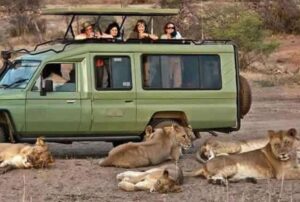
You will never be allowed out of your vehicle on a game drive unless you are at a designated safe area.
-
Gorilla treks maintain a safe distance — seven meters (about twenty-one feet).
-
Your guide carries a radio and knows emergency protocols for every park.
-
Wildlife attacks on tourists in Uganda are extremely rare. They almost always happen when someone breaks the rules.
Real talk: The most dangerous thing in a Ugandan national park is the drive there — not the animals or the people. Which brings us to roads.
2. Road Safety: The Real Risk (And How to Manage It)
Let us be honest. If something goes wrong on your Uganda safari, it will most likely be a road issue — not crime, not wildlife, not political instability.
The Real Risks on Ugandan Roads
-
Average road conditions in remote areas (potholes, unpaved sections, washouts after rain)
-
Reckless drivers — especially boda bodas (motorbike taxis) and large trucks
-
Breakdowns in areas with no phone signal
-
Night driving (which no reputable operator does)
How Reputable Safari Companies Manage These Risks
-
We use well-maintained 4x4 vehicles — Toyota Land Cruisers designed for African roads.
-
We never drive between parks after sunset. All travel happens during daylight hours.
-
We carry satellite phones or emergency beacons on remote routes (Kidepo, Karamoja).
-
We build extra time into every itinerary. Kampala to Bwindi is eight to ten hours. We do not rush it.
What You Can Do
-
Choose your safari operator carefully. Do not cheap out on transport.
-
Ask about vehicle age and maintenance before booking.
-
Never rent a car and drive yourself between parks unless you have extensive African driving experience.
-
Allow buffer days in your itinerary. Roads may take longer than Google Maps suggests.
Bottom line: Road safety is your number one practical concern in Uganda. Manage it by choosing the right operator and scheduling daylight travel only.
3. Crime: Petty Theft vs. Violent Crime
When travelers ask "Is Uganda safe for safari?" they are usually worried about being robbed or harmed. Here is the honest breakdown.
| Crime Type | Uganda (Tourist Areas) | Nairobi (Kenya) | Johannesburg (SA) | Major US City |
|---|---|---|---|---|
| Pickpocketing | Low to medium | High | High | Medium |
| Bag snatching | Low (rare in parks) | Medium | Medium | Medium |
| Violent crime against tourists | Very rare | Low (but happens) | Medium | Low to medium |
| Scams targeting tourists | Low (mostly in Kampala) | Medium | High | Low |
| Carjacking | Extremely rare | Low | High | Low |
What Actually Happens on the Ground
In Kampala or Entebbe:
-
Do not leave your phone on a restaurant table.
-
Do not walk alone at night in unlit areas.
-
Keep your bag zipped and close to your body in crowded markets.
-
Standard city precautions. Nothing more.
On Safari:
-
Almost zero street crime. You are in remote areas with no pickpockets.
-
Lodges have safes for passports and extra cash.
-
Staff are vetted and trustworthy.
Violent Crime:
-
Violent crime against tourists is extremely rare in Uganda.
-
Most Ugandans are warm, helpful, and genuinely proud of their country.
-
The hospitality you will receive is one of the highlights of any trip.
The One Scam You Should Know
At Entebbe International Airport, unofficial "helpers" may offer to carry your bags to the curb. They will then demand a fee. Simply say "no thank you" and use official porters in uniform. That is it. That is the worst scam in the country.
Bottom line: Is Uganda safe for safari when it comes to crime? Yes — as long as you use basic city precautions in Kampala and Entebbe.
4. Solo Travel in Uganda: Women and Single Travelers
This question comes up constantly: "Is Uganda safe for safari if I am traveling alone?"
Short answer: Yes, but with reasonable precautions.
Uganda is one of the more welcoming East African countries for solo travelers, including solo women. That said, here is what you need to know.
For Solo Women Travelers
-
Dress modestly outside tourist areas — cover knees and shoulders in towns and villages.
-
Avoid walking alone at night in Kampala or Entebbe.
-
Use your safari company's driver for all ground transport.
-
Stay at lodges with good security and staff who watch out for female guests.
-
Most female solo travelers report feeling safe, respected, and well cared for.
For All Solo Travelers
-
Consider joining a group safari rather than traveling completely alone.
-
Share your full itinerary with someone at home.
-
Buy a local SIM card (MTN or Airtel) for data and calls.
-
Use the lodge safe for your passport and extra cash.
-
Trust your instincts. If something feels wrong, leave.
A Note on Group Joining Safaris
We offer group joining safaris specifically for solo travelers. You share a vehicle and lodges with other first-timers. This is safer, more affordable, and more fun than traveling alone.
Bottom line: Is Uganda safe for safari for solo travelers? Yes. Thousands do it every year. Take basic precautions, and you will be fine.
5. Political Stability: Elections, Borders, and Outdated Fears
This is where outdated fears linger the longest. Let us kill them with facts.
The Truth About Uganda's Politics Today
-
Uganda has been relatively stable for over three decades.
-
Elections happen every five years. There may be protests in Kampala, but these never affect national parks.
-
Border tensions with the Democratic Republic of Congo and South Sudan exist, but tourist areas are hundreds of kilometers away.
What Travel Advisories Actually Say
Check your government's travel advisory before booking. Here is what they typically warn against:
-
Do not travel to: Border regions with DRC and South Sudan (you will not go there).
-
Reconsider travel to: Karamoja region (far northeast) — but Kidepo Valley is fine with a tour operator.
-
Exercise normal precautions: All safari parks and major tourist areas.
What You Should Know
-
The LRA conflict in northern Uganda ended over a decade ago.
-
Idi Amin left power in 1979. That is nearly fifty years ago.
-
No terrorist attack has ever targeted safari tourists in Uganda.
Bottom line: Political instability is not a concern for safari tourists. You are far from trouble zones. The question "Is Uganda safe for safari?" should not be decided by election news in Kampala.
6. Health Safety: Malaria, Vaccines, and Medical Care
Health is a legitimate safety concern. Here is the honest breakdown.
Malaria
-
Present year-round in most areas.
-
Lower risk in high-altitude Bwindi, but not zero.
-
Take prophylaxis. Consult your doctor six to eight weeks before travel.
-
Use repellent, long sleeves at dusk, and mosquito nets.
Required and Recommended Vaccines
| Vaccine | Required? | Notes |
|---|---|---|
| Yellow fever | Mandatory | You will be checked at Entebbe airport. Carry your certificate. |
| Hepatitis A | Recommended | Food and water borne. |
| Hepatitis B | Recommended | Blood and bodily fluids. |
| Typhoid | Recommended | Food and water borne. |
| Cholera | Recommended for some areas | Discuss with your doctor. |
| Routine vaccines (MMR, tetanus, polio) | Recommended | Ensure you are up to date. |
Medical Facilities in Uganda
-
Kampala has good hospitals: Case Hospital, Nakasero Hospital, International Medical Centre.
-
Safari areas have basic clinics only. Do not expect Western standards.
-
Serious emergencies may require evacuation to Nairobi or South Africa.
Pro tip: Buy travel insurance that includes medical evacuation. It costs fifty to one hundred dollars and gives you genuine peace of mind. This is non-negotiable. Consider the Uganda Travel Health advisor
7. Uganda vs. Kenya vs. Rwanda vs. Tanzania: Safety Comparison
| Factor | Uganda | Kenya | Rwanda | Tanzania |
|---|---|---|---|---|
| Petty crime in cities | Medium | High | Low | Medium |
| Violent crime against tourists | Very low | Low | Very low | Low |
| Terrorism risk | Very low | Low (historical attacks in Nairobi) | Very low | Low |
| Political protests | Occasional (Kampala only) | Occasional (Nairobi only) | Very rare | Rare |
| Road safety | Fair | Good | Excellent | Fair to good |
| Health infrastructure | Basic (good in Kampala) | Better (Nairobi has excellent hospitals) | Good | Basic to good |
| Perceived safety by tourists | Good | Good | Excellent | Good |
Verdict: Rwanda feels safest. Uganda is comparable to Kenya and Tanzania for safari-goers. All four are safe with a reputable operator.
So when someone asks "Is Uganda safe for safari compared to its neighbors?" the honest answer is: yes, equally safe, just with bumpier roads.
8. What NOT to Worry About (Outdated Fears)
Let us kill these myths permanently. These are the fears that keep people from booking — and they are almost all wrong.
| Outdated Fear | Reality |
|---|---|
| "Idi Amin era violence" | Amin left power in 1979. That is nearly fifty years ago. No relevance today. |
| "Rebels in the north" | The LRA conflict ended over a decade ago. Kidepo Valley is completely safe. |
| "Ebola outbreaks" | Ebola is rare, localized, and contained quickly. Tourist areas have never been affected. |
| "Kidnapping of tourists" | Almost unheard of in Uganda. |
| "Dangerous wildlife attacks" | Extremely rare when you follow your guide's instructions. |
| "Yellow fever outbreaks" | Vaccination is mandatory. The risk to vaccinated travelers is zero. |
Real talk: You are more likely to be injured driving to the airport in your home country than on a Uganda safari. Statistically, that is simply true.
9. Practical Safety Tips for Your Uganda Safari
Here is your checklist. Follow these, and you will be safer than most tourists.
Before You Go
-
Register with your embassy. US citizens use the STEP program.
-
Buy comprehensive travel insurance with medical evacuation coverage.
-
Share your full itinerary with family at home.
-
Download offline maps (Maps.me or Google Maps offline).
-
Scan your passport and visa. Keep digital copies in your email.Consider reading the latest US travel advisory about Uganda
On the Ground
-
Use your safari company's driver for everything. Do not rent a car yourself.
-
Do not walk alone at night in Kampala or Entebbe.
-
Keep valuables in the lodge safe. Carry only what you need for the day.
-
Carry a photocopy of your passport. Leave the original in the safe.
-
Drink bottled water only. Never drink tap water.
-
Listen to your guide at all times — especially around wildlife.
-
Trust your instincts. If something feels wrong, speak up.
Emergency Numbers in Uganda
-
Police: 112 or 999
-
Tourist police (Kampala): +256 414 342 156
-
Ambulance: 911
-
Your safari company's 24/7 emergency line: +256 782 915 447-Tulambule Uganda Safaris
10. What Actual Travelers Say About Safety in Uganda
We asked past guests about their safety concerns before and after their trip. Here is what they said.
"I was nervous before going — all those old stories about Uganda. Within one day, I felt completely safe. Our guide was professional, the lodges had security, and the locals were the friendliest people I have ever met." — Sarah, California (first solo safari)
"The roads are rough, but that is the only real danger. My biggest worry turned out to be packing too much." — James, United Kingdom
"As a woman traveling alone, I was cautious. But our group guide checked on me constantly, and I never felt uncomfortable. I would do it again tomorrow." — Maria, Spain
"I kept asking 'Is Uganda safe for safari?' before I booked. Now I feel silly. It was safer than Chicago." — David, Illinois
Final Verdict: Is Uganda Safe for Safari?
Yes. Uganda is safe for safari.
Let us summarize clearly:
-
Safari parks are secure, patrolled by armed rangers, and far from any political instability.
-
Violent crime against tourists is extremely rare. Petty crime exists in Kampala but not in the parks.
-
The real risks are road conditions and malaria — both are manageable with a good operator and proper preparation.
-
Outdated fears from the 1970s have no bearing on modern Uganda. The country has been stable for over thirty years.
Thousands of travelers visit Uganda every year. Almost all of them leave wondering why they were ever worried.
Choose a reputable safari company. Take basic city precautions. Buy travel insurance. Get your vaccines. And then come see the Pearl of Africa for yourself.
The gorillas are waiting. The tree-climbing lions are waiting. And Uganda is safer than you think.
Ready to Book Your Uganda Safari With Confidence?
We have guided hundreds of first-timers — including solo travelers, families, and first-time Africa visitors. Contact us for your safari.
👉 View our Uganda safari packages
Still Wondering "Is Uganda Safe for Safari?"
Send us your specific concerns. We will answer honestly — even if it means recommending a different destination.
Rhino Tracking in Kidepo National Park: 7 Best Lodges & Camps to Stay
Mountain Gorillas in Uganda: The Ultimate Guide to Unforgettable Uganda Gorilla Safaris