Best Places to Visit in Uganda for Locals
Finding the best places to visit in Uganda for locals does not require a passport or an international flight. It just takes a weekend, a full tank of fuel, and a willingness to see your own country the way visitors do, rather than the place you simply live in and drive past every day.
Uganda is often called the Pearl of Africa, and international tourists travel a long way to prove that name right. Ugandans, however, sometimes overlook the very landscapes, parks, and cultures sitting a few hours from their own front door.
This guide covers the best places to visit in Uganda for locals, why domestic travel is worth prioritising, and how to plan a trip that supports your own country's economy along the way.
Why Every Ugandan Should Explore Uganda First
Domestic travel offers something international trips cannot. It connects you to your own heritage while directly supporting the people and places that make Uganda what it is.
- It strengthens the local economy. Every night at a Ugandan lodge, every park fee, and every meal at a local restaurant supports jobs across the tourism value chain.
- It is more affordable than you think. Citizen park entrance fees are set lower than international rates, and many properties now offer local resident pricing.
- It deepens cultural understanding. Uganda is home to around 65 ethnic groups, each with its own language, customs, and traditions worth experiencing firsthand.
- It funds conservation. Park fees help protect endangered species like mountain gorillas and preserve the habitats they depend on.
- It builds national pride. Seeing Uganda's landscapes and wildlife with your own eyes creates a different kind of appreciation than reading about them ever could.
None of these benefits require a big budget or a long holiday. A single weekend trip touches on most of them at once, which is part of why domestic travel has grown steadily among Ugandans over the past few years.
Best Places to Visit in Uganda for Locals
These four parks consistently rank among the best places to visit in Uganda for locals, and each one offers a genuinely different experience.
Bwindi Impenetrable National Park
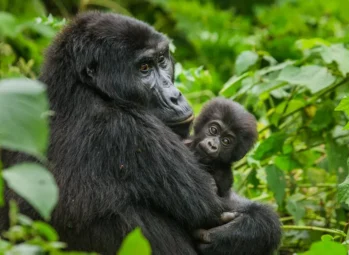
Bwindi Impenetrable National Park is a UNESCO World Heritage Site in southwestern Uganda, covering roughly 331 square kilometres of dense rainforest. It holds nearly half of the world's remaining mountain gorillas.
Gorilla trekking is the headline activity here, but Bwindi also supports over 120 mammal species, 350 bird species, and countless butterflies and reptiles. Community visits to Batwa communities add a cultural layer most visitors do not expect.
Murchison Falls National Park
Murchison Falls National Park is Uganda's largest park, spanning about 3,840 square kilometres in the northwest. The Nile River forces itself through a narrow gorge here and plunges 43 metres, creating one of Uganda's most dramatic natural sights.
Game drives regularly turn up elephants, lions, giraffes, and buffalo, while boat cruises on the Nile add hippos and crocodiles to the list. Birdwatchers come specifically for the rare shoebill stork, one of over 450 recorded species in the park.
Queen Elizabeth National Park
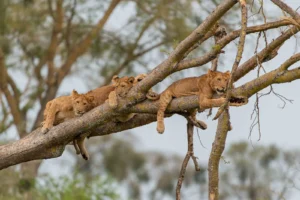 Queen Elizabeth National Park sits in southwestern Uganda and covers close to 1,978 square kilometres of savannah, forest, wetland, and volcanic crater lakes. Few parks pack this much landscape variety into one visit.
The Ishasha sector's tree climbing lions are the star attraction, but boat safaris along the Kazinga Channel come close, with hippos, crocodiles, and dense birdlife visible from the water. Over 600 bird species have been recorded in the park.
Kibale National Park
Kibale National Park in western Uganda is often called the primate capital of the world, home to 13 primate species including chimpanzees, red colobus monkeys, and the rare L'Hoest's monkey.
Beyond primate tracking, the park holds over 300 bird species and a mix of grassland and swamp habitats. The nearby Bigodi Wetland Sanctuary, run by the local community, adds a low cost, high reward stop for birdwatching.
Jinja and the Source of the Nile
Jinja sits at the point where the Nile River begins its journey north, and it has become one of the most popular weekend destinations for Ugandans living in and around Kampala.
White water rafting, quad biking, and simple riverside relaxation all draw crowds here, and the roughly two hour drive from Kampala makes it one of the easiest entries on this list for a short trip.
Ssese Islands, Lake Victoria
The Ssese Islands offer a quieter, beach focused alternative to Uganda's savannah parks. Reachable by ferry or speedboat from Entebbe, the islands combine forest trails, fishing villages, and genuinely relaxing lake shore stretches.
For locals wanting a getaway that feels far from home without an actual long haul journey, Ssese consistently delivers.
Lake Mburo National Park
Lake Mburo National Park is the closest savannah park to Kampala, reachable in around three hours by road. Its compact size makes it one of the most practical entries on this list for a short domestic trip.
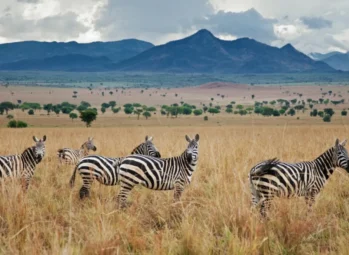
The park allows walking safaris and cycling alongside zebras and impalas, an experience most of Uganda's larger parks cannot offer for safety reasons. Boat trips on the lake itself add hippos, crocodiles, and strong birdlife to a visit that can comfortably fit into a single weekend, making it one of the most efficient parks on this list for time-pressed travellers.
Sipi Falls, Mount Elgon
Sipi Falls sits on the slopes of Mount Elgon in eastern Uganda, a series of three waterfalls surrounded by coffee growing hillsides. It has become a favourite for locals who want a hiking trip without committing to a multi day mountain expedition.
Guided walks between the falls take a few hours, and several viewpoints let visitors take in the scenery without a strenuous hike. The surrounding villages also offer some of Uganda's best coffee farm tours, run directly by local growers who walk visitors through the full process from bean to cup.
How Your Visit Supports Wildlife Conservation
Every park fee paid by a domestic traveller contributes directly to conservation work carried out by the Uganda Wildlife Authority across Uganda's protected areas. This funding supports anti poaching patrols, habitat restoration, and the day to day management that keeps these parks running.
Mountain gorillas are the clearest example of what this funding makes possible. Uganda's gorilla population has grown steadily over recent decades, a trend closely tied to consistent tourism revenue and the protection it funds.
The benefit extends to entire ecosystems, not just headline species. Bird populations, forest cover, and smaller mammal species all depend on the same conservation budget that gorilla and lion tourism helps sustain.
Choosing to visit as a Ugandan citizen, rather than skipping these parks entirely, keeps that funding flowing even during years when international arrivals dip. This matters more than it might seem, since international tourism can swing sharply with global events entirely outside Uganda's control, while domestic visits tend to stay steadier.
How to Visit Uganda's Top Sites on a Local Budget
One of the biggest myths about Uganda's national parks is that they are priced for international tourists only. In practice, the Uganda Tourism Board and the Ministry of Tourism, Wildlife and Antiquities have both pushed for lower citizen park fees for years.
A few ways to keep a domestic trip affordable:
- Book citizen rates directly. Always confirm you are being charged the East African or citizen rate rather than the international one.
- Travel in a group. Splitting vehicle hire and guide fees across a group of friends or family cuts the per-person cost significantly.
- Choose community run stays. Options like Bigodi Wetland Sanctuary near Kibale combine low prices with direct community benefit.
- Visit during shoulder season. Rates at many lodges drop slightly outside the peak dry season months, without much change in wildlife viewing quality.
Private tourism investors have also leaned further into the domestic market since the COVID-19 pandemic reshaped travel patterns, which means more budget friendly options exist today than a few years ago.
Government policy has played a role here too. Reduced citizen fees at flagship parks, paired with UTB campaigns encouraging Ugandans to explore their own country, have made domestic safaris a realistic option for a much wider range of budgets than a decade ago.
Working with a local operator who already knows citizen pricing can also save time. Rather than negotiating rates at each park individually, a single booking can bundle transport, accommodation, and permits at the correct local rate from the start.
Getting Around Uganda on a Domestic Trip
How you travel between these destinations depends heavily on time, budget, and how much of the driving you want to handle yourself.
Self-driving works well for closer destinations like Jinja, Lake Mburo, and Entebbe, all reachable on well maintained roads within a few hours of Kampala. A standard sedan is usually enough for these routes in dry weather.
For the more remote parks, including Bwindi, Kidepo, and parts of Murchison Falls, a 4x4 with a driver guide makes a meaningful difference. Road conditions can vary, and a guide familiar with the route saves time that would otherwise go to navigation.
Public transport, including shared taxis and long distance buses, covers most major towns near these parks, though it rarely reaches the parks themselves. Booking through a local operator who handles the final stretch, from the nearest town to the park gate, is usually the simplest fix and avoids the guesswork of arranging last minute transport on arrival.
Best Time to Visit Uganda's Top Local Destinations
Uganda's equatorial climate keeps temperatures fairly consistent year round, but rainfall still affects the experience at each park.
The dry seasons, from June to September and again from December to February, are generally best for wildlife viewing. Animals gather more predictably around water sources during these months, and roads are easier to navigate.
The wetter months bring lush, green scenery and noticeably fewer crowds, which suits travellers who prioritise a quieter trip over guaranteed sightings.
Timing also affects domestic pricing more than most travellers realise. Lodges and tour operators often lower rates during the wetter, quieter months to keep occupancy up, which can make a shoulder season trip noticeably cheaper without a real drop in experience quality.
For destinations like Jinja and the Ssese Islands, where the main draw is water based activity rather than wildlife, the dry versus wet season distinction matters far less. These make solid year round options when a savannah park is out of season.
Cultural Experiences to Add to Your Trip
A trip built only around wildlife misses half of what makes Uganda worth exploring. With around 65 distinct ethnic groups, the country's cultural range rivals its natural one.
Batwa community visits near Bwindi offer insight into the forest dwelling traditions of one of Uganda's oldest communities. Traditional dance performances, local craft markets, and regional cuisine all add texture to a trip that would otherwise be all game drives and hiking boots.
Each region carries its own version of this. The Bagisu of eastern Uganda, the Banyankole in the southwest, and the Acholi in the north each bring distinct food, music, and customs to a domestic itinerary that passes through their areas.
Educational stops matter too. Facilities like the Uganda Wildlife Education Centre in Entebbe work well for families travelling with children, combining conservation education with an easy, low effort visit.
For older children and teenagers, pairing a cultural stop with a park visit often does more to build lasting interest in conservation than the wildlife sighting alone.
Sample Weekend Ideas for Local Travellers
Not every domestic trip needs a full week off work. A few of these destinations pair naturally into short, achievable weekend plans.
- A quick nature escape. Lake Mburo National Park for a Saturday walking safari, back in Kampala by Sunday evening.
- An adventure weekend. Jinja for white water rafting on Saturday, with a relaxed Sunday along the Nile.
- A beach style break. A ferry to the Ssese Islands on Friday evening, returning Sunday afternoon.
- A hiking trip. Sipi Falls for a two day waterfall hike, combined with a coffee farm tour.
Longer weekends open up Queen Elizabeth, Kibale, or Murchison Falls, all of which reward at least two full days on site. Anything longer than that starts to justify combining two or three of these destinations into a single wider domestic itinerary.
Frequently Asked Questions About the Best Places to Visit in Uganda for Locals
What are the best places to visit in Uganda for locals on a weekend trip? Jinja and the Ssese Islands are the most practical weekend options from Kampala, both reachable within two to three hours by road or a short ferry ride.
Do Ugandans pay less than international tourists at national parks? Yes. Citizen park entrance fees are set lower than international rates at Uganda's national parks, though it is worth confirming the exact rate at each park directly.
Which Uganda national park is best for a first domestic safari? Queen Elizabeth National Park is a strong first choice, since it combines game drives, boat safaris, and tree climbing lions in one accessible park.
Is gorilla trekking worth it for Ugandan citizens? Yes, and citizen permit pricing makes it considerably more accessible than the international rate. Bwindi remains one of the best places to visit in Uganda for locals specifically because of this.
Which is the closest national park to Kampala? Lake Mburo National Park is the closest, at roughly three hours by road. It is the most practical option for a short domestic trip without giving up a full weekend to travel, and its compact size means you can genuinely cover the park properly in a day.
Do I need a 4x4 vehicle to visit Uganda's national parks? Not for every destination. Jinja, Lake Mburo, and Entebbe are manageable in a standard car, but Bwindi, Kidepo, and parts of Murchison Falls are easier and safer with a 4x4 and driver guide, especially during the wetter months when road conditions deteriorate quickly.
Can I visit these destinations without booking through a tour operator? Yes, though a local operator makes booking permits, arranging transport, and matching accommodation to your route considerably simpler, especially for parks further from Kampala.
Continue Planning Your Trip
Ready to explore the best places to visit in Uganda for locals? Browse our safari itineraries, or build your own custom trip around the destinations in this guide, whether that means a full week across Bwindi and Queen Elizabeth or a single weekend in Jinja.
Have questions first, or want help booking at citizen rates? Get in touch with our team and we will help you plan the right trip.