A horseback safari in Uganda is one of the country's most distinctive wildlife experiences, and also one of its least understood by first-time visitors.
Unlike a standard game drive, riding puts you at eye level with zebras and impalas, close enough that many riders describe it as the most intimate wildlife encounter of their entire trip.
This guide covers where the experience is possible, what an actual ride involves, and how it typically fits into a broader Uganda itinerary.
Riders who have done both a game drive and a horseback safari at the same park consistently describe the two as fundamentally different experiences, not just a change of transport.
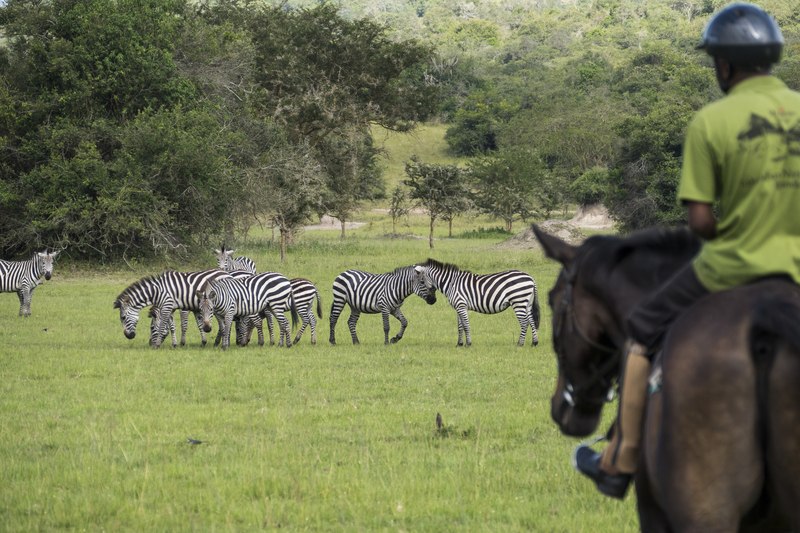
Wildlife that scatters at the sound of an engine will often continue grazing calmly as a horse and rider pass within a few meters.
Why Uganda Only Offers This in One Place
Horseback safaris require animals calm enough not to react aggressively to a horse and rider moving among them, which rules out most of Uganda's parks immediately. Lions and elephants in particular make riding through open wildlife areas far too dangerous to permit.
Lake Mburo National Park is the exception. With no lions and no elephants, it is the only protected area in Uganda where guided horseback rides through active wildlife zones are officially permitted by the Uganda Wildlife Authority, the government body that regulates activities inside all of the country's national parks.
This single fact is why a horseback safari in Uganda almost always means a Lake Mburo horseback safari specifically, rather than a generic activity available at multiple parks.
How the Activity Developed at Lake Mburo
Horseback riding was introduced at Lake Mburo years after the park itself was gazetted, once operators recognized that the absence of dangerous predators created an opportunity most other Ugandan parks could never safely offer.
What began as a niche activity for a small number of specialist riders has since grown into one of the park's signature draws.
Today, a horseback safari in Uganda is frequently listed alongside gorilla trekking and white water rafting as one of the country's defining adventure activities, despite being confined to a single location.
Its scarcity is arguably part of its appeal, since travelers who want this specific experience have exactly one place in the country to find it.
Word of mouth among safari-goers has done much of the marketing work for this activity over the years, with many travelers only learning that a horseback safari in Uganda exists at all after hearing about it from someone who tried it on a previous trip to the region.
What a Horseback Safari at Lake Mburo Involves
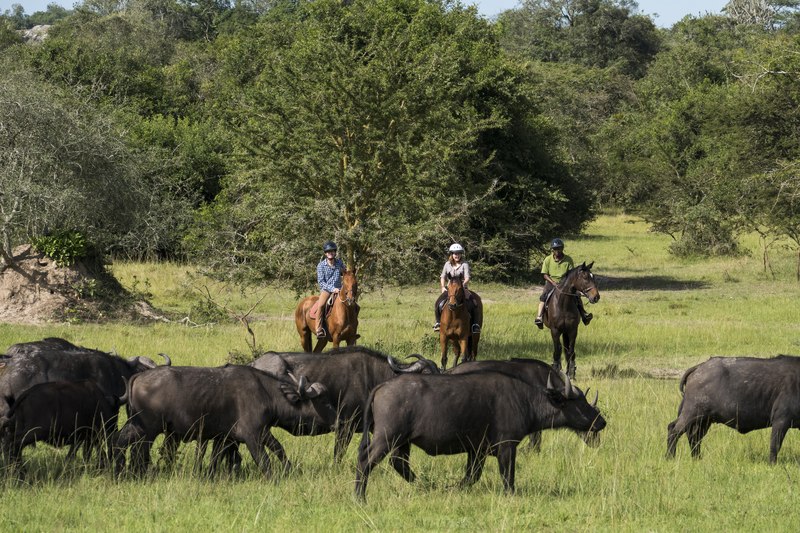
Rides are led by experienced guides on horses accustomed to moving quietly around zebras, impalas, elands, and buffalo, allowing much closer approaches than would be possible on foot or in a vehicle.
Sessions typically run one to three hours, though longer full-day rides can be arranged for confident riders.
A maximum rider weight of around 90 kilograms applies for safety reasons, and riders should expect to book in advance rather than arrange a ride spontaneously on arrival. Basic riding ability helps, but most operators can accommodate genuine beginners with a shorter, more controlled route.
The experience is operated in partnership with specialist horseback safari providers based at the park, most notably Nile Horseback Safaris, who maintain the horses and guide the rides on a daily basis.
Wildlife You Might See on a Horseback Safari
Zebras are the headline attraction, and Lake Mburo holds one of only two populations in Uganda, alongside remote Kidepo Valley National Park. Riders typically get closer to grazing zebra herds on horseback than a vehicle safari ever allows.
Impalas, elands, topi, and warthogs are common sightings along the park's grassland tracks, and buffalo are occasionally encountered at a safe distance. Birdlife is abundant too, with raptors and ground-dwelling species often visible from horseback in a way that a moving vehicle can miss.
Leopards remain in the park but are rarely encountered during daylight rides, since horseback safaris operate only during daytime hours precisely to avoid the risk of a nighttime predator encounter.
Guides on a horseback safari in Uganda are trained to read animal behavior closely, adjusting the route in real time if a herd shows signs of stress or if buffalo move closer than is comfortable for a safe approach on horseback.
Is a Horseback Safari in Uganda Right for You
Confident riders with some prior experience get the most out of longer routes, since a more controlled horse allows closer wildlife approaches without spooking. Complete beginners are still welcome, typically placed on calmer, more experienced horses for a shorter introductory route.
Families with older children can usually be accommodated, though most operators set a minimum age for safety reasons, so confirming this in advance is worth doing before building it into an itinerary.
Travelers with back or joint conditions that make riding uncomfortable should also flag this ahead of booking, since routes can sometimes be shortened but not fully adapted.
A horseback safari in Uganda is generally not recommended for travelers with no prior animal handling experience who are also nervous around large animals up close, since a calm, confident rider gets noticeably more out of the experience than someone tense throughout the ride.
What to Wear and Bring
Long trousers and closed shoes with a small heel are standard for any horseback ride, protecting against both saddle chafing and the acacia thorns common along Lake Mburo's trails. A wide-brimmed hat or riding helmet, depending on what the operator provides, helps with sun exposure during longer sessions.
Sunscreen, water, and insect repellent are worth carrying regardless of ride length, since sessions run in open, exposed terrain with little shade. Cameras are welcome but should be secured well, since a sudden movement to grab a shot can startle both horse and rider at an inopportune moment.
A change of clothes back at the lodge is also worth having ready, since dust and grass stains from a longer ride are difficult to avoid entirely.
Best Time for a Horseback Safari in Uganda
The dry seasons, June through September and December through February, offer the firmest ground conditions and the most comfortable riding weather. Wildlife also tends to concentrate more predictably near water sources during these months, improving sighting odds along standard routes.
Rides remain possible during the rainier months, though muddier trails can shorten routes or change the pace of a ride. Early morning sessions are generally preferred year round, both for cooler temperatures and more active wildlife.
Other Places to Ride in Uganda
While Lake Mburo is the only location for a genuine wildlife-zone horseback safari, shorter recreational rides exist elsewhere in the country without the same big game element. Jinja offers scenic horseback rides along the Nile through local villages, more a leisurely countryside outing than a wildlife encounter.
The Ssese Islands on Lake Victoria also offer horseback riding as one of several relaxed activities available to visitors, again without the wildlife density that defines the Lake Mburo experience.
Neither destination should be confused with an actual horseback safari, since both are recreational rides rather than guided wildlife encounters.
Travelers researching a horseback safari in Uganda online sometimes find these other options listed alongside Lake Mburo, which can create confusion about what is actually on offer. Confirming with your operator whether wildlife viewing is part of the ride, or simply scenery, avoids disappointment on arrival.
How to Combine It With the Rest of Your Trip
A horseback safari fits naturally into a Lake Mburo stopover, typically paired with a game drive, a boat cruise, or a walking safari during the same one or two night stay.
Our full Lake Mburo National Park guide covers how the park's other activities and its role as a stopover between Kampala and the gorilla trekking parks in the southwest.
Because Lake Mburo sits roughly halfway between Kampala and Bwindi, most travelers experience the horseback safari as a single memorable activity on the way to or from gorilla trekking, rather than the sole reason for the trip.
Some itineraries build in a full extra day specifically for a longer ride, particularly for travelers who discover on arrival that a short introductory session was not enough. Confirming flexibility with your operator in advance makes it easier to extend a ride spontaneously if the experience exceeds expectations.
Where to Stay for a Horseback Safari at Lake Mburo
Several lodges near the park can arrange horseback safaris directly or coordinate timing with the on-site operator. Our best lodges in Lake Mburo National Park guide ranks the top options across luxury, mid-range, and budget categories.
Mihingo Lodge in particular has built much of its reputation around horseback access, given its proximity to the park's riding trails and its own on-site stables for guests who want to combine a stay with easy access to rides.
Booking a horseback safari in Uganda through your lodge rather than arranging it independently often simplifies logistics considerably, since timing, transport to the stables, and any weather-related rescheduling can be coordinated directly with your accommodation.
Horseback Safari in Uganda by Traveler Type
The right length and style of ride depends heavily on who is riding and what they want from the experience.
Experienced riders typically request the longer full-day option, prioritizing distance and access to quieter, less-visited sections of the park over a shorter introductory pace.
Complete beginners do best with a one to two hour session on a calm, well-trained horse, treating the ride as a novelty wildlife encounter rather than a riding lesson.
Honeymooners and couples often combine a sunset ride with a stay at a lodge offering direct stable access, turning the activity into one of the more romantic moments of a Uganda itinerary.
Photographers tend to prefer slower-paced rides with frequent stops, since the vantage point from horseback allows compositions that a vehicle safari cannot easily replicate.
Frequently Asked Questions About Horseback Safari in Uganda
Where can I do a horseback safari in Uganda? Lake Mburo National Park is the only place in Uganda offering a genuine wildlife-zone horseback safari, since it is the country's only park without lions or elephants.
Do I need riding experience for a horseback safari in Uganda? No, beginners are accommodated on calmer horses over shorter routes, though prior riding experience allows for longer, more adventurous rides.
Is there a weight limit for horseback safaris at Lake Mburo? Yes, a maximum rider weight of approximately 90 kilograms typically applies for safety reasons, and this should be confirmed when booking.
How long does a horseback safari at Lake Mburo last? Most rides run one to three hours, though longer full-day options can be arranged for experienced riders in advance.
Can children do a horseback safari in Uganda? Older children can usually be accommodated, though minimum age requirements vary by operator and should be confirmed before booking.
How much does a horseback safari in Uganda cost? Pricing varies by ride length and operator, so it is best to confirm current rates directly when booking rather than relying on a fixed figure, since seasonal and group-size adjustments are common.
Do I need to book a horseback safari in Uganda in advance? Yes, advance booking is strongly recommended, since horses and guides are limited and availability can fill quickly during peak season.
A horseback safari in Uganda rewards a little planning ahead, but for travelers willing to build it into their itinerary, it remains one of the country's most memorable and genuinely unique wildlife experiences.
Few activities anywhere in East Africa offer quite the same combination of proximity to wildlife and quiet, unhurried pacing, which is precisely why so many riders who try it once make a point of returning to Lake Mburo specifically for another ride.
Continue Planning Your Trip
Ready to add a horseback safari in Uganda to your itinerary? Our team can help you time it around your gorilla trekking or wider Uganda safari plans.