A Rwanda-Uganda safari packed into just 5 days sounds ambitious, but this itinerary proves it works well for travelers with limited time. It blends Kigali's calm city culture with Uganda's tree climbing lions.
The trip closes with a face to face encounter with mountain gorillas, tying together two of East Africa's most rewarding countries into one continuous journey.
This guide walks through the full day by day itinerary, what it actually costs, the visa rules for crossing between Rwanda and Uganda, and how to prepare for the trek itself, so nothing about this trip catches you off guard.
Why Choose This Rwanda-Uganda Safari
Combining Rwanda and Uganda into a single trip lets you experience two distinct safari styles without adding weeks to your schedule. Rwanda offers polished infrastructure and a short drive from Kigali to gorilla territory.
Uganda, meanwhile, brings open savanna, big cats, and the Kazinga Channel's dense wildlife into the same short window.
Most travelers assume a gorilla trekking safari means picking one country over the other entirely. A Rwanda-Uganda safari removes that trade-off completely, letting you close a short loop that covers both without excessive driving days eating into your holiday.
Because gorilla trekking permits are limited and non-refundable, this itinerary deliberately places the trek on the final day of the trip. That way, earlier travel delays, road closures, or itinerary shifts do not put your gorilla permit at risk of being missed entirely.
Day 1: Arrival in Kigali
Your Rwanda-Uganda safari begins the moment you land at Kigali International Airport, where a driver guide meets you for a short transfer into the city.
Kigali makes an easy, comfortable first stop. Clean streets, a genuinely walkable downtown, and sites like the Kigali Genocide Memorial give you a meaningful introduction to Rwanda before the wildlife portion of the trip truly begins.
Use this day to rest after your flight and adjust to the time zone. Tomorrow starts early, and a full night's sleep in Kigali sets the tone for the days ahead.
Day 2: Journey to Queen Elizabeth National Park
Day two shifts the pace, with an early departure toward Uganda's Queen Elizabeth National Park. The drive takes roughly six to seven hours, passing through rolling hills, terraced farms, and small rural trading centers along the way.
This border crossing is part of what makes a Rwanda-Uganda safari worth the extra planning. Watching the landscape shift from Rwanda's tightly terraced hillsides to Uganda's wider open country is its own kind of scenery.
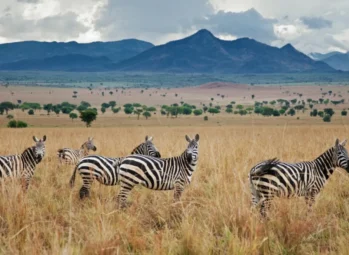
On arrival, head straight into the Ishasha sector for a game drive. This part of the park is known specifically for tree climbing lions, a rare behavior that makes for one of the more memorable sightings on this entire safari.
The day ends at a lodge near Ishasha, with a full board meal plan waiting after a long day on the road.
Day 3: Wildlife Adventure in Queen Elizabeth National Park
Day three is the wildlife-heavy centerpiece of this Rwanda-Uganda safari. An early game drive covers Queen Elizabeth's central savanna, where lions, elephants, and buffalo are common sightings.
After a relaxed lunch back at the lodge, the afternoon shifts to the water. A boat cruise along the Kazinga Channel brings you close to one of Africa's densest hippo populations, along with basking crocodiles and a wide variety of waterbirds.
This single day captures much of what makes Uganda's savanna parks distinct from Rwanda's forest reserves. Big game on land, dense wildlife on water, all within a few hours of each other.
Day 4: Return to Kigali
After breakfast, the itinerary turns back toward Rwanda for the return drive to Kigali. Expect another six to seven hours on the road, retracing much of the same route from Day 2.
This drive doubles as a natural pause between the two halves of your Rwanda-Uganda safari. The Uganda savanna experience is behind you, and the gorilla trek is still ahead, giving you time to mentally reset.
On arrival in Kigali, check into your hotel and use the evening to rest. Tomorrow requires an early start, and the trek itself is physically demanding.
Day 5: Gorilla Trekking in Volcanoes National Park
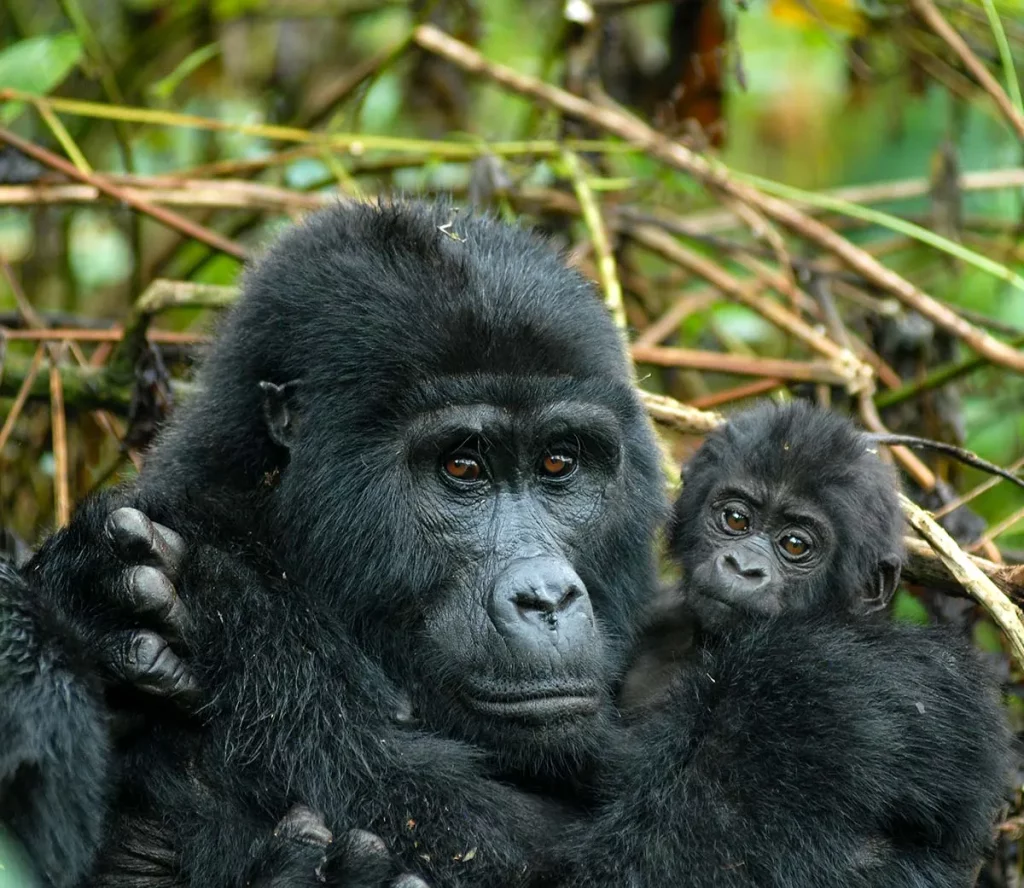
The final day of this Rwanda-Uganda safari is built around a single experience: trekking to see mountain gorillas in Volcanoes National Park.
The morning starts with an early transfer to Kinigi, where all trekking groups gather for a briefing at park headquarters. Rangers assign each group to a specific gorilla family based on that family's last known location.
From there, the trek moves into dense forest, with trail conditions ranging from easy walking paths to steep, muddy terrain depending on where the gorillas are that day.
Once you reach the family, you get one hour with them, watching them feed, interact, and care for their young at close range.
A few things to bring for this specific day:
- Sturdy, broken in hiking boots
- Gardening gloves for gripping vegetation
- A light rain jacket, even in the dry season
- Snacks and water for the trek itself
- A camera with a lens that performs well in low light
This hour, more than any other part of the trip, is usually what travelers remember most vividly once they are home.
Where to Stay on a Rwanda-Uganda Safari
Accommodation on this itinerary splits naturally into three stops: Kigali twice, and one lodge near Queen Elizabeth National Park.
In Kigali, a comfortable mid range hotel works well for both Day 1 and Day 4, since neither night involves early morning activities. Staying somewhere central also makes it easy to grab a meal or walk to a nearby cafe after a long travel day.
Near Ishasha, lodges are generally smaller and more rustic than what you will find in central Queen Elizabeth, reflecting the sector's remote, less developed feel. Full board meal plans are standard here, which matters given how far most lodges sit from independent restaurants.
For Day 5, most travelers stay in Musanze or Kinigi, close to Volcanoes National Park's headquarters. Staying nearby matters more than it might seem, since gorilla trekking briefings start early and a long drive beforehand cuts into rest time you will want before a demanding hike.
What This Rwanda-Uganda Safari Costs
The single largest cost on this itinerary is the gorilla permit itself. As of 2026, a standard gorilla trekking permit in Volcanoes National Park costs USD 1,500 per person for international non-residents, set directly by the Rwanda Development Board.
That fee covers park entry, the guided trek, and your hour with the gorillas. It does not include porters, tips for guides and trackers, meals, or accommodation, all of which are priced separately.
Beyond the permit, your total cost depends heavily on lodge choice and vehicle type. A private 4x4 for the Kigali to Queen Elizabeth legs, combined with mid range lodges, keeps this itinerary reasonably accessible without sacrificing comfort.
Since gorilla permits are non-refundable and limited to a set number of trekkers per family each day, booking three to six months ahead is strongly recommended for popular travel seasons.
Vehicle costs also add up faster than many travelers expect. A private 4x4 for the full loop covers roughly 12 to 14 hours of driving across Days 2 and 4 alone.
This typically runs between USD 250 and USD 350 for the round trip, separate from fuel and driver fees.
Meals are largely covered through full board arrangements at each lodge, which simplifies budgeting considerably. The main variable costs left outside your permit and accommodation are tips, souvenirs, and any optional activities added beyond this core itinerary.
Visa Requirements for a Rwanda-Uganda Safari
Crossing between Rwanda and Uganda mid trip means visa planning matters more than it would for a single country safari. Fortunately, the East Africa Tourist Visa makes this straightforward.
For USD 100, the East Africa Tourist Visa covers Rwanda, Uganda, and Kenya as a single multiple entry visa valid for 90 days.
One detail worth knowing: your first entry point must be the country where you applied for the visa, so plan your application around your actual arrival country.
If you only plan to visit Rwanda and Uganda, the East Africa Tourist Visa still applies at the same cost, even though Kenya is not part of your route. Applications can be completed online through Rwanda's Irembo portal or Uganda's immigration services before you travel.
Passports should be valid for at least six months from your travel date, with at least one blank page, regardless of which visa route you choose.
Best Time for a Rwanda-Uganda Safari
Both countries share similar dry season windows, which makes timing this combined itinerary easier than it might sound.
- June to September. The long dry season, ideal for both gorilla trekking and game drives in Queen Elizabeth.
- December to February. A shorter dry window, still reliable for both halves of the trip.
- March to May and October to November. Wetter months with muddier trekking trails, though fewer crowds and lush scenery for photography.
Trekking is possible year round in Volcanoes National Park, so a Rwanda-Uganda safari can technically run in any month. The dry seasons simply make both the drive and the trek itself considerably easier.
What to Pack for a Rwanda-Uganda Safari
Beyond the trekking specific gear already mentioned for Day 5, a few general packing choices make the whole trip smoother.
- Neutral colored clothing. Useful for both game drives and the forest trek, and less disruptive to wildlife than bright colors.
- A light jacket for Kigali evenings. The city sits at higher altitude and cools down noticeably after dark.
- Binoculars. Genuinely useful for both the Ishasha lions and general game viewing in Queen Elizabeth.
- A dry bag or waterproof cover for electronics. Volcanoes National Park's forest trails can turn wet with little warning.
Packing light matters here too, since the itinerary involves several vehicle transfers and one genuinely demanding hike.
Is This Itinerary Physically Demanding?
The two long drives, roughly six to seven hours each way between Kigali and Queen Elizabeth National Park, are the most physically tiring part of this Rwanda-Uganda safari, simply from time spent seated.
The gorilla trek itself varies considerably. Some groups reach their assigned family within an hour, while others hike for three or four hours through steep, muddy terrain before finding them. Trackers who set out at dawn help narrow this down, but it is never fully predictable.
Travelers with average fitness generally manage the trek without serious difficulty, though a few weeks of regular walking beforehand makes a noticeable difference. Those with mobility concerns should discuss options with their operator, since porters can carry gear and offer physical support on steeper sections.
Game drives and the boat cruise, by contrast, involve very little physical exertion, which makes Days 2 and 3 a good stretch to recover before the more demanding final day.
Highlights of This Rwanda-Uganda Safari
A few moments define this itinerary more than any others:
- Crossing two countries in a single, continuous route rather than two separate trips
- Tree climbing lions in the Ishasha sector, a behavior found in very few places on the continent
- A boat cruise along the Kazinga Channel, dense with hippos, crocodiles, and birdlife
- One hour with a habituated mountain gorilla family in Volcanoes National Park
- Direct support for gorilla conservation and the communities living around both parks
Together, these moments give the trip a shape that a single country itinerary usually cannot match in just five days.
How This Compares to a Single Country Safari
A Rwanda-only gorilla trekking trip can run three to four days, since Volcanoes National Park sits close to Kigali. A Uganda-only savanna safari, focused purely on Queen Elizabeth, might run a similar length without the cross border driving.
Combining them into one Rwanda-Uganda safari adds roughly two extra travel days compared to either single country option, almost entirely spent on the road between Kigali and Queen Elizabeth.
What you gain in exchange is variety that neither single country trip offers alone. Tree climbing lions and a Kazinga Channel boat cruise are distinctly Ugandan experiences, while the gorilla trek and Kigali's city culture are distinctly Rwandan, and this itinerary captures both without requiring two separate bookings.
For travelers with only one trip to East Africa in their near future, that combination often outweighs the extra driving involved.
Frequently Asked Questions About a Rwanda-Uganda Safari
Is 5 days enough for a Rwanda-Uganda safari? Yes, though it is a fairly fast pace with two long drives. Travelers who want more time to relax between activities sometimes extend this itinerary to 6 or 7 days.
How much does gorilla trekking cost on a Rwanda-Uganda safari? The Rwanda gorilla permit costs USD 1,500 per person as of 2026, separate from accommodation, transport, and meals for the rest of the trip.
Do I need two visas for a Rwanda-Uganda safari? No. The East Africa Tourist Visa, priced at USD 100, covers both Rwanda and Uganda as a single multiple entry visa valid for 90 days.
What is the minimum age for gorilla trekking? Rwanda enforces a minimum age of 15 for gorilla trekking, a rule shared across all three countries where mountain gorillas can be tracked.
Can this itinerary be combined with more wildlife time in Uganda? Yes. Many travelers extend the Uganda portion to include Murchison Falls or Kibale National Park before returning to Rwanda for the gorilla trek.
Which airport should I fly into for this safari? Kigali International Airport works best, since the itinerary both starts and ends in Rwanda. Entebbe International Airport in Uganda is a workable alternative if you plan to reverse the route.
What happens if it rains during the gorilla trek? Treks continue in light rain, since Volcanoes National Park's climate is naturally wet and misty for much of the year. Only severe weather affecting ranger safety would delay a scheduled trek.
Is a guide included throughout this Rwanda-Uganda safari? Yes. A driver guide typically stays with you for the full itinerary, handling both the road transfers and, in most cases, the game drives inside Queen Elizabeth National Park.
Continue Planning Your Trip
Ready to experience this Rwanda-Uganda safari for yourself? Explore our safari itineraries, or build your own custom safari around Queen Elizabeth National Park and Volcanoes National Park.
Have questions about permits, visas, or timing? Get in touch with our team and we will help you plan the right trip.
Thrilling 3 Days Gorilla Trek Uganda Tour via Kigali Rwanda – Meet the Giants of Bwindi
12-Day Uganda Kenya Safari: Gorilla Trekking, Big 5 And Culture
7-Day Uganda Wildlife Safari | Chimps, Gorillas, Big 5 & More!
14-Day Budget-Friendly Uganda Safari: Unforgettable Gorillas, Chimps & Wildlife Encounters