Jane Goodall is the woman who changed the way the world sees chimpanzees. Starting in 1960, she spent decades living beside the wild chimps of Gombe in Tanzania, and her discoveries showed that our closest living relatives make tools, hunt, grieve, and form deep family bonds. Today you can follow her story into the forest yourself, on a chimpanzee trekking safari in Uganda, the country where she helped found Ngamba Island Chimpanzee Sanctuary.
This guide tells the story of Jane Goodall, explains what she discovered and why it still matters, and shows you the best places to see chimpanzees in the wild, with permit prices, tips and ready-made chimp safaris you can book.
Jane Goodall at a Glance
- Born: 3 April 1934, London, England, as Valerie Jane Morris-Goodall.
- Known for: the longest study of wild chimpanzees ever made, at Gombe in Tanzania.
- Greatest discovery: in 1960 she saw a chimpanzee make and use a tool to fish for termites.
- Founded: the Jane Goodall Institute (1977) and the Roots & Shoots youth programme (1991).
- Uganda link: helped start Ngamba Island Chimpanzee Sanctuary on Lake Victoria in 1998.
- Died: 1 October 2025, aged 91, while on a speaking tour in the United States.
- Visit today: chimpanzee trekking in Kibale, Budongo and Kyambura Gorge, and a trip to Ngamba Island.
Who Was Jane Goodall?
Jane Goodall was born in London on 3 April 1934. As a child she loved animals more than anything. She read the Tarzan and Doctor Dolittle books, watched birds and insects for hours in the garden, and slept with a toy chimpanzee named Jubilee that her father had given her. From a young age she dreamed of going to Africa to live with wild animals.
Her family could not afford university, so she trained as a secretary and worked as a waitress to save money for the trip. In 1957 a school friend invited her to Kenya, and she went. There she met the famous scientist Louis Leakey, who was searching for the origins of humankind. Leakey hired her as his assistant and soon saw something special in her patience and curiosity.
Leakey believed that studying our closest relatives could teach us about early humans. He chose Jane Goodall to begin a long-term study of wild chimpanzees, and he later chose Dian Fossey for mountain gorillas and Biruté Galdikas for orangutans. You can read the gorilla side of this story in our guide to Dian Fossey and Gorillas in the Mist.
Gombe: Where Jane Goodall’s Chimpanzee Research Began
In July 1960, at the age of 26, Jane Goodall arrived at the Gombe Stream reserve on the shore of Lake Tanganyika, in what was then Tanganyika and is now Tanzania. The authorities would not let a young woman live in the forest alone, so her mother, Vanne, came with her for the first months.
At first the chimpanzees ran away whenever they saw her. She did not give up. Day after day she climbed to a high point, now called Jane’s Peak, and watched them through binoculars. Slowly the chimps grew used to her, and she was able to move closer and closer.
Instead of giving the chimps numbers, as scientists did at the time, she gave them names: David Greybeard, Goliath, Flo, Fifi and Flint. She wrote about their personalities, moods and friendships. Some scientists laughed at this, but her approach opened a window into chimpanzee life that no one had seen before.
The Discovery That Changed Science
In November 1960, only a few months after she arrived, Jane Goodall watched a chimpanzee she called David Greybeard crouch beside a termite mound. He picked a stem of grass, pushed it into a hole in the mound, and pulled it out covered in termites, which he ate. She also saw chimps strip the leaves off twigs to make these fishing tools.
At the time, scientists believed that only humans made and used tools. When Leakey heard the news, he replied with a now-famous line: “Now we must redefine tool, redefine man, or accept chimpanzees as humans.”
In the same first year, she saw chimpanzees hunt and eat meat, including young bushpigs. Until then, people thought chimps were mostly peaceful fruit eaters. Over the following years she recorded chimps hugging, kissing, holding hands, comforting each other and mourning their dead.
Flo, Flint and the Family Life of Chimpanzees
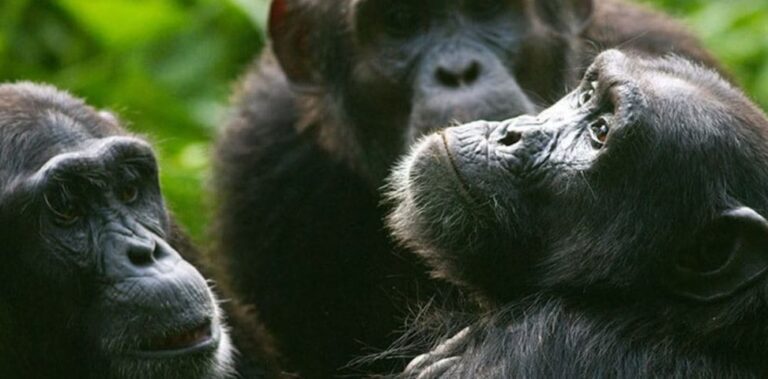
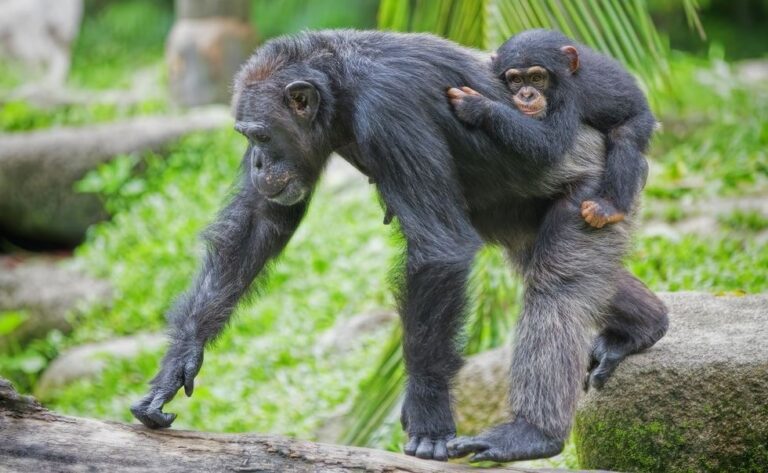
One of the most moving stories from Gombe is that of Flo, a high-ranking mother, and her son Flint. Flint stayed unusually close to his mother long after he should have become independent. When Flo died in 1972, Flint stopped eating and lost interest in the world around him. He died about a month later, aged eight.
For Jane Goodall, stories like this showed that chimpanzees feel emotions such as grief and loneliness. She also recorded a darker side: in the 1970s one chimp community at Gombe attacked and wiped out a group that had split away from it. Similar violence has since been studied among the Ngogo chimps of Kibale Forest in Uganda, which you can read about in our story of the chimpanzee civil war in Kibale Forest.
In 1962 she was accepted at the University of Cambridge to study for a PhD, one of very few people ever admitted without a first degree. She earned her doctorate in ethology in 1965. Her book In the Shadow of Man (1971) brought the Gombe chimps to readers around the world.
From Scientist to Global Voice for Nature
In 1977 she founded the Jane Goodall Institute to protect chimpanzees and their forests. As she travelled across Africa, she saw forests being cleared, chimps hunted for bushmeat and baby chimps sold as pets. She realised that saving chimpanzees meant working with the people who live beside them, so the institute began helping local communities with farming, health and education.
In 1991 she started Roots & Shoots, a programme that encourages young people to care for animals, people and the environment. It now runs in nearly 75 countries. She was named a United Nations Messenger of Peace in 2002, made a Dame in 2004, and in January 2025 she received the US Presidential Medal of Freedom.
Even in her nineties, Jane Goodall travelled most of the year to give talks. She died of natural causes on 1 October 2025, aged 91, in Los Angeles, while on a speaking tour. The research she started at Gombe continues today, making it the longest-running study of any wild animal on earth.
Jane Goodall Timeline
| Year | Event |
|---|---|
| 1934 | Born in London on 3 April. |
| 1957 | Travels to Kenya and meets Louis Leakey. |
| 1960 | Arrives at Gombe in July; sees David Greybeard making and using tools. |
| 1965 | Earns her PhD in ethology at the University of Cambridge. |
| 1971 | Publishes In the Shadow of Man. |
| 1977 | Founds the Jane Goodall Institute. |
| 1991 | Launches Roots & Shoots; the Jane Goodall Institute begins its work in Uganda. |
| 1998 | Ngamba Island Chimpanzee Sanctuary opens on Lake Victoria in Uganda. |
| 2002 | Named a UN Messenger of Peace. |
| 2023 | Visits Uganda for Ngamba Island’s 25th anniversary. |
| 2025 | Receives the Presidential Medal of Freedom in January; dies on 1 October, aged 91. |
Jane Goodall and Uganda
Many travellers know Jane Goodall for Gombe, but fewer know how closely she was tied to Uganda. Her institute’s work here began in 1991, after four young chimpanzees were taken from smugglers and brought to the zoo in Entebbe. The institute sent a chimpanzee expert to care for them and to train Ugandan staff. That rescue was the start of the Jane Goodall Institute in Uganda.
In 1998 she and a small group of partners moved rescued orphan chimps to Ngamba Island, a forested island in Lake Victoria about an hour by boat from Entebbe. The Chimpanzee Sanctuary and Wildlife Conservation Trust, which runs the island, counts the Jane Goodall Institute among its founding trustees. Today the island cares for more than 50 chimpanzees rescued from the illegal pet and bushmeat trade.
She came back to Uganda many times. She also helped the Uganda Wildlife Education Centre in Entebbe become a better home for rescued chimps. She celebrated Ngamba Island’s 20th anniversary in 2018, and in 2023 she returned for its 25th, when she fed the chimps on the island during what turned out to be her last visit. For many Ugandans in conservation, she was a friend as well as a hero.
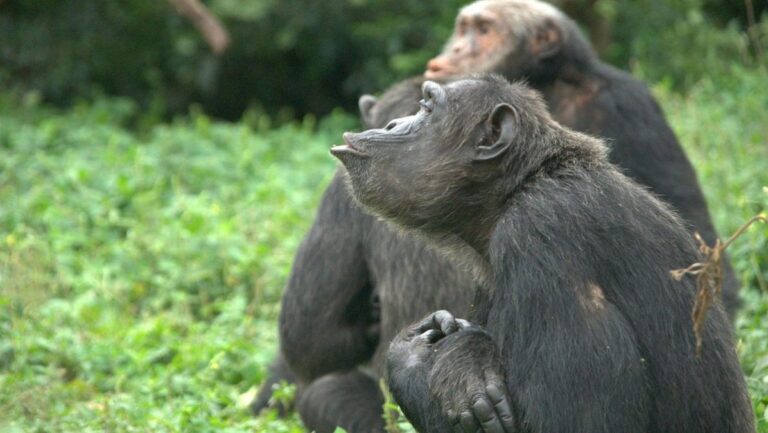
A visit to Ngamba Island is the easiest way to connect with the Jane Goodall story in Uganda. You watch the chimps at feeding time from a raised platform, learn how each one was rescued, and support the sanctuary with your fee. It fits well at the start or end of a safari, close to Entebbe Airport. Read our full guide to Ngamba Island Chimpanzee Sanctuary.
See the chimpanzees Jane Goodall loved
We book chimp permits in Kibale, Budongo and Kyambura Gorge, Ngamba Island visits, lodges and transport from Entebbe or Kampala. Send us your dates for a free chimpanzee trekking itinerary within 24 hours.
Chimpanzee Trekking: Follow Jane Goodall Into the Forest
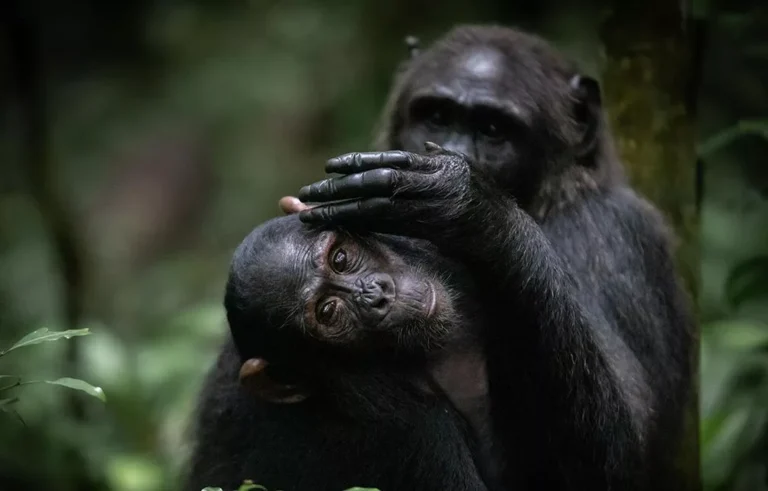
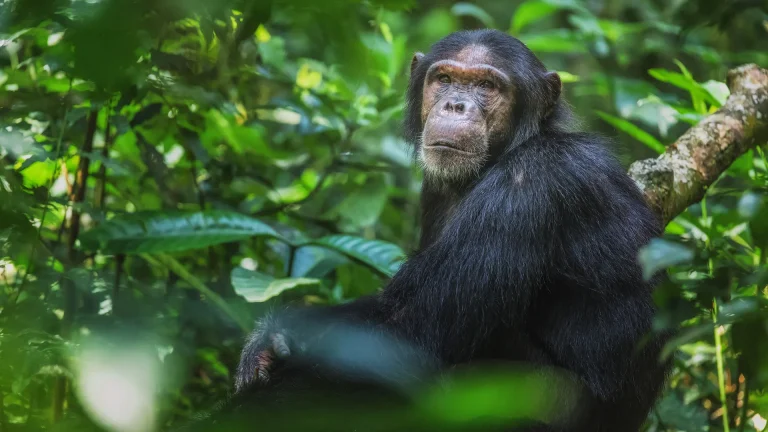
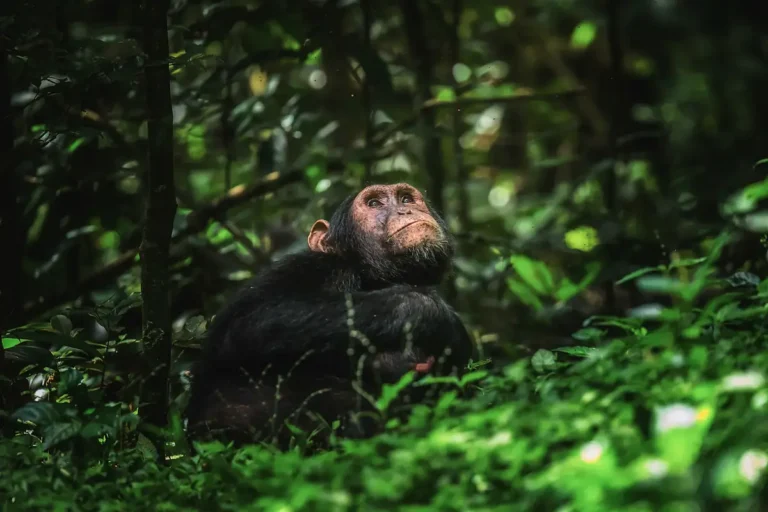
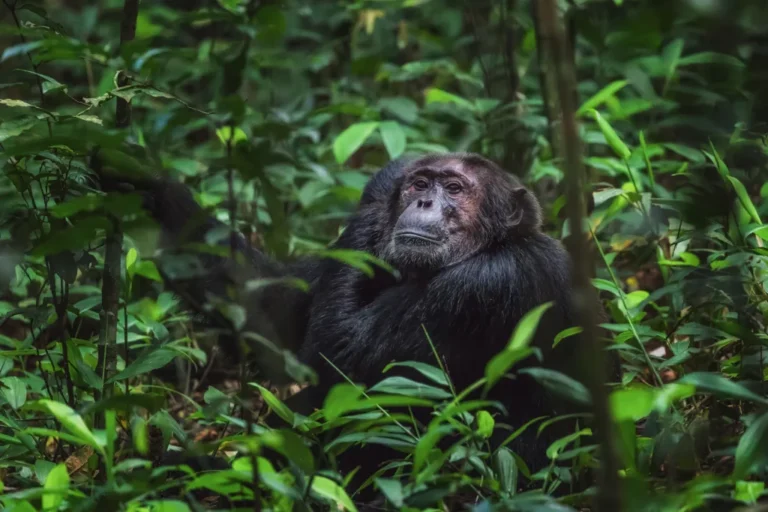
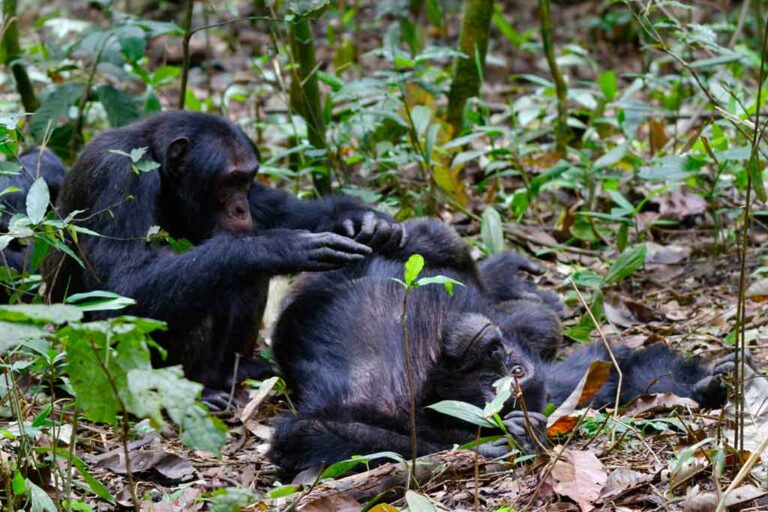
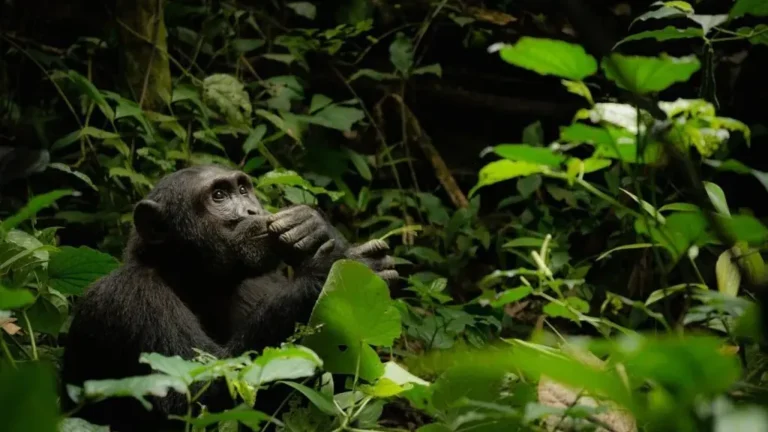
Chimpanzee trekking is the closest most of us will come to the life Jane Goodall lived at Gombe. You walk into the rainforest with an armed ranger, listen for the chimps’ loud pant-hoots, and follow the calls until you find a group feeding, grooming or resting in the trees. Once you find them, you spend up to one hour with the chimps.
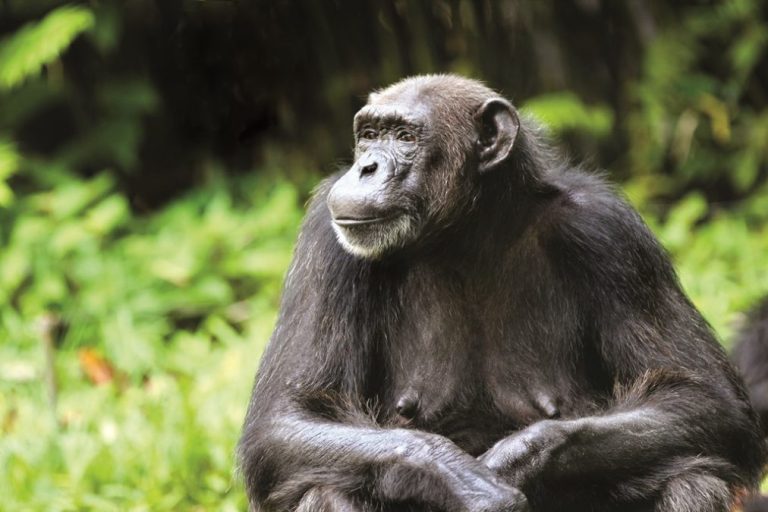
The chimps you visit are habituated, which means researchers and rangers have spent years getting them used to people, just as she did at Gombe. Uganda is home to around 5,000 wild chimpanzees, one of the largest populations of eastern chimpanzees in Africa, so it is one of the best places in the world for chimpanzee trekking. To learn more about the apes themselves, see our pillar guide to chimpanzees in Uganda.
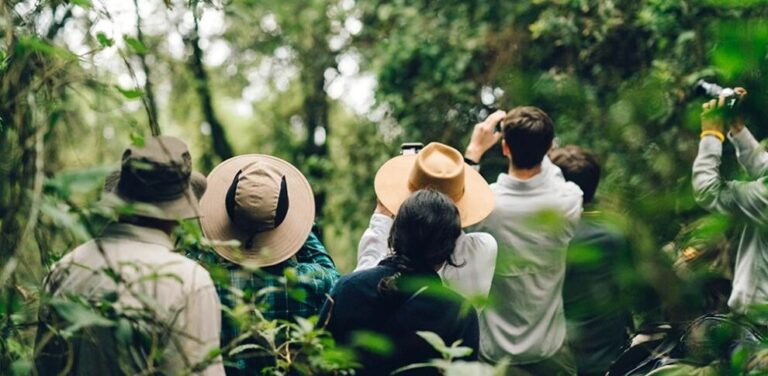
5 Places to Follow in Jane Goodall’s Footsteps
1. Kibale Forest National Park, Uganda
Kibale Forest is the best place for chimpanzee trekking in Africa. It holds about 1,500 chimpanzees, one of the highest densities anywhere, and the habituated groups around Kanyanchu are found on almost every trek. Treks start at 8 am and 2 pm, and the forest is also home to 12 other primate species, including red colobus and L’Hoest’s monkeys.
For the full Jane Goodall experience, book the Chimpanzee Habituation Experience. Instead of one hour, you spend most of the day with a group of chimps that is still getting used to people, alongside the researchers and rangers who are habituating them. It is the nearest thing to her early days at Gombe. Compare the starting points in our guide to Kibale chimp trekking sectors, or read about Kibale Forest National Park.
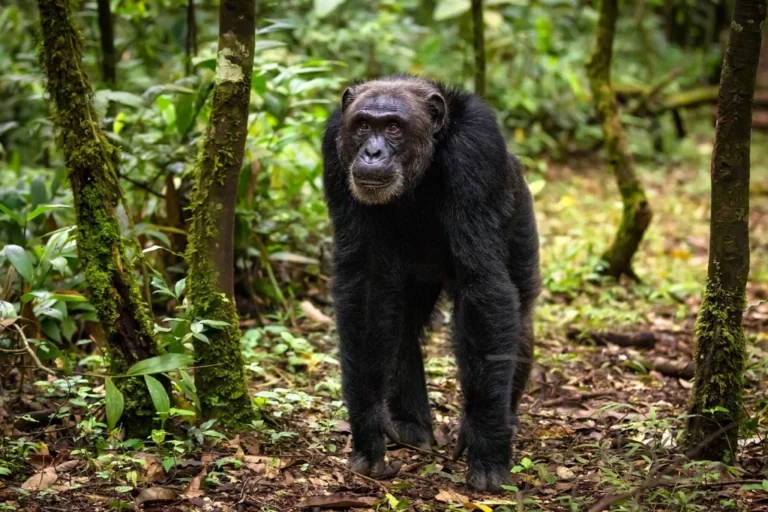
2. Ngamba Island Chimpanzee Sanctuary, Uganda
Ngamba Island is the place in Uganda most directly linked to Jane Goodall. It is not a wild trek: the chimps here are rescued orphans who cannot return to the wild. But it is the best place to understand the threats chimpanzees face and the conservation work she inspired. It is also a good choice if you have only a day near Entebbe or if you cannot do a long forest walk.
3. Budongo Forest, Uganda
Budongo Forest lies on the way to Murchison Falls National Park and is home to about 600 chimpanzees. Its Kaniyo Pabidi area has tall mahogany trees and flat trails, and treks are quieter than in Kibale. It is a great way to add chimps to a Murchison Falls safari. Read more in our guide to chimpanzee trekking in Budongo Forest.
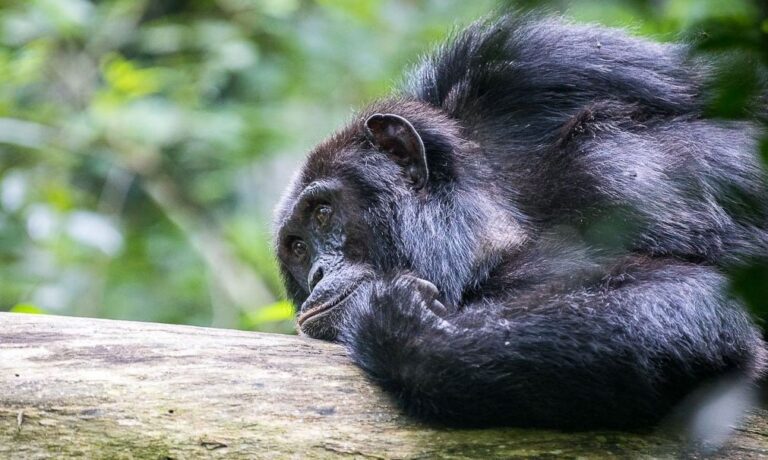
4. Kyambura Gorge, Uganda
Kyambura Gorge is a sunken rainforest inside the savannah of Queen Elizabeth National Park, often called the “valley of apes”. A small, isolated chimp community lives in the gorge. Sightings are less certain than in Kibale, but the walk through the steep, green gorge is unforgettable, and it fits easily into a Queen Elizabeth safari. See our guide to Kyambura Gorge.
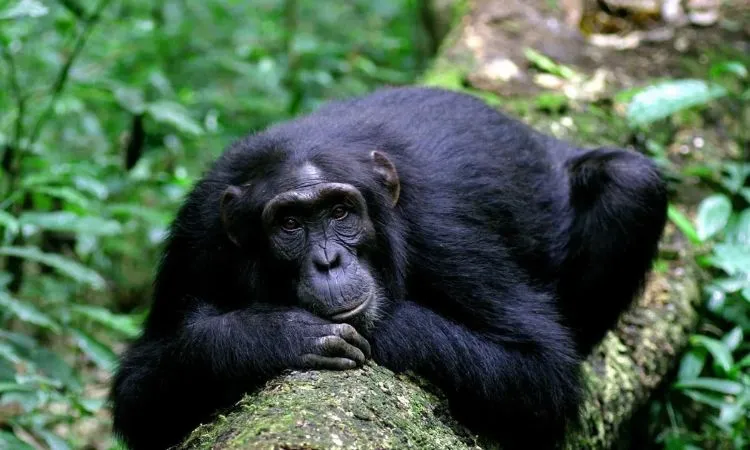
5. Gombe Stream National Park, Tanzania
Gombe is where it all began. It is Tanzania’s smallest national park, a strip of steep forest on the shore of Lake Tanganyika, and there is no road in: you reach it by boat from Kigoma. Here you can trek the descendants of David Greybeard and Flo, visit Jane’s Peak and the feeding station she used, and see the research centre that still follows the chimps today.
Gombe is remote and takes extra time and flights to reach, so most travellers combine it with a longer Tanzania trip. If you would like to add Gombe to your plans, ask our team. For most visitors, Uganda offers easier access, more chimpanzee trekking sites and the chance to add mountain gorillas to the same trip. Other good chimp forests in Uganda include Kalinzu Forest near Queen Elizabeth.
Where to See Chimpanzees: Quick Comparison
| Place | Country | Permit (foreign non-resident) | Best for |
|---|---|---|---|
| Kibale Forest National Park | Uganda | US$250 (US$200 in April, May and November) | The best chance of close chimp sightings |
| Kibale Chimpanzee Habituation Experience | Uganda | US$400 | A full day with the chimps, like Jane Goodall |
| Budongo Forest | Uganda | About US$130 | Quiet treks on a Murchison Falls safari |
| Kyambura Gorge | Uganda | US$240 | Adding chimps to a Queen Elizabeth safari |
| Ngamba Island | Uganda | Ask us for current rates | Rescued chimps and the Jane Goodall story, near Entebbe |
| Gombe Stream National Park | Tanzania | Ask us for current rates | Visiting the place where Jane Goodall started |
For a full price breakdown, including lodges and transport, see our guide to chimpanzee trekking in Uganda costs. To buy permits only, read primate permits in Uganda.
Chimpanzee Trekking Rules Jane Goodall Would Approve Of
Jane Goodall always taught respect for chimpanzees as individuals. The rules on a chimp trek follow the same spirit, and they protect the chimps from stress and from human diseases, which can kill them.
- Keep your distance: stay at least 8 metres from the chimps and follow your ranger’s directions.
- Stay home if you are sick: do not trek with a cold, flu or other illness. Chimps catch our diseases easily.
- Do not eat near the chimps: keep food and drinks in your bag while you are with them.
- No flash photography: turn off your flash and keep your voice low.
- Age limit: the minimum age for chimpanzee trekking in Uganda is 12 years.
- Dress for the forest: wear long trousers, long sleeves and good walking shoes. Our gorilla trekking packing list works for chimp treks too.
Planning Your Chimpanzee Trekking Safari
- How long: 2 to 3 days is enough for chimpanzee trekking in Kibale from Kampala or Entebbe. Allow 5 to 8 days to add gorillas and game drives.
- Best time: chimpanzee trekking runs all year. The drier months of June to September and December to February have firmer trails, while April, May and November bring lower permit prices.
- Book early: Kibale permits are limited and sell out in busy months, especially for the Habituation Experience.
- Combine primates: pair chimps with gorillas, as in our comparison of gorilla trekking vs chimpanzee trekking.
- Read up first: Jane Goodall’s In the Shadow of Man is the perfect book to bring on your trip.
Chimpanzee Trekking Safaris Inspired by Jane Goodall
These Tulambule safaris all include chimpanzee trekking, and many add mountain gorillas, tree-climbing lions or a boat cruise. Each can be adjusted to your dates, budget and fitness, and we can add a visit to Ngamba Island to any of them.
Walk With the Chimps Jane Goodall Gave Her Life To
From chimp permits in Kibale and Budongo to Ngamba Island, lodges and gorilla treks, our Kampala team plans every detail of your chimpanzee trekking safari. Send us your dates for a free quote within 24 hours.
Request a QuoteChat on WhatsApp
UTB Licence UTB/RTT/TT/2025/101877 • Accredited by UWA • Member of AUTO • Rated 4.9 on TripAdvisor