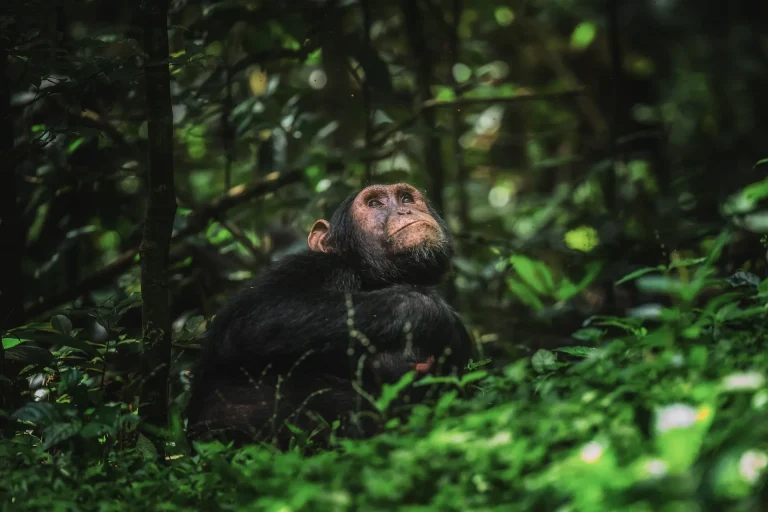
Chimpanzees in Uganda are one of Africa's great wildlife stories. Around 5,000 wild chimpanzees live in the country's forests, the second-largest population of eastern chimpanzees anywhere, and several communities are habituated so you can walk among them. Hearing a community erupt into pant-hoots in the canopy above you is something you never forget.
This is our complete guide to chimpanzees in Uganda: what they are, how they live, what they eat, how many are left, where to see them, what permits cost (including the new rates from 1 January 2027) and how to plan a chimp safari that fits your budget.
We have taken travelers to see chimpanzees since 2014, in Kibale, Budongo, Kyambura and Kalinzu. Everything below comes from that experience, checked against the Uganda Wildlife Authority's official tariff.
Last updated: October 2026. Permit prices change on 1 January 2027; please confirm rates with us before you book.
Quick answer: the best place to see chimpanzees in Uganda is Kibale National Park, with about 1,500 chimps and sighting rates above 90%. A Kibale permit costs $250 (rising to $300 on 1 January 2027), and the minimum age is 12. For a cheaper or quieter trek, try Kyambura Gorge, Budongo Forest or Kalinzu Forest.
Chimpanzees in Uganda at a Glance
| Fact | Details |
|---|---|
| Species | Eastern chimpanzee (Pan troglodytes schweinfurthii) |
| Conservation status | Endangered (IUCN Red List) |
| Population in Uganda | About 5,000 |
| Largest population | Kibale National Park, about 1,500 |
| Lifespan in the wild | Up to about 40 to 50 years |
| Weight | Males about 40 to 60 kg, females about 27 to 50 kg |
| Diet | Mostly ripe fruit, plus leaves, seeds, insects, honey and some meat |
| Where to see them | Kibale, Budongo, Kyambura Gorge, Kalinzu, Bugoma, Rwenzori foothills, Ngamba Island |
| Permit (foreign non-resident) | From $100 (Kyambura) to $250 (Kibale) in 2026 |
| Minimum trekking age | 12 years |
What Is a Chimpanzee?
Chimpanzees are great apes, not monkeys. Like gorillas, orangutans and bonobos, they have no tail, a large brain and long arms that let them climb and knuckle-walk with ease. Chimpanzees and bonobos are our closest living relatives, sharing about 98.7% of our DNA.
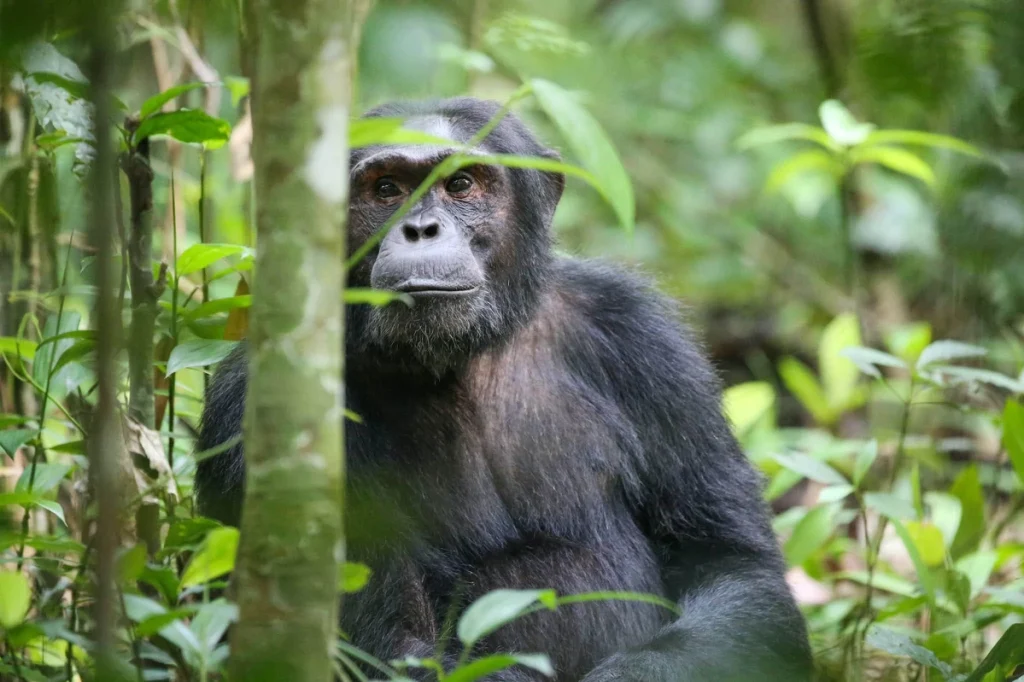
There are four subspecies of chimpanzee across Africa. All chimpanzees in Uganda are eastern chimpanzees, the subspecies also found in the Democratic Republic of Congo, Tanzania, Rwanda, Burundi and South Sudan. Bonobos are a separate species and live only in Congo, so you will not find them in Uganda.
An adult male stands about 1.2 meters tall when upright, but is several times stronger than a person of the same size. Their faces, hands and expressions are so human-like that most visitors are surprised by how familiar a chimpanzee feels at close range.
How Many Chimpanzees Live in Uganda?
Surveys led by the Wildlife Conservation Society and the Jane Goodall Institute estimate about 5,000 chimpanzees in Uganda. That makes Uganda home to the second-largest eastern chimpanzee population after the DRC, and far more than Rwanda, Burundi or Tanzania.
Most chimpanzees in Uganda live in the forests of the Albertine Rift in the west. Kibale National Park holds about 1,500 of them, and Budongo Forest around 600 to 800. Smaller communities live in Kalinzu, Bugoma, Kyambura Gorge, Toro-Semliki, the Rwenzori foothills and even Bwindi, while some groups survive in small forest patches between farms.
How Chimpanzees in Uganda Live
Watching chimpanzees for an hour shows you a society that is noisy, political and full of personality. These are the behaviors guides point out most often.
Communities and Daily Life
Chimpanzees live in communities of about 20 to 150 animals, led by an alpha male. The whole community rarely moves together. Instead it splits into small parties that forage, travel and rest, then regroup, which scientists call fission-fusion. Males stay in the community they were born into, while most females move to a neighboring community as young adults.
Kibale's Ngogo community is one of the largest ever studied, with around 200 members. Researchers there have recorded long-running territorial conflict and even a split within the group, a story we tell in the chimpanzee civil war in Kibale Forest.
Communication
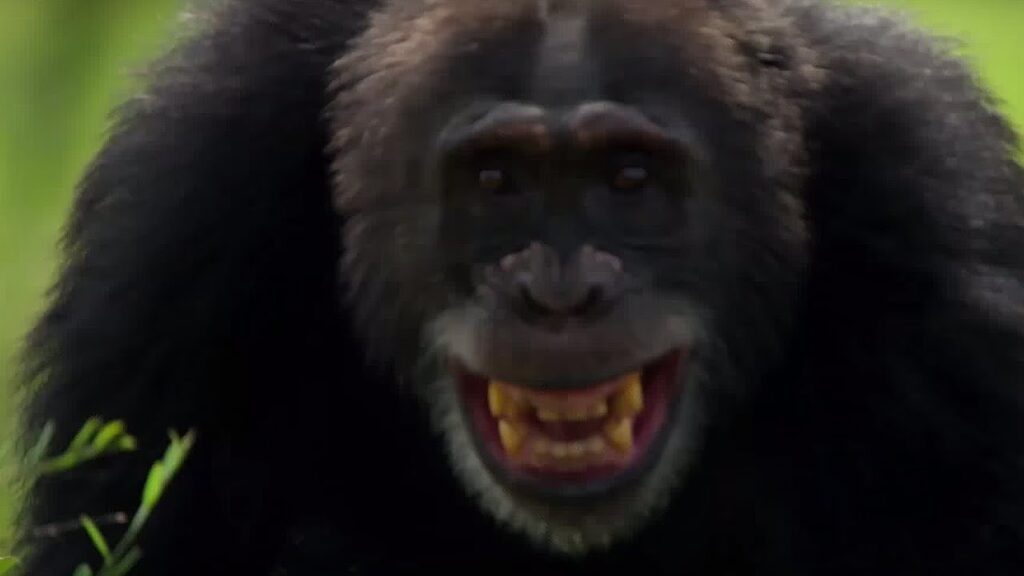
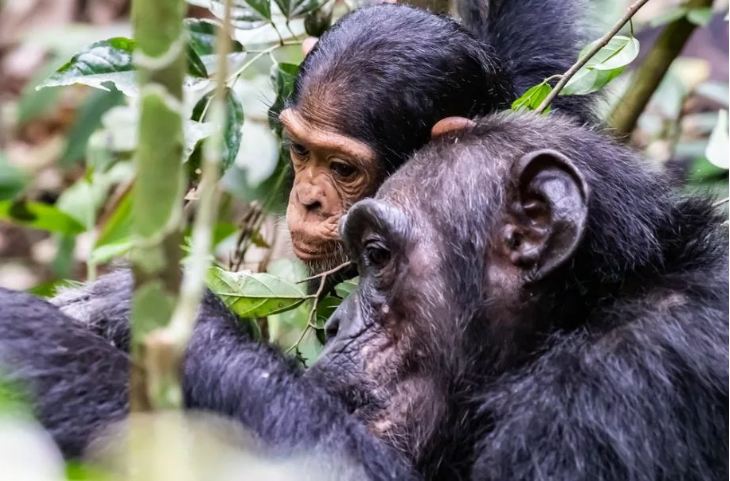
Chimpanzees in Uganda are loud. The pant-hoot, a rising series of hoots ending in screams, carries for over a kilometer and lets parties keep track of each other. Males also drum on the buttress roots of big trees. Up close, they use grooming, facial expressions, gestures and touch to make friends, settle disputes and comfort each other.
Tool Use
Chimpanzees make and use tools more than any animal apart from humans. In Uganda you may see them crumple leaves into a sponge to soak up water from tree holes, use sticks to reach honey, or wipe themselves with leaves. Researchers in Budongo have even recorded chimps learning from each other to use moss as a sponge, evidence of culture passing between individuals.
Hunting
Chimpanzees in Uganda are mostly fruit eaters, but males hunt in coordinated groups, and their favorite prey in Uganda is the red colobus monkey. Meat is shared after a hunt, often as a way of building alliances. If your guide hears colobus alarm calls during a trek, chimps may be close.
Night Nests
Every evening, each of the chimpanzees in Uganda's forests bends and weaves branches into a fresh sleeping nest high in a tree, usually in under five minutes. Mothers share their nest with their baby. Our guide to gorilla and chimpanzee nests explains how they build them and why trackers use old nests to find a community.
What Do Chimpanzees in Uganda Eat?
Ripe fruit makes up most of a chimpanzee's diet, especially figs. Where fruit is scarce, they switch to leaves, pith, seeds, flowers and bark. They also eat insects such as ants and termites, raid wild bee nests for honey, and occasionally hunt monkeys, young antelope and bush pigs.
Because their day revolves around fruit, the location of fruiting trees decides where chimpanzees in Uganda spend their time. When a big fig tree is in fruit, trekking can be easy, as the community gathers in one place to feed. When fruit is scattered, chimps travel further and treks can take longer.
Chimpanzee Life Cycle
A female chimpanzee gives birth to a single baby after about eight months of pregnancy. Babies cling to their mother's belly at first, then ride on her back. They nurse for about four to five years, and females usually have a baby only every five to six years, which is one reason chimp populations recover slowly from losses.
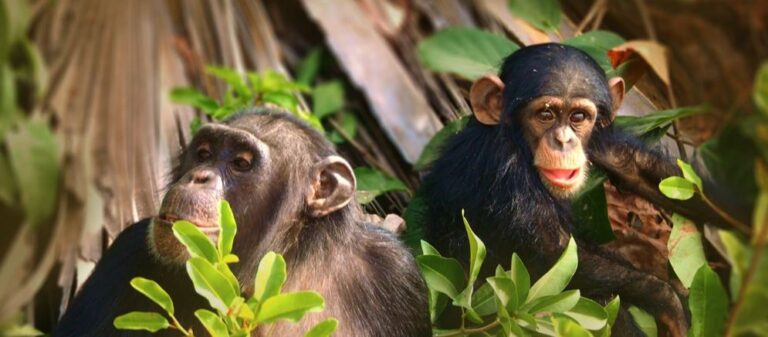
Young chimps spend years watching their mothers to learn which foods are safe, how to use tools and how to behave within the community. Females mature at about 13 and males at about 16. In the wild, chimpanzees can live for about 40 to 50 years.
Chimpanzees in Uganda vs Mountain Gorillas
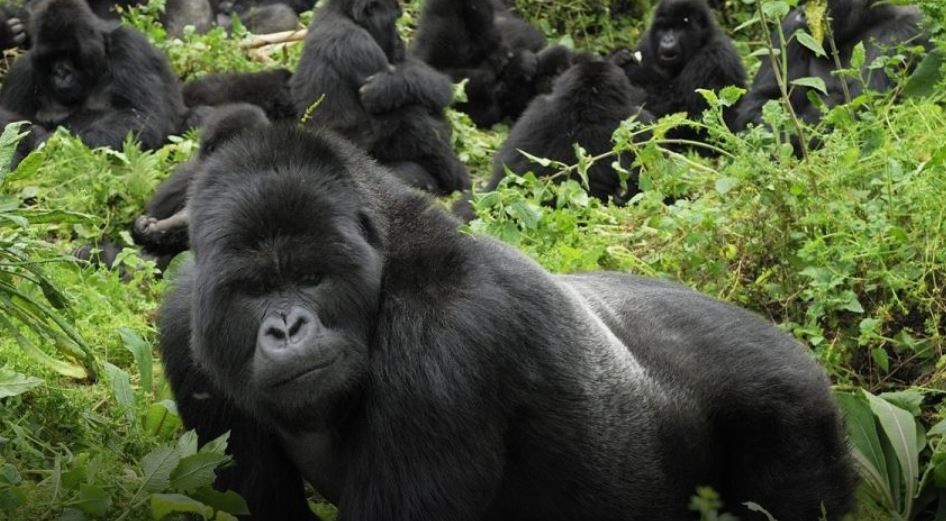
Both are great apes, but the experience of seeing them is very different. Gorillas are calm and stay mostly on the ground. Chimpanzees are fast, loud and often high in the trees, so a chimp trek feels livelier and less predictable. Chimp permits are also far cheaper: $250 in Kibale against $800 for gorillas. Read gorilla vs chimpanzee for the full biological comparison, or gorilla trekking vs chimpanzee trekking to decide which trek to book.
Want to see chimpanzees in Uganda?
Tell us your dates and budget. We will recommend the best forest for you and check chimp permit availability, free of charge.
Where to See Chimpanzees in Uganda
Uganda offers more chimp trekking sites than almost anywhere in Africa, and every site below has habituated chimpanzees in Uganda's protected forests. For a deeper look at each forest and how a trek works, see our chimpanzee trekking in Uganda guide.
Kibale National Park
Kibale Forest National Park, near Fort Portal, is the best place to see chimpanzees in Uganda. It holds about 1,500 chimps and 13 primate species in total. Treks start from Kanyanchu in the morning and afternoon, and the habituated communities give sighting rates above 90%. Kibale is also the only park offering the chimpanzee habituation experience, where you spend much longer with a community that is still getting used to people.
Read our guide to a Kibale Forest chimp trek for what happens on the day, and see Kibale National Park lodges for where to stay.
Budongo Forest
Budongo Forest, on the edge of Murchison Falls National Park, is a huge mahogany forest with around 600 to 800 chimpanzees. Trekking takes place at Kaniyo Pabidi and Busingiro, and the forest is excellent for birds. It pairs perfectly with a Murchison Falls safari; see chimpanzee trekking in Budongo Forest.
Kyambura Gorge
Kyambura Gorge, the Valley of Apes, is a sunken strip of rainforest cut into the savannah of Queen Elizabeth National Park. One small community lives here, isolated from other chimps. Sightings are less certain than in Kibale, but the gorge is spectacular and combines easily with game drives and the Kazinga Channel cruise.
Kalinzu Forest
Kalinzu Forest, a forest reserve between Queen Elizabeth and Bwindi, offers good chimp sightings at a lower price and with fewer visitors. It suits travelers driving south to the gorillas who want chimps on the way.
Other Places to See Chimpanzees
- Bugoma Forest: a quiet forest reserve near Lake Albert with a habituated community and one of the lowest chimp permit prices in Uganda.
- Rwenzori Mountains National Park: the Kinyampanika chimp trail in the foothills is a short, inexpensive walk.
- Toro-Semliki Wildlife Reserve: home to chimps that live in drier woodland and savannah, studied by researchers but rarely visited.
- Ngamba Island: a sanctuary on Lake Victoria for orphaned and rescued chimpanzees, reached by boat from Entebbe. See Ngamba Island Chimpanzee Sanctuary.
Chimpanzee Permits in Uganda: 2026 and 2027 Prices
Every chimp trek needs a permit, and prices depend on where you go. These are the rates for foreign non-residents.
| Experience | Until 31 Dec 2026 | From 1 Jan 2027 |
|---|---|---|
| Chimp trekking, Kibale | $250 | $300 |
| Chimp trekking, Kibale, low season (April, May, November) | $200 | Ask us to confirm |
| Chimpanzee habituation experience, Kibale | $300 | $400 |
| Chimp trekking, Kyambura Gorge | $100 | $200 |
| Chimp trekking, Kalinzu Forest | $130 | $130 |
| Chimp trekking, Budongo and Bugoma | Ask us for the current rate | Ask us for the current rate |
Kibale permits include park entry, but Kyambura permits do not. Foreign non-residents must book chimp permits through a licensed tour operator, and the minimum age is 12. For full budgets including transport and lodges, see chimpanzee trekking in Uganda costs, and for timing, when to book a Kibale chimp permit.
Want the forest to yourself? Ask about private chimpanzee trekking permits. Before you pay, read the Kibale chimp permit cancellation policy.
What Happens on a Chimpanzee Trek?
Your day starts with a briefing at the trailhead, usually around 8:00 AM for morning treks or 2:00 PM for afternoon treks. A UWA ranger guide then leads your small group into the forest, listening for calls and checking feeding trees.
Finding the chimps can take 30 minutes or several hours. Once you reach them, you have one hour, keeping at least 8 meters away. You may be looking up at chimps feeding in a fig tree, or standing in the middle of a party as they stride past on the ground. Expect to move quickly when they move.
On the chimpanzee habituation experience in Kibale, you start early with researchers and stay far longer, watching the community wake up, travel, feed and rest. It costs more but gives a much fuller picture of chimp life.
How to Prepare
- Wear long trousers, long sleeves and closed hiking shoes; forest trails are muddy and full of nettles.
- Bring a rain jacket, insect repellent and water.
- Do not trek if you have a cold, flu or other illness; chimpanzees catch human diseases easily.
- Never eat near the chimps, and do not use flash photography.
- For a full list, use our forest trekking packing list.
Best Time to See Chimpanzees in Uganda
You can see chimpanzees in Uganda all year. The drier months of June to September and December to February bring firmer trails and are the most popular, so book permits early for those dates. The rainy months of March to May and October to November are quieter, greener and cheaper, with discounted Kibale permits in April, May and November.
Sightings in Kibale stay excellent year-round. In some forests, chimps spread out when fruit is scarce, so treks can be longer in certain months. Morning treks tend to find chimps more active and vocal.
Threats to Chimpanzees in Uganda
Chimpanzees are endangered, and chimpanzees in Uganda face several threats:
- Snares: wire traps set for antelope and bush pigs catch chimps too. Surveys in Budongo and Kibale found about one in five chimps with snare injuries.
- Habitat loss: forest outside protected areas is cleared for farms, sugarcane and settlements, leaving chimps in shrinking patches.
- Conflict with farmers: chimps that raid crops at forest edges are sometimes killed.
- Disease: chimpanzees catch human illnesses such as flu, which is why sick visitors must not trek.
Your permit fee funds rangers, snare-removal patrols and community projects around the parks, so responsible tourism is one of the strongest protections chimpanzees in Uganda have.
Other Primates You Will See With Chimpanzees
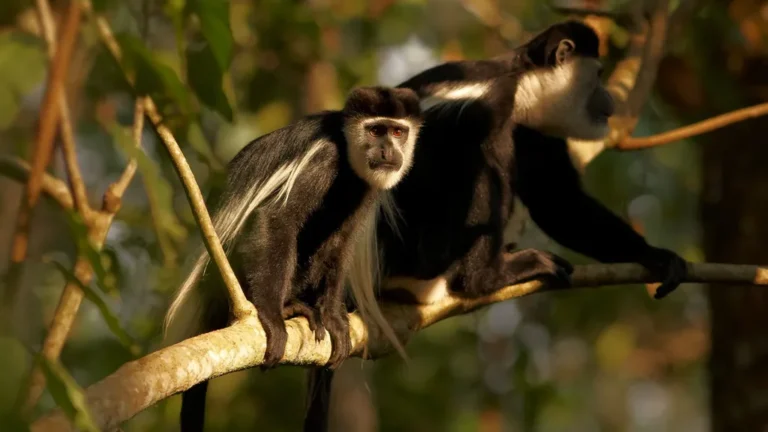
Chimp forests are full of monkeys. In Kibale alone you can see red colobus, black-and-white colobus, red-tailed monkeys, L'Hoest's monkeys, blue monkeys and grey-cheeked mangabeys, often on the same walk. For monkeys across the country, see chimpanzee and monkey safaris in Uganda; for gorillas, see gorilla trekking in Uganda.
Book a Safari to See Chimpanzees in Uganda
Every safari below includes chimpanzee trekking. We book your permit first, then arrange lodges, transport and a professional driver-guide around it. All trips can be tailored to your dates, budget and fitness.
Common Questions About Chimpanzees in Uganda
Where is the best place to see chimpanzees in Uganda?
Kibale National Park. It has about 1,500 chimps, several habituated communities and sighting rates above 90%.
How much does it cost to see chimpanzees in Uganda?
A Kibale chimp permit costs $250 for foreign non-residents until 31 December 2026 and $300 from 1 January 2027. Kyambura Gorge costs $100, rising to $200 in 2027, and Kalinzu costs $130.
Can children see chimpanzees?
The minimum age for chimp trekking is 12. Younger children can see rescued chimps at Ngamba Island.
Are chimpanzees dangerous?
Habituated chimpanzees are used to people and treks are safe when you follow your ranger, keep 8 meters away and avoid eye contact. Chimps are strong and can be aggressive with each other, which is why the rules matter.
Can I see chimpanzees and gorillas on one trip?
Yes. Most of our safaris combine Kibale chimps with gorillas in Bwindi, usually with Queen Elizabeth National Park in between. Allow at least five to six days.
Continue Planning Your Trip
Now that you know where chimpanzees in Uganda live and what permits cost, the next step is choosing a forest and securing your permit.
Let us plan your chimpanzee safari
Tell us your travel month, budget and which other wildlife you want to see. We will book your chimp permit and send you a free, tailor-made quote.
Get a Free QuoteChat on WhatsApp
Licensed by UTB and UWA • Member of AUTO • Rated 4.9 on TripAdvisor