Uganda Safaris for Elderly Travelers: The Complete Guide for Seniors
Age should never be the reason someone crosses gorilla trekking off their bucket list, and increasingly, it is not. Uganda Safaris for Elderly travelers have grown into a genuine, well-supported niche of the country's tourism industry, with operators, lodges, and even the national parks themselves adapting to accommodate travelers in their sixties, seventies, and beyond who want the full safari experience without unnecessary strain. This guide walks through everything older travelers and their families need to know about planning Uganda Safaris for Elderly guests, from choosing the right activities to practical health considerations and how to build an itinerary that delivers real adventure without real risk.
What makes this possible is not a watered-down version of a standard safari, but a genuinely thoughtful reworking of pace, activity selection, and logistics built specifically around what makes a trip enjoyable rather than merely survivable for an older traveler.
Why Uganda Works Well for Older Travelers
Uganda offers a genuinely compelling case for Uganda Safaris for Elderly travelers compared with some of the continent's more physically demanding safari destinations. Much of the country's classic wildlife viewing happens from the comfort of a vehicle during game drives, requiring no walking at all, while activities that do involve physical exertion, like gorilla trekking, come with considerable built-in flexibility that many travelers do not realize exists until they start planning.
Rangers assign gorilla families to trekking groups each morning partly based on fitness considerations communicated in advance, and porters are available at every trailhead specifically to assist trekkers who want support navigating steep or uneven terrain.
Beyond the parks themselves, Uganda's tourism infrastructure has matured considerably, with a wide range of lodges now offering the kind of comfort, accessibility, and personalized service that make Uganda Safaris for Elderly guests genuinely comfortable rather than merely tolerable. Many operators have grown experienced in tailoring pace, activity selection, and daily schedules specifically around older travelers, recognizing that a fulfilling safari does not require an exhausting one, and that a slower, more deliberate itinerary often produces a richer experience than a rushed, activity-packed schedule designed for younger backpackers.
Gorilla Trekking for Older Travelers
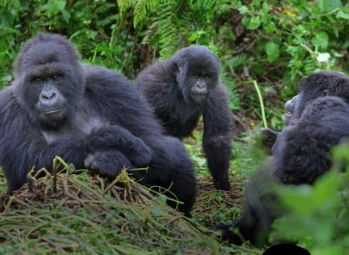
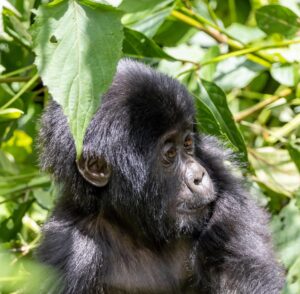
Gorilla trekking understandably raises the most questions when families and travelers research Uganda Safaris for Elderly, since the activity has a reputation for demanding steep, muddy, physically taxing terrain. The reality is more nuanced. Trek difficulty varies enormously depending on where a gorilla family happens to be feeding on a given morning, and treks can run anywhere from thirty minutes to several hours, meaning outcomes are genuinely unpredictable regardless of a trekker's age or fitness level.
Many travelers in their sixties, seventies, and even eighties successfully complete gorilla treks in Uganda every year, often with the help of a hired porter and a walking stick provided at the trailhead.
For Uganda Safaris for Elderly travelers specifically concerned about trek difficulty, Buhoma sector in Bwindi Impenetrable Forest generally offers the gentlest terrain among the park's four trekking bases, making it a sensible starting point for older or less mobile trekkers. Communicating mobility concerns to your operator well before arrival matters enormously, since this information gets passed along to park rangers, who take it into account when assigning gorilla families each morning, sometimes matching older or less mobile visitors with a family known to be closer to the trailhead.
Sedan chairs, essentially a porter-carried seat, are also available at Bwindi for travelers who want to attempt the trek but cannot manage the full walking distance independently, opening up the experience to guests who might otherwise assume it was entirely out of reach.
Choosing Activities That Match Your Pace
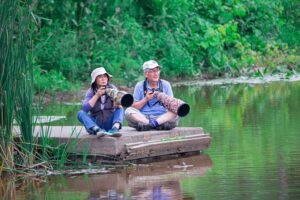
A well-designed itinerary for Uganda Safaris for Elderly travelers leans heavily on activities that deliver genuine wildlife encounters without demanding sustained physical exertion. Game drives across parks like Queen Elizabeth National Park, , and Kidepo Valley happen almost entirely from the seat of a safari vehicle, delivering close encounters with elephants, lions, buffalo, and countless other species without requiring travelers to walk more than a few steps at any point.
Boat cruises along the Kazinga Channel or the Nile below Murchison Falls offer similarly low-effort, high-reward wildlife viewing, drawing hippos, crocodiles, and abundant birdlife into close range while travelers remain comfortably seated throughout.
Lake Mburo National Park adds a gentler walking option for Uganda Safaris for Elderly travelers who want some activity without the intensity of a full gorilla trek, since the park's absence of lions and elephants permits guided walking safaris across relatively flat, manageable terrain among zebras, giraffes, and antelope. Chimpanzee tracking in Kibale Forest, while more physically demanding than a standard game drive, offers considerably shorter and gentler trails than gorilla trekking in most cases, making it a reasonable middle-ground activity for travelers who want a forest primate encounter without the more serious physical commitment gorilla trekking sometimes requires.
Health and Medical Considerations
Planning Uganda Safaris for Elderly travelers responsibly means addressing health considerations directly rather than glossing over them. A yellow fever vaccination certificate is mandatory for entry into Uganda, and travelers over sixty, along with anyone with a weakened immune system, should discuss the vaccine with a travel health professional well ahead of departure, since adverse reactions, while rare, occur slightly more frequently in this age group. Malaria prevention deserves similarly careful planning, with appropriate prophylaxis medication discussed and prescribed by a doctor familiar with the traveler's broader health history before departure.
Travel insurance covering both trip disruption and medical evacuation is worth arranging without exception for Uganda Safaris for Elderly travelers, given the remote nature of many of the country's national parks and the value of having a clear evacuation plan in place should a medical issue arise far from major hospitals. Travelers managing chronic conditions should carry adequate medication supplies well beyond the planned trip length, along with copies of relevant prescriptions, and should discuss altitude considerations with their doctor if their itinerary includes higher-elevation destinations like Bwindi or the Rwenzori foothills, where thinner air can occasionally affect travelers with underlying cardiovascular or respiratory conditions.
Choosing the Right Accommodation

Lodge selection plays a meaningful role in how comfortable Uganda Safaris for Elderly travelers find their overall trip, and increasingly, properties across the country have adapted to accommodate this growing segment of visitors. Many lodges now offer ground-floor rooms or units specifically to avoid staircases, along with step-free access to common areas, dining rooms, and viewing decks. Requesting these accommodations explicitly when booking, rather than assuming they will be automatically provided, ensures operators can match travelers to genuinely suitable properties within each park.
Comfort features like reliable hot water, good bedding, and proximity to trekking trailheads or game drive starting points all matter more for Uganda Safaris for Elderly travelers than they might for younger, more adaptable guests, and experienced operators generally know which properties within each park genuinely deliver on these fronts versus which merely advertise comfort without consistently providing it. Shorter transfer distances between activities and accommodation also reduce the cumulative fatigue that can build up across a multi-day itinerary, making proximity a genuinely practical consideration rather than a minor luxury preference.
Building the Right Pace Into Your Itinerary
Perhaps the single most important principle behind successful Uganda Safaris for Elderly travelers is pacing. Rather than packing every single day with back-to-back activities the way a younger, more energetic traveler might prefer, the most successful itineraries for older guests build in deliberate rest days, shorter driving distances between destinations, and enough flexibility to skip or modify an activity if energy levels dip partway through the trip. A gorilla trek, for instance, is often scheduled with a full rest day both before and after, rather than squeezed between two other demanding activities.
Experienced operators planning Uganda Safaris for Elderly itineraries also tend to favor fewer overall destinations visited more thoroughly, rather than an ambitious circuit trying to cover every major park within a single trip. Spending three or four nights in a single location, allowing time to genuinely settle in rather than repeatedly packing and unpacking, tends to produce a far more enjoyable experience than a whirlwind schedule that treats each destination as a brief checkbox rather than a place worth lingering in.
Traveling With Family Across Generations
Many Uganda Safaris for Elderly travelers are not traveling alone but as part of a multi-generational family trip, adding another layer of planning consideration. Successful multi-generational itineraries often build in activity options that split the group by ability on a given day, allowing more active family members to attempt a gorilla trek or a longer hike while older relatives enjoy a gentler game drive or boat cruise, with everyone reconvening for meals and evenings together. This approach lets each generation genuinely enjoy activities suited to their own capabilities rather than forcing the entire group to move at the pace of its least mobile member or, conversely, pushing older travelers beyond what they can comfortably manage.
Lodges accustomed to hosting multi-generational groups often have interconnecting rooms, family cottages, or suites that accommodate this kind of split-activity planning smoothly, and experienced operators can build entire days around optional rather than mandatory group activities, ensuring Uganda Safaris for Elderly family members never feel like they are holding the rest of the group back or being excluded from the parts of the trip that matter most to them.
Packing Essentials for Older Travelers
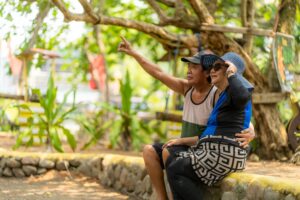
Practical packing choices make a real difference to comfort on Uganda Safaris for Elderly travelers, and a little extra thought here pays off across the entire trip. Comfortable, broken-in walking shoes with good ankle support matter more for older travelers than for younger, more adaptable guests, particularly for any activity involving uneven terrain. A sturdy walking stick or trekking pole, whether brought from home or picked up at a trailhead, provides genuine stability on both gentle walks and more demanding treks, and many travelers find a lightweight, collapsible pole easiest to pack and use throughout a multi-activity itinerary.
Layered clothing suits Uganda's climate well across every region, from the warmer lowland savannah parks to the cooler, higher-altitude forests around Bwindi and the Rwenzori foothills. A well-stocked personal first aid kit, including any regular medications in their original labeled packaging along with copies of prescriptions, is worth carrying regardless of how thoroughly an operator has prepared for the trip. Binoculars, sun protection, and insect repellent round out the practical essentials that make Uganda Safaris for Elderly travelers considerably more comfortable across long days of game viewing and shorter, gentler walks alike.
Comparing Uganda to Other Safari Destinations for Older Travelers
Travelers weighing Uganda Safaris for Elderly options against destinations like Kenya, Tanzania, or South Africa often find Uganda offers a genuinely favorable combination of accessibility and depth. Kenya and Tanzania's classic savannah circuits involve considerably more time spent purely in vehicles across vast, flat plains, which suits some older travelers well but can also mean long consecutive days of driving between camps.
South Africa's private game reserves offer excellent accessibility and infrastructure but typically lack the primate trekking experiences that make Uganda distinctive, meaning travelers specifically drawn to gorillas or chimpanzees have fewer substitute options elsewhere on the continent.
Uganda's combination of vehicle-based game viewing, gentler walking safaris at Lake Mburo, and genuinely flexible, supported gorilla trekking gives Uganda Safaris for Elderly travelers a broader menu of experiences scaled to different ability levels within a single country, rather than requiring a trip spanning multiple nations to access this same range of activity intensity. For families weighing several African destinations against each other for an older relative's milestone trip, Uganda's relatively compact geography, with several major parks reachable within a few hours of each other, also reduces the cumulative travel fatigue that can make larger, more spread-out safari countries considerably more taxing for older travelers to navigate comfortably.
Working With an Experienced Operator
The single biggest factor separating a smooth, enjoyable trip from a stressful one when arranging Uganda Safaris for Elderly travelers is the experience level of the operator handling the logistics. A knowledgeable local operator understands which lodges genuinely deliver on accessibility promises, which trekking sectors offer the gentlest terrain, and how to structure a realistic daily pace rather than an itinerary borrowed directly from a standard, younger-traveler-focused package. Being upfront about mobility limitations, health conditions, and personal pace preferences during the initial planning conversation allows an experienced operator to build genuinely appropriate recommendations rather than retrofitting a generic itinerary after the fact.
Operators experienced with Uganda Safaris for Elderly travelers also tend to have established relationships with specific lodges and guides known for patience, flexibility, and genuine attentiveness to older guests' needs, connections that make a measurable difference to the overall quality of the trip beyond what any generic booking platform could arrange. This kind of tailored planning costs little more than a standard itinerary but delivers considerably more peace of mind, both for the traveler and for family members who may be encouraging or supporting an older relative's decision to take on this kind of adventure.
Traveling Solo as an Older Visitor
Not every older traveler undertakes Uganda Safaris for Elderly guests as part of a family group, and solo senior travelers represent a genuinely significant share of the market. Group tours specifically designed with an older demographic in mind offer built-in companionship and a shared pace among fellow travelers of similar ages and fitness levels, easing some of the natural concerns solo travelers might have about undertaking a demanding trip alone.
Many operators can also arrange fully private, one-on-one guided itineraries for solo travelers who prefer complete control over pacing and activity selection without needing to accommodate a wider group's preferences.
Safety concerns that solo older travelers sometimes raise about African travel are generally well addressed within a structured safari itinerary, since virtually every day involves a dedicated guide, driver, or ranger accompanying the traveler throughout scheduled activities, meaning genuine independent exploration without support rarely factors into how a trip like this is actually structured. Lodges accustomed to hosting solo travelers, of any age, typically offer comfortable single-occupancy rooms without the steep single supplement fees sometimes found at properties in more conventional, couple-oriented destinations, making solo senior travel to Uganda considerably more financially reasonable than some travelers initially assume.
Making the Most of a Once-in-a-Lifetime Trip
For many older travelers, Uganda Safaris for Elderly journeys represent a genuinely once-in-a-lifetime undertaking, whether framed as a milestone birthday celebration, a retirement trip long deferred, or simply a bucket-list adventure finally given the time and attention it deserves. Approaching the trip with this mindset, rather than treating it as just another vacation, often shapes planning decisions in meaningful ways, from choosing slightly more comfortable accommodation over the cheapest available option to allowing extra buffer days in the itinerary specifically to savor rather than rush through each destination.
Family members helping plan or fund a Uganda Safaris for Elderly trip for a parent or grandparent frequently find that the investment pays off far beyond the trip itself, with the resulting photographs, stories, and shared memories becoming genuinely treasured touchstones within the family for years afterward. Encouraging an older relative to pursue this kind of adventure, rather than assuming age alone makes it unrealistic, often turns out to be one of the more rewarding gifts a family can offer, both for the traveler themselves and for everyone who gets to hear about the experience afterward.
Common Questions About Senior Safaris in Uganda
Families and older travelers researching Uganda Safaris for Elderly guests tend to ask a similar set of practical questions. Is there an age limit for gorilla trekking? Uganda sets a minimum age of fifteen for gorilla trekking but no formal upper age limit, meaning the decision comes down to individual fitness and health rather than a fixed cutoff. Do all activities require a doctor's clearance? Not universally, though travelers managing significant health conditions should discuss their planned itinerary with a doctor beforehand, particularly regarding altitude, vaccination requirements, and any activities involving sustained physical exertion.
Are wheelchair-accessible options available? While Uganda's national parks are not extensively wheelchair-adapted given their remote, forested terrain, game drives and boat cruises remain accessible for travelers with limited mobility, and sedan chair options exist for gorilla trekking specifically at Bwindi for those unable to walk the full distance independently.
How much does a typical senior-focused itinerary cost compared with a standard safari? Costs are broadly comparable, since the main adjustments involve pacing, accommodation selection, and activity choice rather than fundamentally different logistics, though slower itineraries with fewer destinations sometimes reduce overall transport costs.
What is the best time of year for older travelers to visit? The dry seasons, roughly June through September and December through February, offer firmer trails and more predictable weather, generally making these windows the most comfortable choice for Uganda Safaris for Elderly guests concerned about mud or difficult underfoot conditions.
Why Uganda Safaris for Elderly Travelers Deserve Serious Consideration
For older travelers who assumed an African safari, and particularly gorilla trekking, was permanently out of reach, Uganda Safaris for Elderly guests prove otherwise every single season. With thoughtful pacing, the right sector and lodge selection, honest communication about mobility with an experienced operator, and appropriate health preparation, there is very little standing between a determined older traveler and one of the most profound wildlife encounters available anywhere on earth.
Families supporting an older relative's decision to travel should take heart from just how routinely Uganda Safaris for Elderly guests complete their trips successfully, often describing the experience as one of the most meaningful of their entire lives rather than a compromise made in spite of their age. Reach out to Tulambule Uganda Safaris to start planning a safari built around your own pace, priorities, and comfort, whatever your age.
Suggested Packages
3-Day Murchison Falls Wildlife Safari: Big Game & Beautiful Scenery
3-Day Kibale Chimp Trekking Tour, Uganda
4-Day Affordable Uganda Safari: Gorillas, Chimps & Lake Bunyonyi
4-Day fly-in Uganda Safari – Gorillas and Chimpanzees
4-Day Murchison Falls Wildlife Safari: Big Five, Big Game & Chimp
4 Days Safari In Beautiful Queen Elizabeth National Park 2026/27
5 Days Uganda Safari Gorillas, Chimps, Wildlife & Culture
6 Day Luxury Safari Uganda: Gorillas, Wildlife & Culture
6 Day Uganda Safari, Chimps, Gorillas and Wildlife
6-Day Luxury Rwanda & Uganda gorilla Tour
21 Days Uganda Safari: Three Weeks In Uganda