These facts about Ngorongoro Crater show why this huge volcanic bowl in northern Tanzania is one of the most rewarding places on any African safari. In one day on the crater floor you can see lions, buffalo, elephants, hippos, flamingos and, with luck, the rare black rhino, all inside walls that are around 600 metres high.
The Ngorongoro Conservation Area is a UNESCO World Heritage Site and one of the Seven Natural Wonders of Africa. Thousands of travellers visit every year, and almost all of them leave saying there is nowhere else quite like it.
In this guide, our safari team at Tulambule shares 13 fascinating facts about Ngorongoro Crater. We also explain how the crater formed, what the name means, the current fees, the best time to go and how to fit it into a Tanzania safari.
Quick Facts About Ngorongoro Crater
Here are the key facts about Ngorongoro Crater in one place, so you can see the big picture before we go into detail.
| Location | Ngorongoro Conservation Area, northern Tanzania, about 180 km west of Arusha |
| Formed | Roughly 2 to 3 million years ago, when a giant volcano collapsed |
| Size | About 19 km across, with a floor of around 260 square km |
| Depth | Walls of about 400 to 610 metres |
| Wildlife | Around 25,000 large animals, including all of the Big Five |
| Protected status | UNESCO World Heritage Site, Biosphere Reserve and UNESCO Global Geopark |
| Best time to visit | June to October for dry-season game viewing; all year for wildlife |
| Time on the crater floor | Up to 6 hours per vehicle per visit |
Where Is Ngorongoro Crater?
Ngorongoro Crater lies in northern Tanzania, about 180 km west of Arusha, on the way to the Serengeti National Park. The drive from Arusha takes about three to four hours on a good tarmac road.
The crater sits inside the Ngorongoro Conservation Area, a protected region of around 8,300 square km. The area covers the Ngorongoro Highlands, a chain of old volcanoes on the edge of the Great Rift Valley, and part of the short-grass plains of the southern Serengeti ecosystem.
Among the practical facts about Ngorongoro Crater, access is one of the best: most international visitors fly into Kilimanjaro International Airport or Arusha Airport. If you are starting your trip in Uganda, you can take a short regional flight from Entebbe and begin your Tanzania safari the same day.
How Was Ngorongoro Crater Formed?
One of the most surprising facts about Ngorongoro Crater is that it was once a mountain. Scientists believe a huge volcano stood here, possibly as tall as Mount Kilimanjaro. Roughly 2 to 3 million years ago, after a major eruption, the top of the volcano collapsed into its empty magma chamber.
What was left behind is a caldera, and understanding it helps all the other facts about Ngorongoro Crater make sense. The word comes from the Spanish for "cauldron", and it describes a large bowl-shaped hollow, usually more than 1 km wide, with steep walls all around.
After the collapse, smaller eruptions formed minor cones and hollows on the floor. Over time rainwater, springs and streams created the swamps, forest and soda lake that make the crater so rich in wildlife today.
What Does Ngorongoro Mean?
The name is believed to come from the Maasai, who have grazed cattle in this area for generations. Local tradition says it copies the sound of the bell worn by the lead cow in a herd, a hollow "ngoro ngoro" that echoes across the highlands.
Like many facts about Ngorongoro Crater, the story is part history and part legend. Whatever its exact origin, the name is now known around the world as a byword for one of the finest safari experiences in Africa.
13 Fascinating Facts About Ngorongoro Crater
Now for the main list. These 13 facts about Ngorongoro Crater cover its geology, wildlife, history and people, and they explain why so many safari travellers put it at the top of their Tanzania bucket list.
1. It Is the World's Largest Intact, Unflooded Caldera
Ngorongoro is about 19 km across, and its walls rise between roughly 400 and 610 metres from the floor. The tallest parts of the rim are higher than the roof of the Empire State Building in New York.
There are bigger calderas in the world, but most of them have broken walls or have filled with water to become lakes. Ngorongoro is the largest one with its walls still whole and its floor still dry, which is why it works like a giant natural enclosure for wildlife.
2. It Is One of the Seven Natural Wonders of Africa
Ngorongoro Crater was named one of the Seven Natural Wonders of Africa in 2013. It shares the list with Mount Kilimanjaro, the Serengeti wildebeest migration, the Sahara Desert, the Okavango Delta, the Red Sea Reef and the Nile River.
Few facts about Ngorongoro Crater surprise visitors more than this one: Tanzania holds three of those seven wonders, and the crater sits right between two of them. That makes northern Tanzania one of the easiest places in Africa to tick off several natural wonders on one trip.
3. Around 25,000 Large Animals Live on the Crater Floor
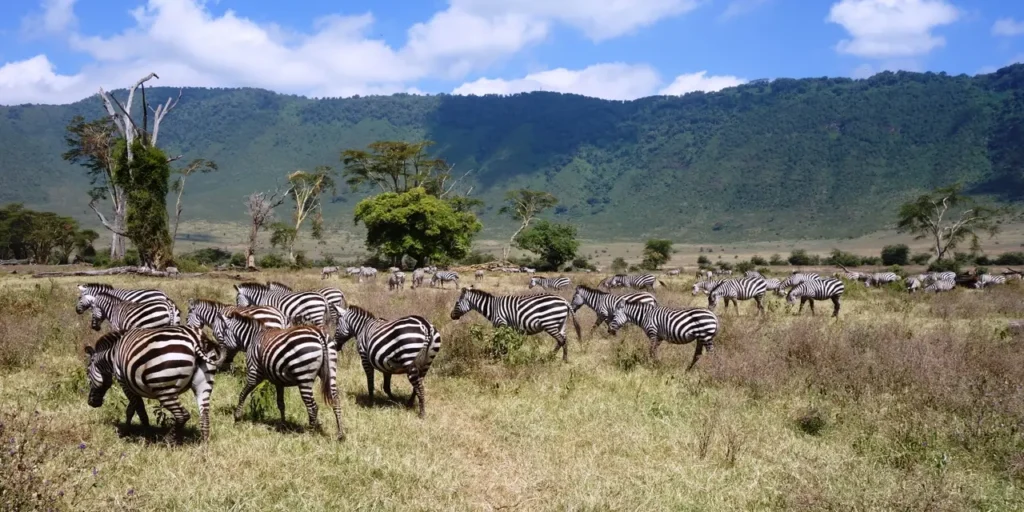
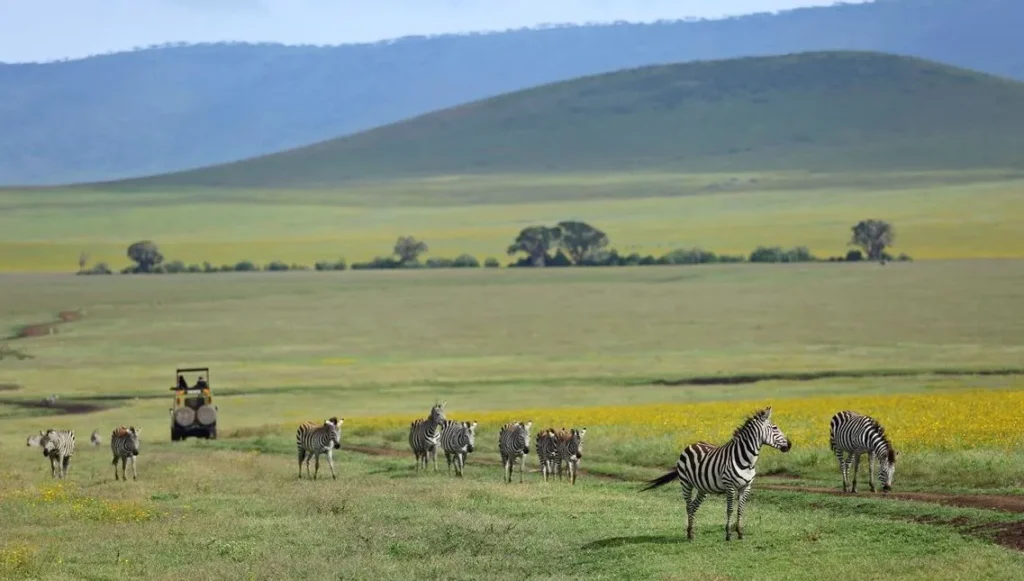
The fertile volcanic soil grows short, nutritious grass all year. That grass feeds an estimated 25,000 large animals, one of the densest concentrations of wildlife anywhere in Africa.
Big herds of zebras, wildebeest, buffalo, Grant's and Thomson's gazelles and elands graze the open plains. This is one of the best-known facts about Ngorongoro Crater. Because the walls keep many animals inside, you can see huge numbers in a single morning game drive.
4. It Has One of Africa's Densest Populations of Predators
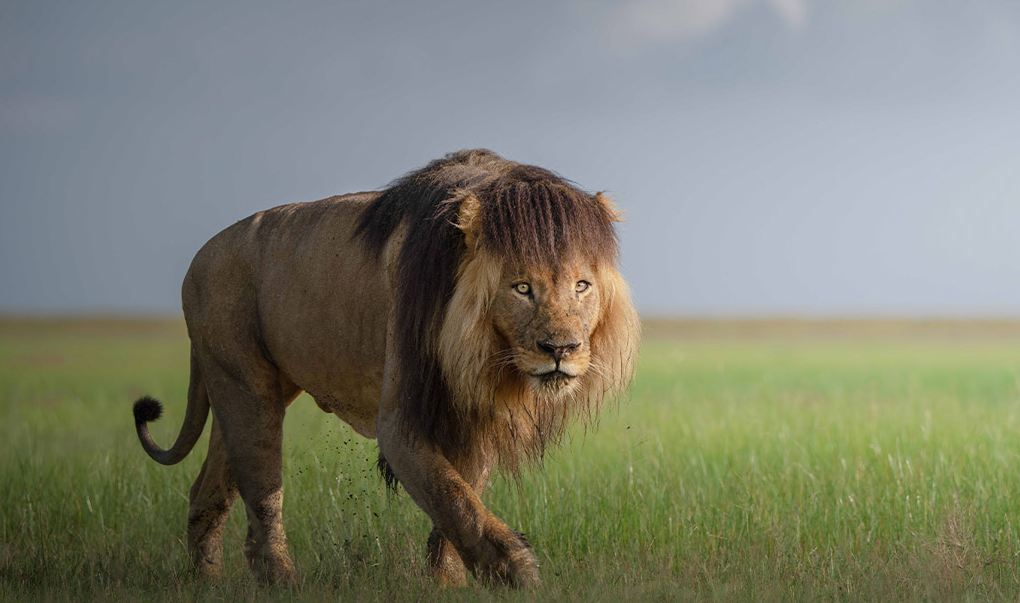
All those grazers attract predators. The crater has one of the highest densities of lions and spotted hyenas in Africa, and the lions are so used to safari vehicles that they often rest in their shade.
Cheetahs, leopards, golden and black-backed jackals, servals and bat-eared foxes complete the line-up. Because the lions cannot easily move in and out, scientists study them closely, and their isolation is one of the more serious facts about Ngorongoro Crater for conservation.
5. It Is One of the Best Places in East Africa to See the Big Five
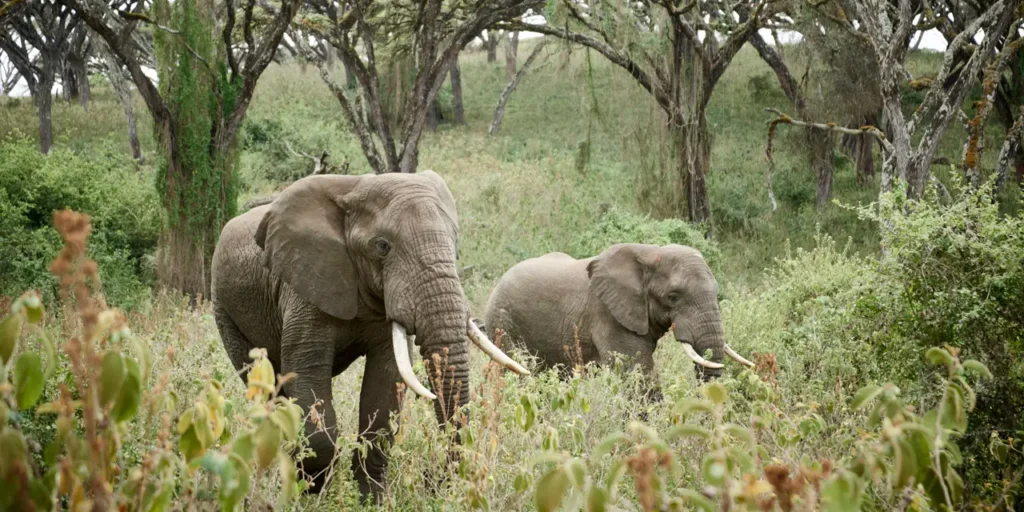
Few places give you a better chance of seeing all of the African Big Five in one day. Buffalo and lions are almost guaranteed, and black rhinos are seen far more reliably here than in most other parks.
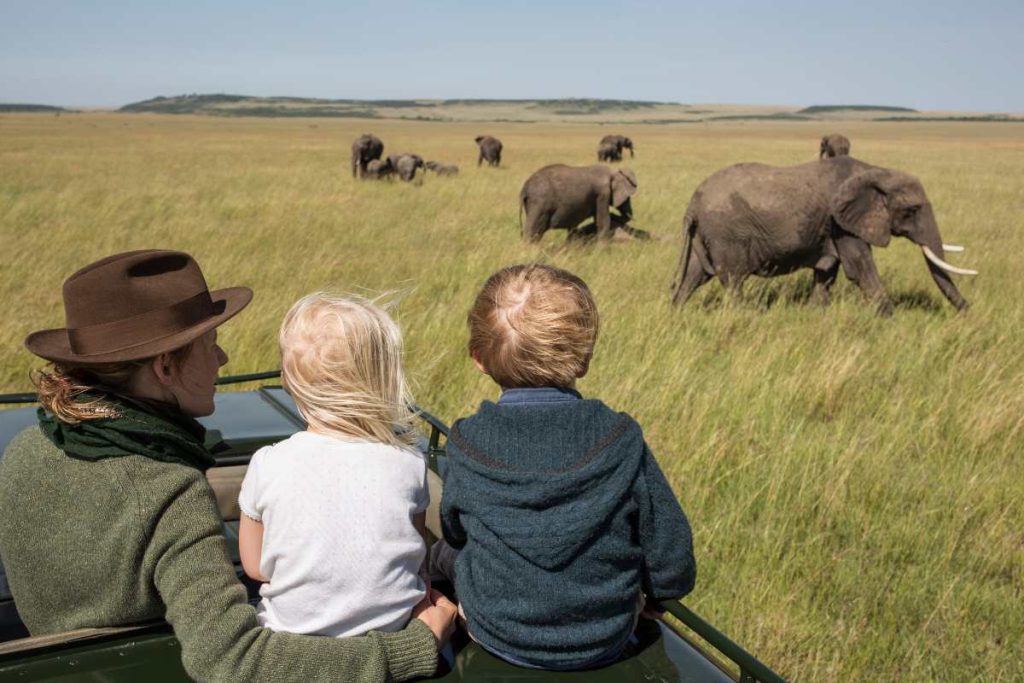
The elephants on the crater floor are mostly old bulls with huge tusks, often seen around the Lerai Forest. Breeding herds tend to stay in the highland forests on the rim. Leopards are the hardest to find, but they do live in the forested parts of the crater and on the walls.
6. It Protects One of Tanzania's Last Black Rhino Populations
The eastern black rhino is critically endangered, and the crater is one of the few places in Tanzania where you can still see one in the wild. Rangers monitor this small population around the clock, and it is one of the proudest facts about Ngorongoro Crater for Tanzania's conservation team.
Rhinos are usually seen on the open plains, often near the Lerai Forest and the Gorigor Swamp. Bring binoculars, as they sometimes keep their distance from the tracks.
7. There Are No Giraffes and Hardly Any Impala
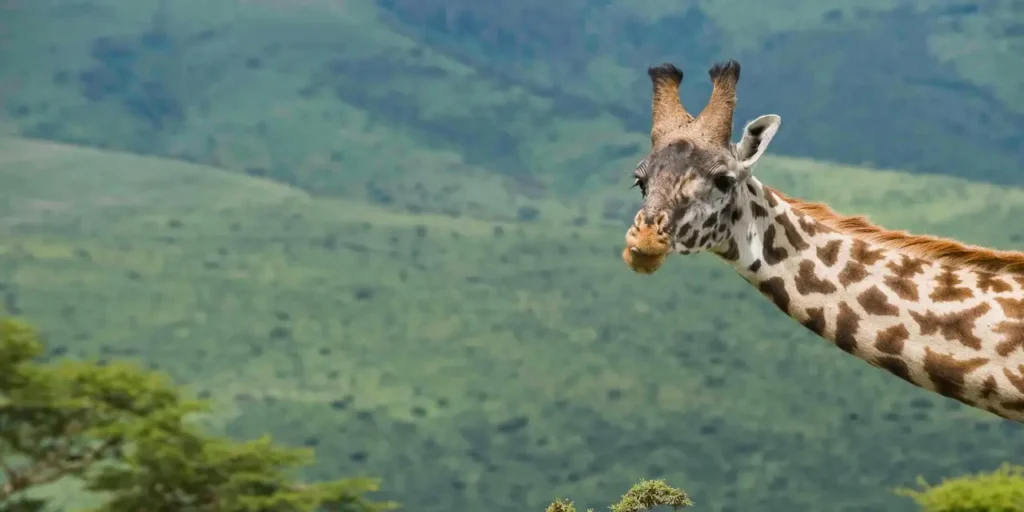
Here is one of the more unusual facts about Ngorongoro Crater: you will not see a giraffe on the floor. The steep walls make it hard for giraffes to get down, and there are few of the tall acacia trees they feed on. Impala, which prefer open woodland, are also missing or very rare.
If giraffes are on your list, do not worry. You will see plenty in Tarangire National Park, Lake Manyara National Park and the Serengeti on the same trip.
8. More Than 500 Bird Species Have Been Recorded
The wider conservation area has more than 500 recorded bird species, so one of the overlooked facts about Ngorongoro Crater is that birding is excellent both on the crater floor and on the forested rim. Lake Magadi often turns pink with flamingos, and grey crowned cranes walk the grasslands.
Look out for the ostrich, the largest bird on earth, and the kori bustard, one of the heaviest flying birds. Other highlights include the secretary bird, Fischer's lovebird, the rufous-tailed weaver, augur buzzards and bright sunbirds such as the golden-winged and malachite sunbird.
9. It Has Many Different Habitats in One Small Area
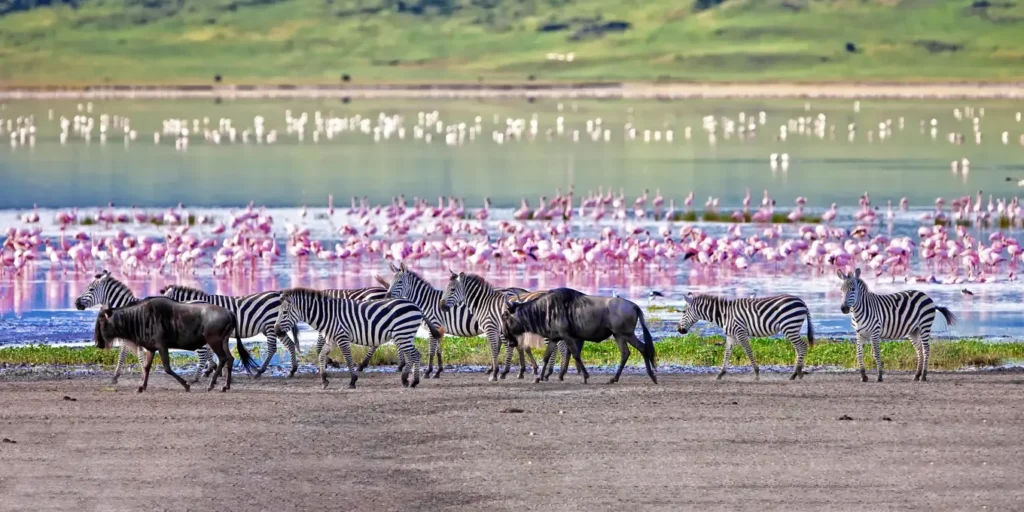
The crater is small enough to cross in under an hour, yet it holds a surprising mix of habitats. Each one draws different animals, which is why a full game drive feels so varied:
- The crater walls: thick montane forest, a favourite place for leopards.
- Lake Magadi (Lake Makat): a shallow soda lake that draws flamingos and other waterbirds.
- Mandusi and Gorigor Swamps: year-round water for hippos, elephants, lions and wading birds.
- Ngoitokitok Spring and the Hippo Pool: popular picnic stops where you can watch hippos up close.
- Lerai Forest: yellow fever trees full of vervet monkeys, baboons, bushbuck and big tusker elephants.
- Open grasslands: most of the floor, home to the big herds of zebras, wildebeest, gazelles and buffalo.
10. It Sits Beside One of the Most Important Prehistoric Sites on Earth
Just west of the crater lies Olduvai Gorge, now officially spelled Oldupai. Here, in 1959, Mary Leakey found the skull of an early human relative about 1.75 million years old. Louis Leakey and his team later described Homo habilis from fossils found in the same gorge.
Further south, at Laetoli, Mary Leakey's team found fossil footprints in 1978 that are about 3.6 million years old. They are some of the oldest known footprints of early humans walking upright. For history lovers, these are the most exciting facts about Ngorongoro Crater and its surroundings. Today you can visit the gorge and its museum, which displays fossils and a cast of the famous footprints.
11. The Maasai Share the Land With the Wildlife
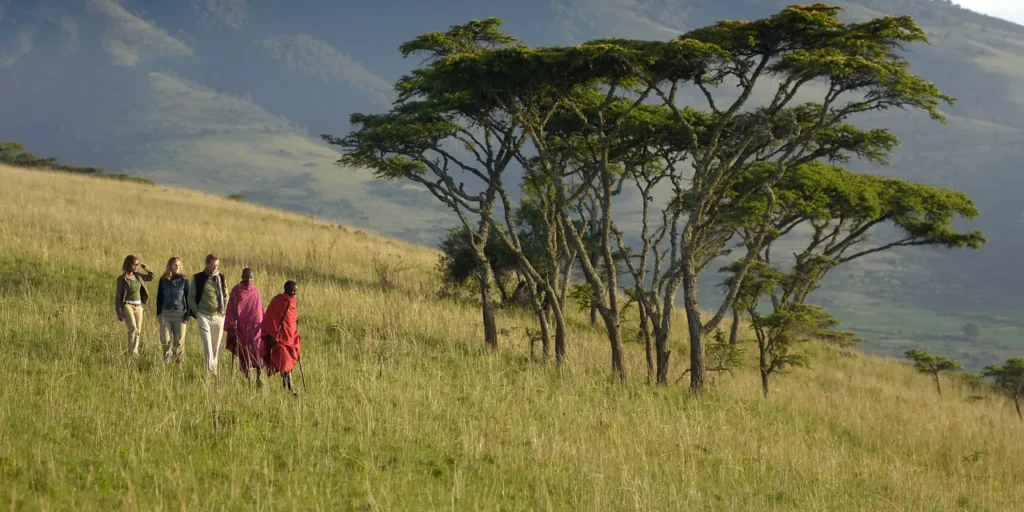
The Ngorongoro Conservation Area is not a national park. It was set up in 1959 as a multiple land-use area, where Maasai pastoralists live and graze their cattle alongside wild animals.
You will often see Maasai herders in red shukas walking with their cattle beside the road. If you would like to learn more about their way of life, several Maasai bomas (homesteads) welcome visitors for a fee, which is the respectful way to take photos.
12. It Holds Three International Titles
Ngorongoro was listed as a UNESCO World Heritage Site in 1979, and its listing was extended in 2010 to recognise its cultural value too. It is also part of the Serengeti-Ngorongoro Biosphere Reserve.
In 2018, the area became part of the Ngorongoro Lengai UNESCO Global Geopark, the first of its kind in sub-Saharan Africa. Few places on earth hold all three titles at once, which makes it one of the standout facts about Ngorongoro Crater.
13. You Can Only Spend 6 Hours on the Crater Floor
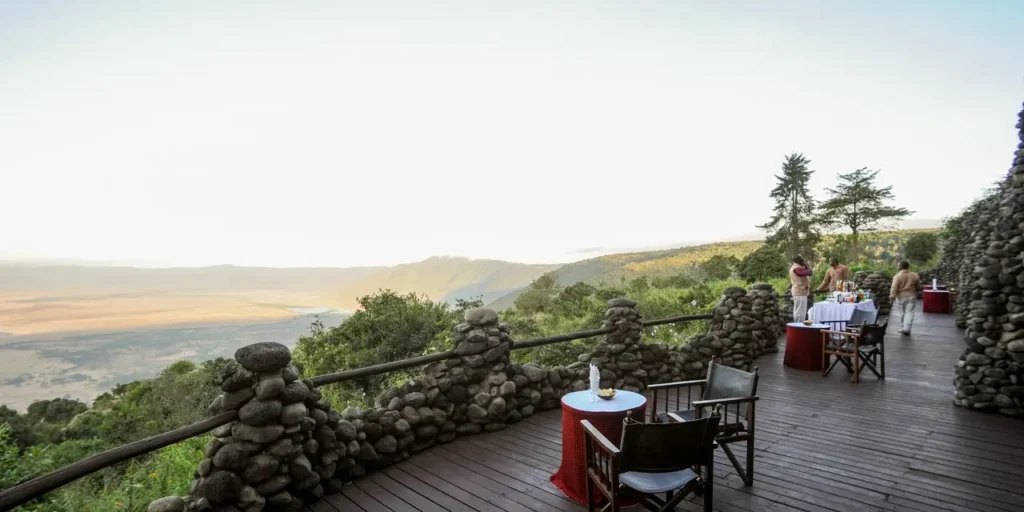
To protect the fragile floor and control traffic, each vehicle may spend a maximum of 6 hours inside the crater per visit. There are no lodges or camps on the floor, so all visitors stay outside it.
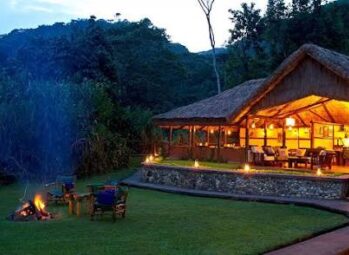
The best option is a lodge on the crater rim, where some rooms have some of the finest views in Africa. You will also be close to the descent road for an early start. Karatu, about an hour away, has good mid-range lodges at lower prices, and it is the base we often use for families and budget-conscious travellers.
Best Time to Visit Ngorongoro Crater
One of the most useful facts about Ngorongoro Crater for planning is that it offers good game viewing all year, because the animals do not migrate out of it. Even so, the season changes your experience:
- June to October (dry season): short grass, clear views and easy driving. This is the busiest time, so start early.
- December to March: green scenery and fewer vehicles. From January to March, the wildebeest calving season takes place on the nearby Ndutu plains, which are also inside the conservation area.
- April and May (long rains): lush and quiet, with lower lodge prices. Some roads get muddy, but the crater floor stays open.
The rim is about 2,300 metres above sea level, so mornings and evenings are cold all year. Pack a warm fleece or jacket, even in the dry season.
Ngorongoro Crater Fees
Fees are among the facts about Ngorongoro Crater that change most often. They are set by the Ngorongoro Conservation Area Authority and are charged in US dollars. At the time of writing, the main fees for foreign non-resident visitors are:
| Conservation fee (adult, 16 and over) | US$70.80 per person per 24 hours |
| Conservation fee (child, 5 to 15) | US$23.60 per person per 24 hours |
| Crater service fee | US$295 per vehicle per descent |
| Children under 5 | Free |
Fees can change at short notice, and the authority may add VAT or vehicle charges. Every Tulambule safari quote includes all park and crater fees, so you know the full price before you travel.
How to Combine Ngorongoro Crater With Other Parks
Most travellers visit Ngorongoro as part of Tanzania's Northern Safari Circuit. A classic route links Tarangire National Park, Lake Manyara, Ngorongoro Crater and the Serengeti in five to eight days, all by road from Arusha.
You can also add a beach stay in Zanzibar at the end, or start with mountain gorillas in Uganda. Our 11-day Uganda and Tanzania safari combines gorilla trekking in Bwindi with the Serengeti and Ngorongoro Crater, giving you the best of both countries.
Ngorongoro Crater Safari Packages
Ready to see it for yourself? These popular itineraries all include a full day on the crater floor.
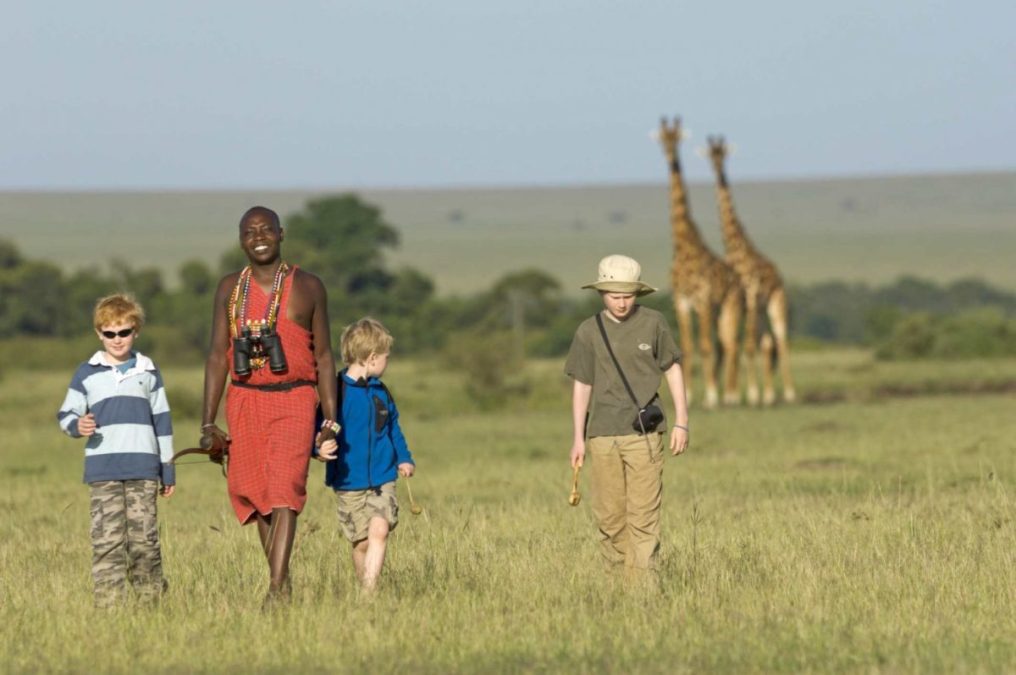
A Memorable 7 Days Tanzania Family Safari Vacation
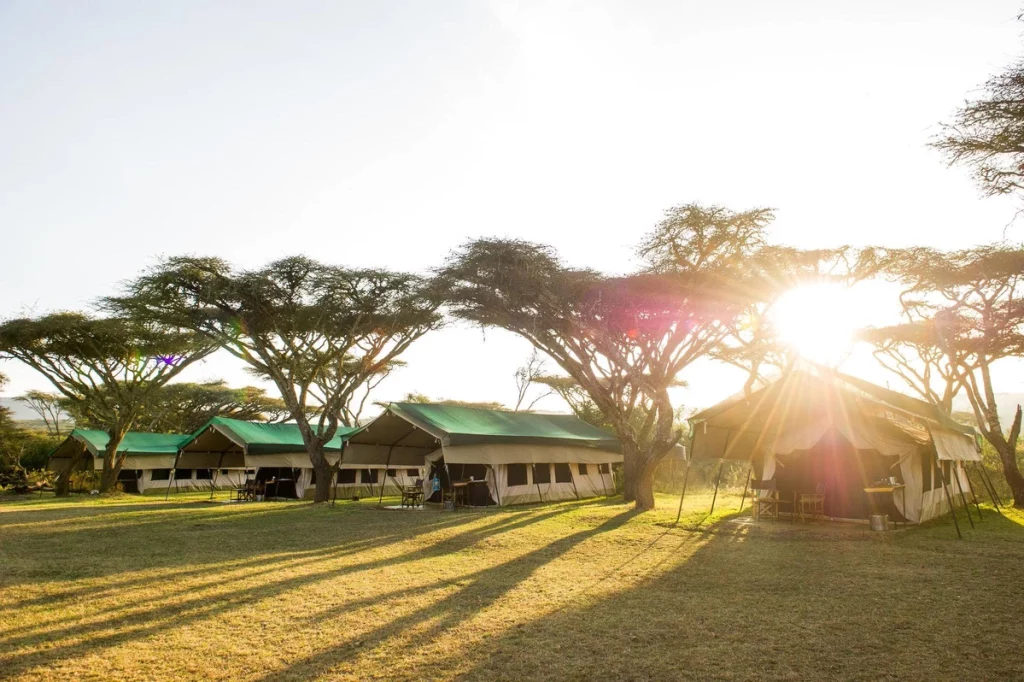
6-Day Tanzania Safari: Explore 3 Incredible Wildlife Parks
11-Day Uganda Tanzania Safari: Gorillas and Big Game Viewing
FAQs: Facts About Ngorongoro Crater Travellers Ask
Is Ngorongoro Crater worth visiting?
Yes. Ngorongoro Crater is one of the best places in Africa to see a huge number of animals in one day, including lions, buffalo, elephants and the rare black rhino. The scenery from the rim alone is worth the trip.
How long should I spend at Ngorongoro Crater?
One full day on the crater floor is enough for most travellers, as vehicles can stay up to 6 hours. Plan at least one night on the rim or in Karatu so you can start early.
Can you see the Big Five in Ngorongoro Crater?
Yes. Lions, buffalo and elephants are seen on most days, black rhinos are seen more often here than almost anywhere in Tanzania, and leopards live in the forests and on the crater walls.
How much does it cost to visit Ngorongoro Crater?
Foreign adults pay a conservation fee of US$70.80 per 24 hours, plus a crater service fee of US$295 per vehicle for each descent. Fees can change, and a tour operator's quote usually includes them.
Can you stay overnight inside Ngorongoro Crater?
No. There are no lodges or camps on the crater floor. Visitors stay in lodges on the crater rim or in Karatu, about an hour away.
Does the East Africa Tourist Visa cover Tanzania?
No. The East Africa Tourist Visa covers Uganda, Rwanda and Kenya only. If you are combining a Uganda safari with Ngorongoro, you will need a separate Tanzania visa, which most visitors can apply for online.
Plan Your Ngorongoro Crater Safari With Tulambule
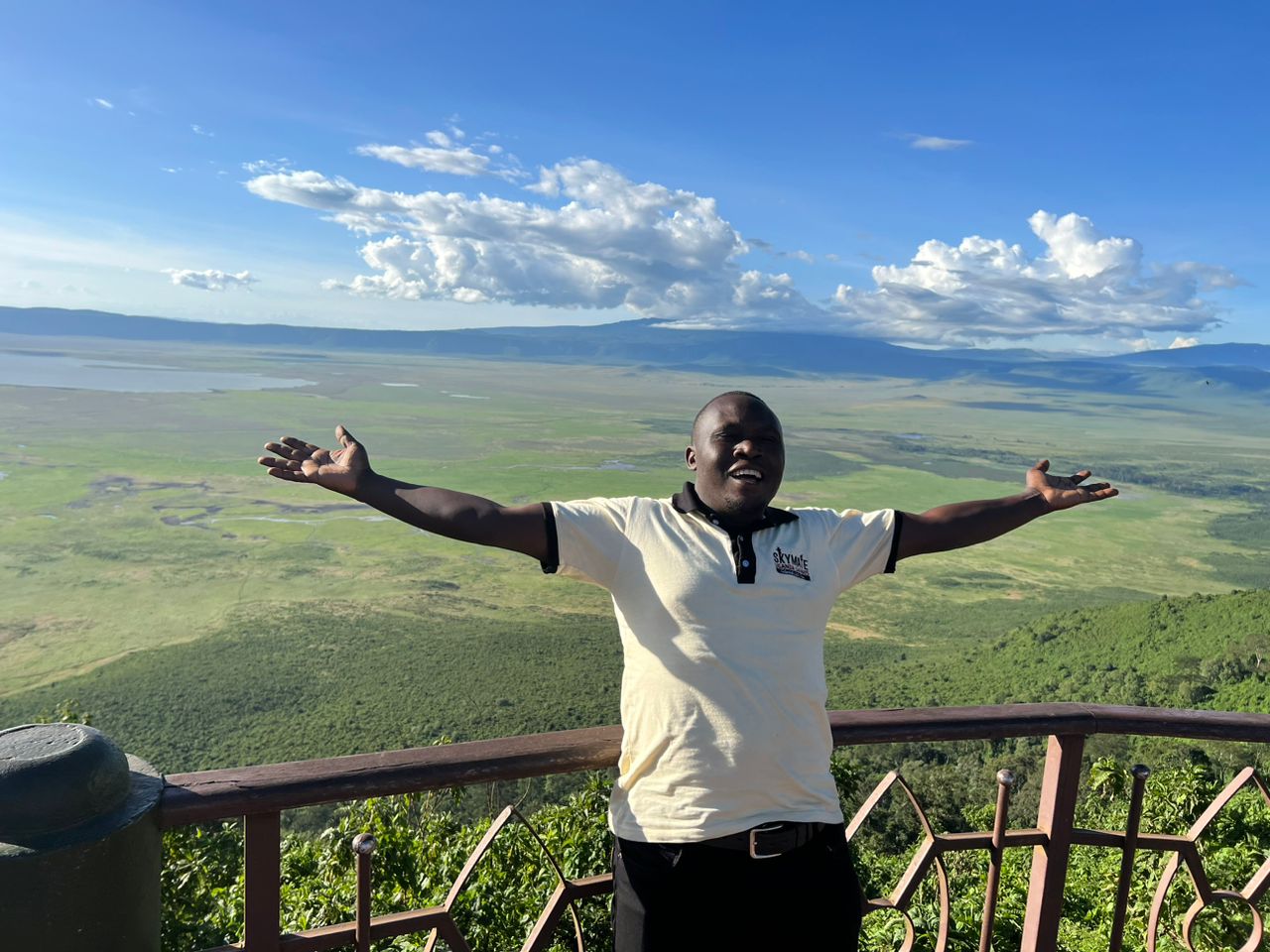
These facts about Ngorongoro Crater only tell part of the story. Standing on the rim at sunrise, with the whole crater floor stretched out below you, is something you have to see for yourself.
Tulambule Uganda Safaris is a licensed East African tour operator based in Uganda. We have been planning safaris since 2014, and we handle everything for your Tanzania trip: park and crater fees, lodges, transfers and an experienced driver-guide. We can also link Ngorongoro with gorilla trekking in Uganda or a beach holiday in Zanzibar.
Tell us your dates, budget and travel style, and we will send you a tailor-made itinerary with clear pricing.
Continue Planning Your Trip
Further reading: