10 Reasons a Gorilla Trekking Adventure Excites.
A gorilla trekking adventure ranks among the most extraordinary wildlife experiences on earth. Deep within the misty rainforests of East Africa, endangered mountain gorillas live in protected habitats where conservation and responsible tourism work hand in hand.
Uganda and Rwanda are the only two countries where this adventure is consistently accessible, carefully regulated, and ethically managed. Bwindi Impenetrable National Park in Uganda and Volcanoes National Park in Rwanda protect over half of the world's remaining mountain gorillas.
Most people who go home talking about their safari for years afterward don't point to the lions or the sunsets. They point to the hour they spent sitting a few meters from a gorilla family, watching a species that looks back at you with something unmistakably like recognition. That's the reason this particular adventure occupies a different category from almost anything else you can do on a trip to Africa.
Here are 10 reasons this gorilla trekking adventure belongs at the top of Africa's wildlife bucket list.
1. You'll Encounter One of the World's Rarest Primates
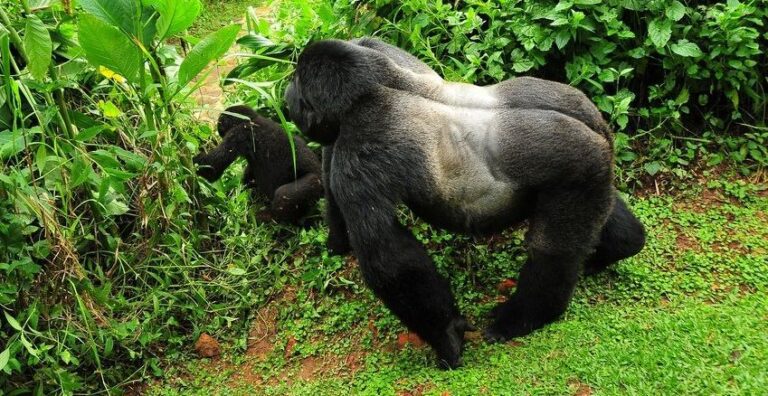
Mountain gorillas are endangered, with just over 1,000 left in the wild. Seeing them up close in their natural habitat is a once-in-a-lifetime wildlife experience that cannot be replicated anywhere else.
Unlike most wildlife encounters on a safari, this isn't about spotting an animal from a vehicle window. It's a sustained, close-range encounter with a species so rare that fewer people have seen a wild mountain gorilla than have climbed Mount Everest. That scarcity is part of what makes the moment land so hard.
2. Your Adventure Helps Protect Over Half the World's Mountain Gorillas
By trekking here, you directly support the national parks and conservation programs safeguarding this population, funding anti-poaching patrols, veterinary care, and habitat preservation.
This is one of the few wildlife tourism experiences anywhere in the world where the act of visiting is directly, measurably tied to the survival of the species itself. Mountain gorillas are the only great ape whose population is currently growing rather than shrinking, a recovery the IUCN Red List credits directly to sustained, permit-funded conservation.
3. It's an Intimate, Emotional Encounter
Standing meters from a silverback, or watching a baby gorilla play, creates a connection to nature that few travel experiences can match. Curious about the youngest members of these families? Our guide to young mountain gorillas in Uganda and Rwanda goes deeper into how they grow and behave.
Guides often say the same thing: nothing they explain beforehand fully prepares first-time trekkers for how it actually feels. There's a stillness that settles over most groups in the first few minutes, and it isn't fear. It's the sense of being a guest in someone else's home.
4. Your Permit Fee Directly Funds Conservation
Every permit contributes to gorilla protection, forest conservation, and community programs, making your gorilla trekking adventure a meaningful act of conservation, not just tourism.
It also funds the rangers and trackers who spend every single day, permit or no permit, monitoring these families for signs of illness, injury, or poaching activity, work carried out under the Uganda Wildlife Authority, the government body responsible for issuing permits and protecting the parks. Your one trek supports a system that operates 365 days a year, long after your flight home has landed.
5. Small Group Sizes Make It Exclusive
Only 8 visitors are permitted per gorilla family each day. That intimacy means more attention from your guide and less disturbance to the gorillas themselves.
It also means the experience never feels like a queue. There's no crowd jostling for a photo angle, no loudspeaker commentary. Just a small group, a guide speaking in a near-whisper, and a family of gorillas going about their day as if you weren't there at all.
6. The Trek Itself Is Part of the Adventure
Hiking through misty forests and steep slopes to find the gorillas is physically rewarding on its own, offering a genuine sense of anticipation with every step of this gorilla trekking adventure.
The forest itself does a lot of the emotional work before you ever see a gorilla. Bwindi in particular earns its name; the canopy is thick enough that daylight filters through in shafts, and the sound of the forest, birds, insects, distant primates, builds a kind of tension that makes the eventual encounter feel earned rather than handed to you.
7. No Two Treks Are Ever the Same
Gorilla families move daily, so the length, terrain, and rhythm of your trek shift every time, no fixed script, just the forest and whatever the day brings.
Some mornings the trackers locate a family within an hour. Other days it takes most of the day, winding through valleys and up ridgelines that weren't on anyone's plan. Guides who have led hundreds of treks will tell you they still don't know what a given day will look like until it happens, and that unpredictability is part of the appeal rather than a drawback.
8. It Pairs Naturally With Other East African Adventures
Combine your trek with chimpanzee tracking, savannah safaris, or lake cruises for a well-rounded journey through the region's biodiversity and culture.
Few destinations let you move from primate tracking in dense rainforest to open savannah game drives in the space of a few days. That range, misty forest one morning, golden grassland the next, is part of what makes an East African itinerary built around gorilla trekking so satisfying to plan.
9. You're Supporting Local Communities, Too
Gorilla trekking revenue funds jobs, schools, and healthcare initiatives in the communities bordering the parks, extending the impact of your adventure well beyond the forest.
Villages that once relied partly on subsistence farming at the forest edge now have guides, porters, cooks, and craft cooperatives whose livelihoods are tied to the parks staying protected. That shift, from viewing the forest as competition for land to viewing it as a source of income, has done as much for gorilla conservation as any ranger patrol.
10. It's Simply Once in a Lifetime
No other wildlife encounter matches this combination of emotional impact, exclusivity, and connection to nature. It's the kind of trip that stays with you.
Ask anyone who has done it, and the story rarely leads with facts and figures. It leads with a specific moment: a juvenile gorilla wandering closer than expected, a silverback's brief, direct eye contact, the particular quality of silence in the group afterward. Those are the details that don't fade.
Years later, most trekkers can still describe that specific moment in precise detail, even when the rest of the trip has blurred together. It's an unusual thing for a single hour of travel to do, and it's exactly why this particular adventure keeps earning its reputation the old-fashioned way, through people telling other people about it.
What a Gorilla Trekking Adventure Actually Feels Like
Nothing quite prepares first-time trekkers for the actual encounter, no photograph, documentary, or description does it justice. The ranger ahead of you raises a hand, the group stops, and for a second there's nothing but forest sound. Then a shape moves in the undergrowth, and it isn't subtle. A 200-kilogram silverback doesn't announce itself quietly.
What surprises most visitors isn't fear, it's how unbothered the gorillas are by your presence. They've grown accustomed to trackers and small groups over years of habituation, so a family will often continue feeding, grooming, or resting within a few meters of you, occasionally glancing over with what looks, unsettlingly, like mild curiosity.
The hour passes strangely. Some visitors describe it as feeling like ten minutes. Others say it feels suspended, outside normal time. Almost everyone says the same thing afterward: they wish they'd had longer, even though an hour with mountain gorillas is already far more time than most people get with any wild animal on earth.
Why the Connection Feels So Real
Part of what makes this experience different from any other wildlife encounter is genetic. Gorillas share around 98 percent of their DNA with humans, and it shows in ways that are hard to miss once you're standing in front of one. Their hands, their expressions, the way infants cling to their mothers, all of it reads as unmistakably familiar.
Researchers who have spent years studying mountain gorillas, following in the footsteps of Dian Fossey's original work at Karisoke, describe complex social bonds within gorilla families: play between juveniles, grooming rituals that reinforce hierarchy and affection, and a silverback's protective vigilance over the group. None of that is exaggerated for tourism. It's simply what gorilla society looks like up close, and it's a large part of why the encounter feels less like wildlife viewing and more like witnessing a family.
The Silverback: Guardian of the Group
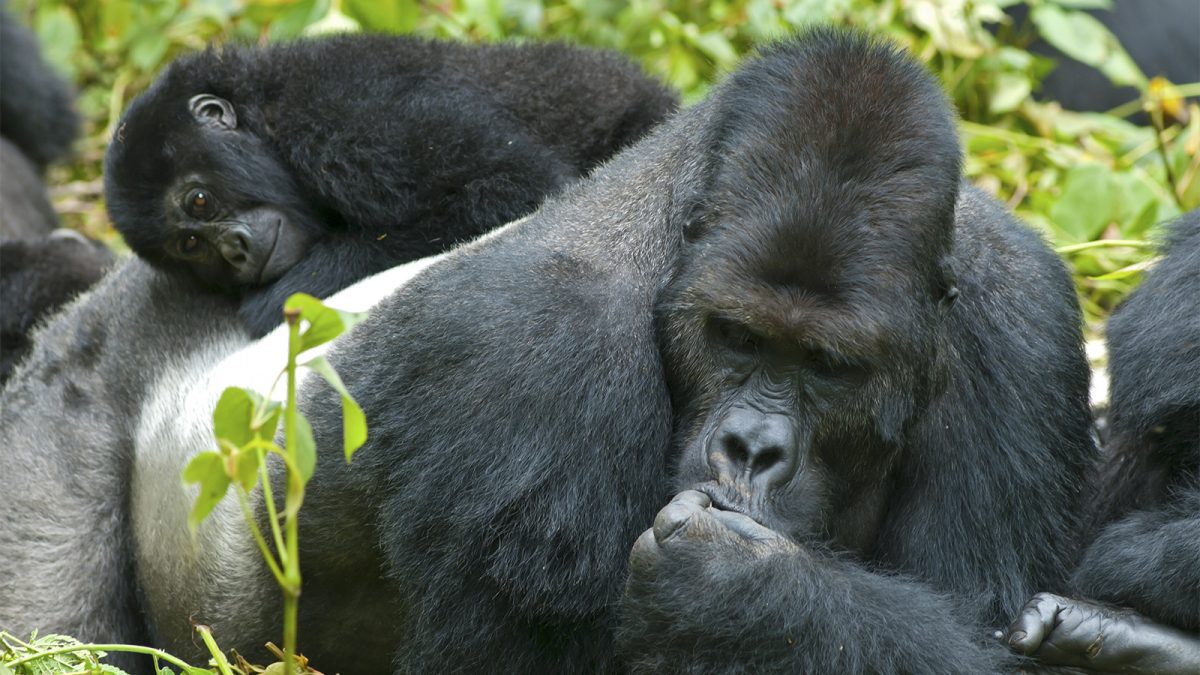
Every gorilla family is led by a dominant male, the silverback, named for the distinctive band of silver-grey hair that develops across his back with age. He can weigh close to 200 kilograms and is capable of extraordinary strength, yet the role he plays within the family is protective rather than aggressive.
A silverback spends his days monitoring the group's movements, mediating disputes between members, and positioning himself between visitors and his family during a trek. Trekkers often describe the moment a silverback turns to look directly at the group as the single most memorable part of the entire experience, not because it feels threatening, but because of how deliberate and calm that gaze usually is. It's a brief acknowledgment that you've been permitted, however temporarily, into his world.
Younger males eventually leave to form their own groups, a process that can take years and involves its own social drama within gorilla society. Guides who track the same families over long periods often know individual gorillas by name, their personalities, their quirks, which juveniles are troublemakers and which are more cautious. That familiarity is part of what makes a guided trek so much richer than simply walking into the forest alone would ever be.
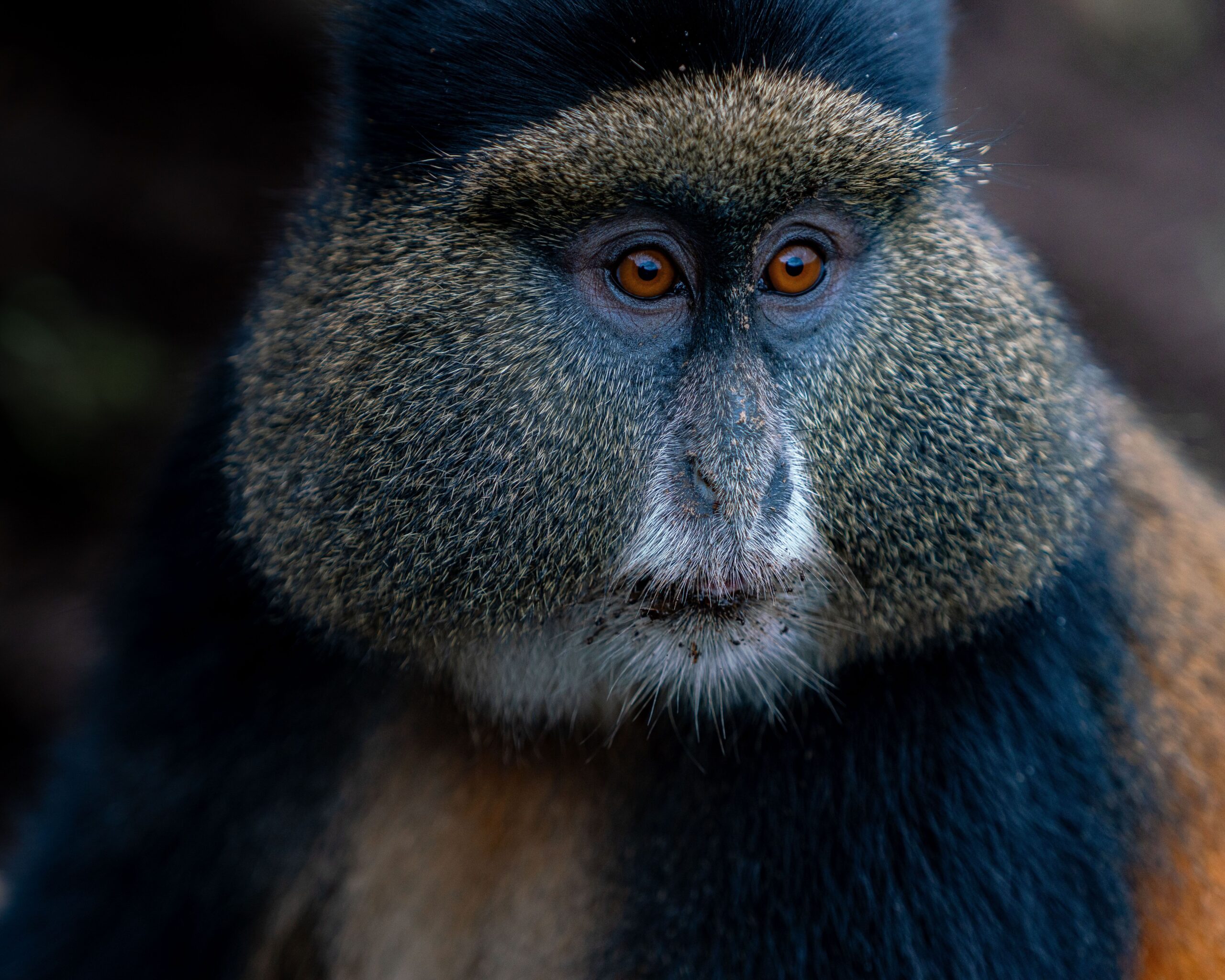
Beyond the Gorillas: What Else Lives in These Forests
Bwindi and the Virunga forests aren't just home to gorillas. Both are rich, biodiverse ecosystems that reward travelers who take the time to notice what's happening beyond the main event.
Bwindi alone hosts over 350 bird species, several found nowhere else on earth, making it a serious draw for birdwatchers even outside gorilla trekking season. The forest floor and canopy also support forest elephants, duikers, and several other primate species, including black-and-white colobus monkeys that are often spotted moving through the treetops during the trek itself.
None of this competes with the gorillas for attention, but it does mean the walk to find them is rarely uneventful even before a gorilla family comes into view. Many trekkers report that the forest itself, its sounds, its scale, its sheer density, left almost as strong an impression as the gorillas did.
Uganda or Rwanda for Your Gorilla Trekking Adventure?
Both countries protect the same extraordinary species, with Uganda offering lower permit costs and Rwanda offering shorter, more luxury-focused treks. Neither is the wrong choice, it largely comes down to budget, time, and how much comfort matters to you along the way. For a full breakdown of which fits your trip best, see our Uganda vs Rwanda gorilla trekking comparison.
A Few Honest Questions People Ask Before Booking
Will I definitely see the gorillas? Sighting rates on a gorilla trekking adventure are very high, generally cited above 95 percent, because trackers head out at dawn to relocate each family before trekking groups even start walking. It isn't guaranteed, but it's close to it.
What if I'm not very fit? Treks range from a gentle 30-minute walk to several hours over uneven terrain, and porters are available to help carry gear or assist with the harder stretches. Guides pace the group to its slowest member, not its fastest.
Is it safe? Gorilla families used for trekking are fully habituated to human presence after years of careful, gradual exposure by rangers, and strict distance and behavior rules exist specifically to keep both visitors and gorillas safe.
Is one hour really enough? It rarely feels like enough in the moment, but park authorities cap viewing time specifically to minimize stress on the gorillas, a small trade-off for a population that's still recovering.
What happens if it rains? Trekking continues in most weather short of genuinely dangerous conditions, since gorillas don't wait out the rain and neither do trackers. A rain jacket and waterproof boots matter more here than almost anywhere else on a typical safari, and misty, rain-dampened forest often makes for some of the most atmospheric photographs of the whole trip.
Planning Your Own Gorilla Trekking Adventure
Ready to plan? Permit costs, best travel seasons, and full trip logistics are covered in our complete guide to Uganda gorilla safaris. If you're packing for the trek itself, our gorilla trekking packing list covers exactly what to bring.
Popular itineraries to consider:
- Affordable 3-Day Gorilla Trekking Uganda Safari
- 7-Day Uganda Wildlife Safari: Chimps, Gorillas, Big 5
- 10-Day Uganda Wildlife Safari, Gorillas, Chimps & Big Game
Continue Planning Your Trip
Ready to experience Uganda's mountain gorillas for yourself? Explore our sample safari itineraries, use our Build My Safari tool to create a custom trip, or contact us directly to start planning your gorilla trekking adventure today.
More about Mountain Gorilla Trekking adventure:
10 Uganda Safari Forests and Bushes Worth Exploring
Guided Uganda Gorilla Safari Tours: Everything You Need to Know Before You Trek
Bwindi vs Mgahinga: Which Uganda Gorilla Park Should You Choose in 2026?