Rhinos in Uganda are one of Africa's great comeback stories. Wiped out by poaching in the early 1980s, they are back, and today you can walk within metres of a southern white rhino in the morning and, a few days later, sit an hour away from a family of mountain gorillas in Bwindi. Very few countries let you do both on one trip.
This guide explains where to see rhinos in Uganda today, how the rhino population was rebuilt, and how to combine rhinos and gorillas into one smooth safari. We are a Kampala-based safari company that has run these routes since 2014, so everything here comes from planning real trips for real guests.
Rhinos in Uganda: Quick Facts
- Species: southern white rhino, reintroduced from 2005
- Rhinos in the country: about 61 by March 2026, after new arrivals from South Africa
- Where to see them: Ziwa Rhino Sanctuary, plus new populations in Kidepo Valley and Ajai
- Rhino tracking: on foot with rangers, about 1.5 to 2.5 hours, around US$50 per person
- Add gorillas: Bwindi or Mgahinga, with a gorilla permit of US$800 per person
- Rhinos and gorillas together: from 7 days on a private safari
Are There Rhinos in Uganda?
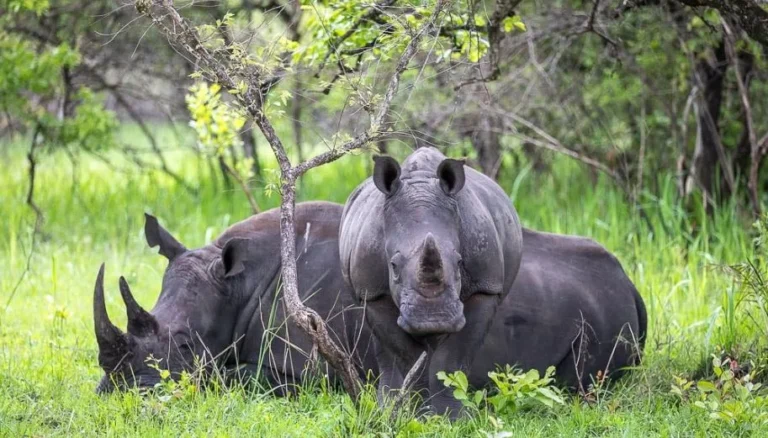
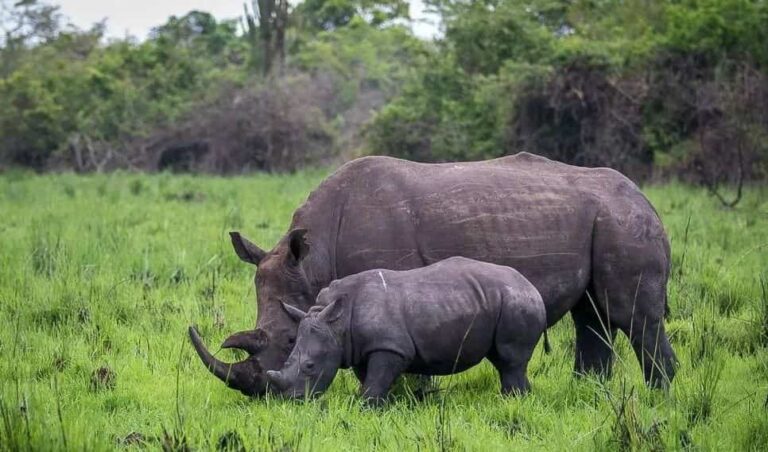
Yes. For more than twenty years Uganda had no rhinos at all, but today there are about 61 southern white rhinos in the country, according to the Uganda Tourism Board. Most rhinos in Uganda live at Ziwa Rhino Sanctuary in Nakasongola District, about 170 km north of Kampala, where they are protected around the clock by rangers.
Since late 2025 the numbers have been growing in new ways. Eight rhinos arrived from South Africa in December 2025 to bring fresh bloodlines, and rhinos born at Ziwa have started moving back into the wild areas where their ancestors once lived. So the answer to "are there rhinos in Uganda?" is not only yes, but more than at any time in the last 40 years.
The Story of Rhinos in Uganda: Lost and Brought Back
Uganda was once home to two rhino species. The northern white rhino grazed the grasslands of West Nile, including the area that is now Ajai Wildlife Reserve. The eastern black rhino browsed the bush of Murchison Falls and the plains of Karamoja around Kidepo.
During the insecurity of the 1970s and early 1980s, park protection collapsed and poachers shot rhinos for their horns. The last known wild rhino was killed in Kidepo Valley in 1983, and rhinos in Uganda were declared extinct. Today only two northern white rhinos survive anywhere on earth, both in Kenya, so Uganda's original white rhinos can never return.
How Ziwa Rebuilt the Population
The comeback started with Rhino Fund Uganda in 1997, working with the Uganda Wildlife Authority (UWA). In 2005 and 2006, six southern white rhinos arrived at Ziwa: four from Solio Ranch in Kenya and two donated by Disney's Animal Kingdom in Florida. The sanctuary covers about 70 square kilometres of bush and swamp, fenced and patrolled by armed rangers.
The number of rhinos in Uganda grew slowly and then steadily: 15 rhinos in 2014, 22 in 2018, 33 in 2021, 41 in 2024 and 48 by July 2025. Every rhino born at Ziwa is a small victory, and many guests tell us that knowing this history makes the encounter far more moving.
Where to See Rhinos in Uganda Today
There are now three places linked to rhinos in Uganda. Only one of them, Ziwa, offers reliable rhino tracking for visitors today. The other two are new homes where the rhinos are still settling in.
1. Ziwa Rhino Sanctuary: The Sure Place
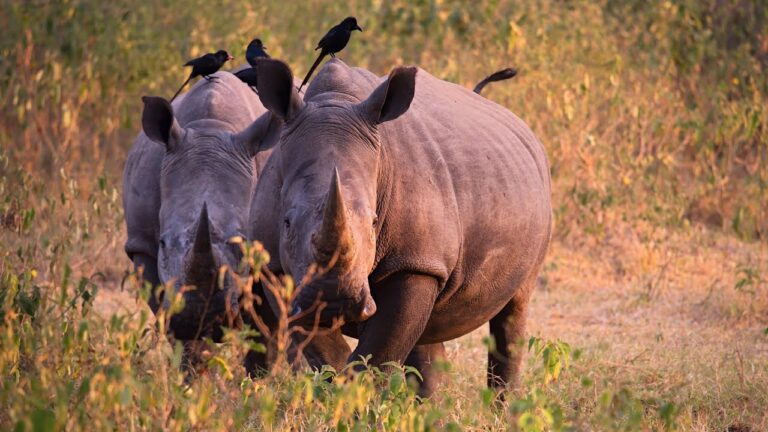
Ziwa is where almost every traveller sees rhinos in Uganda, and it is the only place where rhino tracking is a regular daily activity. You walk through the bush with a ranger, who knows each rhino by name, and usually get within about 15 to 30 metres of them. The walk is on flat ground, so it suits most ages and fitness levels. Ziwa also offers a shoebill canoe trip in the Lugogo swamp and guided nature walks.
Ziwa sits on the main road from Kampala to Murchison Falls, which is why it fits so naturally into a longer safari. For the full details of the walk, fees and lodges, read our complete guide to Ziwa Rhino Sanctuary in Uganda, or see the short 2 days Murchison Falls safari with Ziwa rhino tracking.
2. Kidepo Valley National Park: A New Chapter
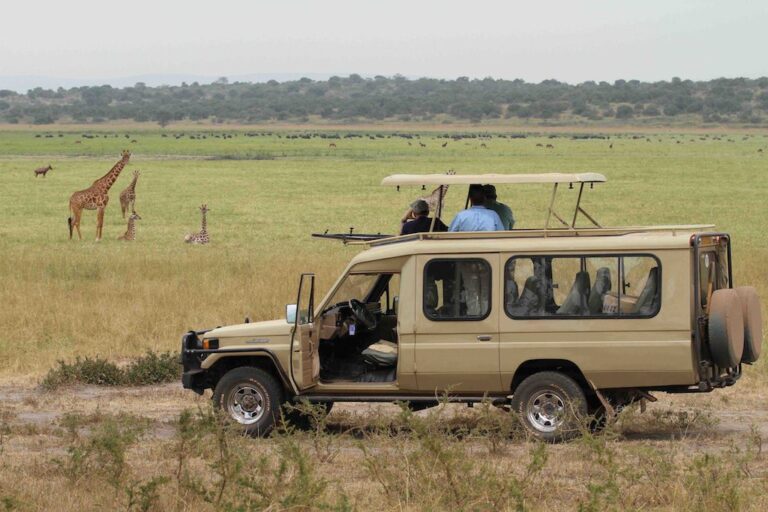
On 17 March 2026, UWA began returning rhinos to Kidepo Valley National Park, 43 years after the last one was killed there. The first rhinos came from Ziwa, and eight are planned for the first phase. They live in a secure sanctuary inside the park while they adapt, watched by rangers and monitoring teams.
With rhinos in Uganda now returning to the north, Kidepo is on its way to becoming a full Big Five park, alongside its lions, elephants, buffalo and leopards. Rhino viewing for visitors there is still being developed, so ask us for the latest before you travel. Our guide to rhinos in Kidepo follows the story, and you can read more about the park in our Kidepo National Park guide.
3. Ajai Wildlife Reserve: Rhinos Return to West Nile
In January 2026, four rhinos from Ziwa were moved to Ajai Wildlife Reserve in West Nile. It was the first time Uganda moved rhinos from one protected area to another. Up to 20 rhinos are planned for Ajai once the first group has settled. For now, Ajai is a conservation site rather than a tourist stop, but it shows how quickly rhinos in Uganda are spreading back into their old range.
Rhinos and Gorillas: Why the Pair Works So Well
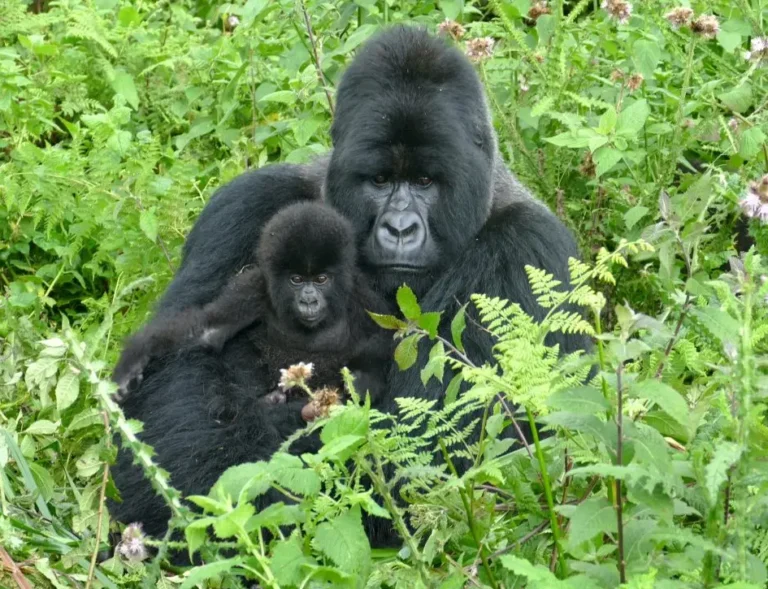
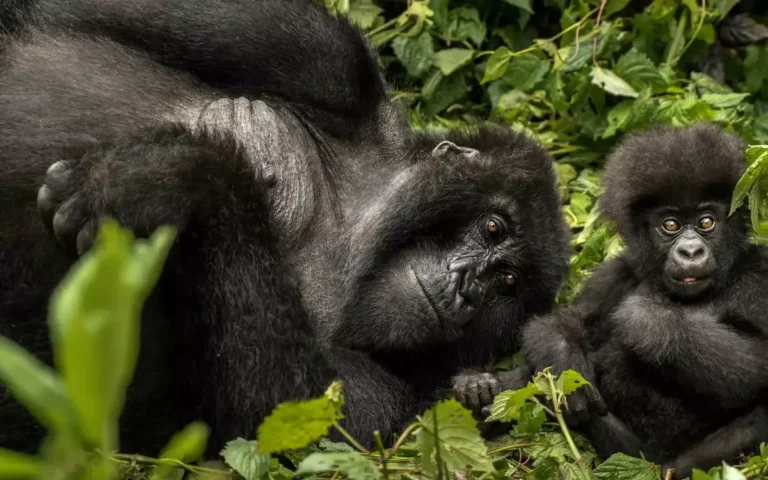
Rhinos in Uganda and mountain gorillas are two of the most endangered large animals in Africa, and Uganda is one of the few countries where you can meet both on foot. The two experiences feel completely different, which is exactly why they work so well together.
- Open bush versus deep forest. Rhino tracking happens in open savannah and bush, with wide views. Gorilla trekking takes you into the steep, misty rainforest of Bwindi or Mgahinga.
- Two conservation success stories. Rhinos in Uganda were brought back from extinction, while mountain gorillas have grown from a few hundred to more than 1,000 worldwide. Almost half of them live in Bwindi.
- Both on foot, both with rangers. You walk with expert guides in both places, which makes each encounter personal and quiet, without vehicles around you.
- Easy and challenging. The rhino walk is flat and gentle. The gorilla trek can take one to several hours on hilly ground. Together they suit a wide range of travellers.
If you want to compare gorillas with the classic savannah animals in more depth, our article on the Big 5 vs mountain gorillas looks at the differences, and our gorilla trekking in Uganda guide explains the trek step by step.
How a Rhino and Gorilla Safari Fits Together
The rhinos in Uganda that you can track today are in central Uganda, at Ziwa, on the way north to Murchison Falls. The gorillas are in the far south-west. That is why the best rhino and gorilla safaris run as a loop: north to Ziwa and Murchison first, then down the western side of the country through Kibale and Queen Elizabeth, and finally to Bwindi for the gorillas.
Here is a typical 8-day route that shows how rhinos in Uganda and gorillas fit into one trip:
| Day | Where | Highlight |
|---|---|---|
| 1 | Ziwa Rhino Sanctuary to Murchison Falls | Rhino tracking on foot, then on to Murchison |
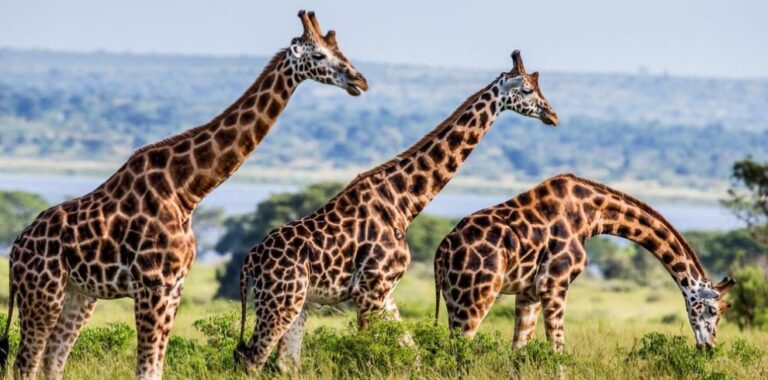
| 2 | Murchison Falls National Park | Morning game drive and a Nile boat trip to the falls |
| 3 | Top of the Falls to Kibale | The Nile forced through a 7-metre gap, then the drive south |
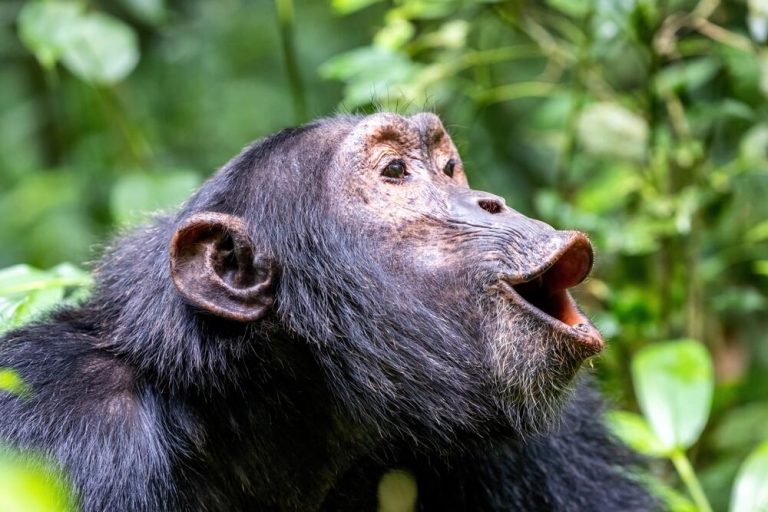
| 4 | Kibale Forest | Chimpanzee trekking and the Bigodi swamp walk |
| 5 | Queen Elizabeth National Park | Game drive and the Kazinga Channel boat cruise |
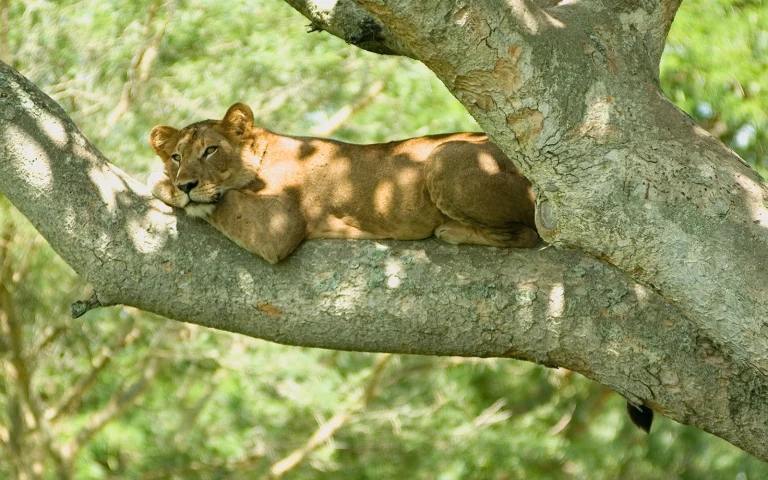
| 6 | Ishasha to Bwindi | Tree-climbing lions on the way to the gorillas |
| 7 | Bwindi Impenetrable Forest | Mountain gorilla trekking |
| 8 | Bwindi to Entebbe | Drive or fly back for your flight home |
Short on time? Fly from Bwindi back to Entebbe to save a long drive, or skip the chimpanzees and go from Murchison straight to Queen Elizabeth. With more time, add Lake Mburo, Lake Bunyonyi or the golden monkeys of Mgahinga. You can also build your own safari and we will shape the route around you.
Want to see rhinos and gorillas on one trip?
Send us your dates and group size. We will check gorilla permits for you, plan the rhino tracking at Ziwa on the right day and send a free, tailor-made quote within 24 hours.
What a Rhino and Gorilla Safari Costs
Seeing rhinos in Uganda costs far less than seeing gorillas, and the two activity fees are very different. Rhino tracking is one of the best-value wildlife experiences in East Africa, while the gorilla permit is the biggest single cost of most Uganda safaris.
| Experience | Where | Typical fee per person | Time on foot |
|---|---|---|---|
| Rhino tracking | Ziwa Rhino Sanctuary | About US$50 (foreign non-resident) | About 1.5 to 2.5 hours |
| Gorilla trekking | Bwindi or Mgahinga | US$800 gorilla permit | 1 to 6 hours, plus 1 hour with the gorillas |
| Chimpanzee trekking (optional) | Kibale Forest | US$250 chimp permit | 2 to 4 hours |
Fees change from time to time, so we always confirm the latest rates in your quote. A private 7 to 12 day safari covering rhinos and gorillas usually includes your vehicle and driver-guide, lodges, meals, park fees and permits. Learn more about booking in our guide to gorilla trekking permits in Uganda. Tulambule also accepts payment in instalments, so you can secure your gorilla permits early and spread the cost.
Best Time to See Rhinos and Gorillas in Uganda
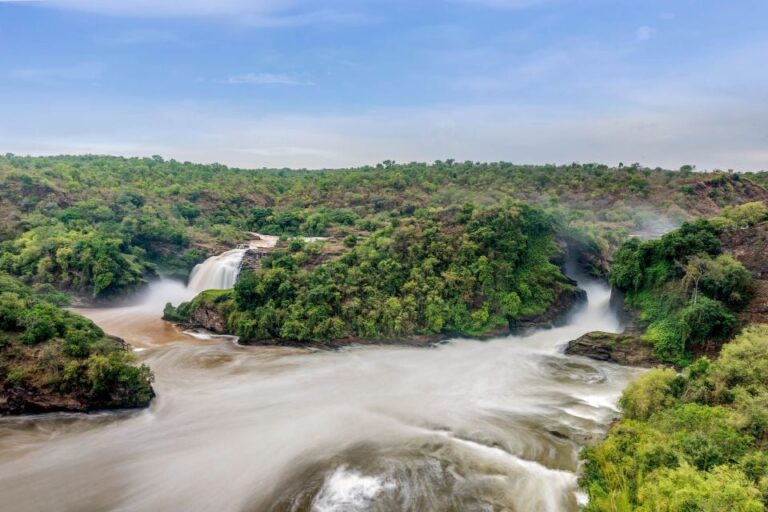
You can see rhinos in Uganda all year round, because the Ziwa rhinos stay within the sanctuary and rangers track them every day. Gorilla trekking also runs every day of the year, so rhinos in Uganda and gorillas can be combined in any month.
The drier months, from June to September and from December to February, are the most comfortable time for both. Trails in Bwindi are less muddy, game drives in Murchison and Queen Elizabeth are easier, and photos come out clearer. The wetter months bring greener scenery, fewer visitors and easier gorilla permit availability. Our guide to the best time to visit Uganda covers each month in detail.
Tips for Your Rhino and Gorilla Safari
- Book gorilla permits first. Permits are limited to 8 people per gorilla family per day, so we secure yours before anything else, especially for the dry seasons.
- Track rhinos in Uganda in the morning or late afternoon. The light is softer and the rhinos are more active, which makes for better photos.
- Wear neutral colours. Greens, browns and khaki work for both walks. Avoid bright colours and strong perfume.
- Bring good shoes. Light walking shoes are fine at Ziwa. For the gorillas, bring waterproof hiking boots and a rain jacket.
- Listen to the rangers. Keep together, stay quiet and follow your ranger's directions with both rhinos and gorillas.
- Look out for the shoebill. Ziwa's swamps are one of the places to look for this rare bird. See our guide to the shoebill stork in Uganda.
Rhino and Gorilla Safari Packages
Each of these private safaris combines rhinos in Uganda, tracked on foot at Ziwa, with mountain gorilla trekking, and every one can be adjusted to your dates, budget and pace. Prices depend on your travel dates, group size and choice of lodges, so ask us for a free quote.
Only have a few days? Start with the 3 days Murchison Falls safari with rhinos, or browse all our Uganda gorilla safaris.
Plan Your Rhino and Gorilla Safari With Tulambule
Rhinos in Uganda have gone from extinct to more than 60 in a single generation, and seeing them on foot, then meeting the mountain gorillas, is one of the most rewarding wildlife journeys in Africa. The next step is simple: tell us when you would like to travel, and we will do the rest.
Let us plan your rhino and gorilla safari
Share your travel dates, group size and budget. We will secure your gorilla permits, arrange rhino tracking at Ziwa and send a free, tailor-made itinerary within 24 hours. Gorilla permits are limited, so the earlier you ask, the more choice you have.
Get a Free QuoteChat on WhatsApp
Licensed by UTB and UWA • Member of AUTO • Rated 4.9 on TripAdvisor