Staying Connected on a Safari in Uganda: Your 2026 Internet & Mobile Guide
You are standing knee-deep in the mist of Bwindi Impenetrable Forest. A silverback gorilla emerges from the thick vegetation, pauses, makes eye contact, and continues his morning routine as if you are just another tree. Your heart is pounding. Your hands are shaking. And your first instinct is to share this moment with someone back home. Then you look at your phone. No signal. Zero bars. Nothing.
Here is the truth about staying connected on a safari in Uganda. It is not what you might expect from a developing nation. And that is exactly what we are going to talk about today.
Staying connected on a safari is surprisingly achievable in Uganda, but it requires planning and realistic expectations. The country has two major mobile network operators, MTN Uganda and Airtel Uganda, whose coverage extends well beyond major cities and into several national parks.
But here is the nuance. Gorilla trekking takes place in some of Uganda's most remote terrain, and connectivity in and around Bwindi Impenetrable National Park is genuinely limited in places if you want to be staying connected on a safari.
I am going to give you the real, unfiltered truth about staying connected on a safari in Uganda. Not the sugar-coated version but the actual, practical, here-is-what-you-need-to-know version that will help you plan your trip with confidence.
Because the reality is that staying connected on a safari in Uganda is surprisingly good in some places and genuinely limited in others. Understanding that difference is the key to a stress-free adventure.
So grab your coffee, and let us dive into everything you need to know about staying connected on a safari in the Pearl of Africa.
Why Staying Connected on a Safari Actually Matters
Let us be honest for a second. When you picture a safari, you are probably not thinking about Wi-Fi passwords and data bundles. You are thinking about lions, elephants, gorillas, and sunsets that look like they were painted by someone with an overly dramatic colour palette.But here is why staying connected on a safari deserves a spot on your pre-trip checklist.
Safety is the first priority. Whether you are coordinating with your tour operator, checking road conditions, or just letting someone know you have arrived safely at your lodge, having a way to communicate matters. Uganda's national parks are wild places, and while your guide will handle the logistics, having your own connectivity gives you an extra layer of security.
Navigation is another key reason. If you are doing a self-drive safari, which is absolutely doable in Uganda, mobile data is how you will navigate between parks, find fuel stations, and locate your lodge. Google Maps works beautifully in Uganda, but only if you have data or offline maps downloaded.
Sharing the magic is also important. Let us not pretend otherwise. You are going to want to share photos. Your friends and family are going to want to see them. While being present in the moment is essential, there is nothing wrong with sending a quick message to your loved ones about the incredible experience you are having.
Peace of mind cannot be overlooked. Simply knowing you can connect if you need to reduces travel anxiety. You do not have to be glued to your phone. But having the option is priceless.
Uganda's Mobile Network Landscape: The Big Picture
Before we get into the nitty-gritty of specific parks and lodges, let us talk about the overall state of staying connected on a safari in Uganda.
Uganda has a relatively advanced mobile telecommunications sector for East Africa, overseen by the Uganda Communications Commission. The country is served by several providers, but as a traveller, you really only need to know about two: MTN Uganda and Airtel Uganda for your staying connected on a safari.
MTN Uganda
MTN is the market leader, holding roughly half of all mobile subscribers in the country. It offers the widest coverage footprint, including strong 4G and LTE signals in Kampala, Entebbe, Jinja, and Mbarara, as well as reasonable 3G penetration along major highways and in areas surrounding key national parks.
If you are planning to move between multiple destinations and need to be staying connected on a safari with reliable connectivity throughout your trip, MTN is your best bet. MTN Uganda is generally considered to have the strongest rural coverage in western Uganda, the region that includes Bwindi, Queen Elizabeth, Kibale, and the Rwenzoris.
MTN Uganda SIM cards deliver 4G LTE service in Kampala, Jinja, Fort Portal, Mbarara, Kabale, Gulu, and all other major urban centres. MTN's infrastructure reaches more rural areas and national park lodge locations than Airtel Uganda's network.
Airtel Uganda
Airtel is the second-largest provider and a fierce competitor. It covers most urban centres and tourist corridors with solid 3G and 4G service. By 2019, Airtel had upgraded its entire network of over 1,600 base stations to 4G and LTE technology.
Airtel is especially attractive to budget-conscious travellers because of its competitively priced data bundles and flexible short-term prepaid packages. However, the Airtel network is slightly weaker than MTN in rural and national park areas according to most traveller comparisons.
Network Comparison Summary
For staying connected on a safari, MTN generally has better coverage in rural and safari areas, while Airtel often has more affordable data plans in urban areas.
Both networks have kiosks at Entebbe International Airport, usually open until late evening, making it easy to get connected the moment you land.
Staying Connected on a Safari by Region
Now let us get specific. Different parts of Uganda offer very different levels of connectivity. Here is the breakdown by region.
Cities and Towns
In Kampala, Entebbe, Jinja, and Gulu, you can expect near-complete 4G coverage with speeds regularly reaching 30 to 50 Mbps on good days. Streaming, video calls, and map navigation all work comfortably in these areas.
Hotel and restaurant Wi-Fi is widely available in urban centres, though speeds vary. Most shopping malls, cafés, and guesthouses in larger towns offer free Wi-Fi, but these connections are often shared and can be slow during peak hours which can deter your staying connected on a safari.
For anything beyond light browsing, relying on your own mobile data bundle is the smarter choice to enhance staying connected on a safari in uganda .
Bwindi Impenetrable National Park
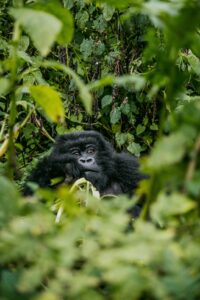
This is where expectations need to be realistic. Bwindi is one of Uganda's most iconic destinations and one of the most challenging for staying connected on a safari.
The villages immediately adjacent to Bwindi, including Buhoma, Ruhija, Rushaga, and Nkuringo, have variable but generally usable mobile coverage. Buhoma has reasonable MTN signal at most lodges, though speed is limited and streaming video is not realistic. Voice calls and WhatsApp messaging work reliably when signal is good.
Inside the forest park itself, connectivity drops to minimal or absent. The dense canopy and steep terrain obstruct signal propagation, and there are no mobile towers inside the protected area.
The good news is that Bwindi lodge WiFi varies enormously by property. Starlink-based WiFi is now available at some properties, providing dramatically faster connections. Some lodges now offer complimentary Star-Link WiFi to keep guests in touch with loved ones or share their adventure in real time.
Queen Elizabeth National Park
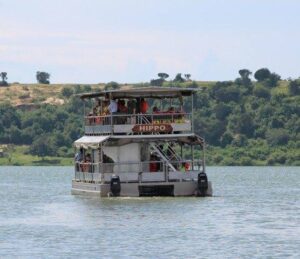
Queen Elizabeth National Park offers better connectivity than Bwindi in most areas. Coverage at lodge areas is generally available with MTN at 3G or 4G speeds.
Mobile phone coverage is good in towns and along major roads but limited within the national park itself. Near lodges and the Kazinga Channel, coverage is generally good, but expect signal drops during game drives in remote sectors of the park.
WiFi is available at most mid-range and luxury lodges, though speeds vary. In remote areas, connectivity becomes more challenging.
Murchison Falls National Park
Coverage at Murchison Falls lodge areas is generally available with MTN at 3G or 4G speeds. The park is seeing ongoing improvements in connectivity infrastructure.
Airtel Uganda has started piloting Direct-to-Cell Starlink satellite services in Murchison Falls National Park. According to Airtel's leadership, this service could significantly improve access to communication services in remote areas such as Murchison Falls National Park. The initial phase focuses on voice calls, SMS, and limited data services, with full mobile broadband expected in later stages which will enhance staying connected on a safari in murchison.
This is a genuine game-changer for staying connected on a safari in one of the country's most remote parks.
Kibale National Park
Kibale National Park, home to Uganda's famous chimpanzee tracking, has usable MTN coverage around Kanyanchu. Coverage at Kibale lodge areas is generally available with MTN at 3G or 4G speeds.
Free internet is available within the boundaries of Primate Lodge Kibale. However, electricity in Kibale is usually available from 6:00 a.m. to 9:00 a.m. and again from 6:30 p.m. to 10:00 p.m. Charging your devices requires some planning.
Kidepo Valley National Park
Kidepo Valley in the far northeast is one of Uganda's most remote parks, and connectivity here is genuinely limited for the traveller who would wish to be staying connected on a safari. Travellers heading to Kidepo should expect more limited and less reliable coverage than around Kampala, particularly deep within the park.
That said, MTN's coverage does extend to tourist regions like Kidepo Valley. Just do not expect to be streaming anything.
How to Stay Connected on a Safari: Your Options
Now that you know what to expect, let us talk about how to actually stay connected.
Local SIM Card
Purchasing a Uganda SIM card on arrival at Entebbe International Airport costs far less than international roaming charges on a home network.
The process is simple. Both MTN and Airtel have official shops at Entebbe International Airport where you can buy a prepaid SIM card. You will need your passport for registration, which is mandatory under Ugandan law. Registration takes five to ten minutes at any authorised dealer. The SIM card itself is free or costs a nominal fee at most authorised outlets. The real cost comes from the data and voice bundles you purchase after activation.
Data bundle costs are incredibly affordable. Daily bundles of 1 gigabyte cost the equivalent of less than one US dollar. Twelve gigabytes for 30 days costs approximately 30,000 Ugandan shillings, which is about eight US dollars. Weekly bundles of 5 to 10 gigabytes provide even better per-gigabyte rates.
For a multi-week safari, a local SIM card is by far the most cost-effective option for staying connected on a safari.
eSIM
If you want to skip the queue at the airport and avoid the SIM registration process, an eSIM is answer for your staying connected on a safari.
Why eSIMs are gaining popularity is clear. You install the eSIM on your compatible phone before you fly. You step off the plane with data already working. There is no hunting for SIM card shops, no language barriers, and no connection problems. Most eSIM providers offer plans starting at just a few dollars.
Most eSIMs connect to either MTN or Airtel networks in Uganda, ensuring coverage in Kampala, Entebbe, and on major safari routes. Some providers offer plans starting from around seven to fourteen US dollars.
The main downside is that eSIMs are more expensive than local prepaid SIM cards. You can get around 10 to 12 gigabytes of data for about eight US dollars with a local SIM, which is significantly less than most eSIM options.
But for short trips or travellers who value convenience above all else, the time savings often outweigh the extra cost.
International Roaming
International roaming from most carriers is expensive. Uganda's international roaming charges can be very high, with several euros or dollars charged per megabyte.
For anything beyond a day or two, international roaming is not a viable option for staying connected on a safari.
Lodge WiFi: What to Expect
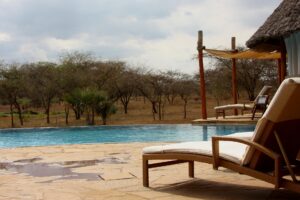
Most established lodges and camps across Uganda's national parks now offer some form of Wi-Fi access, though quality and reliability vary considerably depending on the property's specific location and infrastructure investment.
Luxury lodges typically invest more in connectivity infrastructure, sometimes installing satellite systems like Starlink or dedicated fibre connections where available. Mid-range lodges usually offer WiFi, but speeds vary. Budget options may have very limited or no WiFi.
Even lodges in the deep jungles of Bwindi and Mgahinga provide free wireless internet connection. However, it is often slow and shared across the whole camp, so treat it as a way to send a message home rather than stream anything.
A word of warning: Uganda experiences frequent power outages, which can instantly cut off any Wi-Fi network. Having your own mobile data as a backup is always wise.
And here is a security tip. Hotel WiFi in Uganda is often unsecured. When using hotel WiFi, airport networks, or cafe hotspots, your personal data and banking information can be vulnerable. A VPN encrypts your connection, keeping your passwords, credit cards, and private communications safe from hackers on the same network.
Pro Tips for Staying Connected on a Safari
Let us wrap up with some practical advice that will make your connectivity experience infinitely better.
Download Offline Maps Before You Go
This is non-negotiable. Internet connectivity can be unreliable, especially in remote areas like national parks and rural regions.
Download the Uganda region on Google Maps or Maps.me before you leave Kampala or while you still have strong Wi-Fi. These offline maps will work without any data connection.
Maps.me provides complete offline maps of Uganda, including unpaved roads and park tracks. Google Maps with offline downloads is also essential for remote driving.
Carry a Power Bank
Using GPS and mobile data drains your phone's battery quickly. Charging points are not always available on safari vehicles.
A portable charger or power bank is essential for staying connected on a safari throughout long game drives.
Buy Your SIM at the Airport
Both MTN and Airtel have official shops at Entebbe International Airport. Buying your SIM here means you are staying connected on a safari from the moment you leave the airport.
The MTN shop is to the right after customs, and an Airtel kiosk is about 50 metres from the arrivals building. The registration desk staff will demonstrate the bundle activation process for you.
Know Your Data Needs
A typical 7 to 10 day trip that includes safari drives in Queen Elizabeth National Park, gorilla tracking in Bwindi, and time in Kampala's cafés will often be comfortable with 10 to 20 gigabytes total.
If you are planning to work remotely or upload lots of photos, budget for more.
Use a VPN for Security
When using public WiFi in Uganda, a VPN adds an extra layer of security. It takes two minutes to set up and works automatically on all your devices.
Make Important Calls Before Entering Parks
Before heading to national parks or remote safari areas, make important calls or send messages in advance. Once inside the park, signal may be limited for your staying connected on a safari.
Withdraw Cash Before Heading Remote
ATMs dispensing Ugandan shillings are widely available in Kampala, Entebbe, and Kabale, but absent near Bwindi. Withdraw sufficient cash before leaving Kabale for the Bwindi area.
Ensure Your Phone is Unlocked
Before travelling to Uganda, make sure your phone is unlocked. Most phones purchased through international contracts are pre-locked to the issuing operator's network. Contact your provider before departure to understand the unlocking process.
Your Guide Can Help
Your driver or tour guide will have a local number that you can borrow if you really must make a phone call. They can also help you register a SIM card and choose the right data package.
Embrace the Disconnect
Here is the most important tip of all. Embrace the natural disconnection.
The most memorable parts of gorilla trekking do not come from phone signal. They come from being fully immersed in one of the most extraordinary places on Earth. Staying connected on a safari is a tool, not the goal. Use it wisely, and then put your phone down and experience the magic.
The Future of Staying Connected on a Safari
Things are changing fast in Uganda's connectivity landscape.
5G expansion is underway. 5G is active in parts of Kampala. Airtel has expanded its 5G network to 364 sites across major cities and towns. MTN also offers 5G in parts of Kampala. This will only improve over time.
Starlink and satellite services are becoming more available. Starlink-based WiFi is now available at some safari properties, providing dramatically faster connections. Airtel Uganda has started piloting Direct-to-Cell Starlink services in Murchison Falls National Park. Paratus Uganda has also become the first provider in the country to launch Starlink's low earth orbit satellite service for enterprise customers.
Infrastructure sharing is improving coverage. An infrastructure sharing agreement between MTN and Airtel, signed in 2025, should improve rural coverage for both operators.
Rural connectivity investment continues. Airtel has handed over 42.9 billion Ugandan shillings to the Uganda Communications Universal Service and Access Fund to accelerate rural connectivity.
The future of staying connected on a safari in Uganda is bright. Each year, more of the country gets connected. Each year, speeds get faster. Each year, it becomes easier to stay in touch while exploring the Pearl of Africa.
Final Thoughts
Staying connected on a safari in Uganda is a nuanced topic. In cities, it is excellent. In national parks, it varies from good to non-existent. In the deep forest of Bwindi, you will likely lose signal entirely, and honestly, that is part of the experience.
The key is to plan ahead. Buy a local SIM or eSIM before you need it. Download offline maps. Carry a power bank. And then let go of the anxiety of being disconnected.
Because here is the truth. Uganda is one of the most breathtaking countries on Earth. The gorillas of Bwindi, the tree-climbing lions of Queen Elizabeth, the thundering waters of Murchison Falls, these are experiences that do not need a Wi-Fi signal to be unforgettable.
Your plan for staying connected on a safari should enable your adventure, not define it. Use it to stay safe, share the magic, and navigate the journey. Then put the phone down, look up, and soak in the wonder of the Pearl of Africa.
Ready to experience Uganda for yourself? Whether you are planning a gorilla trekking adventure, a classic savanna safari, or a combination of both, understanding connectivity is just one piece of the puzzle. The real magic happens when you are standing in the mist, heart pounding, watching a silverback gorilla go about his morning routine, completely unbothered by your presence.
No Wi-Fi required. No data bundle needed. Just you, the gorilla, and one of the most extraordinary moments of your life.
Now go book that safari.
SUGGESTED PACKAGES
4 Days Safari In Beautiful Queen Elizabeth National Park 2026/27
5 Days Uganda Safari Gorillas, Chimps, Wildlife & Culture
6 Day Luxury Safari Uganda: Gorillas, Wildlife & Culture
6 Day Uganda Safari, Chimps, Gorillas and Wildlife
6-Day Luxury Rwanda & Uganda gorilla Tour
21 Days Uganda Safari: Three Weeks In Uganda