Why Uganda Lion Tracking Safari Tours Are East Africa's Best-Kept Wildlife Secret
Most visitors who come to Uganda think gorillas first. That is completely understandable — gorilla trekking in Uganda is one of the greatest wildlife encounters on the planet. But if you travel to western Uganda and leave without adding lion tracking to your itinerary, you are missing something truly extraordinary.
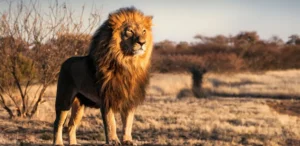
Uganda lion tracking safari tours in Queen Elizabeth National Park are unlike any other lion experience in East Africa. You do not sit passively in a vehicle hoping a lion drifts past. You join active conservation researchers, pick up radio signals from GPS-collared lions, drive off-road across open savannah, and find a pride in their natural, undisturbed state. It is science-backed, purposeful, and among the most immersive wildlife encounters anywhere on the African continent.
This complete guide covers everything you need to plan your Uganda lion tracking safari tour — what the experience involves, where it happens, what it costs, the best time to go, and how to combine it with Uganda's other unmissable wildlife highlights.
What Are Uganda Lion Tracking Safari Tours?
Uganda lion tracking safari tours are a structured, conservation-based wildlife activity conducted exclusively in Queen Elizabeth National Park, in a partnership between the Uganda Wildlife Authority (UWA) and the Uganda Carnivore Program (UCP) — the independent research body that has been monitoring and protecting Uganda's large carnivores since 2015.
The key difference between lion tracking and a regular game drive is the use of science. A number of lions in the park are fitted with GPS radio collars. UCP researchers carry telemetry equipment that picks up those collar signals in real time, allowing them to locate specific prides with high accuracy. Guests join the researchers in UWA safari vehicles, travel off-road where needed, and observe lions at close range from inside the vehicle.
A typical session lasts two to three hours. Throughout that time, your researcher-guide shares information on lion behaviour, pride structure, territorial patterns, and the broader conservation landscape. You are not simply watching animals from a distance — you are an active participant in wildlife monitoring. Every behavioural observation logged during your session contributes directly to the long-term data set used to protect Uganda's lion population.
According to the Uganda Carnivore Program, their experiential lion tourism is a core pillar of their conservation funding model — linking visitor revenue directly to community compensation, anti-poaching efforts, and ongoing collar monitoring. When you book a Uganda lion tracking safari tour, your permit fee does more than buy an encounter. It funds a future where Uganda's lions still roam the savannah.
Where Does Lion Tracking Take Place?
Lion tracking in Uganda takes place in Queen Elizabeth National Park (QENP), located in the western region of the country along the border with the Democratic Republic of Congo. Within the park, two areas are most relevant:
The Kasenyi Plains — Primary Tracking Zone
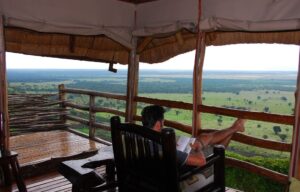
The Kasenyi sector in northern QENP is the main lion tracking zone. It is an open grassland with high visibility and exceptional prey density — Uganda kob, buffalo, warthog, and topi all move through here in significant numbers. The lions of the northern pride are regularly collared and monitored by UCP researchers, making Kasenyi the most reliable area for tracking sessions. The UCP currently estimates the northern QENP lion population at between 50 and 65 individuals.
The Kasenyi plains are also featured prominently in our 3-day Uganda safari itinerary, which pairs morning lion tracking with afternoon game drives and a Kazinga Channel boat cruise — a perfect short introduction to Queen Elizabeth's wildlife.
The Ishasha Sector — Tree-Climbing Lions
The southern Ishasha sector is home to one of the world's most unusual lion populations — tree-climbing lions. These lions regularly rest in the branches of ancient fig and acacia trees, a behaviour documented in only two places on earth: Ishasha and Tanzania's Lake Manyara. The Ishasha population is smaller, estimated at fewer than 20 individuals, and formal telemetry tracking is less structured here than in Kasenyi. However, spotting a pride draped across fig tree branches in the golden afternoon light is one of the most iconic wildlife images in all of Africa.
Most multi-day Uganda lion tracking safari tours include both sectors within a broader Queen Elizabeth itinerary.
The Conservation Story Behind Uganda Lion Tracking
Understanding why Uganda's lions are tracked — and why they need tracking — makes the experience far more meaningful.
Uganda's lion population is in serious decline. A landmark 2024 study published in the journal Conservation Science and carried out using advanced spatial capture-recapture methods — the first comprehensive carnivore population survey in Uganda in nearly two decades — confirmed that Queen Elizabeth National Park holds fewer than 40 lions within its main research zones. Kidepo Valley National Park holds fewer than 20. The study, which involved more than 100 conservation stakeholders, formed the scientific foundation for Uganda's Strategic Action Plan for Large Carnivore Conservation (2023–2033).
The historical trajectory is alarming. Over the past four decades, the lion population in the Queen Elizabeth Conservation Area has fallen by more than 90% — from over 400 individuals in the 1980s to approximately 39 by 2022, according to data from the Kyambura Lion Monitoring Project, which received a 2025 Adventure Travel Conservation Fund grant to continue its work.
Key threats include wire snare poaching, retaliatory killings by farming communities after livestock attacks, habitat loss due to human encroachment, and illegal livestock grazing inside park boundaries. In 2018 alone, 13 lions were poisoned in a single incident inside QENP.
In this context, the UCP's experiential lion tracking tourism programme is not simply a visitor attraction. It generates income that:
- Funds compensation payments to local communities whose livestock is killed by lions — reducing the incentive for retaliatory poisoning
- Finances radio collaring operations that allow researchers to track movements, identify injured animals, and respond rapidly to human-wildlife conflict
- Supports the training of young Ugandans from park-adjacent communities in scientific conservation fieldwork
This is what separates Uganda lion tracking safari tours from virtually every other lion experience in Africa. It is tourism with measurable conservation impact.
What to Expect on a Lion Tracking Session
Here is a realistic, step-by-step account of what happens during a lion tracking experience in Queen Elizabeth National Park.
Early Morning or Late Afternoon Start
Lions are most active during the cooler parts of the day. Sessions typically begin at around 6:30–7:00 AM or 3:00–4:00 PM. Your group meets the UCP researcher at a designated point — usually near the Kasenyi ranger post.
Briefing and Equipment Introduction
Before heading into the field, the researcher briefs the group on the day's plan, explains how the radio telemetry equipment works, and outlines the behaviour guidelines and safety rules. Group sizes are intentionally kept small — this is not a mass-market activity.
Driving to the Signal Zone
Your vehicle moves across the Kasenyi plains while the researcher periodically steps out to scan for collar signals. The steady crackle of the telemetry device, growing stronger as you close in on a pride's location, is a sound you will remember long after the trip.
Approaching the Pride
Once lions are located, the vehicle approaches slowly and quietly. You remain inside the vehicle at all times. Rangers position the car for optimal sightlines while maintaining a respectful, non-disruptive distance from the animals.
Observation and Data Collection
You may spend 30 to 60 minutes with the pride. The researcher records live behavioural data — resting patterns, cub interactions, territorial signals, social hierarchies — and shares this in real time with your group. Questions are encouraged throughout.
Return and Debrief
The session closes with a debrief, often over tea at camp, where the researcher contextualises what you observed within the broader conservation picture of QENP's lion population.
Lion Tracking Fees — How Much Does It Cost?
As of 2026/2027, the official Uganda Wildlife Authority fees for lion tracking in Queen Elizabeth National Park are:
| Category | Fee |
|---|---|
| Foreign Non-Residents | USD 200 per person |
| Foreign Residents | USD 150 per person |
| East African Community (EAC) Residents | UGX 200,000 per person |
These fees are paid to UWA and are separate from your overall safari package costs, which cover accommodation, transport, park entrance fees, and professional guiding. At Tulambule Uganda Safaris, we structure all of this into a single, transparent package — no hidden extras.
Slots are limited and fill quickly, especially during peak season. Book at least 24–48 hours in advance, and ideally as part of your full trip planning before departure.
For a broader view of what a Uganda safari costs end-to-end, visit our detailed Uganda safaris and tours page where we outline options across all budgets.
Best Time for Uganda Lion Tracking Safari Tours
Lion tracking runs year-round, but two windows offer significantly better conditions:
June to September — Peak Season (Best)
This is the best period for Uganda lion tracking safari tours overall. Vegetation is shorter, making lions far easier to spot across open grassland. Track conditions allow vehicles to travel freely off-road. Prey species concentrate around water sources, bringing lions into predictable areas. The weather is generally clear and comfortable for both game drives and tracking sessions.
June to September also aligns with Uganda's broader peak safari season — the same window that delivers the best gorilla trekking and chimpanzee tracking conditions. If you plan to combine activities, this is your target window.
December to February — Excellent Alternative
December through February offers a strong second window. Visitor numbers are slightly lower than the June–September peak, which can mean a quieter, more personal experience with the research team. Road conditions are good and wildlife viewing across the park is excellent throughout.
March to May and October to November — Possible but Challenging
Lion tracking can still happen during Uganda's rainy seasons, but expect muddy tracks, reduced visibility in tall grass, and occasional weather-related cancellations. The park turns vividly green and visitor numbers are low — some travellers prefer this for the atmosphere and value — but it is not the ideal window for tracking specifically.
Combining Lion Tracking with Uganda's Best Safari Experiences
One of the greatest strengths of a Uganda lion tracking safari tour is how naturally it pairs with the country's other world-class experiences. A well-designed itinerary can fit multiple highlights into a single trip.
Kazinga Channel Boat Cruise

The 35-kilometre natural channel connecting Lake George and Lake Edward is one of Uganda's finest wildlife corridors. A two-hour boat cruise delivers close-range encounters with some of the world's densest hippo concentrations, large Nile crocodiles, elephants at the water's edge, and over 600 recorded bird species. This pairs naturally with a morning lion tracking session — track lions at dawn, cruise the channel in the afternoon.
Read our dedicated page on the Kazinga Channel boat cruise for everything you need to know about this spectacular experience.
Chimpanzee Tracking in Kyambura Gorge and Kibale Forest
A short drive north of Queen Elizabeth brings you to Kibale Forest National Park — home to the highest density of wild chimpanzees in Africa. Chimpanzee trekking in Kibale is one of Uganda's defining wildlife experiences and pairs beautifully with a Queen Elizabeth lion tracking stay. Read our complete guide to chimpanzee trekking in Kibale Forest.
For something more dramatic and off-the-beaten-track, chimpanzee tracking is also possible in Kyambura Gorge — a forested valley carved into the Queen Elizabeth savannah floor, sometimes called "the valley of apes." This means you can track lions and chimps on consecutive mornings without even leaving the park. And if budget is a consideration, Kalinzu Forest chimpanzee trekking is the most affordable chimp permit in Uganda and is located adjacent to QENP.
Gorilla Trekking in Bwindi Impenetrable Forest
Queen Elizabeth National Park sits within comfortable driving distance of Bwindi Impenetrable Forest — Uganda's gorilla trekking heartland and a UNESCO World Heritage Site. A combined lion tracking and gorilla trekking safari is one of the most powerful Uganda itineraries available anywhere. Spend two nights in QENP for lion tracking, the Kazinga cruise, and Ishasha tree-climbing lions, then drive south through the scenic Ishasha sector to Bwindi for gorilla trekking.
Our 7-day Uganda gorilla and chimpanzee safari covers this exact western circuit and is one of our most popular itineraries. For a longer East Africa adventure, explore our 15-day gorillas, chimps, safari and beach holiday which builds the full circuit from Kibale and Queen Elizabeth through Bwindi to the coast.
Birdwatching in Queen Elizabeth National Park
With over 600 recorded bird species, Queen Elizabeth National Park holds one of the highest avian counts of any protected area in Africa — a fact acknowledged by BirdLife International. Serious birders will want a dedicated morning session targeting species like the African fish eagle, martial eagle, African skimmer, papyrus gonolek, and the shoebill stork in nearby Mabamba wetlands. The Kazinga Channel and the crater lake fringe are particularly rewarding.
Uganda Wildlife Safaris Across the Country
If your time allows, Queen Elizabeth can anchor a broader Uganda wildlife itinerary that extends north to Murchison Falls — Uganda's largest national park and the country's most important lion stronghold, with an estimated 240 individuals. Our Uganda wildlife safaris and game drives guide covers the full country-wide picture and helps you plan the right combination for your interests and schedule.
Where to Stay During Your Lion Tracking Safari
Queen Elizabeth National Park offers accommodation to suit every style of travel. Here is a practical overview:
Luxury Options
Mweya Safari Lodge sits on a peninsula overlooking the Kazinga Channel — one of the most spectacular positions of any lodge in Uganda. It offers easy access to both the channel cruise and the Kasenyi tracking zone and is frequently included in our luxury Uganda safari packages.
Kyambura Gorge Lodge is perched above the gorge with sweeping Rift Valley views. It is intimate, beautifully designed, and perfectly placed for both chimp tracking and lion tracking.
Kasenyi Safari Camp sits directly within the Kasenyi savannah, meaning you are in lion country from the moment you step outside your tent.
Mid-Range Options
Engiri Game Lodge, Marafiki Safari Lodge, and Buffalo Safari Lodge all offer solid, comfortable bases with good vehicle access and proximity to the Kasenyi tracking zone.
Ishasha Sector
For tree-climbing lion viewing, Ishasha Wilderness Camp is the go-to property — rustic, authentic, and positioned for exactly the kind of slow, rewarding wildlife watching the sector rewards.
For our full breakdown of Queen Elizabeth accommodation, visit our dedicated page on the best lodges in Queen Elizabeth National Park covering luxury, mid-range, and budget options.
Rules and Guidelines for Lion Tracking
Uganda lion tracking safari tours are carefully regulated to protect the lions and ensure a safe, meaningful experience for visitors. The key rules to know before you go:
- Stay in the vehicle at all times unless explicitly instructed otherwise by the UCP researcher
- No flash photography — camera flashes disturb the animals and are strictly prohibited
- Maintain silence when near the pride; the researcher will signal when it is appropriate to speak quietly
- Follow the researcher's instructions immediately and completely — their decisions are based on years of experience with individual lion behaviour
- Do not litter anywhere inside the park or tracking zone
- Respect minimum distances — the vehicle will be positioned correctly; do not pressure your driver to move closer
Violating these rules can result in immediate removal from the activity and, more importantly, endangers both the lions and your group.
How to Book Uganda Lion Tracking Safari Tours with Tulambule
Tulambule Uganda Safaris is a 100% Ugandan-owned tour operator, accredited by the Uganda Tourism Board (UTB), Uganda Wildlife Authority (UWA), AUTO, and TUGATA. We have been building authentic Uganda safari experiences since 2014, with a 4.9-star TripAdvisor rating built on genuine traveller reviews.
We handle all UWA permit bookings, logistics, accommodation reservations, and ground transport. Your lion tracking session is scheduled at the optimal time of day, paired with complementary activities, and embedded within an itinerary designed around your interests, budget, and travel dates.
Whether you are planning a budget-friendly Uganda safari or a fully private luxury experience, we build every itinerary from scratch around what you want — nothing is off the shelf. We also offer the full East Africa safari experience for travellers looking to extend into Rwanda, Kenya, or Tanzania.
We respond to all enquiries within 24 hours and provide detailed, no-obligation quotations tailored to your group size, dates, and interests. Contact us here to start planning.
Frequently Asked Questions About Uganda Lion Tracking
Is lion tracking in Uganda safe? Yes. You remain inside a UWA safari vehicle throughout the session, accompanied by an experienced UCP researcher and a UWA ranger. The lions of the Kasenyi plains are accustomed to research vehicles and behave naturally without being disturbed.
How long does a session last? Most sessions run between two and three hours, including driving time to locate the pride using telemetry signals.
Is it guaranteed that I will see lions? No wildlife encounter anywhere in the world carries a 100% guarantee. However, lion tracking uses radio telemetry to locate collared individuals — giving it a significantly higher success rate than a standard game drive where sightings rely on luck and timing.
Can children join the tracking session? Children aged 12 and above are generally permitted. Confirm specific UWA age guidelines with us at the time of booking, as these may be updated.
Do I need a high level of fitness? Not at all. The entire experience takes place inside a vehicle. No walking or physical exertion is required.
Can I combine lion tracking with gorilla trekking on the same trip? Absolutely — this is one of our most popular combinations. A 7 to 10-day Uganda safari can comfortably include lion tracking in QENP and gorilla trekking in Bwindi, along with chimpanzee tracking, the Kazinga Channel cruise, and more. Get in touch to design your itinerary.
When is the best time to go? June to September is the peak season and the most reliable window for lion tracking. December to February is an excellent alternative with slightly fewer visitors. See our full best-time breakdown above.
Why Uganda Lion Tracking Safari Tours Belong on Your Bucket List
There is no shortage of places in Africa where you can see a lion on a game drive. But there are very few places on earth where you can track one alongside active scientists, contribute to real conservation data, and know that your visit directly funds the work keeping that animal alive.
Uganda lion tracking safari tours occupy a rare and precious space — where adventure, science, and genuine conservation impact converge in a single morning. The lions of the Kasenyi plains and the Ishasha sector are among the most at-risk in Africa. Their survival depends on exactly the kind of responsible, research-backed tourism that the Uganda Carnivore Program has built its model around.
If you are planning a Uganda safari in 2026 or 2027, do not leave without experiencing lion tracking. Combined with gorilla trekking in Bwindi, chimpanzee tracking in Kibale, and a sunset cruise on the Kazinga Channel, it forms part of a Uganda wildlife itinerary that no other destination in East Africa can match.
Ready to plan your Uganda lion tracking safari tour? Contact the Tulambule team today — we will build your perfect itinerary around the experience you deserve.
Related Reading:
- Gorilla Trekking Africa — The Complete 2026 Guide
- Chimpanzee Trekking in Kibale Forest — A First-Timer's Guide
- Bwindi Gorilla Tours and Safaris — 7 Proven Tips
- Safari in Queen Elizabeth National Park — 7 Incredible Wildlife Experiences
- 10 Powerful Reasons Your 2026 African Safari Should Be in Uganda
Short Uganda Safari Itineraries you may like to book.
- Affordable 3 Day Gorilla Trekking Uganda Safari tour
- 3 Days Fly-In Gorilla Safari Uganda
- 3 Day Queen Elizabeth National Park Safari In Uganda
- 3-Day Murchison Falls Wildlife Safari: Big Game & Beautiful Scenery
- 3-Day Kibale Chimp Trekking Tour, Uganda
- 4-Day Affordable Uganda Safari: Gorillas, Chimps & Lake Bunyonyi
- 4-Day fly-in Uganda Safari – Gorillas and Chimpanzees
- 4-Day Murchison Falls Wildlife Safari: Big Five, Big Game & Chimp
- 4 Days Safari In Beautiful Queen Elizabeth National Park 2026/27
- 5 Days Uganda Safari Gorillas, Chimps, Wildlife & Culture
- 6 Day Luxury Safari Uganda: Gorillas, Wildlife & Culture
- 6 Day Uganda Safari, Chimps, Gorillas and Wildlife
- 6-Day Luxury Rwanda & Uganda gorilla Tour