This Uganda birding guide gives you everything you need to plan and enjoy birding in the Pearl of Africa: the birds to look for, the best birding spots, when to go, the gear and apps that work in the field, and how to get the most from a local bird guide. Whether you are a first-time birder or a seasoned lister chasing Albertine Rift endemics, you will find practical advice here.
Uganda has more than 1,000 recorded bird species in an area about the size of the United Kingdom. Few countries in Africa pack so many habitats into such a short drive: papyrus swamps, montane rainforest, lowland Congo forest, savannah, lakes and the mighty Nile. That variety is what makes a birding trip to Uganda so rewarding, and it is why we wrote this Uganda birding guide from our own experience in the field.
Quick answer
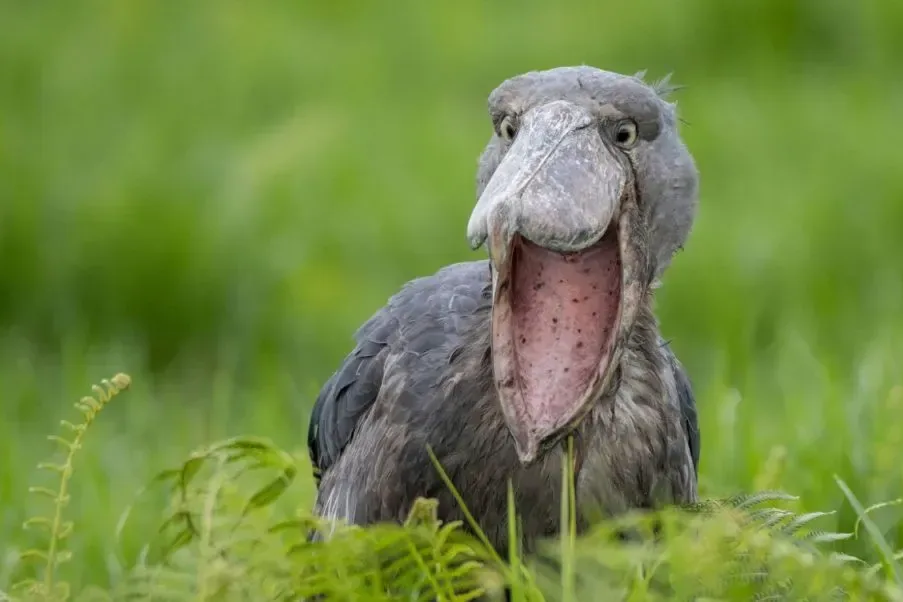
Uganda is one of Africa's best birding countries, with over 1,000 species. Top birds include the shoebill at Mabamba Swamp and the Nile delta, Albertine Rift endemics in Bwindi and Mgahinga, and Central African forest birds in Semuliki. Birding is good all year, with migrants from November to April. Bring 8x42 binoculars, an East Africa field guide and a local bird guide, and plan 10 to 14 days to cover the main habitats.
Why Uganda Is One of Africa's Best Birding Destinations
Uganda sits where several of Africa's great habitats meet. The East African savannah, the West African and Congo lowland forests, and the mountains of the Albertine Rift all reach into the country. As a result, birds from very different regions live within a few hours of each other.
This Uganda birding guide highlights three reasons birders keep coming back:
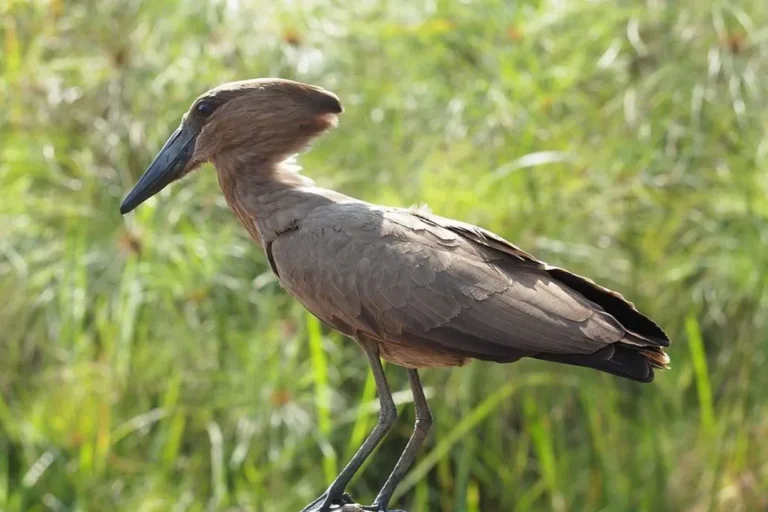
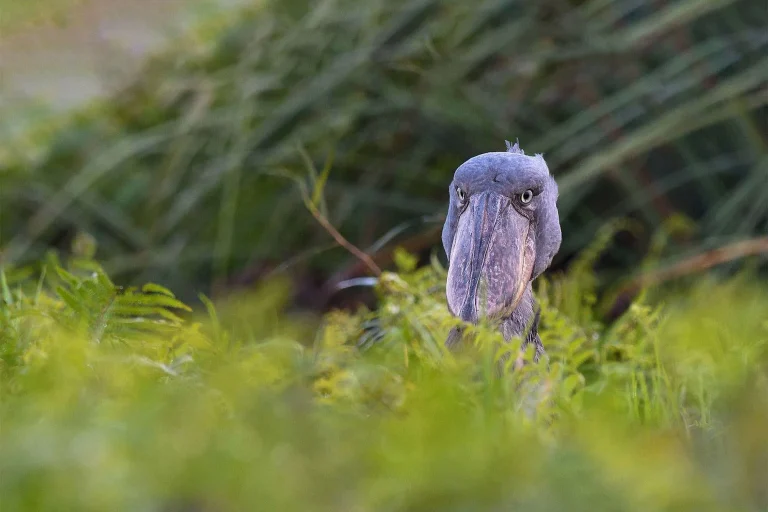
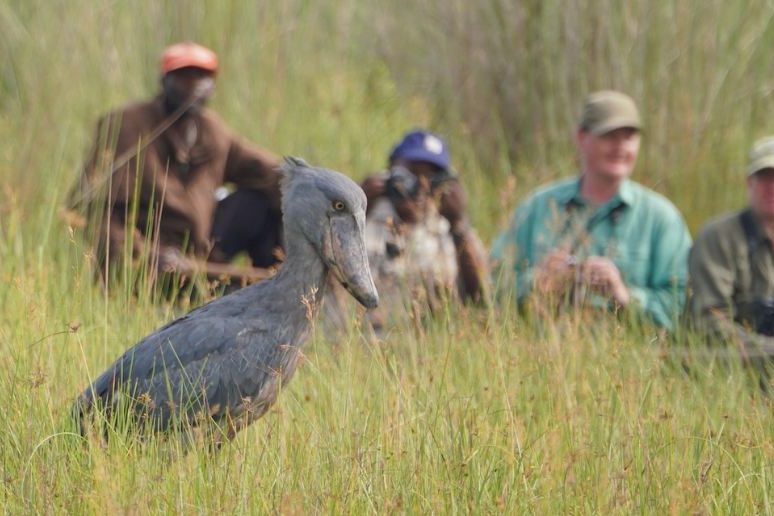
- The shoebill. Uganda is one of the most reliable places in the world to see this prehistoric-looking bird.
- Albertine Rift endemics. The forests of southwestern Uganda hold many birds found only in this mountain region of Central Africa.
- Huge daily lists. In a single day in the right habitats, a good birder with a skilled guide can record well over 100 species.
Uganda is also a safe, English-speaking country with well-organised national parks, so it is an easy first African birding destination.
Top Birds to See in Uganda
Every birder has a wish list, and this Uganda birding guide starts with the birds most people travel for. These are the birds most visitors hope to tick off, with the best places to look for them.
| Bird | Where to look |
|---|---|
| Shoebill | Mabamba Swamp, Murchison Falls (Nile delta), Lake Mburo |
| Great blue turaco | Kibale Forest, Bigodi Wetland, Budongo Forest |
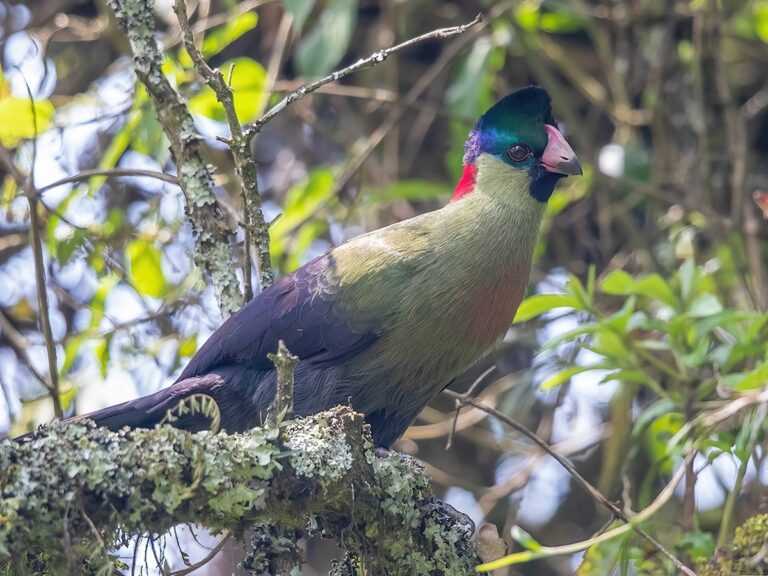
| Rwenzori turaco | Mgahinga, Bwindi (Ruhija), Rwenzori Mountains |
| African green broadbill | Bwindi (Mubwindi Swamp trail) |
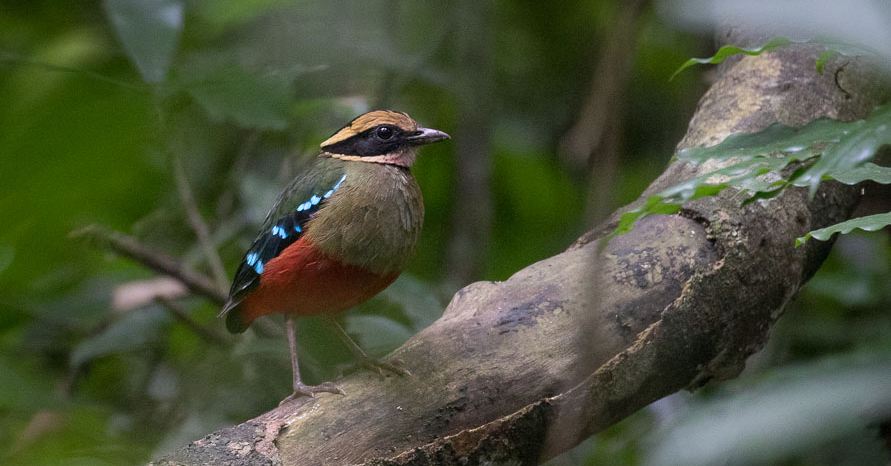
| Green-breasted pitta | Kibale Forest |
| Grauer's swamp warbler | Echuya Forest, Mubwindi Swamp |
| African finfoot | Lake Mburo, Mabamba |
| Fox's weaver | Seasonal wetlands of eastern Uganda |
| Karamoja apalis | Kidepo Valley |
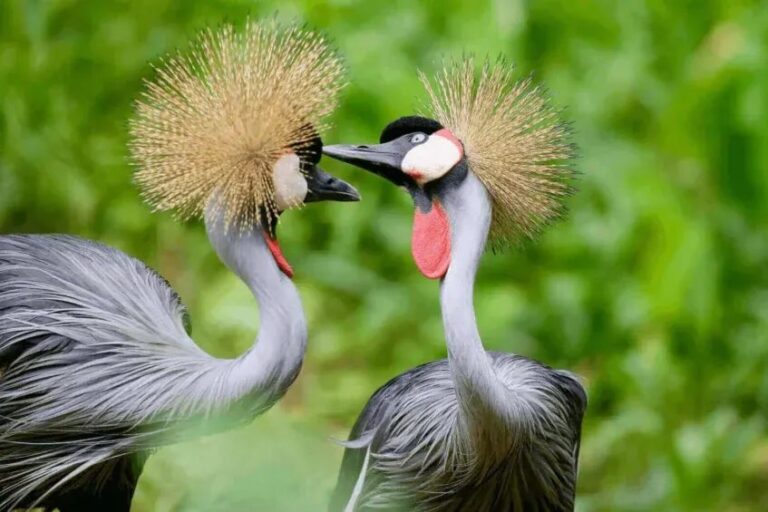
Beyond this Uganda birding guide's shortlist, add colourful common birds such as the grey crowned crane, Uganda's national bird, along with bee-eaters, kingfishers, sunbirds and hornbills, and your list grows quickly.
Uganda Birding Guide to the Best Birding Spots
This part of the Uganda birding guide covers the places every serious birding itinerary should include.
Mabamba Swamp
Mabamba is a Ramsar wetland on the shores of Lake Victoria, about an hour from Entebbe. Local guides paddle you through the papyrus channels by canoe in search of the shoebill, along with jacanas, kingfishers, herons and papyrus specialists. It is the perfect first or last day of a trip. Read our guides to Mabamba Swamp and the shoebill stork in Uganda.
Murchison Falls National Park
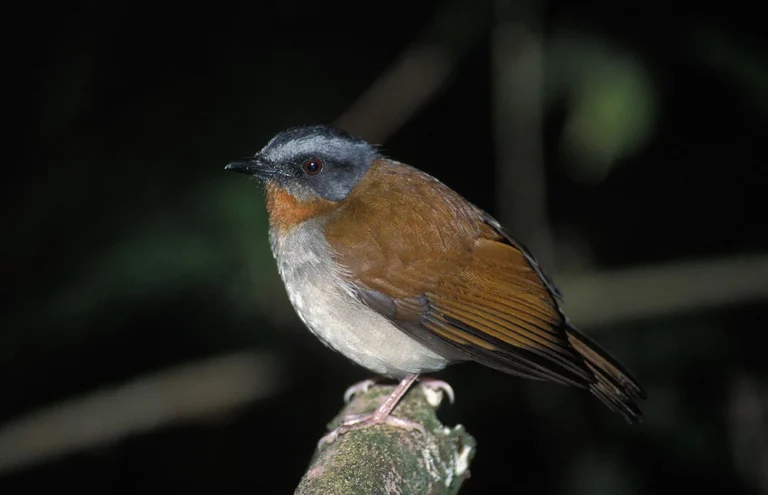
Uganda's largest park combines savannah, riverine forest and the Nile. A boat trip to the Nile delta is one of the best chances to see the shoebill in the wild, and the Budongo Forest nearby holds forest birds such as the Puvel's illadopsis. See birding in Murchison Falls National Park.
Bwindi and Mgahinga
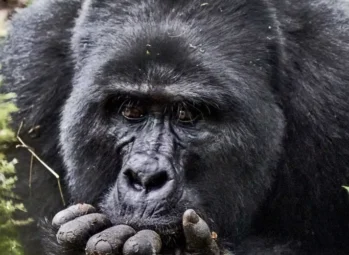
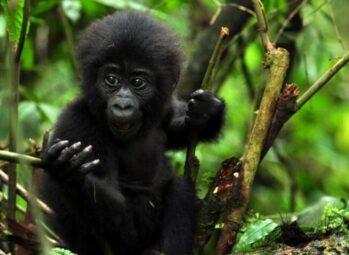
The mountain forests of the southwest are the heart of Albertine Rift birding. Bwindi's Ruhija sector and the trail to Mubwindi Swamp are famous for the African green broadbill, while Mgahinga adds the Rwenzori turaco and Rwenzori double-collared sunbird. Many birders combine birding here with gorilla trekking, and every Uganda birding guide rates this region highly. See birding in Bwindi Impenetrable National Park.
Kibale Forest and Bigodi Wetland
Kibale is best known for chimpanzees, but its forest also holds the green-breasted pitta and many forest birds. The community-run Bigodi Wetland Sanctuary next door is one of the easiest places to see the great blue turaco.
Semuliki National Park
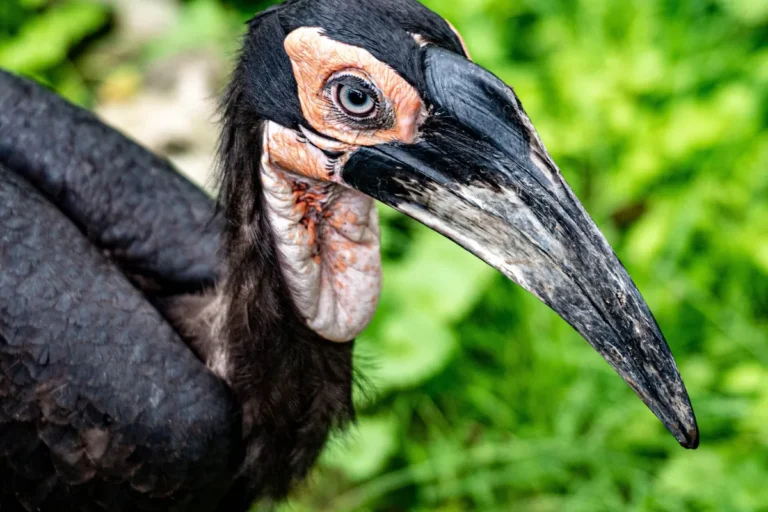
On the border with the Democratic Republic of Congo, Semuliki is an extension of the Ituri Forest. It holds Central African birds rarely seen anywhere else in East Africa, including several hornbills and forest kingfishers. See birding in Semliki National Park.
Queen Elizabeth National Park
With around 600 species, Queen Elizabeth is one of Africa's richest parks for birds. The Kazinga Channel boat cruise brings pelicans, skimmers, fish eagles and huge flocks of waterbirds, while the savannah adds raptors and larks.
Lake Mburo National Park
Close to Kampala, Lake Mburo is ideal for acacia woodland birds such as the red-faced barbet, and boat trips on the lake can reveal the African finfoot. See birding in Lake Mburo National Park.
Best Time to Go Birding in Uganda
A common question in any Uganda birding guide is when to go. The short answer: birding in Uganda is good all year.
- November to April: migrants from Europe and Asia, such as bee-eaters, warblers, waders and birds of prey, join the resident birds, so lists are longest.
- Rainy seasons (March to May and October to November): many birds breed, sing and wear their brightest colours. Expect some muddy forest trails.
- Dry seasons (June to August and December to February): trails are easier and it is a great time to combine birding with gorilla and chimpanzee trekking.
Whatever month you choose, the advice in this Uganda birding guide is the same: mornings are the most productive time everywhere. Plan to be on the trail at first light.
Plan your Uganda birding trip with expert guides
Tell us your target species, your dates and your experience level. Our team will design a birding itinerary with skilled Ugandan bird guides and send you a quote within 24 hours.
Uganda Birding Guide to Essential Gear
This Uganda birding guide keeps the kit list short and practical.
- Binoculars: 8x42 or 10x42 models are ideal. In dark rainforest, 8x42 binoculars give a brighter image and a wider view.
- Field guide: a regional book covering East Africa, such as Birds of East Africa, includes almost every species you will meet in Uganda.
- Clothing: neutral greens and browns, long sleeves and trousers for forests, a light rain jacket, and waterproof hiking boots for muddy trails.
- Extras: a hat, sunscreen, insect repellent, a water bottle, a small backpack and a power bank.
- Optional: a spotting scope is useful on lakes and in open savannah. Your guide may carry one.
Birding Apps and Field Guides
Apps are a great companion to a printed Uganda birding guide or field book.
- Merlin Bird ID: download the East Africa bird pack before you travel. It suggests species from photos and recorded songs.
- eBird: record your daily checklists. Your sightings help scientists track bird populations in Uganda.
- Offline maps: many parks have weak or no signal, so download maps and bird packs in advance.
Apps do make mistakes with African birds, especially in forests where many species sound alike. Use them alongside your field guide and your bird guide's knowledge.
Field Skills for Birding in Uganda
Good field skills help you see far more, whatever your level. This section of the Uganda birding guide covers the habits experienced birders use every day.
Forest Birding
In Bwindi, Kibale and Semuliki, you will hear many more birds than you see. Move slowly, stop often and listen. Watch for mixed feeding flocks, where many species move through the canopy together. Your guide will often find a bird by its call, then help you locate it.
Savannah and Wetland Birding
Open habitats are easier for beginners. Scan treetops for raptors and rollers, check the water's edge for herons and kingfishers, and use boat trips to get close to waterbirds without disturbing them.
Identify by Shape and Behaviour
Before focusing on colour, notice size, bill shape, tail length and how the bird moves. Shape and behaviour are often the fastest way to narrow down a species.
Bird Photography in Uganda
Photography is a bonus in this Uganda birding guide, not a must. Uganda is a rewarding place for bird photography, from colourful turacos to the shoebill in its swamp.
- Use a telephoto lens of 300mm or more. A modern superzoom camera is a good lighter option.
- Raise your ISO in forests, where light is low under the canopy.
- Shoot from boats at Mabamba, Murchison and the Kazinga Channel for close, eye-level views.
- Focus on the eye and use a fast shutter speed to freeze movement.
- Protect your gear with a rain cover and dry bags in the wet season.
Ethical Birding in Uganda
Responsible birding protects Uganda's birds and the communities who look after them. This Uganda birding guide recommends a few simple rules:
- Keep your distance and never approach nests or chase birds for a photo.
- Use playback sparingly and only as your guide advises.
- Stay on trails and follow Uganda Wildlife Authority park rules.
- Support local communities by using community guides at places such as Mabamba and Bigodi.
Why Bird With a Ugandan Bird Guide
The best Uganda birding guide is a person, not a book. Uganda has a strong community of professional bird guides who know hundreds of calls by heart and know exactly where each special bird feeds, roosts and sings.
A skilled guide can find a shy forest bird in minutes that might take you days alone. With a guide, you see more species, learn faster and spend your time enjoying birds instead of searching for them. All our birding tours include an experienced bird guide.
Planning Your Uganda Birding Trip
Use this checklist from our Uganda birding guide to plan your trip:
- Choose your trip length. One day at Mabamba gives you the shoebill. Five to seven days covers the shoebill and savannah birds. Ten to fourteen days covers the main habitats and Albertine Rift endemics.
- List your target birds. Share them with us so we can plan the route and choose the right guide.
- Check entry rules. Most visitors need an e-visa and a yellow fever certificate. See our Uganda visa requirements guide.
- Budget for park fees. Birding does not need a special permit, but national park entry for foreign visitors costs about US$35 to US$45 per person per day.
- Add primates if you like. The best birding forests are also home to gorillas and chimpanzees, so many birders add a trek.
Compare all our Uganda birding tours, or see sample routes in our Uganda birding itinerary guide.
Uganda Birding Tours
Put this Uganda birding guide into practice on one of our guided birding tours. Every tour includes an expert bird guide and can be adjusted to your target species and dates.
Looking for the full experience? Our 17-Day Uganda Birding Tour covers every major birding region in the country.
Go Birding in Uganda With Tulambule
Send us your target species, dates and group size. We will plan your birding tour with expert guides and send a free quote within 24 hours.
Request a QuoteChat on WhatsApp
UTB Licence UTB/RTT/TT/2025/101877 • Accredited by UWA • Member of AUTO • Rated 4.9 on TripAdvisor