Uganda hiking safaris are one of the most rewarding ways to experience East Africa on foot. Instead of watching the landscape pass by a vehicle window, you walk through it, feeling the forest floor, hearing the birds and meeting the communities who live along the trails.
Uganda is known as the Pearl of Africa for good reason. Within one country you'll find snow-capped mountains, ancient rainforests, extinct volcanoes, thundering waterfalls and rolling tea plantations, all connected by trails that few travellers ever explore.
Most visitors come for the mountain gorillas, but that is only the beginning. If you have a good pair of walking shoes and a sense of adventure, Uganda offers some of Africa's most beautiful and least crowded hikes. This guide covers the best places to go, when to travel, how fit you need to be and what to pack.
Why Choose Uganda Hiking Safaris?
Uganda packs an extraordinary range of landscapes into a small area. In a single trip, you can trek through misty bamboo forest in the morning and watch elephants on the savannah by evening.
The trails are also refreshingly quiet. Unlike Kilimanjaro, where hundreds of climbers share the same routes in peak season, many Ugandan hikes see only a handful of visitors each day. On some multi-day treks, you may not meet another group at all.
Uganda hiking safaris also bring you closer to local life. Trails pass through villages, coffee farms and banana plantations, giving you the chance to meet farmers, taste fresh local food and enjoy community-based tourism experiences that most tourists never encounter.
Finally, hiking in Uganda supports conservation. Park fees collected by the Uganda Wildlife Authority help protect endangered species like mountain gorillas and chimpanzees, while local guides, porters and community projects earn a living from responsible tourism.
Best Places for Uganda Hiking Safaris
1. Rwenzori Mountains National Park
The Rwenzori Mountains are the crown jewel of Uganda hiking safaris. Known since ancient times as the Mountains of the Moon, they form Uganda's jagged western border with the Democratic Republic of Congo and are a UNESCO World Heritage Site, recognised for both their beauty and their remarkable biodiversity.
The Rwenzoris are the highest block mountains in Africa, meaning they were pushed up by movements in the earth's crust rather than formed by volcanoes. The highest point is Margherita Peak (5,109 metres) on Mount Stanley, Africa's third-highest mountain. Its neighbouring summits include Alexandra Peak (5,091 metres) and Albert Peak (5,087 metres).
Along with Kilimanjaro and Mount Kenya, the Rwenzoris are one of only three mountain ranges in Africa with permanent glaciers. The hike takes you through dense rainforest on the lower slopes, then bamboo zones, and finally into the strange afro-alpine moorland, where giant lobelias and groundsels grow taller than a person.
What makes the Rwenzoris special is their sense of isolation. Few people make the journey, so hikers often feel they have the mountains to themselves. New plant and animal species are still being recorded here.
You don't need to be a mountaineer to enjoy the Rwenzoris. Short day hikes in the foothills are perfect for beginners, while experienced trekkers can take on multi-day circuits or a full summit attempt on Margherita Peak, which requires technical skills and roughly 7 to 9 days.
2. Bwindi Impenetrable National Park
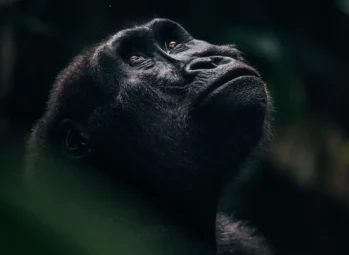
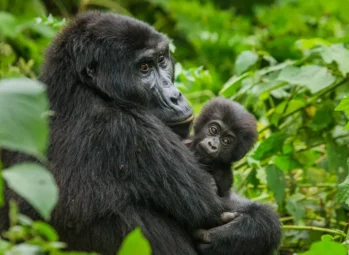
Bwindi offers one of the most memorable hikes in the world: tracking mountain gorillas through ancient rainforest. Bwindi Impenetrable National Park is a UNESCO World Heritage Site and home to around half of the world's mountain gorillas, with the rest living in the Virunga Volcanoes shared by Uganda, Rwanda and the Democratic Republic of Congo.
The mountain gorilla population is tiny, with just over 1,000 individuals left in the wild. Bwindi's forest ranges from about 1,160 to 2,607 metres above sea level, and trekking through its steep, muddy and often overgrown terrain is a real adventure. Weather can change quickly, so expect sun, rain and cool mist on the same day.
A gorilla trekking permit in Uganda costs US$800 per person and allows you to spend one magical hour with a habituated gorilla family. Permits are limited, so booking well in advance is essential. You can start planning on our best Uganda gorilla safaris page.
Beyond gorillas, Bwindi offers forest nature walks, waterfall trails, excellent birding and visits to the Batwa people, the original forest dwellers who share their traditional knowledge of hunting, gathering and medicinal plants.
3. Mount Elgon National Park
Mount Elgon is an extinct shield volcano straddling the border between Uganda and Kenya. Its highest point, Wagagai Peak (4,321 metres), lies on the Ugandan side and offers views across both countries.
Elgon was once thought to be Africa's tallest mountain, before millions of years of erosion reduced it to its current height. It still has one of the largest volcanic bases in the world and one of the largest calderas, a huge crater measuring around 40 kilometres across.
Hiking Mount Elgon reveals rolling hills, ancient caves formed by lava, steep cliffs, gorges, waterfalls, rivers, hot springs and rare plants. The main summit routes, including the Sasa and Sipi trails, take about 4 to 6 days.
Unlike more famous mountains, Elgon is calm and uncrowded, making it ideal for hikers seeking peace and solitude. All hikes are led by a Uganda Wildlife Authority ranger guide, which keeps you safe and adds real local knowledge to the experience.
4. Sipi Falls
Sipi Falls is a series of three beautiful waterfalls in the foothills of Mount Elgon, just outside the national park. The tallest drops roughly 100 metres over a dramatic cliff edge, and many visitors consider Sipi the most beautiful waterfall in Uganda.
The full hike to all three falls covers about 7 kilometres and takes around 4 hours. The trail winds through villages, coffee farms and banana plantations, with sweeping views of the cliffs, the green slopes of Mount Elgon and, on clear days, the distant plains of the Karamoja region.
Sipi is a highlight of many Uganda hiking safaris because it's easy to reach and suits most fitness levels. You can also join a local coffee tour, where farmers show you how Arabica coffee is grown, roasted and brewed.
While it's possible to explore on your own, we recommend a local guide. They'll explain the plants and wildlife along the way and help you pass respectfully through private farmland.
5. Mgahinga Gorilla National Park and the Virunga Volcanoes
Mgahinga Gorilla National Park in southwestern Uganda protects three of the eight Virunga Volcanoes, which rise along the borders of Uganda, Rwanda and the Democratic Republic of Congo. The volcanoes on the Ugandan side are dormant, while the two active ones in the range lie in Congo.
The three peaks are Mount Muhabura (4,127 metres), Mount Sabinyo (3,645 metres) and Mount Gahinga (3,474 metres). Each offers a different challenge, from Gahinga's gentle climb to a beautiful crater swamp, to Muhabura's long, steep ascent to a small summit crater lake.
Mount Sabinyo, whose name means "old man's teeth," is the most thrilling hike. Its rugged terrain includes steep ridges and wooden ladders, but the reward is spectacular. At the summit, you can stand in Uganda, Rwanda and Congo at the same time.
Mgahinga also offers gorilla trekking, golden monkey tracking and the Batwa Trail, a cultural walk where Batwa guides share how their ancestors lived in these forests for thousands of years.
6. Kibale Forest and the Fort Portal Crater Lakes
Kibale Forest National Park is famous for chimpanzee trekking, one of the most exciting short hikes in Uganda. Walking through the forest as chimps call and crash through the trees above you is an experience few travellers forget. Not sure which primate trek suits you best? Read our guide to gorilla trekking vs chimpanzee trekking in Uganda.
Just outside the park, the countryside around Fort Portal is dotted with dozens of crater lakes. Gentle walking trails link the lakes, tea estates and small villages, offering some of the prettiest scenery in western Uganda. The nearby Bigodi Wetland Sanctuary walk is also excellent for birds and primates.
7. Murchison Falls National Park
Most visitors see Murchison Falls from a boat, but the short hike to the top of the falls is far more dramatic. Here, the entire River Nile forces its way through a gap just a few metres wide before plunging into the gorge below with incredible power.
The trail takes less than an hour and is easy for most people. Combining the boat ride with the hike to the top gives you the best of both views, and the walk can easily be added to any classic Murchison safari.
8. Kidepo Valley National Park
For a true wilderness experience, Kidepo Valley National Park in remote northeastern Uganda offers guided nature walks across open savannah and rocky hills. Walking with an armed ranger, you may spot zebras, ostriches and antelope, along with sweeping views of the Narus Valley.
Kidepo also gives you the chance to visit the Karamojong and Ik communities, whose traditional ways of life remain strong in this rugged corner of the country.
Best Time for Uganda Hiking Safaris
Uganda can be visited all year round, but the best time to visit Uganda for hiking is during the two dry seasons: December to February and June to September. Trails are firmer, views are clearer and river crossings are easier.
The rainy seasons, from March to May and October to November, bring muddier trails and more frequent showers. However, the forests are at their greenest, and you'll find fewer visitors and more flexible availability at lodges.
For high-altitude hikes like the Rwenzoris and Mount Elgon, the dry seasons are strongly recommended, as rain at higher altitudes can make conditions cold, slippery and challenging.
How Fit Do You Need to Be?
Uganda hiking safaris suit a wide range of fitness levels. Sipi Falls, the Murchison top-of-the-falls walk and the crater lake trails near Fort Portal are suitable for most healthy travellers. For more easy options, see our list of the best day hikes in Uganda anyone can do.
Gorilla and chimpanzee trekking require moderate fitness. Treks can last anywhere from one to several hours, depending on where the animals are, often over steep and slippery ground. Porters are available to carry your bag and help you on difficult sections, and hiring one also supports a local family.
Multi-day climbs on Mount Elgon, Muhabura and the Rwenzoris need good stamina and some hiking experience. For these, we recommend a few weeks of regular walking, stair climbing or hill training before your trip.
What to Pack for Hiking in Uganda
Packing well makes a big difference to your comfort on the trail. Here's what we recommend:
- Waterproof hiking boots with good grip, already broken in before your trip
- A lightweight rain jacket, as showers can happen even in the dry season
- Long trousers and long-sleeved shirts to protect against nettles, thorns and insects
- Gardening gloves for gripping vegetation on steep gorilla and chimp treks
- Warm layers, a hat and gloves for high-altitude hikes like the Rwenzoris and Elgon
- Insect repellent, sunscreen and sunglasses
- A reusable water bottle and energy snacks
- A small daypack with a rain cover
- Binoculars and a camera with extra batteries
For multi-day climbs, your operator will advise on extra gear such as sleeping bags, gaiters and trekking poles.
Plan Your Uganda Hiking Safaris with Tulambule
At Tulambule Uganda Safaris, we design Uganda hiking safaris around your interests, fitness level and travel dates. Whether you want a relaxed walk to Sipi Falls, a gorilla trek in Bwindi or a full Rwenzori expedition, our team handles permits, transport, accommodation and experienced local guides.
We can also combine hiking with classic Uganda safaris, cultural visits and relaxing lake stays, giving you a complete taste of the Pearl of Africa. If you love adrenaline, explore our Uganda adventure tours, or if you're short on time, our short Uganda safaris make it easy to fit a hike into a busy schedule.
Frequently Asked Questions About Uganda Hiking Safaris
Is hiking in Uganda safe?
Yes. Hikes in national parks are led by Uganda Wildlife Authority rangers who know the terrain and wildlife well. Travelling with a licensed tour operator adds an extra layer of safety and support.
Do I need a guide to hike in Uganda?
Inside national parks, a ranger guide is required for most hikes. Outside the parks, such as at Sipi Falls, a guide is not compulsory but is strongly recommended.
Which is the hardest hike in Uganda?
The climb to Margherita Peak in the Rwenzori Mountains is Uganda's toughest hike. It involves glacier walking and requires good fitness, technical equipment and several days on the mountain.
Can beginners enjoy Uganda hiking safaris?
Absolutely. Sipi Falls, the Fort Portal crater lakes, the Murchison top-of-the-falls walk and Rwenzori foothill day hikes are all perfect for beginners.
How much does a gorilla trekking permit cost in Uganda?
A gorilla trekking permit in Uganda costs US$800 per person. Permits are limited, so we recommend booking several months in advance.
Continue Planning Your Trip
Ready to lace up your boots and explore Uganda on foot? Browse our ready-made safari itineraries, create your own adventure with our Build My Safari planner, or contact us today and our team will help you plan the perfect Uganda hiking safari.