Most safari travellers arriving in Uganda know they will see gorillas in Bwindi or chimpanzees in Kibale — but very few know anything meaningful about gorilla and chimpanzee nests before they step into the forest. These sleeping structures reveal intelligence, learned behaviour, social structure, health strategies, and evolutionary history all at once.
Whether you are preparing for a gorilla trek in Bwindi Impenetrable Forest, a chimpanzee habituation experience in Kibale, or a visit to Ngamba Island Chimpanzee Sanctuary, understanding gorilla and chimpanzee nests will completely transform what you notice during your time in the forest.
Here are 10 surprising things you never knew — and why they make a Uganda primate safari one of the most intellectually rewarding wildlife experiences on earth.
1. Gorilla and Chimpanzee Nests Are Built Fresh Every Single Night
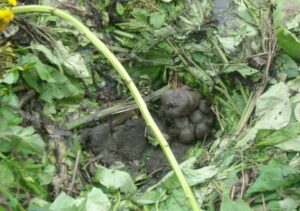
One of the most astonishing facts about gorilla and chimpanzee nests is that neither species ever sleeps in the same nest twice. Every evening, without exception, each individual builds a completely fresh sleeping structure from scratch. The previous night's nest is abandoned and left to decompose on the forest floor or in the tree canopy.
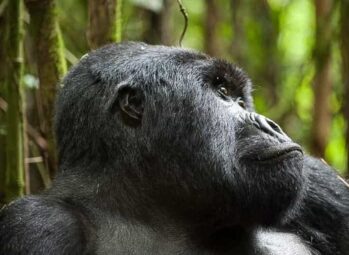
For mountain gorillas in Bwindi and Mgahinga Gorilla National Park, nest building begins roughly half an hour before dusk. It takes as little as 5 to 25 minutes depending on the individual's age, experience, and available materials. The gorilla pulls surrounding branches, leaves, and vegetation inward, tucking them into a firm circular sleeping platform.
Chimpanzees in Kibale Forest, Budongo, and Kyambura Gorge follow the same daily routine but are generally more elaborate nest builders. They spend longer selecting the right tree, weaving interlocking branches together before adding softer leaf material as cushioning. According to the Dian Fossey Gorilla Fund, gorillas sleep between 10 and 12 hours per night in these freshly built structures.
In rare circumstances — approximately 4.1% of cases according to research on western lowland gorillas — a nest may be briefly reused. This happens primarily during heavy rainfall when an old nest provides immediate shelter. Otherwise, a fresh gorilla or chimpanzee nest is built every single evening without exception.
2. These Animals Weigh Far More Than You Think — And Still Build Every Night
Understanding the physical scale of gorillas and chimpanzees makes their nesting behaviour even more extraordinary. A mountain silverback — the dominant male leading every gorilla family in Bwindi — typically weighs between 160 and 220 kilograms. Some exceptional individuals reach up to 267 kilograms, making them two to three times heavier than the average adult human male.
Female mountain gorillas average around 90 kilograms, while juveniles range from 20 to 70 kilograms depending on age. The silverback also possesses an estimated 4 to 10 times the upper body strength of an average human. That an animal of this scale builds a structurally sound sleeping platform from forest vegetation in under 30 minutes every single night is a remarkable feat.
Chimpanzees are considerably lighter. Adult male chimps at Kibale National Park weigh between 40 and 70 kilograms, while adult females weigh between 27 and 50 kilograms. Despite their smaller frames, chimpanzees build proportionally more complex gorilla and chimpanzee nests — positioning them high in the forest canopy between 4.5 and 24 metres above the ground.
A 60-kilogram chimpanzee constructing an elevated nest 15 metres up in a Kibale tree fork is a genuine feat of engineering and spatial intelligence that never fails to impress visitors during the Chimpanzee Habituation Experience.
3. Each Gorilla and Chimpanzee Nest Is Built and Occupied by One Individual
In both gorilla troops and chimpanzee communities, each nest is built and occupied by exactly one individual. There is no shared sleeping structure among adults. Every gorilla in a family group — from the dominant silverback to sub-adult males, adult females, and older juveniles — constructs and sleeps in their own nest each night.
The nests are built in close proximity to one another, typically clustered within a small area. This reinforces group cohesion and allows members to maintain auditory and olfactory contact throughout the night. The silverback typically positions his nest at the perimeter of the cluster — placing himself between potential threats and the rest of the family.
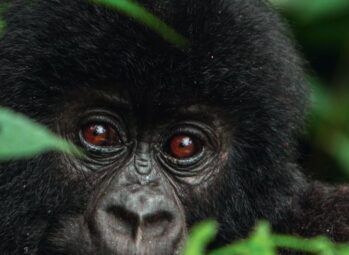
The one important exception is infant gorillas and chimpanzees. Young infants too small to build their own nests sleep in the same nest as their mother. For gorillas, this mother-infant sharing continues until the juvenile is approximately 3 years old. For chimpanzees at Kibale and Budongo Forest Reserve, the pattern is the same.
Once the mother gives birth to a new infant — typically after 4 years — the older juvenile must begin building independently. This transition moment is one of the most closely watched developmental milestones in gorilla and chimpanzee research.
4. Gorilla and Chimpanzee Nest Building Is a Learned Skill — Not Instinct
Perhaps the most intellectually striking fact about gorilla and chimpanzee nests is that neither species is born knowing how to build one. Nest building is a learned behaviour — acquired through years of careful observation of mothers and other group members — not a biological instinct.
Young gorillas begin attempting to build their own nests from around 3 years of age. These early efforts are simple and loose, offering little real stability or insulation. By the time they sleep independently — typically between 4 and 6 years old — most juveniles build functional nests with growing competence.
Chimpanzee infants follow a nearly identical learning curve. Research at Kibale's Ngogo study site confirmed that older infants built nests at significantly higher rates than younger ones. The youngest infants — under one year old — rarely attempted independent gorilla and chimpanzee nests at all, relying entirely on their mothers.
This places nest building alongside stone tool use and medicinal plant self-medication as a form of cultural transmission. What the young ape learns from its mother in Bwindi or Kibale directly shapes how it sleeps for the rest of its life — a remarkable echo of how human children learn essential skills.
5. Gorilla and Chimpanzee Nests Are Built in Completely Different Locations
One of the clearest differences between gorilla and chimpanzee nests is where they are constructed. Mountain gorillas in Bwindi and Mgahinga build the vast majority of their nests directly on the ground. Dominant silverbacks almost always nest at ground level, while females sometimes build slightly elevated nests in low vegetation.
Chimpanzees take the opposite approach entirely. Wild chimps at Kibale Forest, Budongo, and Kyambura Gorge build their nests high in the forest canopy — typically between 4.5 and 24 metres above the ground. This elevation is directly linked to predator avoidance, particularly from leopards, the primary nocturnal threat to chimpanzees.
A landmark study of the Sebitoli chimpanzee community in Kibale National Park found that chimps also select nesting trees based on aromatic properties. The leaves of certain preferred trees showed repellent activity against Anopheles mosquitoes in laboratory testing — meaning chimpanzees may be choosing their gorilla and chimpanzee nests partly for chemical protection against malaria vectors.
The elevation difference reflects each species' ecological reality. Mountain gorillas, with few natural predators, can sleep safely on the dense forest floor. Chimpanzees, smaller and more vulnerable, use height as a primary defence mechanism every single night. Read more about these differences on our Gorilla vs Chimpanzee page.
6. What Actually Happens Inside the Nest at Night
Understanding what goes on inside gorilla and chimpanzee nests after dark adds a deeply human dimension to your Uganda safari experience. Both species sleep between 10 and 12 hours per night — significantly more than the average human — an adaptation to their high-fibre, low-calorie diet that requires considerable energy to digest. See What Mountain Gorillas Eat
Inside a gorilla nest in Bwindi, the night is rarely completely silent. Silverbacks are known to grunt softly during sleep — a contact call that reassures the rest of the group throughout the night. Family members adjust posture, turn over, and occasionally interact quietly in the darkness. Infants nurse from their mothers, maintaining the close physical bond central to gorilla family life.
Chimpanzees in Kibale's elevated nests are lighter sleepers than gorillas. They wake more easily to sounds in the forest and have been documented vocalising briefly and resettling multiple times through the night. Rain is a particular disruptor — chimps have been observed hunching over their nests during heavy downpours or descending to seek ground shelter when tree nests offer insufficient cover.
Young gorilla and chimpanzee infants sleep in physical contact with their mothers throughout the night — nursing, being groomed, and moving together if the mother shifts position. This constant contact during sleep is the foundation of the mother-infant bond that shapes both species' social development. Learn more about these bonds on our Uganda Wildlife Safaris page.
7. Under What Circumstances Would a Gorilla or Chimpanzee Nest Be Reused?
Gorilla and chimpanzee nests are almost always used for one night only. However, specific and scientifically documented circumstances can lead to a nest being occupied for more than one night or revisited by the same individual.
For gorillas in Bwindi, the most commonly observed exception is extreme weather. During heavy rainfall or cold nights, a gorilla may return to or shelter near a previous nest rather than building fresh — particularly if the old structure is still intact and in a sheltered position. Research on western lowland gorillas recorded nest reuse in approximately 4.1% of cases, with weather as the primary driver.
Illness or injury can also affect nesting behaviour. A gorilla or chimpanzee that is unwell may move shorter distances and build a simpler nest, or in rare cases rest in the same spot for a second consecutive night. This is a key behavioural signal that field rangers and veterinary teams at Uganda Wildlife Authority monitor closely within habituated groups.
In chimpanzee communities at Kibale and Budongo, certain high-quality trees are returned to across multiple nights — not as a reuse of the physical nest but as fidelity to a preferred nesting tree with structural security and insect-repelling properties. Researchers describe this as active, intelligent evaluation of sleeping location quality that goes far beyond simple habit.
8. Gorilla and Chimpanzee Nests Serve Multiple Biological Functions
The most obvious purpose of gorilla and chimpanzee nests is comfortable sleep. But scientific research has revealed these structures serve a range of biological functions that go far beyond simple rest — all of which are directly relevant to how these species survive in Uganda's forests.
Thermoregulation: The layered vegetation acts as natural insulation against cold nights. In Bwindi — sitting between 1,160 and 2,607 metres above sea level — night temperatures drop sharply in the mist and rain. A well-constructed gorilla nest provides meaningful warmth through its compressed leaf and branch layers.
Parasite and hygiene protection: Building a fresh nest every night means gorillas and chimps never return to a site where parasites or bacteria have had time to multiply. Research confirms that abandoned gorilla and chimpanzee nests host significantly higher parasite levels than fresh ones — making nightly renewal a clear hygiene adaptation.
Mosquito repellence: As confirmed by the Sebitoli community study at Kibale National Park, chimps select nesting trees with aromatic leaves that repel Anopheles mosquitoes — a form of environmental self-medication that continues to astonish primatologists worldwide.
Social cohesion: The spatial clustering of gorilla and chimpanzee nests within a family or community reinforces social bonds. Sleeping within earshot and scent-range of family members throughout the night strengthens group ties and ensures rapid collective response to any nocturnal threat.
9. What Happens to Abandoned Gorilla and Chimpanzee Nests
Once a gorilla family or chimpanzee community moves on from a nesting site, the abandoned structures become some of the most scientifically valuable objects in Uganda's forests — and eventually play a meaningful ecological role.
Field rangers from Uganda Wildlife Authority and the Jane Goodall Institute walk transect lines through Bwindi, Kibale, and Budongo each morning, recording every fresh nest they find. From these counts they estimate group size, track movement, and monitor health across habituated communities. The 2025 Bwindi census confirming 426 chimpanzees used nest counting as a core methodology.
Abandoned gorilla and chimpanzee nests also yield biological samples of enormous conservation value. Hair, skin cells, and faecal deposits left in or near a nest allow researchers to extract DNA, assess parasite loads, and identify individual animals — all without any direct disturbance to the animals themselves.
As abandoned nests decompose over days and weeks, they return organic matter and nutrients directly to the forest floor. The decomposing vegetation enriches the soil, and in some cases the cleared ground around an old nest allows sunlight to penetrate and stimulate new plant growth. What begins as a sleeping platform ends as a small act of forest regeneration. Read more about forest ecosystems on our Uganda Safari Forests and Bushes blog.
10. You Can See Gorilla and Chimpanzee Nests on Your Uganda Safari
One of the most overlooked and memorable experiences on a Uganda primate safari is finding and examining gorilla and chimpanzee nests in their natural setting. Most travellers walk straight past these extraordinary structures in their excitement to find the animals. An experienced guide changes everything.
In Bwindi Impenetrable Forest, Uganda Wildlife Authority trackers begin each morning by finding the previous night's nest site — a cluster of circular ground depressions lined with bent branches, sometimes still warm from the bodies of the animals that slept there hours before your arrival. A silverback's ground nest is typically 1 to 1.5 metres across — built to accommodate an animal weighing up to 220 kilograms.Visit our Uganda gorilla Safari Holiday or fill in a form to contact us directly to book your Uganda Gorilla Safari or any Uganda Wildlife Safaris
In Kibale Forest National Park, the Chimpanzee Habituation Experience takes guests into the forest before dawn at 6.00 am — arriving at the previous night's nest trees just as the community begins to wake. If timing is perfect, you may find chimps still in their gorilla and chimpanzee nests 15 metres above you, stretching and calling as the first light filters through the canopy.
At Ngamba Island Chimpanzee Sanctuary on Lake Victoria — just 23 kilometres by boat from Entebbe — overnight guests can assist staff in physically preparing sleeping nests for rescued chimpanzees. Visit our Ngamba Island page for overnight stay details. This hands-on experience makes gorilla and chimpanzee nests not just something you read about, but something you build, touch, and understand from the inside.
On your next Uganda safari, ask your Tulambule guide to show you the nest sites before you find the animals. The stories these structures tell — of intelligence, learned culture, evolutionary history, and conservation science — are some of the most fascinating in the entire animal kingdom.
Plan Your Uganda Primate Safari with Tulambule Uganda Safaris
Understanding gorilla and chimpanzee nests is just the beginning of what Uganda's extraordinary primate habitats have to reveal. From the ancient montane forests of Bwindi to the chimpanzee communities of Kibale and Budongo, Uganda offers primate experiences of a depth and intimacy that no other destination on earth can match.
At Tulambule Uganda Safaris, we design fully customised gorilla trekking and chimpanzee safari itineraries — handling permits, accommodation, expert guiding, and all logistics from arrival to departure. Our guides know exactly where to find gorilla and chimpanzee nests and bring the science and stories to life in the forest.
Explore our Chimpanzee Trekking in Uganda guide, read our Gorilla vs Chimpanzee comparison, or visit our Uganda Wildlife Safaris page to start building your itinerary. Contact us today to plan your Uganda primate safari — and make sure you ask your guide to find you the nests.
Below are some of the Safaris you may book and experience the nests:
5 Days Uganda Safari Gorillas, Chimps, Wildlife & Culture
6 Day Luxury Safari Uganda: Gorillas, Wildlife & Culture
6 Day Uganda Safari, Chimps, Gorillas and Wildlife
6-Day Luxury Rwanda & Uganda gorilla Tour
7 Days Uganda Safari, Gorilla, Chimps, Culture & Wildlife
7 Days Uganda Birding Tour | Shoebills, Chimps, Gorillas, & More
7-Day Uganda Wildlife Safari | Chimps, Gorillas, Big 5 & More!
8 Days Uganda Safari, Big 5, gorillas, Chimps and Tree-Climbing Lions