Akagera National Park is Rwanda's only savannah park and the one place in the country where you can see the Big Five. Most travellers know Rwanda for gorilla trekking, but in the far east of the country, on the border with Tanzania, rolling grassland, acacia woodland, lakes and papyrus swamps hold lions, leopards, elephants, buffalo and both black and white rhinos, along with giraffes, zebras, hippos and almost 500 bird species.
Akagera is also one of Africa's great conservation comebacks. A park that lost its lions and rhinos in the years after 1994 is now fully restored and pays its own way, and it was named among National Geographic's Best of the World destinations. This complete guide covers 10 amazing things to do in Akagera National Park, plus its story, wildlife, birds, entrance fees, lodges, the best time to visit and how to get there from Kigali.
Akagera National Park at a Glance
| Location | Eastern Province, Rwanda, on the border with Tanzania |
| Size | About 1,122 square kilometres |
| Established | 1934, one of the oldest parks in Africa |
| Habitat | Savannah, acacia woodland, rolling hills, lakes and Central Africa's largest protected wetland |
| Big Five | Lion, leopard, elephant, buffalo, black and white rhino |
| Birds | Almost 500 species, including the shoebill |
| Distance | About 110 km and 2 to 2.5 hours by road from Kigali |
| Managed by | African Parks with the Rwanda Development Board |
Why Visit Akagera National Park?
Akagera turns a Rwanda gorilla trip into a complete African safari. In one short drive from Kigali you swap misty volcanoes for open plains and big game, so you can track mountain gorillas in Volcanoes National Park, see chimpanzees in Nyungwe Forest and then finish with lions and rhinos in Akagera, all in one small, safe country.
It is also quiet. Akagera National Park receives a fraction of the visitors of the Masai Mara or Serengeti, so sightings are rarely crowded. Add boat cruises among hippos and crocodiles on Lake Ihema, night drives, hot air balloon flights and excellent birding, and Akagera offers far more variety than its size suggests.
The Story of Akagera National Park
Named after the Akagera River that runs along its eastern boundary, the park was created in 1934 to protect animals and vegetation in three ecoregions: savannah, mountain and swamp. At that time it covered about 2,500 square kilometres and was one of the richest wildlife areas in Central Africa.
The war of the early 1990s and the 1994 Genocide against the Tutsi left Rwanda in crisis. As hundreds of thousands of refugees returned home and needed land for their families and cattle, much of the park was settled. In 1997 its size was reduced by more than half, to the 1,122 square kilometres protected today, mostly by removing the western grasslands.
Wildlife suffered badly. Elephants raided crops, lions and buffalo threatened cattle, and many animals were hunted or poisoned in response. Lions had disappeared by the early 2000s and the last black rhino was seen in 2007. Poachers also took fish from the park's lakes every night.
In 2010 the Rwanda Development Board invited the conservation group African Parks to manage Akagera together, forming the Akagera Management Company. New fencing, ranger patrols, tracking dogs and a helicopter brought poaching under control, and no high-value species has been lost to poachers since. Then came the return of the big animals:
- 2015: seven lions flown in from South Africa, the first in Rwanda for about 15 years.
- 2017 and 2019: eastern black rhinos brought back from Europe and South Africa.
- 2021: 30 southern white rhinos moved from South Africa.
- 2025: 70 more white rhinos added, one of the largest rhino moves of its kind.
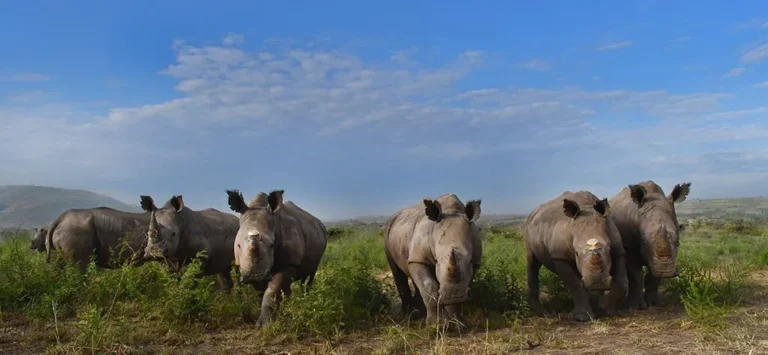
Today Akagera National Park covers all of its running costs from tourism, and 10% of park income goes to neighbouring communities through Rwanda's revenue-sharing scheme, funding schools, clinics and cooperatives. Visitor numbers have grown more than threefold, proof that responsible tourism and conservation can protect both people and wildlife. Learn more about the park's history on Wikipedia.
Animals in Akagera National Park
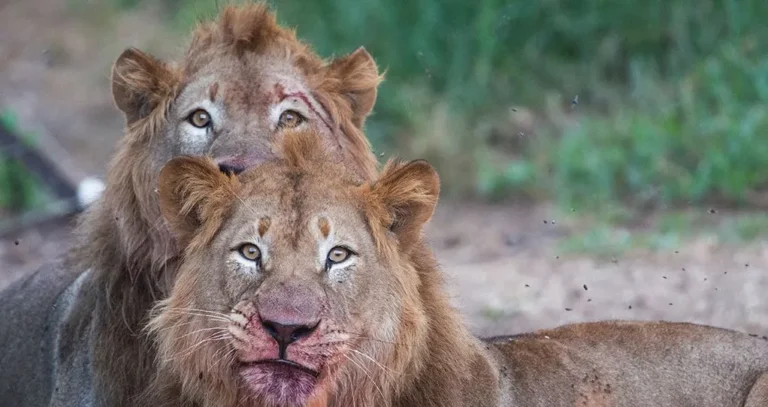
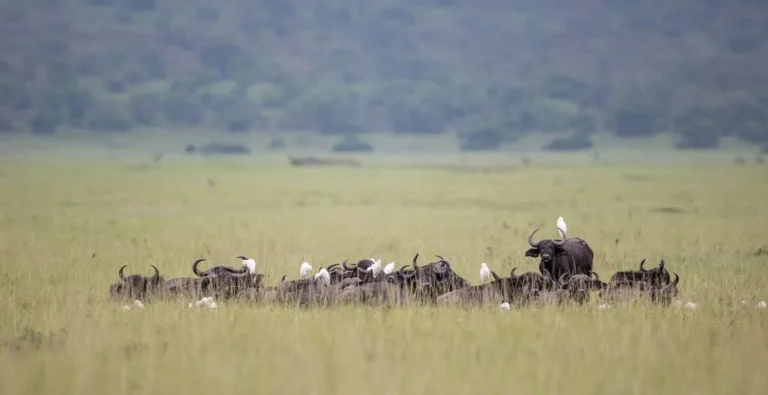
Akagera is home to all of the African Big 5 animals. Current estimates include:
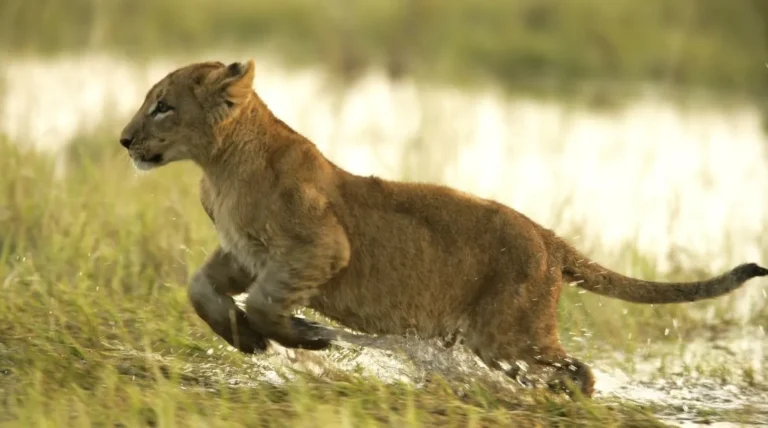
- Lions: about 70, descended from the seven reintroduced in 2015 and two males added later. They are most often seen on the northern plains.
- Rhinos: eastern black rhinos and a large, growing herd of southern white rhinos, with new calves born every year.
- Elephants: about 150, and quite commonly seen near the lakes.
- Buffalo: more than 3,000, often in big herds.
- Leopards: present across the park but shy, best searched for on a night drive.
Beyond the Big Five, the park has Masai giraffes, plains zebras, hippos in large numbers, Nile crocodiles, topi, impala, waterbuck, eland, the rare roan antelope, oribi, bushbuck, warthogs and sitatunga in the swamps. Smaller predators include spotted hyenas, side-striped jackals, servals, genets and white-tailed mongooses, while olive baboons, vervet monkeys and bush babies complete the list.
Birds in Akagera National Park
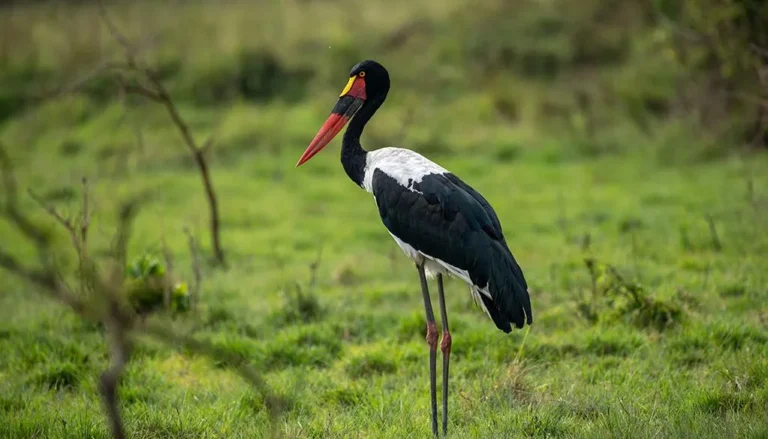
With almost 500 species recorded, Akagera is Rwanda's second most important birding site after Nyungwe, and the two parks complement each other perfectly. Its wetlands and lakes hold many water birds that are found nowhere else in Rwanda. A small island in Lake Ihema serves as a roost for thousands of cormorants, darters, herons, ibises and African openbills.
Key species to look for include:
- Shoebill, the most wanted bird in the swamps
- Papyrus gonolek, white-winged swamp warbler and Carruthers's cisticola
- Red-faced barbet, a speciality of the area
- Ross's turaco and blue-headed coucal
- Martial eagle, Beaudouin's snake eagle and African fish eagle
- Denham's bustard, Shelley's francolin and brown-chested lapwing
- Rufous-bellied heron, lesser jacana and black-crowned night heron
- Pennant-winged nightjar, marsh owl and marsh tchagra
Migrant birds such as Amur falcons and Caspian plovers arrive between November and April. If you love birds, see our guide to bird watching in Uganda for ideas on a combined East Africa birding trip.
10 Amazing Things to Do in Akagera National Park
1. Big Five Game Drives
Game drives are the heart of any Akagera safari. Early morning and late afternoon are best, when it is cooler and animals are most active. The south, around the lakes, is good for elephants, hippos, giraffes and birds, while the open northern plains are where you are most likely to find lions, rhinos, buffalo and zebras. A park guide who knows where animals have been seen recently is well worth adding.
2. Boat Cruise on Lake Ihema
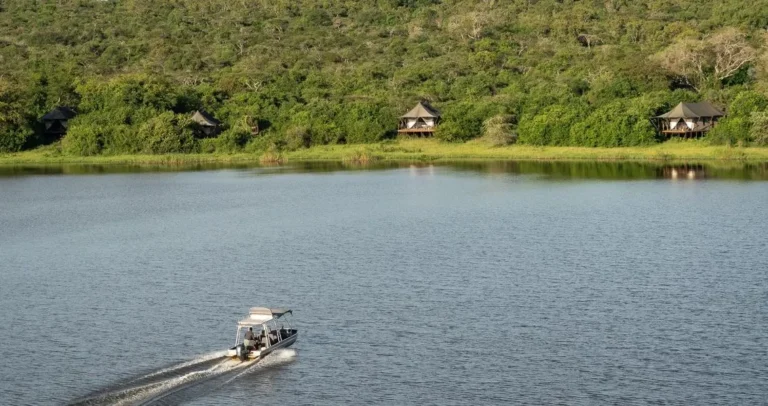
Lake Ihema is the second largest lake in Rwanda, and a one-hour boat trip brings you close to pods of hippos, large crocodiles, elephants drinking at the shore and countless water birds. Trips run several times a day, starting with an early morning departure, and private boats can be booked around midday.
3. Sunset Boat Cruise
Guests staying overnight can take the longer sunset cruise on Lake Ihema. Golden light, hippos calling and birds flying in to roost make it one of the most memorable hours of a Rwanda safari.
4. Night Game Drive
Akagera National Park is one of the few parks in East Africa that offers night drives. Starting at about sunset and lasting around two and a half hours, a ranger uses a spotlight to search for leopards, hyenas, servals, genets, civets, bush babies and nightjars.
5. Hot Air Balloon Safari
Float over the lakes and plains at sunrise in a hot air balloon, watching the park wake up beneath you, then land for a bush breakfast. Balloons carry small groups and depart from the south of the park, so book early.
6. Birding Tours
A specialist bird guide can take you to the best spots for the shoebill, papyrus specialities and savannah raptors. The swamps and lakeshores of the south are the most productive areas.
7. Guided Walking Safaris
Walking safaris offered by the lodges and camps let you explore on foot with an armed guide, reading tracks, learning about plants and insects and feeling the thrill of being among big animals without a vehicle.
8. Sport Fishing on Lake Shakani
Fishing is allowed on Lake Shakani. Bring your own gear or hire it at the park, and try your luck for tilapia and catfish on a catch-and-release or take-home basis.
9. Behind the Scenes Tour
Visit the park headquarters to meet the team, see the work of the ranger and canine units and learn how Akagera was brought back from the brink. It is a fascinating insight into modern conservation.
10. Cultural Community Experiences
Around the park, community tours let you learn about Rwanda's cattle culture, milk traditions, banana beer brewing and honey making. All income goes to the families and cooperatives you visit, so your trip directly supports people living next to the park.
Akagera National Park Entrance Fees
Park entry is charged per person for each 24-hour visit. As a guide, international visitors pay about USD 100 per adult per day, with lower rates for African and East African residents and Rwandan citizens. Children aged 6 to 12 pay about half, and children 5 and under enter free. Discounts apply for second and third nights, so longer stays are better value.
Typical activity prices for international visitors are about USD 35 for a scheduled boat trip, USD 45 for the sunset cruise, USD 40 for a night drive and USD 25 to 40 for a park guide for a half or full day. Rates change from time to time, so check the latest fees on the official Akagera park page or ask us for an all-inclusive quote.
Where to Stay in Akagera National Park
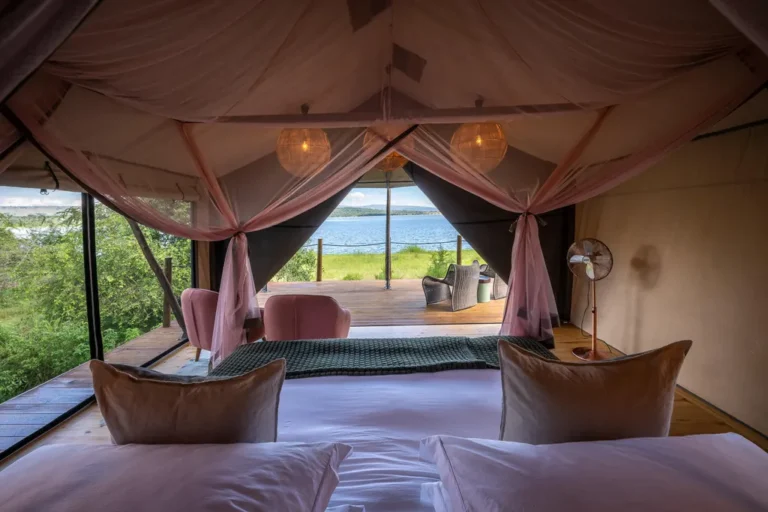
Akagera National Park has accommodation for every budget, from luxury camps to public campsites.
Luxury: Wilderness Magashi and Magashi Peninsula
Set in an exclusive area of the remote northeast on the shore of Lake Rwanyakazinga, Wilderness Magashi offers spacious tents with lake views and fully guided game drives, boat trips and walks. The newer Magashi Peninsula camp adds even more privacy, with star beds for a night under the sky.
Upmarket: Ruzizi Tented Lodge
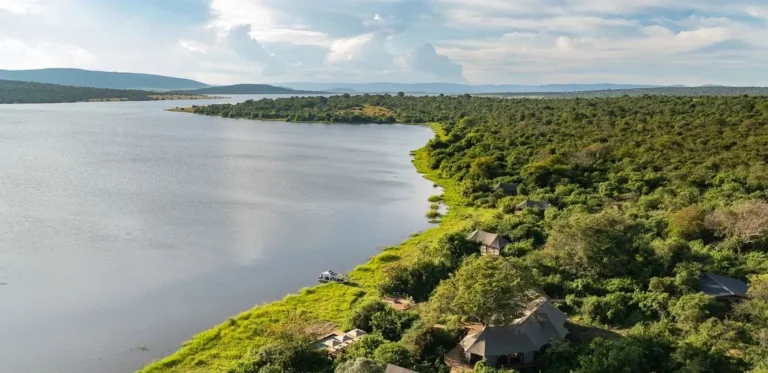
Ruzizi has just nine solar-powered tents on the papyrus-fringed shore of Lake Ihema, joined by boardwalks to the lounge and dining deck. Hippos and crocodiles are often in view, and the lodge is built from local, natural materials.
Mid-range: Karenge Bush Camp
Perched on a ridge above the wildlife-rich Kilala Plains in the north, Karenge is a small, fully catered tented camp for travellers who want privacy, great views and quick access to the best lion and rhino areas.
Mid-range: Akagera Game Lodge
A good-value hotel on a ridge in the south of the park, with wide views, a swimming pool and family rooms. It suits families and groups who want comfortable rooms and easy access to Lake Ihema.
Budget: Rhino Lodge and Campsites
Rhino Lodge, just outside the south gate, is a simple, affordable option. Inside the park there are public campsites at Muyumbu overlooking Lake Ihema, at Shakani on the lakeshore, at Mutumba in the hills and at Mihindi. You can bring your own gear or hire tents.
Best Time to Visit Akagera National Park
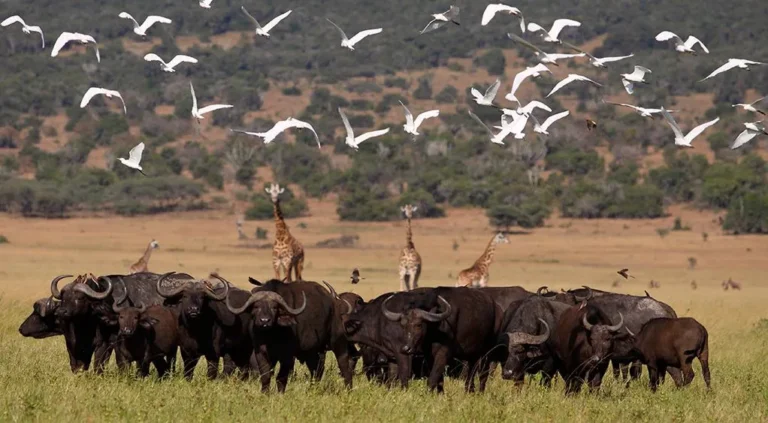
Akagera is open all year. The best wildlife viewing is in the dry seasons, from June to September and from December to February, when the grass is short and animals gather near the lakes. The wet months, March to May and October to November, are greener and quieter with fewer vehicles, and they are the best time for migrant birds, though some tracks can be muddy. To plan your gorilla trek around the same trip, read our guide to the best time to visit Rwanda to see gorillas.
How to Get to Akagera National Park
- By road from Kigali: about 110 km and 2 to 2.5 hours on good tarmac via Kayonza to the south gate. Most visitors travel with a private driver-guide.
- Self-drive: allowed with a 4x4 vehicle, and a park guide can join you at the gate.
- By air: helicopter charters from Kigali can land at the park.
- From Uganda: cross into Rwanda at the Katuna or Mirama Hills border, or fly into Kigali and combine Akagera with gorillas in Uganda or Rwanda.
The north gate is an exit only, so many safaris enter in the south, drive the length of the park and leave through the north towards Kigali or the Uganda border.
How Many Days Do You Need?
- Day trip from Kigali: possible, but you will mostly see the south of the park.
- 2 days: the minimum we recommend, with a game drive, boat cruise and a chance of lions in the north.
- 3 days or more: time for a night drive, balloon flight, walks and relaxed game viewing across the whole park.
Combine Akagera With Other Safaris
Akagera National Park fits easily into a longer East Africa trip:
- Rwanda gorillas and Big Five: our 7 Day Rwanda Wildlife and Gorilla Safari combines Akagera, Volcanoes and more.
- Uganda and Rwanda: pair Akagera with Bwindi, Queen Elizabeth National Park and Kibale on the 14 Days Uganda to Rwanda Safari.
- Not sure which country? Compare gorilla safaris in Uganda vs Rwanda.
- More ideas: browse all our best Rwanda safaris, or cross the border to the national parks in Tanzania.
Travel Tips for Akagera
- Rwanda is one of Africa's safest countries for travellers; read more in is Rwanda safe to visit.
- Start game drives at dawn and bring a packed breakfast to make the most of the day.
- Wear neutral colours, a hat and sunscreen, and carry insect repellent for the lakeshores.
- Bring binoculars and a camera with a good zoom lens.
- Tsetse flies can be present in wooded areas; avoid dark blue and black clothing.
- Plastic bags are banned in Rwanda, so pack with reusable bags.
- Check visa and health rules on the official Visit Rwanda website before you travel.
Akagera National Park FAQs
Where is Akagera National Park?
Akagera National Park is in eastern Rwanda on the border with Tanzania, about 110 km or 2 to 2.5 hours by road from Kigali.
Does Akagera National Park have the Big Five?
Yes. Lions, leopards, elephants, buffalo and both black and white rhinos all live in Akagera, making it Rwanda's only Big Five park.
How much is the entrance fee for Akagera National Park?
International visitors pay about USD 100 per adult per day, with lower rates for residents and citizens and half price for children aged 6 to 12. Activities such as boat trips and night drives cost extra.
Can you visit Akagera National Park as a day trip from Kigali?
Yes, but it is a long day and you will mostly see the south. We recommend at least one night to explore the northern plains where lions and rhinos are most often seen.
What is the best time to visit Akagera?
The dry seasons from June to September and December to February are best for wildlife. The wet months are greener, quieter and better for migrant birds.
Can I combine Akagera with gorilla trekking?
Yes. Akagera combines perfectly with gorilla trekking in Volcanoes National Park in Rwanda or Bwindi in Uganda, giving you primates and the Big Five on one trip.
Plan Your Akagera National Park Safari
Ready to see the Big Five in Rwanda? Call or WhatsApp +256 782 915 447 or email info@tulambule.com, and we will design your Akagera National Park safari with private transport from Kigali or Uganda, park fees, activities and the lodge that suits your budget. We can add gorillas, chimpanzees and Uganda's parks to create one seamless East Africa adventure.