Ready for an unforgettable journey into one of Africa’s most enchanting rainforests? Nyungwe Forest National Park invites you to meet its most intelligent residents—Rwanda’s wild chimpanzees. From misty morning treks to thrilling primate sightings, this experience blends biodiversity, adventure, and conservation into one remarkable safari. Discover 10 incredible facts that will inspire your next escape into Rwanda’s wilderness.
Best known for its gorillas, the Central/East African Country of Rwanda also offers the opportunity for chimpanzee trekking tours in the most extensive protected montane forest in Africa. That forest’s name is Nyungwe Forest.
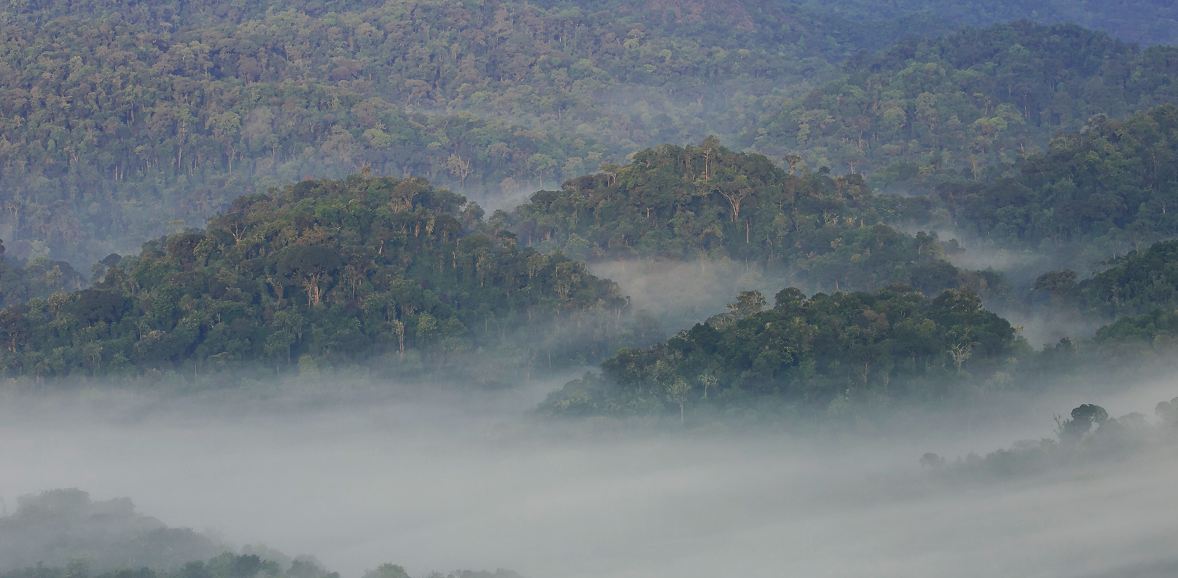
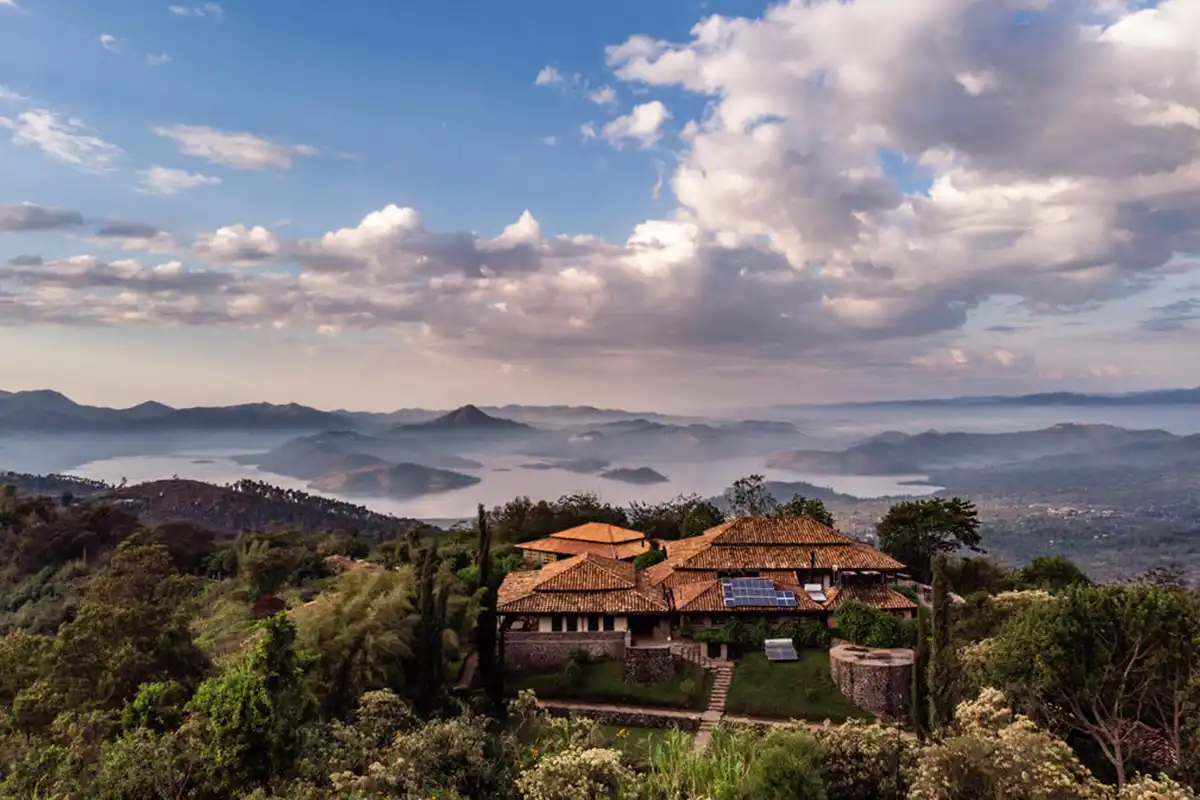
The forest is protected in a magnificently scenic and biodiverse 1,015 km2 park set on the Rift Valley escarpment above Lake Kivu.
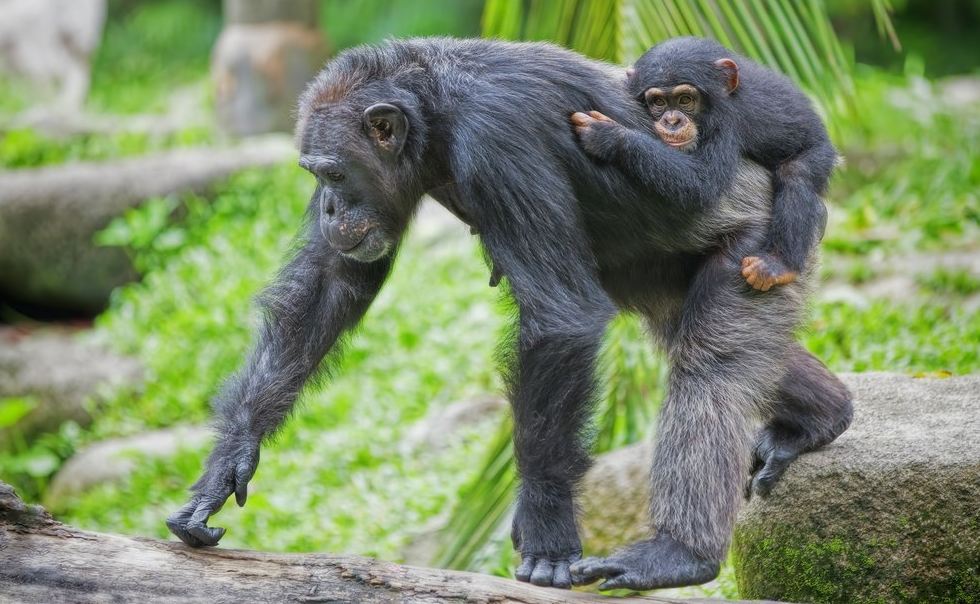
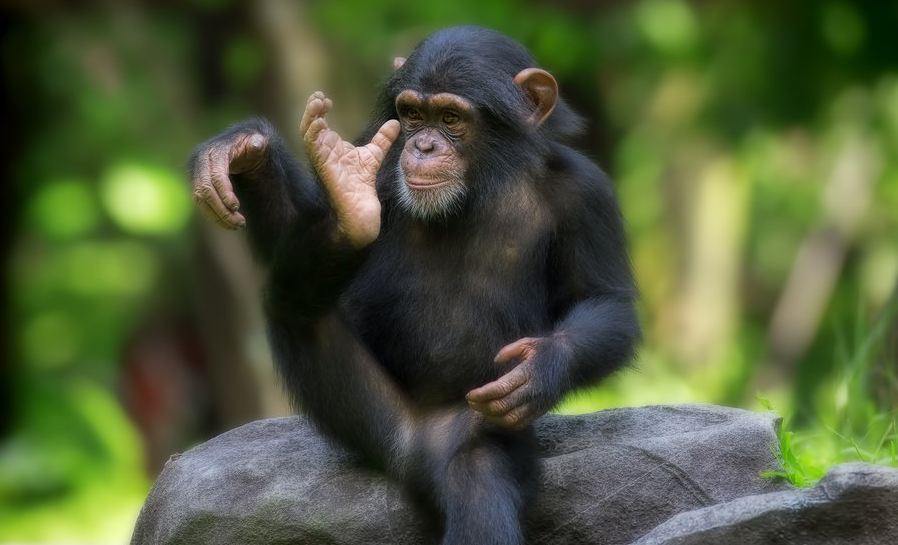
Nyungwe Forest National Park is home to around 500 wild chimpanzees that roam its vast rainforest jungle. But the main chimpanzee trekking site is Cyamudongo, an isolated forest annex whose community of 30 chimpanzees is well habituated to visitors.
These human-like apes share nearly 99% of our DNA. And trekking through the jungle to encounter them is one of many magical experiences on offer in this underrated Rwanda safari park. In fact, we include it in our 20 best things to do in Rwanda.
Nyungwe National Park is a Natural World Heritage Site
On September 19, 2023 Rwanda’s Nyungwe has been inscribed on the list of the World Heritage Sites by UNESCO. Nyungwe also becomes the first site in Rwanda to be featured on the UNESCO World Heritage list which are places of global importance.
That is to mean, sites that should be recognized and protected because they possess a biodiversity (in the case of the Nyungwe) or something and that is not found in many places in the world and should therefore be protected for the future generations to find.

Location of Nyungwe Forest In Rwanda
Nyungwe Forest National Park is located in the southwest corner of Rwanda.
The back is situated about a 4-5 hour drive from, the capital city Kigali on good if sometimes winding roads.
There are some attraction along the way that include Nyanza King’s Palace and the Ethnographic Museum should you wish to break the trip.
FAQs about Chimp Trekking in Nyungwe
1. How does chimp trekking in Nyungwe compare to other places?
The chimpanzees at Nyungwe Forest are now well habituated, so they are used to seeing people and not very shy.
The actual chimpanzee trekking adventure in Nyungwe Forest of Rwanda is relatively similar to what it is in other places in Africa that offer chimp treks.
However, one main difference is that Nyungwe Forest’s the main chimpanzee trekking site (Cyamudongo) is over a 2-hour drive from the park reception center and from most safari accommodation, so a very early start (usually around 5:30 AM) is required.
Another difference is that the small size and steep slopes of Cyamudongo Forest in Nyungwe National Park mean you typically have to walk shorter distances than at other places, but the terrain is tougher.
2. What fitness level is required For Chimpanzee trekking in Nyungwe Forest?
You need a relatively high level of fitness and agility to track chimps of Nyungwe Forest. Indeed, of all the major chimp trekking destinations in East Africa, Nyungwe is probably the most physically demanding, due to the steep slopes and slippery underfoot conditions.
That said, the distances involved are not great, and most people who are sufficiently fit to participate in Gorilla trekking in Volcanoes National Park will be fine in Nyungwe Forest.
3. Are chimpanzee sightings in Nyungwe Forest National Park guaranteed?
The short answer is no. Chimpanzee sightings cannot be guaranteed on a Nyungwe Forest chimp trekking tour.
But this is true of almost all chimpanzee trekking locations, simply because chimps (unlike mountain gorillas) tend to be very active.
Even in Kibale Forest National Park of Uganda which the best place in the world to see wild chimpanzees, the chances of encountering them are around 95%.
Chimpanzees travel long distances at a pace no person could hope to match in the tangled forest jungle undergrowth.
4. Is chimpanzee trekking in Nyungwe Forest safe?
Nyungwe Forest National Park is a very safe place to track wild chimpanzees.
While chimps can be quite imposing in appearance, and they are far stronger than human, Nyungwe Forest’s habituated chimpanzee community is not bothered by human guests and shows no aggression towards them.
As a precaution, children under below the age of 12 are not allowed to track chimpanzees in Nyungwe National Park.
But adults have little to worry about, provided they follow the guidelines and instructions given by their tracking guide.
The most significant risk in Nyungwe Forest National Park is losing your footing on the tangled slopes. This will be greatly reduced if you use one of the walking sticks that are offered to all trekkers and put on strong hiking shoes or boots.
5. Can I combine chimpanzee trekking in Nyungwe Forest With gorilla trekking?
You most certainly can!
In fact, for most travellers who go for chimpanzee trekking in Nyungwe Forest National Park, the excursion is made as an add-on to a safari whose main focus is mountain gorilla trekking in Volcanoes National Park.
While planning your Rwanda safari itinerary, please not that although Rwanda is a small country, these two primate parks lie at opposite ends of it.
It is worth breaking up the long drive with a night or two on the shores of the gorgeous Lake Kivu or in the Kigali city, the capital of Rwanda.
Also, when you are in planning mode for Rwanda safari holiday, you could also consider adding Akagera National Park, a very scenic savannah reserve that is home all the African Big Five animal (lion, leopard, elephant, buffalo and rhino) and numerous antelopes.
6. What other animals am I likely to see in Nyungwe National Park?
While chimpanzee viewing is the focus of many Nyungwe Forest safaris, other hikes offer the opportunity to see many of the other 86 mammals and over 310 bird species recorded in the park.
Monkeys
The owl-faced monkey was only recently confirmed to occur in Nyungwe National Park, and this is the only population of this rare monkey species to occur outside of DR Congo.
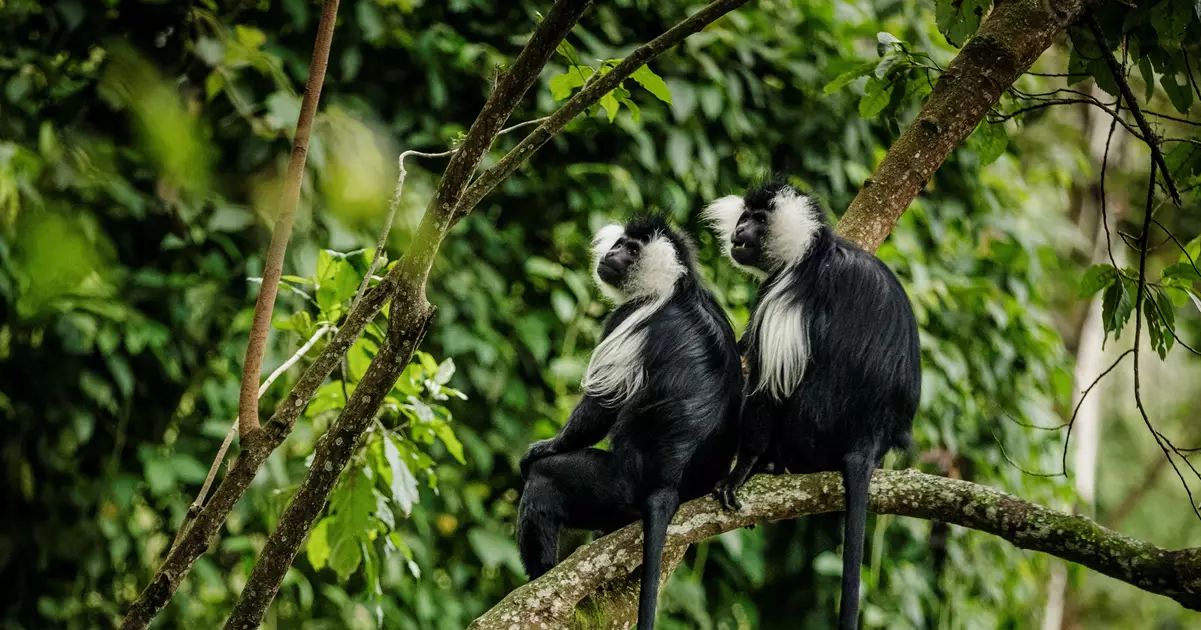
The forest is also home to the largest mega-troop of Rwenzori pied colobus in Africa, numbering over 400 of these striking black and white monkeys. This well-habituated mega-troop also attracts the company of a myriad of additional primate species such as:
- Vervet monkeys
- Blue monkeys
- Olive baboons
- Grey-cheeked mangabeys
- L’Hoest’s monkeys
- Silver monkeys
- Dent’s Mona monkeys
- Red-tailed monkeys
Chimpanzees of Nyungwe Forest National Park are also drawn to the colobus monkeys, although for completely different reasons: food. They hunt the smaller monkey species and an opportunity to witness a chimpanzee raid is a once-in-a-lifetime experience, as the forest explodes into shrieks of terror and the excited howls of the hunting chimps.
Birds
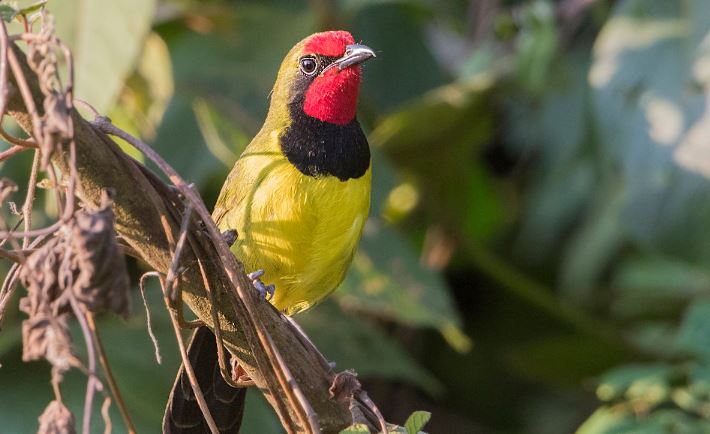
The exceptional birdlife of Nyungwe Forest National Park includes 30 Albertine Rift endemics, which are restricted to the western branch of the Rift Valley. These include:
- Albertine owlet
- Red-collared mountain babbler
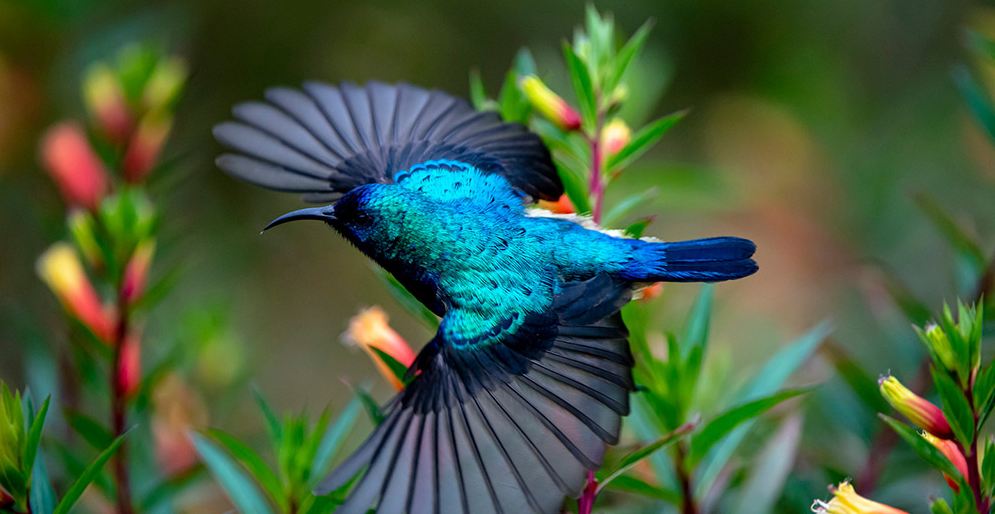
- Rockefeller’s sunbird
- Mountain masked apalis
- Ruwenzori turaco
- Dwarf honeyguide
- Handsome francolin
- Neumann’s short-tailed warbler
Other mammals
While the birds and primates tend to take centre stage in Nyungwe, there are other mammal species wandering the forest paths, climbing the ancient trees, or slinking through the undergrowth. Camera trap studies have revealed that Nyungwe is home to an assortment of creatures, from Congo clawless otters, lithe servals to golden cats and Lord Derby’s scaly-tailed squirrels
- Congo clawless otters
- Lithe servals
- Golden cats
- Lord Derby’s scaly-tailed squirrels
Plant life
Nyungwe Forest National Park’s extraordinary biodiversity also extends to the oft-overlooked plant life. There are over 1,000 different recorded plant species, of which 250 are endemic to the Albertine Rift. About 140 of these plant species are orchids, which add their splashes of colour to the blanket of green and brown around them.
- 1000 plant species
- 140 species of orchids
Reptiles and Amphibians
You can also look out for the formidable Rwenzori three-horned chameleons. Nyungwe Forest National Park is also known to be home to the Bururi long-fingered frog (Cardioglossa cyaneospila), a species once thought extinct. Last seen in 1949, the 3.2-centimeter-long amphibian was found during a December 2011 biodiversity survey in the small central African country of Burundi.
7. What Other Hikes And Activities Are Available In Nyungwe Forest?
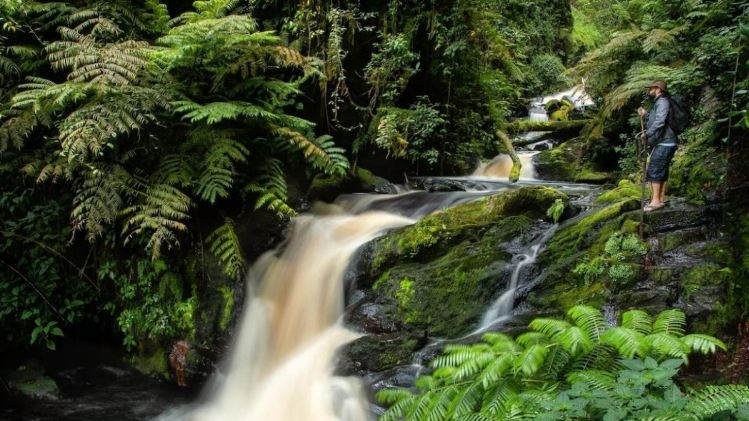
Nyungwe Forest National Park is a true hiker’s paradise. The forest is crisscrossed by a 130km network of well-maintained day trails that offer great opportunities for bird watching, monkey viewing and enjoying the magical forest interior.
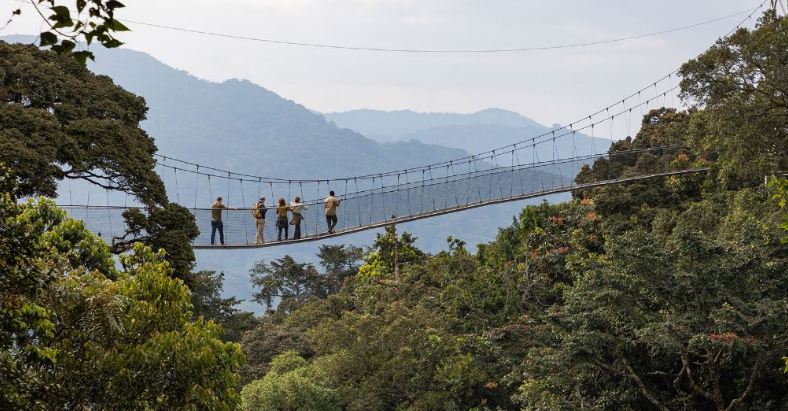
The shortest and most popular is the Igishigishigi Trail, which features a 160m-/525ft-long canopy walkway suspended between facing slopes above a fern-lined stream.
Other trails lead to Kamiranzovu Swamp, Ndamabarare Waterfall and Mt Bigugu, where you can see the most remote source of the world’s longest river, the Nile River.
8. Other Attractions around Nyungwe National Park
Tea is among the largest exports of Rwanda and several tea plantations – including Gisakura, Kitabi and Gisoyu – are found along the fringes of Nyungwe Forest National Park.
Not only do these plantations provide vital employment for local communities and educational experiences for tourists, but they also serve as buffer zones around the park.
There are also several beekeeping cooperatives active near the park offices. While beekeeping is a traditional practice in the area, the members of the cooperatives are now producing additional products such as candles, as well as honey, which are sold to visiting tourists.
Those interested in learning more about the surrounding communities’ traditions can also visit the cultural centers and villages, some of which also offer campsites and other facilities.
9. What are the accommodation options at Rwanda Nyungwe National Park?
Nyungwe National Park offers accommodation to suit most tastes and budgets.
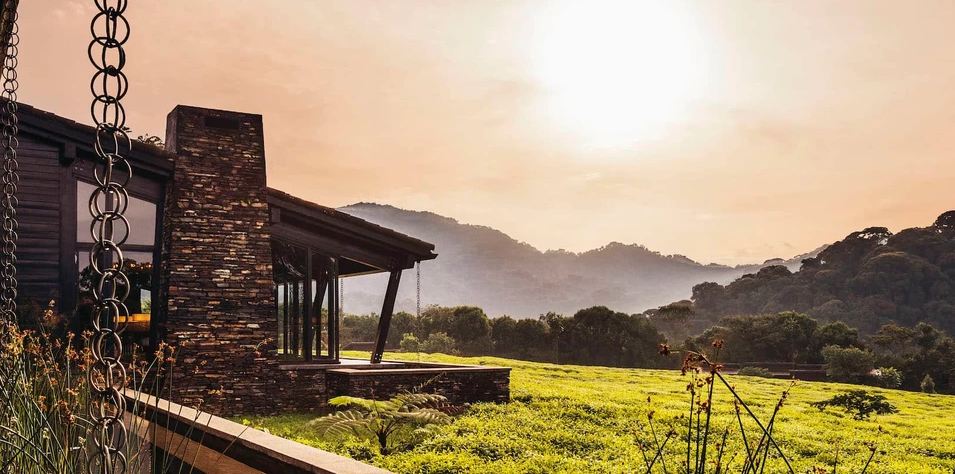
At the very top end is a boutique lodge called One&Only Nyungwe House, but there is also a good selection of mid-range and budget safari lodges, as well as a few campsites.
Munazi Eco Lodge, currently under construction and due to open in early 2024 will be a fully-catered camp featuring 10 ensuite chalets set deep within the forests of Nyungwe – the perfect option for immersing yourself in the forest experience.
Many travellers with also choose to stay on the shores of Lake Kivu and travel to and from the park on relatively good roads.
- Nyungwe Top View Hill Hotel
- One&Only Nyungwe House
- Munazi Eco Lodge
10. What to Pack for Nyungwe Forest safari?
The dense forests and rugged landscapes of Nyungwe necessitate exploration on foot.
As might be expected for an experience that involves hiking in a rainforest, appropriate footwear is an absolute must – preferably waterproof but, most importantly, worn-in and sturdy. The climate in Nyungwe Forest is relatively mild, with temperatures seldom reaching over 30˚C.
Still, it receives high rainfall levels every year, so waterproof gear for valuables is essential.
Long trousers and sleeves will protect against the forest’s more intrusive insects, and it is worth keeping in mind that the weather can be capricious and high altitudes mean cold temperatures at times.
- Waterproof hiking shoes
- Long trousers
- Long-sleeved shirts
- Sunscreen, insect repellent.
- Camera
- A pair of binocular
Akagera National Park is Rwanda’s only savannah park and the one place in the country where you can see the Big Five. Most travellers know Rwanda for gorilla trekking, but in the far east of the country, on the border with Tanzania, rolling grassland, acacia woodland, lakes and papyrus swamps hold lions, leopards, elephants, buffalo and both black and white rhinos, along with giraffes, zebras, hippos and almost 500 bird species.
Akagera is also one of Africa’s great conservation comebacks. A park that lost its lions and rhinos in the years after 1994 is now fully restored and pays its own way, and it was named among National Geographic’s Best of the World destinations. This complete guide covers 10 amazing things to do in Akagera National Park, plus its story, wildlife, birds, entrance fees, lodges, the best time to visit and how to get there from Kigali.
Akagera National Park at a Glance
| Location |
Eastern Province, Rwanda, on the border with Tanzania |
| Size |
About 1,122 square kilometres |
| Established |
1934, one of the oldest parks in Africa |
| Habitat |
Savannah, acacia woodland, rolling hills, lakes and Central Africa’s largest protected wetland |
| Big Five |
Lion, leopard, elephant, buffalo, black and white rhino |
| Birds |
Almost 500 species, including the shoebill |
| Distance |
About 110 km and 2 to 2.5 hours by road from Kigali |
| Managed by |
African Parks with the Rwanda Development Board |
Why Visit Akagera National Park?
Akagera turns a Rwanda gorilla trip into a complete African safari. In one short drive from Kigali you swap misty volcanoes for open plains and big game, so you can track mountain gorillas in Volcanoes National Park, see chimpanzees in Nyungwe Forest and then finish with lions and rhinos in Akagera, all in one small, safe country.
It is also quiet. Akagera National Park receives a fraction of the visitors of the Masai Mara or Serengeti, so sightings are rarely crowded. Add boat cruises among hippos and crocodiles on Lake Ihema, night drives, hot air balloon flights and excellent birding, and Akagera offers far more variety than its size suggests.
The Story of Akagera National Park
Named after the Akagera River that runs along its eastern boundary, the park was created in 1934 to protect animals and vegetation in three ecoregions: savannah, mountain and swamp. At that time it covered about 2,500 square kilometres and was one of the richest wildlife areas in Central Africa.
The war of the early 1990s and the 1994 Genocide against the Tutsi left Rwanda in crisis. As hundreds of thousands of refugees returned home and needed land for their families and cattle, much of the park was settled. In 1997 its size was reduced by more than half, to the 1,122 square kilometres protected today, mostly by removing the western grasslands.
Wildlife suffered badly. Elephants raided crops, lions and buffalo threatened cattle, and many animals were hunted or poisoned in response. Lions had disappeared by the early 2000s and the last black rhino was seen in 2007. Poachers also took fish from the park’s lakes every night.
In 2010 the Rwanda Development Board invited the conservation group African Parks to manage Akagera together, forming the Akagera Management Company. New fencing, ranger patrols, tracking dogs and a helicopter brought poaching under control, and no high-value species has been lost to poachers since. Then came the return of the big animals:
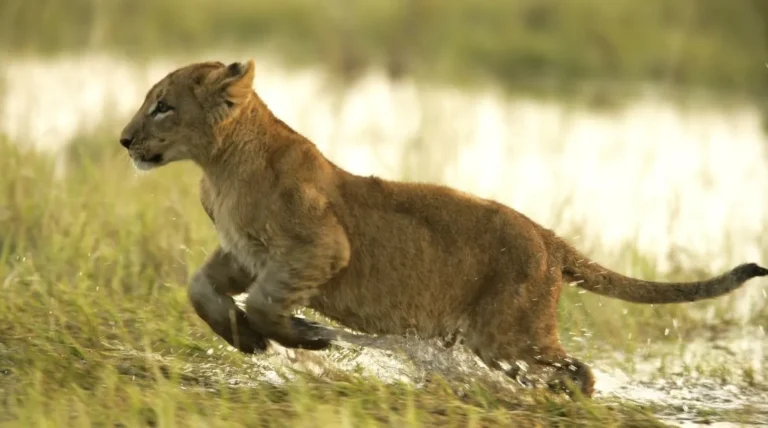
- 2015: seven lions flown in from South Africa, the first in Rwanda for about 15 years.
- 2017 and 2019: eastern black rhinos brought back from Europe and South Africa.
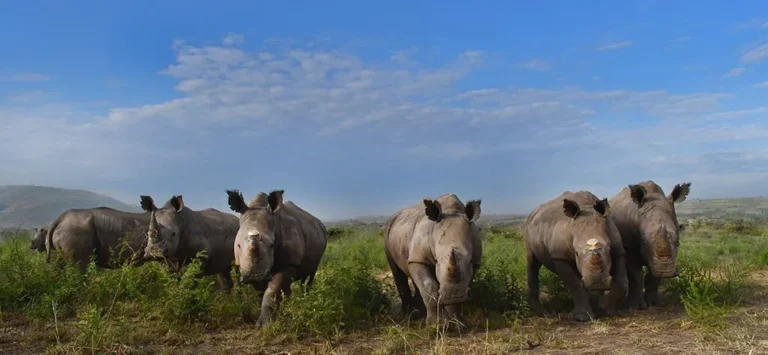
- 2021: 30 southern white rhinos moved from South Africa.
- 2025: 70 more white rhinos added, one of the largest rhino moves of its kind.
Today Akagera National Park covers all of its running costs from tourism, and 10% of park income goes to neighbouring communities through Rwanda’s revenue-sharing scheme, funding schools, clinics and cooperatives. Visitor numbers have grown more than threefold, proof that responsible tourism and conservation can protect both people and wildlife. Learn more about the park’s history on Wikipedia.
Animals in Akagera National Park
Akagera is home to all of the African Big 5 animals. Current estimates include:
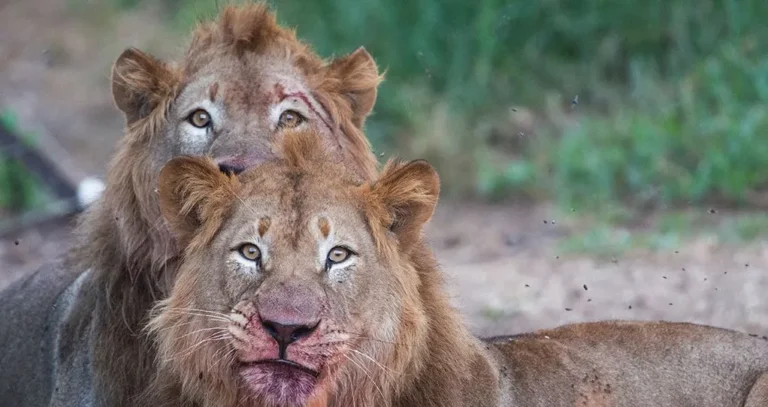
- Lions: about 70, descended from the seven reintroduced in 2015 and two males added later. They are most often seen on the northern plains.
- Rhinos: eastern black rhinos and a large, growing herd of southern white rhinos, with new calves born every year.
- Elephants: about 150, and quite commonly seen near the lakes.
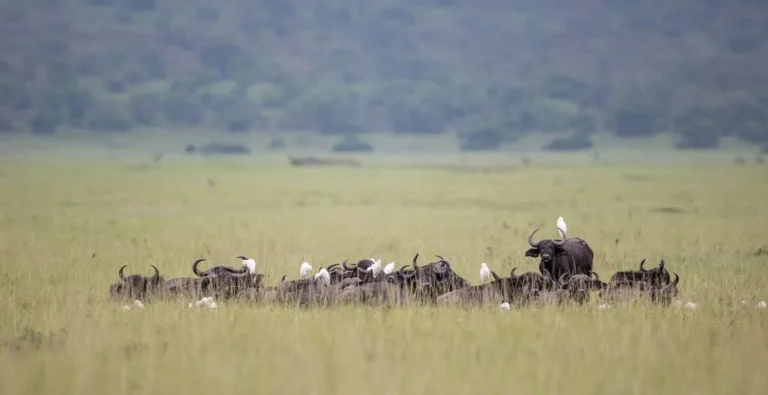
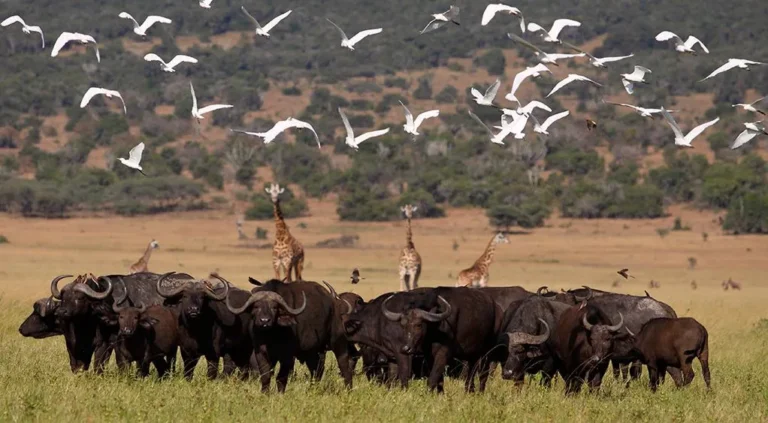
- Buffalo: more than 3,000, often in big herds.
- Leopards: present across the park but shy, best searched for on a night drive.
Beyond the Big Five, the park has Masai giraffes, plains zebras, hippos in large numbers, Nile crocodiles, topi, impala, waterbuck, eland, the rare roan antelope, oribi, bushbuck, warthogs and sitatunga in the swamps. Smaller predators include spotted hyenas, side-striped jackals, servals, genets and white-tailed mongooses, while olive baboons, vervet monkeys and bush babies complete the list.
Birds in Akagera National Park
With almost 500 species recorded, Akagera is Rwanda’s second most important birding site after Nyungwe, and the two parks complement each other perfectly. Its wetlands and lakes hold many water birds that are found nowhere else in Rwanda. A small island in Lake Ihema serves as a roost for thousands of cormorants, darters, herons, ibises and African openbills.
Key species to look for include:
- Shoebill, the most wanted bird in the swamps
- Papyrus gonolek, white-winged swamp warbler and Carruthers’s cisticola
- Red-faced barbet, a speciality of the area
- Ross’s turaco and blue-headed coucal
- Martial eagle, Beaudouin’s snake eagle and African fish eagle
- Denham’s bustard, Shelley’s francolin and brown-chested lapwing
- Rufous-bellied heron, lesser jacana and black-crowned night heron
- Pennant-winged nightjar, marsh owl and marsh tchagra
Migrant birds such as Amur falcons and Caspian plovers arrive between November and April. If you love birds, see our guide to bird watching in Uganda for ideas on a combined East Africa birding trip.
10 Amazing Things to Do in Akagera National Park
1. Big Five Game Drives
Game drives are the heart of any Akagera safari. Early morning and late afternoon are best, when it is cooler and animals are most active. The south, around the lakes, is good for elephants, hippos, giraffes and birds, while the open northern plains are where you are most likely to find lions, rhinos, buffalo and zebras. A park guide who knows where animals have been seen recently is well worth adding.
2. Boat Cruise on Lake Ihema
Lake Ihema is the second largest lake in Rwanda, and a one-hour boat trip brings you close to pods of hippos, large crocodiles, elephants drinking at the shore and countless water birds. Trips run several times a day, starting with an early morning departure, and private boats can be booked around midday.
3. Sunset Boat Cruise
Guests staying overnight can take the longer sunset cruise on Lake Ihema. Golden light, hippos calling and birds flying in to roost make it one of the most memorable hours of a Rwanda safari.
4. Night Game Drive
Akagera National Park is one of the few parks in East Africa that offers night drives. Starting at about sunset and lasting around two and a half hours, a ranger uses a spotlight to search for leopards, hyenas, servals, genets, civets, bush babies and nightjars.
5. Hot Air Balloon Safari
Float over the lakes and plains at sunrise in a hot air balloon, watching the park wake up beneath you, then land for a bush breakfast. Balloons carry small groups and depart from the south of the park, so book early.
6. Birding Tours
A specialist bird guide can take you to the best spots for the shoebill, papyrus specialities and savannah raptors. The swamps and lakeshores of the south are the most productive areas.
7. Guided Walking Safaris
Walking safaris offered by the lodges and camps let you explore on foot with an armed guide, reading tracks, learning about plants and insects and feeling the thrill of being among big animals without a vehicle.
8. Sport Fishing on Lake Shakani
Fishing is allowed on Lake Shakani. Bring your own gear or hire it at the park, and try your luck for tilapia and catfish on a catch-and-release or take-home basis.
9. Behind the Scenes Tour
Visit the park headquarters to meet the team, see the work of the ranger and canine units and learn how Akagera was brought back from the brink. It is a fascinating insight into modern conservation.
10. Cultural Community Experiences
Around the park, community tours let you learn about Rwanda’s cattle culture, milk traditions, banana beer brewing and honey making. All income goes to the families and cooperatives you visit, so your trip directly supports people living next to the park.
Akagera National Park Entrance Fees
Park entry is charged per person for each 24-hour visit. As a guide, international visitors pay about USD 100 per adult per day, with lower rates for African and East African residents and Rwandan citizens. Children aged 6 to 12 pay about half, and children 5 and under enter free. Discounts apply for second and third nights, so longer stays are better value.
Typical activity prices for international visitors are about USD 35 for a scheduled boat trip, USD 45 for the sunset cruise, USD 40 for a night drive and USD 25 to 40 for a park guide for a half or full day. Rates change from time to time, so check the latest fees on the official Akagera park page or ask us for an all-inclusive quote.
Where to Stay in Akagera National Park
Akagera National Park has accommodation for every budget, from luxury camps to public campsites.
Luxury: Wilderness Magashi and Magashi Peninsula
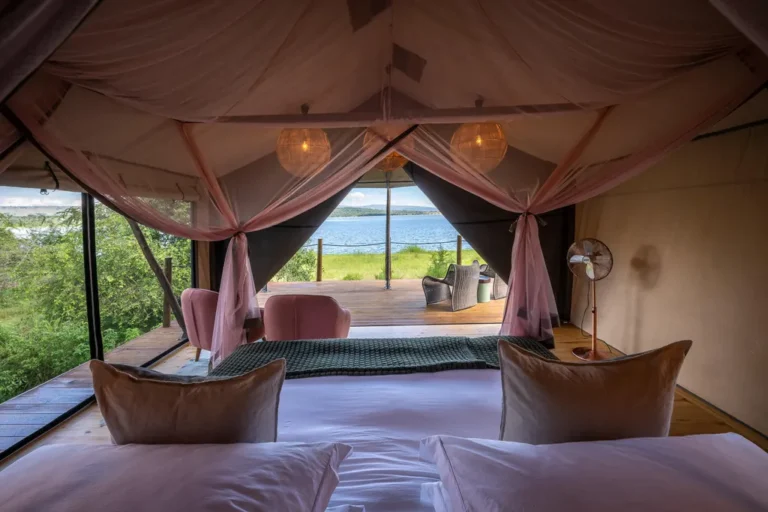
Set in an exclusive area of the remote northeast on the shore of Lake Rwanyakazinga, Wilderness Magashi offers spacious tents with lake views and fully guided game drives, boat trips and walks. The newer Magashi Peninsula camp adds even more privacy, with star beds for a night under the sky.
Upmarket: Ruzizi Tented Lodge
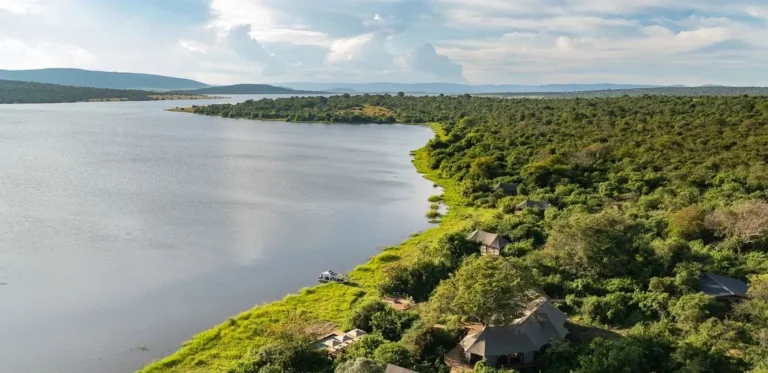
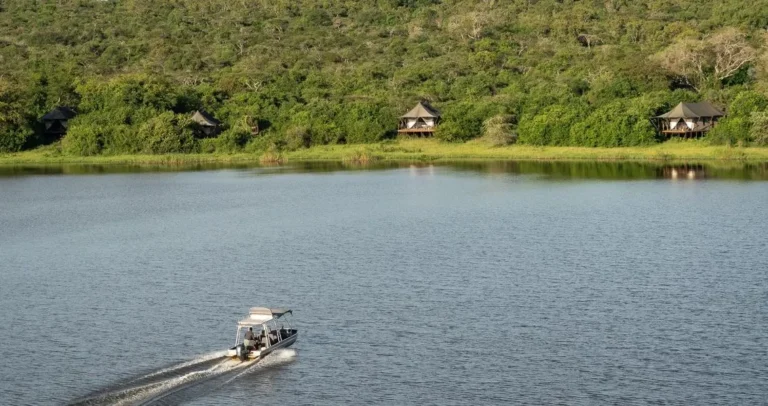
Ruzizi has just nine solar-powered tents on the papyrus-fringed shore of Lake Ihema, joined by boardwalks to the lounge and dining deck. Hippos and crocodiles are often in view, and the lodge is built from local, natural materials.
Mid-range: Karenge Bush Camp
Perched on a ridge above the wildlife-rich Kilala Plains in the north, Karenge is a small, fully catered tented camp for travellers who want privacy, great views and quick access to the best lion and rhino areas.
Mid-range: Akagera Game Lodge
A good-value hotel on a ridge in the south of the park, with wide views, a swimming pool and family rooms. It suits families and groups who want comfortable rooms and easy access to Lake Ihema.
Budget: Rhino Lodge and Campsites
Rhino Lodge, just outside the south gate, is a simple, affordable option. Inside the park there are public campsites at Muyumbu overlooking Lake Ihema, at Shakani on the lakeshore, at Mutumba in the hills and at Mihindi. You can bring your own gear or hire tents.
Best Time to Visit Akagera National Park
Akagera is open all year. The best wildlife viewing is in the dry seasons, from June to September and from December to February, when the grass is short and animals gather near the lakes. The wet months, March to May and October to November, are greener and quieter with fewer vehicles, and they are the best time for migrant birds, though some tracks can be muddy. To plan your gorilla trek around the same trip, read our guide to the best time to visit Rwanda to see gorillas.
How to Get to Akagera National Park
- By road from Kigali: about 110 km and 2 to 2.5 hours on good tarmac via Kayonza to the south gate. Most visitors travel with a private driver-guide.
- Self-drive: allowed with a 4×4 vehicle, and a park guide can join you at the gate.
- By air: helicopter charters from Kigali can land at the park.
- From Uganda: cross into Rwanda at the Katuna or Mirama Hills border, or fly into Kigali and combine Akagera with gorillas in Uganda or Rwanda.
The north gate is an exit only, so many safaris enter in the south, drive the length of the park and leave through the north towards Kigali or the Uganda border.
How Many Days Do You Need?
- Day trip from Kigali: possible, but you will mostly see the south of the park.
- 2 days: the minimum we recommend, with a game drive, boat cruise and a chance of lions in the north.
- 3 days or more: time for a night drive, balloon flight, walks and relaxed game viewing across the whole park.
Combine Akagera With Other Safaris
Akagera National Park fits easily into a longer East Africa trip:
Travel Tips for Akagera
- Rwanda is one of Africa’s safest countries for travellers; read more in is Rwanda safe to visit.
- Start game drives at dawn and bring a packed breakfast to make the most of the day.
- Wear neutral colours, a hat and sunscreen, and carry insect repellent for the lakeshores.
- Bring binoculars and a camera with a good zoom lens.
- Tsetse flies can be present in wooded areas; avoid dark blue and black clothing.
- Plastic bags are banned in Rwanda, so pack with reusable bags.
- Check visa and health rules on the official Visit Rwanda website before you travel.
Akagera National Park FAQs
Where is Akagera National Park?
Akagera National Park is in eastern Rwanda on the border with Tanzania, about 110 km or 2 to 2.5 hours by road from Kigali.
Does Akagera National Park have the Big Five?
Yes. Lions, leopards, elephants, buffalo and both black and white rhinos all live in Akagera, making it Rwanda’s only Big Five park.
How much is the entrance fee for Akagera National Park?
International visitors pay about USD 100 per adult per day, with lower rates for residents and citizens and half price for children aged 6 to 12. Activities such as boat trips and night drives cost extra.
Can you visit Akagera National Park as a day trip from Kigali?
Yes, but it is a long day and you will mostly see the south. We recommend at least one night to explore the northern plains where lions and rhinos are most often seen.
What is the best time to visit Akagera?
The dry seasons from June to September and December to February are best for wildlife. The wet months are greener, quieter and better for migrant birds.
Can I combine Akagera with gorilla trekking?
Yes. Akagera combines perfectly with gorilla trekking in Volcanoes National Park in Rwanda or Bwindi in Uganda, giving you primates and the Big Five on one trip.
Plan Your Akagera National Park Safari
Ready to see the Big Five in Rwanda? Call or WhatsApp +256 782 915 447 or email info@tulambule.com, and we will design your Akagera National Park safari with private transport from Kigali or Uganda, park fees, activities and the lodge that suits your budget. We can add gorillas, chimpanzees and Uganda’s parks to create one seamless East Africa adventure.
Continue Planning Your Trip
Volcanoes National Park in Rwanda is the most accessible gorilla trekking destination in Africa. Established in 1925, it is also Africa’s oldest national park and home to some of the most luxurious safari accommodation on the continent.
This beautiful Rwanda national park is also where the legendary American Primatologist Dian Fossey studied and protected Gorillas for 18 years until her death in 1985. It is a place where against so many odds, the critically endangered mountain gorillas have flourished.
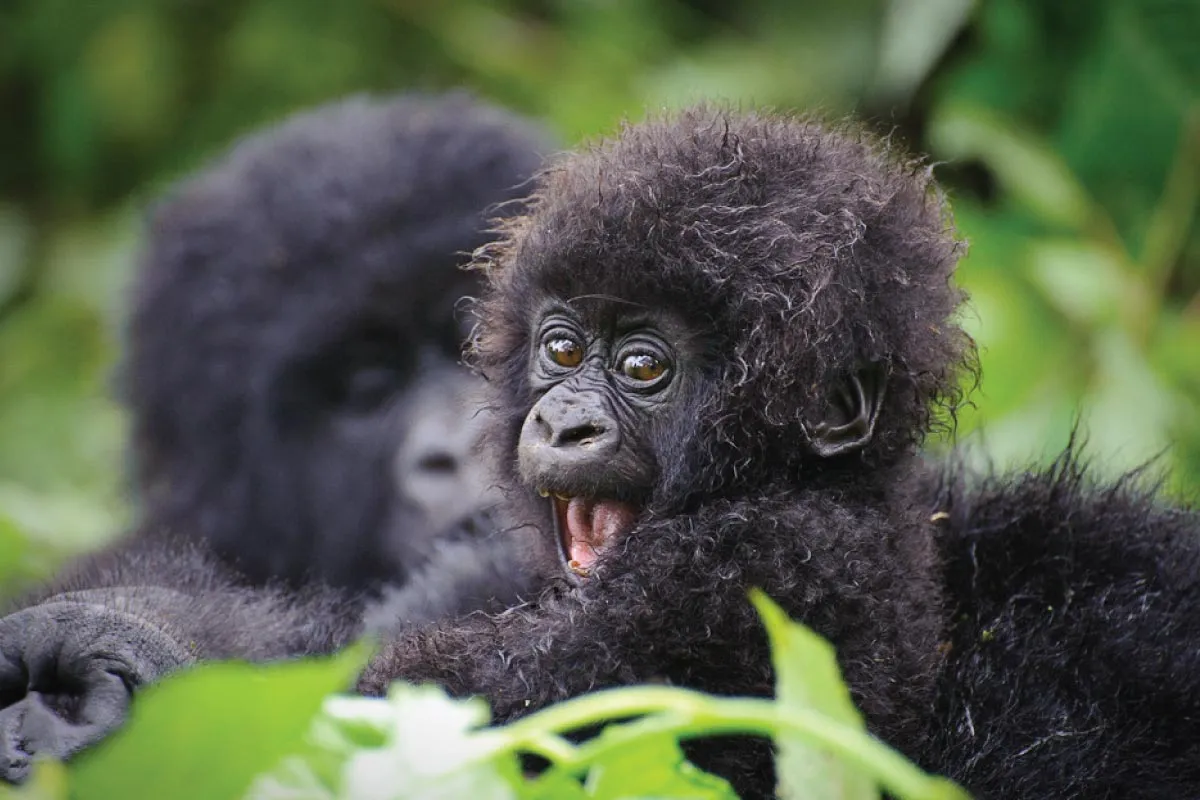
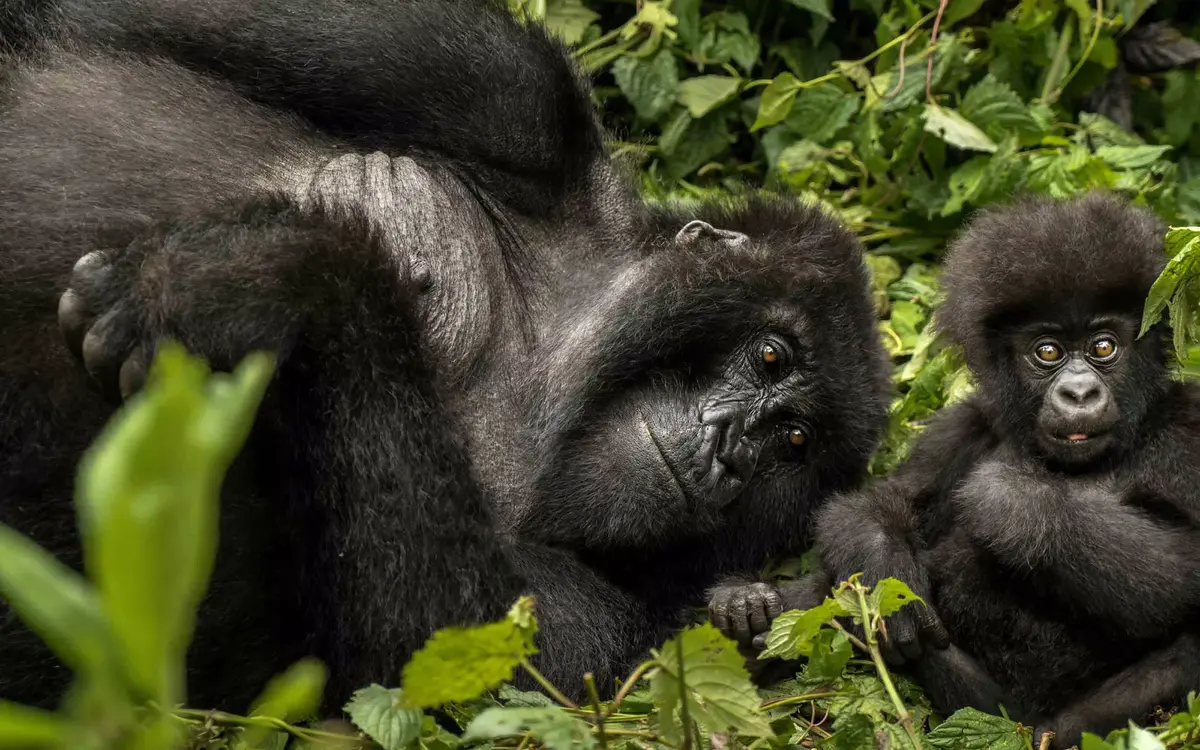
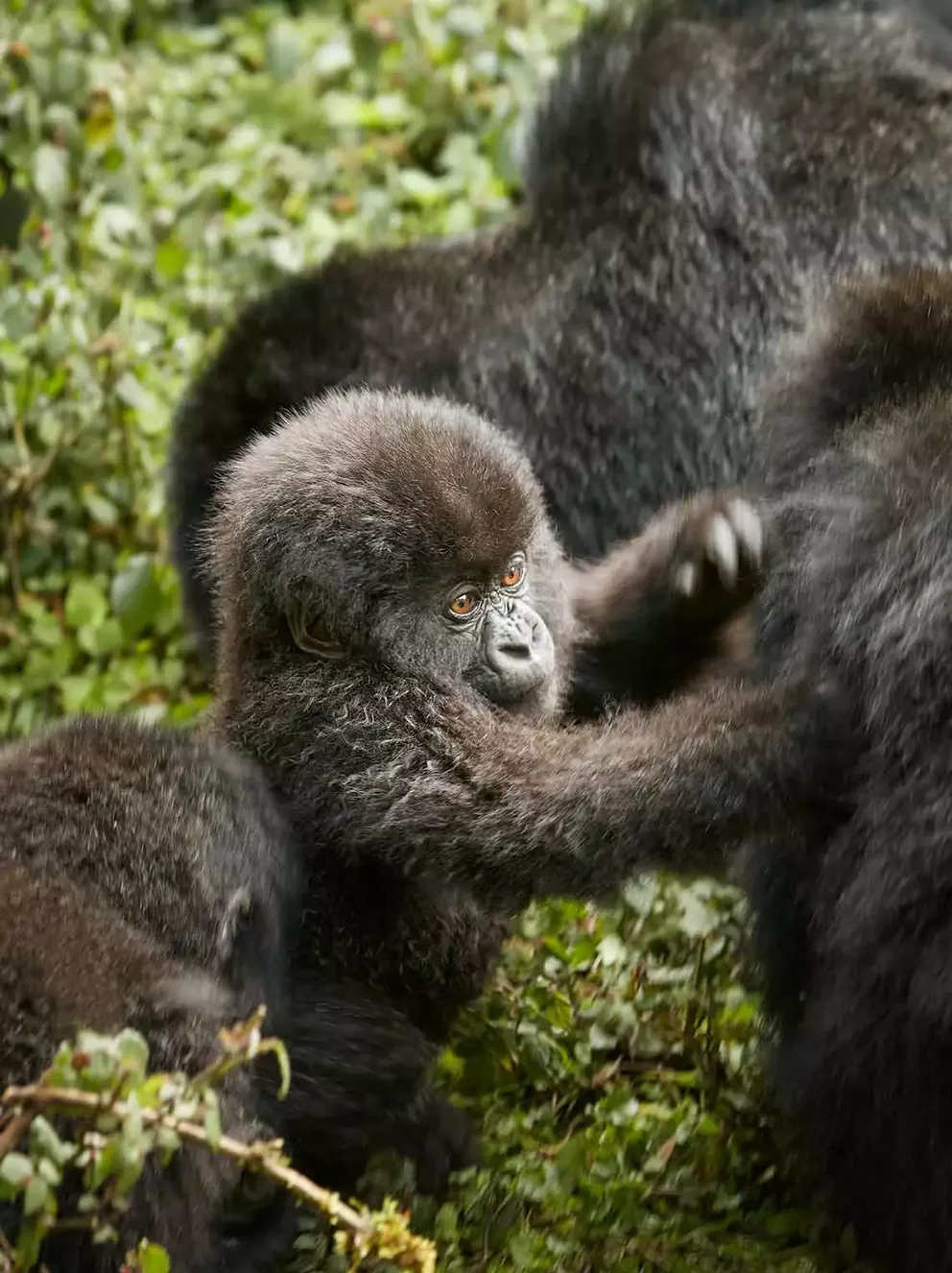
Here, special daily gorilla trekking excursions offers visitors the once-in-a-lifetime opportunity to come face-to-face with these magnificent gentle giants, which can weigh over 200 kg and share almost 98% of their DNA with us humans.
And while the mountain gorillas may be the stars, visitors always find themselves blown away by park’s breathtaking scenery and astonishing biodiversity.
Vegetation types include misty bamboo forest, Afro-montane rainforests, Afro-alpine shrubland, thicket, and grassland with marshes and small lakes interspersed.
Why Is Volcanoes National Park Rwanda Important?
Volcanoes National Park In Rwanda is a success story for country’s conservation and communities. The rich biodiversity of the national park is home to the highly endangered mountain gorilla and the endemic golden monkey.
The park also generates employment opportunities, livelihood and infrastructure development, community projects and so much more.
Why is it called Volcanoes National Park?
Volcanoes National Park is named after the dormant volcanoes located within it.
The park protects a vital portion the Virunga Mountains, a spectacular series of eight volcanoes that rises from the Great Rift Valley escarpment to a high point of 4,507m.
Most of the Volcanoes National Park lies at over 2,000 metres above sea level – not high enough to cause altitude sickness but something that certainly takes some getting used to for unacclimatised visitors.
How Many Volcanic Mountains Are In Rwanda’s Volcanoes National Park?
Volcanoes National Park is home to 5 of the 8 volcanic Virunga Mountains.
These mountains are the products of ferocious geological forces that shaped this section of the Great Rift Valley.
All 5 of the Virunga Volcanoes on the Rwandan side have long since retired from spewing lava (although there are 2 active volcanoes in the range in the neighbouring Democratic Republic of Congo), but their presence in the park is no less dramatic for their dormancy.
The highest volcano in the park is Mount Karisimbi at 4507 meters/14787 feet. Other volcanoes in the park include:
- Mount Muhabura (4127 meters/13540feet)
- Mount Bisoke (3711 meters/12175 feet)
- Mount Sabyinyo 3,669 meters (12,037 feet)
- Mount Gahinga (3474 meters /11398 feet)
How Big Is Volcanoes National Park In Rwanda?
Volcanoes National Park is approximately 160 square kilometers in size. Rwanda is the 4th smallest country on the African continent, covering an area of about 26 340 square kilometers (10 170 square miles).
Where Is Volcanoes National Park Located In Rwanda?
Volcanoes National Park is located in the north-western corner of Rwanda.
The park is situated near the town of Musanze, formerly known as Ruhengeri. Volcanoes National Park’s offices are based in the small village called Kinigi, in the Musanze area. This park is found in the Virunga chain of volcanoes on the borders of Uganda and the Democratic Republic of Congo.
With DR Congo’s Virunga National Park in the west and Mgahinga Gorilla National Park in Uganda to the north, Volcanoes National Park is part of the Greater Virunga Conservation Area.
This trio of countries acts as the guardians of just over half of the world’s remaining population of endangered mountain gorillas, living on the forest-swathed slopes of the imposing volcanoes.
How Far Is Volcanoes National Park From Kigali In Rwanda?
Volcanoes National Park is Africa’s easiest gorilla trekking destination to access.
It is only about 80 kilometer (50 miles) from Kigali, the capital city of Rwanda. This means it takes about 2 to 3 hours to drive from Kigali International Airport (KGL) to Volcanoes National Park on a good paved road.
It is possible to embark on day trips to Volcanoes for gorilla trekking. But, we advise against day tours as it is just too far and there is so much more to see in and around Volcanoes National Park.
What is unique about Volcanoes National Park Rwanda?
1. Its Africa’s Oldest National Park
Volcanoes National Park is the oldest national park in Africa. It established in 1925. It was formerly called Albert National Park, after Belgium’s King Albert I.
A few years later (in 1929) the park was expanded into the Congo and it was run by the Belgian colonial authorities who were in charge of both colonies.
In the 1960s it was split into two national parks, namely Virunga National Park in the Congo and Volcanoes National Park in Rwanda. In the 1990s the Rwandan genocide devastated the country and the park became a battlefield and tourism ceased.
After years of turmoil, the Rwanda Government re-launched tourism and conservation efforts in Volcanoes National park. In 2005 they introduced the Kiwita Izina (a baby gorilla naming ceremony) for tourists, involving the local community
2. It’s Home To Over 300 Mountain Gorillas
Volcanoes National Park is famous for its gorilla trekking safaris.
The park protects about 300 mountain gorillas – around half the world’s existing population – and is the scene for what is often described as Africa’s easiest gorilla trekking. It is one of the three places to go mountain gorilla trekking in Africa.
That means it is one of only three places in the entire world where you can come face-to-face with mountain gorillas in the wild. No small claim to fame!
3. Its Where Dian Fossey Conducted Her Gorilla Research
Volcanoes is also where famous American primatologist Dian Fossey spent 18 years of her life studying and saving the amazing Mountain Gorillas from extinction.
The survival of these magnificent human cousins is largely credited to her work.
Fossey made incredible discoveries about Gorillas. Initially, Gorillas had a terrible reputation as savage beasts that would kill a human on sight.
In her study and love of these apes, she demolishes this myth. Living alongside Gorilla families, Fossey showed to the world that these massive ground-dwelling apes are actually gentle giants. In many ways, they are like us.
Slowly, she gained their trust and could sit near them and observe their daily lives. Accurately, she documented what they ate and how they vocalized and studied their social relationships. This method of gaining Gorilla’s trust is called Gorilla Habituation, Fossey’s great gift to the world.
Sadly, with all her work and struggles in fighting poachers over the years, Fossey had also made many enemies, especially among those who benefitted from this illegal trade.
This haunted her on a dark night in 1985 when she was brutally hacked to death with a crude machete. She was laid to rest in the gorilla graveyard in Volcanoes National Park next to her favorite Gorilla friend, Digit.
4. It’s Where “Gorillas in the Mist ” Movie Was Filmed
Later, Dian Fossey’s story was beautifully portrayed in the popular Hollywood movie ‘Gorillas in the Mist’ (1988), which was also the title of the book she wrote. The movie was filmed here in Volcanoes National Park in Rwanda.
5. Troops of Endemic Golden Monkeys
In addition to its endangered mountain gorillas, Volcanoes National Park is also home to troops of habituated golden monkeys.
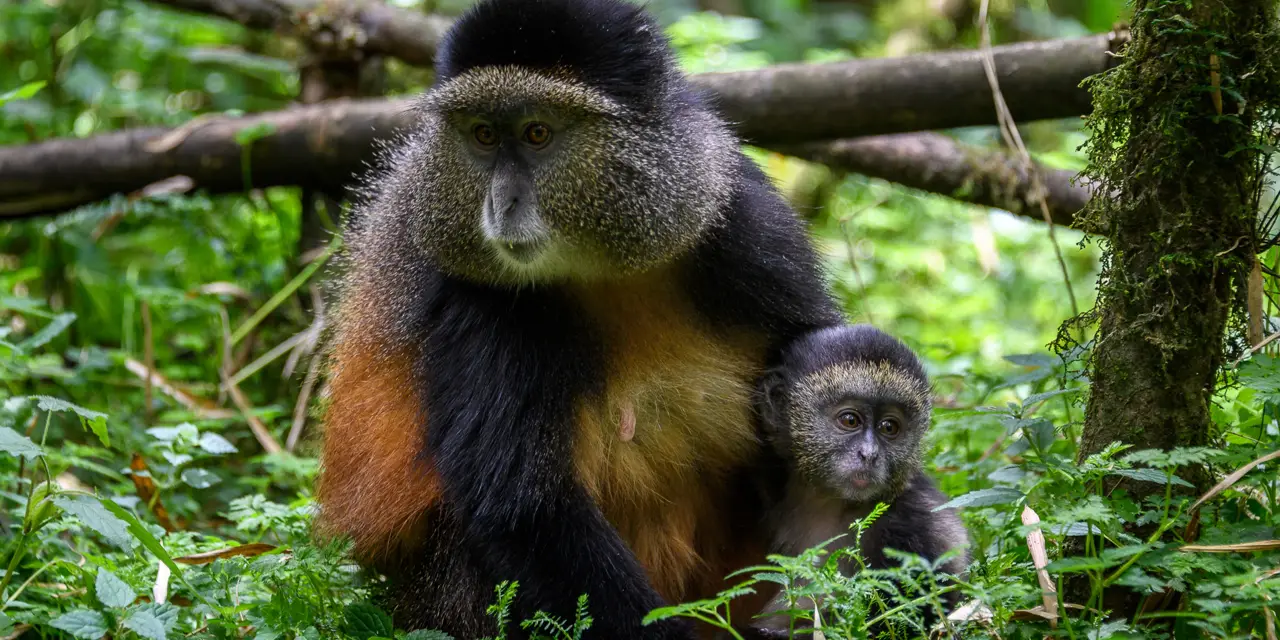
These charismatic monkeys are almost as scarce as their gorilla cousins and are only found around the Virunga region. They are among the most beautiful of African monkeys
With their attractive facial mane, auburn capes of fur, and perpetually surprised expressions, the golden monkeys are the perfect photographic subjects, and their antics are endlessly entertaining.
Tracking them is less expensive and not as difficult as gorilla trekking, so many visitors add this activity to their visit.
6. Home to Over 200 Species of Unique Birds
Like Nyungwe Forest National Park in southern Rwanda, Volcanoes National Park offers some of the best birding in East Africa.
This bird-watching haven has over 200 different recorded species, including 17 Albertine Rift endemics. Some of the avian specials here include:
- Bronze sunbird
- Scarlet-tufted sunbirds
- Rwenzori Turacos
- Handsome Francolins
- Rwenzori double-collared sunbirds
- African green broadbills
- Rwenzori batises
- Archer’s robin-chat
- Doherty’s bush-shrike
- Dusky crimsonwing
- Grauer’s swamp warbler
- Lagden’s bush-shrike
- Red-faced woodland warbler
- Ruwenzori apalis
- Ruwenzori nightjar
- Strange weaver
7. beautiful scenery with Five volcanoes
Besides wildlife attractions, visitors are always blown away by the breathtaking scenery of Volcanoes National Park.
The park protects the Rwandan sector of the Virunga Volcanoes.
The beautiful scenery consists of a chain of these freestanding mountains, connected by forested saddles. The mountain gorillas are often found along these saddles, in enormous groves of bamboo.
How many gorilla families are in Volcanoes National Park?
There are 12 gorilla families in Volcanoes National Park that have been habituated for tourism (other families are habituated solely for research purposes).
Each gorilla family consists of several females and their young and is lead a by a silverback male.
On a guided trek you can spend up to an hour in their presence – plenty of time to observe their family dynamics, snap pictures, and make lifetime memories. The gorilla families in Volcanoes National Park in Rwanda include:
- Susa Gorilla Family
- Igisha Gorilla Family
- Karisimbi Gorilla Family
- Sabyinyo Gorilla Family
- Amahoro Gorilla Family
- Agashya Gorilla Family
- Kwitonda Gorilla Family
- Umubano Gorilla Family
- Hirwa Gorilla Family
- Bwenge Gorilla Family
- Ugyenda Gorilla Family
- Muhoza Gorilla Family
Rwanda Gorilla Trekking In Volcanoes National Park
Described by many as a life-changing experience, gorilla trekking is certainly one of Africa’s most sought-after bucket-list experiences. But perhaps more importantly, your gorilla trek directly empowers a huge ongoing conservation success story.
All Rwanda gorillas trekking takes place in Volcanoes National Park. The adventure takes you through the verdant afro-montane forests.
Of course, your main focus will be mountain gorillas (read more about these gentle giants here), but you will encounter other wonderful species, such as golden monkeys, colourful Rwenzori Turacos and prehistoric three-horned chameleons – amongst others. You’ll be guided by experienced local ranger guides.
how does gorilla trekking in Volcanoes compare to other parks?
Volcanoes is generally regarded to be the easiest place to track mountain gorillas and a good choice for anyone who is unsure about their fitness.
This is because the park’s habituated gorilla family groups are predictably territorial and can usually be found quite close to the forest edge, which is reached along any of several relatively flat footpaths.
Trekking conditions at Volcanoes National Park’s main competitor, Uganda’s Bwindi Impenetrable National Park, are less inherently predictable and often involve long walks through steep and densely forested slopes.
The main negative of Volcanoes National Park is that the gorilla trekking permit costs US$1,500 per person as compared to US$700 in Uganda.
How much time do you have with the gorillas?
You will spend a maximum of one hour in the company of the mountain gorillas on any given gorilla-watching outing. This does not include time spent trekking to find the gorillas or the descent back to the trailhead.
Generally, if the gorillas are located in difficult terrain or the middle of a downpour, the guides will suggest you wait a while before joining the gorillas and starting the clock.
what Fitness Level Is Required For Gorilla Trekking In Volcanoes?
You don’t need to be super fit to go gorilla trekking in Volcanoes National Park and moderately fit people should not find it too challenging.
In most cases, the hike from the trail-head to the forest edge is quite flat and easy, though the altitude might leave you out of breath.
Once in the forest, the terrain can be more challenging.
But you generally won’t need to walk too far or too fast. And the porters are used to assisting struggling trekkers up the steep and slippery slopes.
Visitors who are older than 50 and/or out of shape may find the trek more challenging. However, they can take heart from the fact that all people of 15 years and above and fitness levels have tracked gorillas in Volcanoes.
And while gorilla sightings are not guaranteed, the success rate is around 99%.
It helps that the guides usually have a good idea of how tough the hike to any given gorilla family will be on any given day, so they are able to allocate the easier options to elderly or less-fit trekkers.
What preparations are advised for gorilla trekking in Volcanoes?
Gorilla trekking in Volcanoes National Park takes place at high altitudes (up to 3,000 meters/9,842 feet). Thus, it is worth spending a few days acclimatizing in the nearby highlands, especially if you are unused to hiking and/or live close to sea level.
No special training is required for a gorilla trek. But if you would be daunted by the prospect of a two-hour walk at home, then try to build yourself up to a level where you can cover that distance in your stride. To protect you against stinging nettles, long sleeves are recommended. And long trousers tucked into long socks and solid walking shoes will help to deter biting ants.
Remember to carry a rainjacket, hat, sunblock and up to two liters of drinking water. A good walking stick is very useful in the forest interior, but you don’t need to bring one from home, as you will be offered one before you set off on the gorilla trekking adventure. Porters are also available to carry your day pack and to help push and pull you up any tricky slippery slopes.
How Much Will A Volcanoes National Park Gorilla Trekking Tour Cost?
The cheapest 2-day Rwanda gorilla trekking safaris to Volcanoes NP of the capital Kigali start at around US$ 2,000 per person.
These are usually inclusive of transport from Kigali, a transfer to the trailhead, accommodation, meals and the US$1,500 gorilla trekking permit.
Rwanda gorilla tours to Volcanoes National Park that use more luxurious accommodation or that are longer than 2 days will have a significantly higher price.
Which other activities are available in Volcanoes National Park?
A wide variety of guided hikes and treks are available in Volcanoes National Park. These include:
- Golden monkey trekking in the bamboo zone
- Hiking to Dian Fossey’s grave located in a scenic spot between Bisoke and Karisimbi volcano
- A scenic day hike to the Crater Lake at the 3,711m/12,175ft summit of Mount Bisoke
- An overnight route to the top of Mount Karisimbi, the highest point in the park
- Hike to the Mount Muhavura to look out across the Twin Lakes of Burera and Ruhondo (separated by an ancient Lava flow)
- A subterranean stroll through the atmospheric Musanze Caves
- Cultural visit to the nearby Iby’iwacu Cultural Village (Gorilla Guardian Village)
- Visiting the Great Lakes of Ruhondo and Bulera
Which other parks should I visit on a trip that includes a gorilla trek?
Rwanda is home to two other well-established national parks.
And visiting all three offers you a unique chance to see gorillas and chimpanzees as well as all the Big Five on one safari holiday package.
The most conventional safari destination in the country is Akagera National Park. This is a savannah game park that also incorporates some extensive lakes and wetlands fed by the Akagera River.
Leopard, Lion, buffalo, elephant, white rhino, black rhino, giraffe and hippo are all present in Akagera, along with a good variety of antelope and water birds.
On the other hand, Nyungwe National Park protects a vast tract of lush tropical rainforest set on hills that roll down to the border with Burundi.
Here, you can enjoy a trek in search of habituated chimpanzees, walk across the tallest canopy walkway in East Africa, and go on guided hikes to see gorgeous waterfalls, unique forest birds and half a dozen different types of monkey.
A little-known alternative to Nyungwe Forest National Park is the recently gazetted Giswati-Mukura National Park.
Because it is far closer to Volcanoes National Park, Giswati-Mukura is more convenient than Nyungwe for those with very limited time. Wildlife here includes golden monkeys, chimpanzees, L’Hoest’s monkey and a variety of forest birds.
Where to Stay In Volcanoes National Park In Rwanda?
The only visitors allowed in the park overnight are those that have booked multiple-day hiking excursions to the top of Mount Karisimbi. However, there are many accommodation options ranging from budget hotels to ultra-luxurious safari lodges on the periphery of the park. These include:
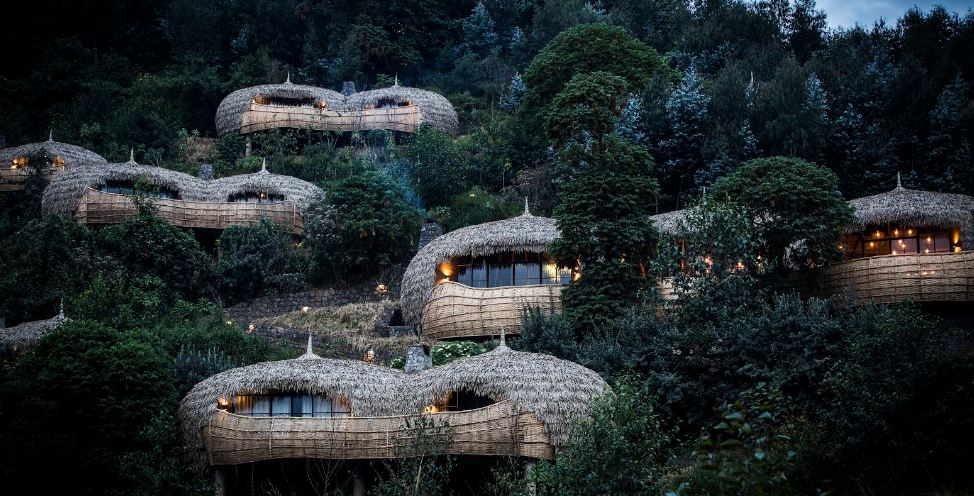
- Bisate Lodge
- Sabyinyo Silverback Lodge
- One&Only Gorilla’s Nest Lodge
- Virunga Lodge
- Singita Kwitonda Lodge
- Five Volcanoes Boutique Hotel
- Mountain Gorilla View Lodge
- Tiloreza Eco Lodge
- Garden Palace Hotel
Best Time to Visit Volcanoes National Park In Rwanda
Volcanoes National Park is open year-round, though the “best time” to visit is from June until September — the long dry season.
Though the highest rainfall levels occur from March to May and again in October and November, this is an equatorial region, and rain is possible at any time.
And, naturally, the famous mists do more than just hide the gorillas. Consequently, it is essential to waterproof all electronics and photographic equipment, and a good pair of non-slip, waterproof walking boots is vital.
Lake Kivu in Rwanda is a joy to reckon with! Although Rwanda may not have zanzibar or the Kenya Coast, it is still possible to take a beach break in the Land of 1,000 Hills. Beautiful Lake Kivu in Rwanda is part of Africa’s series of Great Lakes and the go-to destination for those looking for some rest and relaxation. This massive freshwater water boday lies on the western side of Rwanda and framed by imposing hills, nestled within a verdant valley. It is not only the country’s largest freshwater lake, but also marks the natural border with neighboring Congo.
Considered a hidden gem among the tourist attractions of Rwanda, Lake Kivu in Rwanda is ideally located as a stopping point between the mountain gorillas of Volcanoes National Park and the chimpanzees of Nyungwe Forest. Imagine spending a few days exploring Rwanda’s verdant forests, tracking wild gorillas, golden monkeys, and chimpanzees on foot, and walking in the footsteps of Rwandan kings, and then traveling a short distance to a sparkling lake and lovely beach for some rejuvenation.
Kivu offers endless possibilities for fun-filled beach days, including boat cruises, water sports, beachfront lounging and more! The shores of Lake Kivu are dotted with resorts, 5-star hotels, backpackers, and family-friendly hotels for all budgets.
Geography
Lake Kivu is part of the Albertine Rift Valley, the western branch of the East African Rift, covering parts of Uganda, Rwanda, DR Congo, Burundi and Tanzania.
As a result, there is high volcanic activity in the area, which means that the region around the lake has a special flora and fauna compared to other Rift Valley lakes.
Lake Kivu in Rwanda is about 42 kilometers long and 50 kilometers at it’s widest. The irregular shape of the lake makes measuring its precise surface area difficult; it has been estimated to cover a total surface area of some 2,700 square kilometers, making it Africa’s 8th largest lake. The surface of the lake sits at a height of 1,460 meters above sea level. The world’s 10th largest island in a lake, Idjwi, lies in Lake Kivu in Rwanda.
The maximum depth of Lake Kivu is 475 meters making it the 20th deepest lake on the planet. Lake Kivu empties into the Ruzizi River, which flows southwards into Lake Tanganyika.
History
In the past, Lake Kivu drained toward the north, contributing to the Nile River. About 13,000 to 9,000 years ago, volcanic activity blocked Lake Kivu’s outlet to the watershed of the Nile.
The volcanism produced mountains, including the Virunga Volcanoes, which rose between Lake Kivu and Lake Edward, to the north. Water from Lake Kivu was then forced south down the Ruzizi. This, in turn, raised the level of Lake Tanganyika, which overflowed down the Lukuga River.
In 1894, German explorer and Officer Gustav Adolf von Götzen was the first European to discover the lake. Since then it has maintained a historical importance for been caught up in the conflict between Hutu and Tutsi people in Rwanda, and their allies in Congo, which led to the 1994 Genocide and the first and second Congo wars. Lake Kivu gained notoriety as a place where many of the victims of the genocide were dumped.
Chemistry
Lake Kivu is a multi-layered lake whose depths are saturated with trapped carbon dioxide and methane. It is one of 3 lakes on Earth, along with Lake Nyos and Lake Monoun that undergo limnic eruptions, where overturn of deepwater stratified layers releases dissolved carbon dioxide (CO2).
The bottom of Lake Kivu also contains methane (CH4), meaning a limnic eruption can occur if the lake is disturbed, putting the lives of people living nearby in danger. The amount of methane gas contained at the bottom of Lake Kivu is estimated to be around 65 cubic kilometres.
If burned in a modern combined-cycle generating plant, that amount of methane would generate around 40,000 megawatts for an entire year, which is equivalent to the power output of 6 Grand Coulee Dams operating at peak springtime power.
Until 2004, extraction of the methane gas was done on a small scale, with the extracted gas being used to run boilers at a brewery, the Bralirwa in Gisenyi.
Nice Locations At Lake Kivu
1. Gisenyi
Also known as Rubavu, Gisenyi town is located in the far north of Lake Kivu in Rwanda. After the capital Kigali, this is the largest city in Rwanda! Due to its location near the famous Volcanoes National Park, this place has developed as a place with good tourist facilities. There are a variety of accommodation options along the shores of the lake, which also have beautiful private beaches and trendy bars ideal for sundowner cocktails. Gisenyi is an ideal location to recover from impressions gained in the Volcanoes. From here, you can also visit the Pfunda Tea Estate or start a walk along the Congo Nile Trail.
2. Kibuye
Now better known as Karongi, Kibuye is situated halfway between the north and the south of the Lake Kivu in Rwanda. This authentic town is only visited by few tourists. Yet it has a fantastic location, which is mainly interesting as a stopover on the way from Nyungwe Forest to the impressive Volcanoes National Park. Kibuye is encircled by beautiful hills and there are beautiful peninsulas in the lake.
Here, you can experience authentic Rwanda better than anywhere else. Local fishermen with their beautiful fishing boats, children playing on the waterfront, and women working on the plantations: here you get a special insight into rural life. Here too, travelers can hike part of the Congo Nile Trail, spot birds on Napoleon Island or simply enjoy the beautiful view.
3. Cyangungu
Also known as Rusizi, Cyangugu is the last town at the south of Lake Kivu in Rwanda. It overlooks Bukavu town on the other side of the lake in DR Congo. Cyangugu is not as developed as Gisenyi and Kibuye and does not have a lot of hotels. The town is located about 30 – 40 minute drive from Nyungwe Forest and is thus a good place to stay when visiting Nyungwe for the chimpanzee trekking, canopy walk or other treks in the forest.
Activities At Lake Kivu
The real joy of the Lake Kivu region is driving between its towns – the road gently twists back and forth as it winds through the gorgeous mountains and hills beside the lake. A visit to Lake Kivu in Rwanda is also worthwhile for hiking and cycling enthusiasts as well as travelers who want to get to know the local inhabitants of Rwanda.
Lake Kivu region is a great option if you want to take an unhurried route between Nyungwe Forest and Volcanoes National Parks, stopping over to enjoy the lake’s beautiful beaches and warm, safe swimming waters. Here are the details about all the best things to do at Lake Kivu.
1. Relaxing By The Lake
Believe it or not, Lake Kivu in Rwanda has one of the best beach escapes in Central Africa! The gorgeous scenery does much to relax you. Most accommodations on the shores of the lake feature a private beach or a grassy meadow where you can relax.
2. Boat Trips
Off the coast of Kibuye Town lies Napoleons Island, a small island rich in many bird species. It is possible to take a boat cruise to the island in about 30 minutes, after which you will receive a tour and look for the various bird species. It is a fun-filled day trip that also offers a surprising view of the rolling hills of the mainland. You can as well board a tour boat on Lake Kivu before sunset to hear the famous “Singing Fishermen” of Lake Kivu. The songs, sung in a mix of deep baritones and high-pitched chants, are a part of the nightly ritual of these men, who will spend about 12 hours on the water.
The rhythm of the songs guides their paddle strokes, as they move a trio of large, wooden boats across Lake Kivu. When they find a perfect spot for fishing, they stop the singing. Then, the nine men work together to use the boat’s long poles to cast a wide net between them, set up kerosene lamps to attract the fish, and wait.
3. Kayaking
You can also take a kayak excursion to discover the blue and clear waters that lap the scenic shores of Lake Kivu. There are several of sandy inlets where you can stop and relax while watching birds that dart in and out of the surrounding bushes. Fear not, kayaking on Lake Kivu in Rwanda is super safe as there are no hippos or crocodiles.
You will find peace and tranquility on the quiet waters and feel the touch of the breeze, with the volcanic mountains as an astonishing backdrop. Kayaking on Lake Kivu in Rwanda is also another great opportunity to approach the Singing Fishermen on their superb traditional wooden boats. You may hear them singing rhythmically as they paddle out in unison – a memorable experience.
4. Hike Or Bike The Congo Nile Trail
On the shores of Lake Kivu there is a cycling and hiking trail of no less than 227km (140 miles) long, called the ‘Congo Nile Trail’. In recent years, this route has become one of the most well-known hiking and cycling trails in Rwanda. It uses a series of interconnected dirt road, rural paths, and drivable tracks through the tropical Kivu Region. Running roughly parallel to the eastern shores of the lake, the entire route can be completed in about 10 days on foot or 5 days on a mountain bike.
Expect a unique adventure amid rolling hills, vast coffee plantations and fascinating tropical forests – not to mention phenomenal lake views. Cycling or hiking is not the only focus, it is also a great way to meet locals and share traditional activities, including honey harvesting, craft making, visiting tea or coffee estates or joining local fishermen as they spend the night fishing sambaza (small fish).
The icing on the cake: there are also several hidden beaches en route where you can take a dip. There are dangerous animals living in Lake Kivu in Rwanda– so it is perfectly safe – and recommended – to refresh on a beach after a day’s hiking or biking the trail. There are also various types of accommodation enroute. Your guide can arrange camping, but if tents or campsites are not your things, there are guesthouses, homestays, and small lodges you can opt to stay in.
5. Tea Estate And Coffee Tours
The rich volcanic soil of Rwanda, together with high altitudes, makes ideal growing conditions for coffee, which, along with tea, is one of the top exports of the country. A network of close to half a million small growers produce coffee all over Rwanda, including the northernmost Virunga region, and Akagera, a southeastern region with the country’s only Big Five destination, Akagera National Park.
The most famous coffee-producing area is concentrated around Lake Kivu’s Gisenyi Town. Here, you can visit spots like the Kinunu Washing Station overlooking Lake Kivu or the Ingoboka Collective on Nyamirundi Island, to learn about Rwanda’s renowned coffee variety, Bourbon Arabica. Also you can visit Pfunda Tea Estate which is located about 10 minutes from Gisenyi Town. In 2011, this became the first plantation in Rwanda to officially receive a certificate for sustainability. Thanks to its location on the volcanic hills, the tea is of excellent quality. Travelers are welcome to take a look at the plantations and taste the tea themselves.
How do I get from Kigali to Lake Kivu?
You can get to Lake Kivu by road as well as plane as well as from Kigali.
By road, you’ll spend around 3 hours driving from Kigali to Lake Kivu on a well-tarmacked route. Furthermore, public transportation is also accessible from Kigali; you may take a bus from Kigali to Kibuye, Cyangugu, or Gisenyi. Buses from these towns to Lake Kivu in Rwanda run regularly.
By Air, you can also reach Kivu through chartered aircraft from Kigali International Airport. You can take a chartered flight from Kigali to Gisenyi airport, where you’ll be connected to Lake Kivu for leisure and exploration by either public or private transfers, depending on your travel package.
When Is The Best Time To Visit Lake Kivu?
If you are planning a Rwanda safari holiday to the Lake Kivu, the dry seasons are the ideal time to visit the gorgeous lake. The hottest months of June through August through October are the finest seasonal months to visit Lake Kivu. These months feature cool temperatures and clear sunny days, with temperatures ranging between 15 to 27 degrees Celsius. However, Lake Kivu is a fantastic Rwanda safari destination that can be visited at any time of the year. All this depends on your travel interests.
Accommodation – Lake Kivu Hotels & Resorts
As Lake Kivu attracts a number of tourists and Rwandan holidaymakers, there are a variety of accommodation options ranging from budget, midrange to luxury hotels, resorts, and guesthouses. The views from many hotels and guesthouses across the lake are lovely, with little sandy beaches and grassy banks leading down to the palm-fringed shore.
1. Gisenyi
Some of the hotels we can recommend for international visitors include:
- Lake Kivu Serena Hotel (upmarket)
- Paradis Malahide Hotel (Midrange)
- Inzu Lodge (budget).
2. Kibuye
Some of the hotels we can recommend to international visitors include:
- Kivu Lode (upmarket)
- Moriah Hill Resort (Midrange)
- Comoran Lodge (Midrange)
- Home Saint Jean (Budget)
3. Cyangungu
Hotels we can recommend in Cyangugu include:
- Peace Guesthouse (Budget)
- Emeraude Kivu Resort (midrange)
Do You Have Questions About Lake Kivu?
Ask them to our specialists. All Rwanda specialists are happy to help you organize your dream trip!