Before you cancel your Uganda safari over the Ebola advisory, read the facts, the geography, and what smart travellers are doing instead.
If you have a Uganda safari booked and you have been watching the news, you are probably sitting with a difficult question right now. The Uganda safari Ebola advisory is real, the headlines are alarming, and your travel agent or tour operator may not be giving you the full picture. This blog will. We are going to walk you through exactly what happened, when it happened, what the current situation looks like, and — most importantly — what it means for your safari plans.
Because here is what most people do not know: while some travellers are cancelling, a quieter group of smart safari lovers is doing the exact opposite.
How the Uganda Safari Ebola Advisory Unfolded — A Timeline
Understanding the Uganda safari Ebola advisory starts with understanding how this outbreak actually began and how fast the response came.
On 24 April 2026, a health worker in Bunia, Ituri Province in northeastern Democratic Republic of Congo (DRC), developed symptoms of fever, haemorrhaging, and vomiting. He died at a local medical centre. This was later identified as the presumed index case. At the time, nobody knew it was Ebola.
On 5 May 2026, the World Health Organization (WHO) received an alert about a high-mortality unknown illness in Mongbwalu Health Zone, Ituri Province, including the deaths of four healthcare workers within four days.
On 15 May 2026, laboratory analysis confirmed the illness as Bundibugyo virus disease — a species of Ebola. The same day, both the DRC and Uganda officially declared an Ebola outbreak. Uganda's case was a single imported case, a traveller who had crossed from the DRC.
On 17 May 2026, just two days later, the WHO Director-General declared the outbreak a Public Health Emergency of International Concern (PHEIC) — only the eighth such declaration in history. That declaration triggered the global headlines that likely brought you here.
By 19 May 2026, the US State Department upgraded Uganda's travel advisory to Level 4 — Do Not Travel — covering the entire country. That is where the Uganda safari Ebola advisory stands today.
It is important to understand what that Level 4 means and what it does not mean. It covers Uganda as a country. It does not mean every part of Uganda is equally affected, and it does not mean your safari destination is in danger.
Where Is the Outbreak Actually Happening?
This is the single most important question for any traveller evaluating the Uganda safari Ebola advisory.
According to the European Centre for Disease Prevention and Control (ECDC), as of 22 June 2026, Uganda had reported 20 confirmed cases — with 15 linked to travel from the DRC and five from local transmission events. Of the cases with known locations, eight were in Kampala and one in the neighbouring district of Wakiso.
The outbreak is concentrated in Ituri Province in northeastern DRC, more than 600 kilometres from Uganda's gorilla trekking destinations. Bwindi Impenetrable National Park, Mgahinga Gorilla National Park, Queen Elizabeth National Park, Kibale Forest, and Murchison Falls — every major safari destination in Uganda — sits in the south and southwest of the country, nowhere near the affected zone.
There are no confirmed Ebola cases in or near any of Uganda's national parks. The Uganda Wildlife Authority has placed no restrictions on safari or trekking activities. The parks are open. The wildlife is undisturbed.
What Uganda's President and Ministry of Health Have Said
When evaluating the Uganda safari Ebola advisory, it matters enormously what the people actually managing the response are saying — not just the headlines.
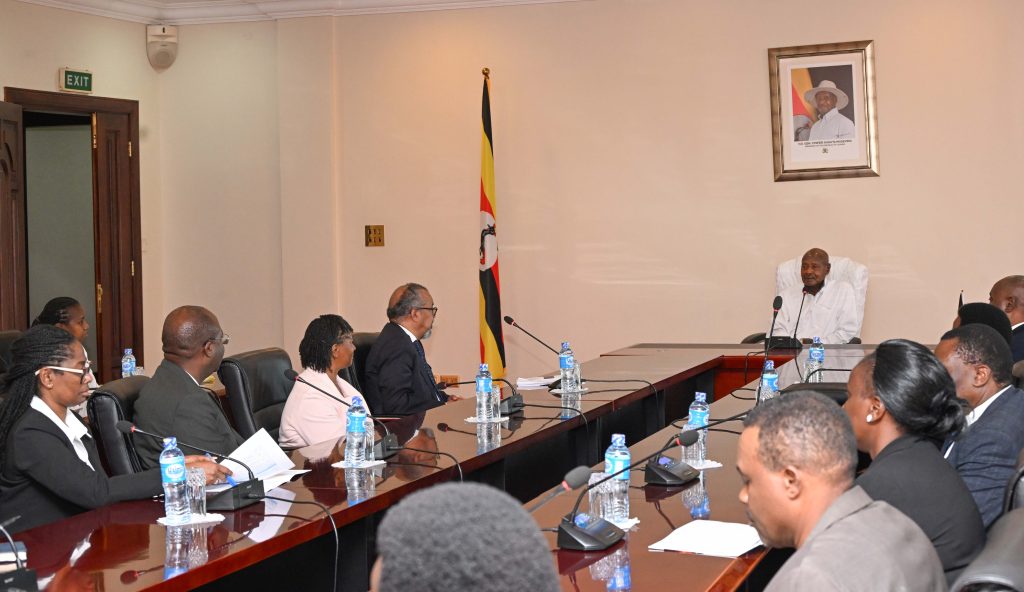
On 8 June 2026, President Yoweri Museveni met WHO Director-General Dr. Tedros Adhanom Ghebreyesus at State House Entebbe. In a nationally televised address shortly after, President Museveni told the nation: "Five days now, no new case. The fire of Ebola has started going down. This is easy to stop. We stopped it in the past and we can stop it now."
The Ministry of Health's Permanent Secretary, Dr. Diana Atwine, confirmed at the same meeting that 14 of Uganda's 19 confirmed cases at that point were members of the same family who had entered Uganda from the DRC. One family, one corridor.
The Uganda Ministry of Health has publicly stated that travellers do not require an Ebola-free certificate to enter or travel within Uganda, and that the Ministry remains firmly in control of the situation.
WHO itself praised Uganda's rapid response. The Ebola Treatment Unit at Mulago Hospital was commissioned within six hours of the outbreak being declared, and the country's 146-member Emergency Medical Team was deployed within two hours. Dr. Tedros also made a clear public statement that travel bans are counterproductive: "Travel bans are not helpful in controlling Ebola outbreaks and can negatively affect the movement of essential supplies, response teams and commodities needed to support control efforts."
Uganda Has Been Here Before — And Always Contained It
One of the most reassuring facts about the Uganda safari Ebola advisory is Uganda's track record. This is not Uganda's first encounter with Ebola. According to the UN, this is Uganda's ninth experience with Ebola. Every single previous outbreak has been contained.
Here is a brief history of Uganda's Ebola outbreaks and how long each took to resolve:
2000 — Gulu (Sudan strain): Uganda's first major Ebola outbreak. 425 cases, 224 deaths. Declared over within four months.
2007 — Bundibugyo (Bundibugyo strain): The first-ever recorded outbreak of this specific strain, identified right here in Uganda. Contained within three months.
2011 — Luwero (Sudan strain): Single case. Contained in weeks.
2012 — Kibaale (Sudan strain): 24 cases. Contained within two months.
2019 — Kasese (Zaire strain): Imported from DRC. Contained within weeks with no local spread.
2022 — Mubende and Kassanda (Sudan strain): 164 cases, declared over on 11 January 2023 — less than four months after declaration.
2025 — Kampala (Sudan strain): Declared on 30 January 2025, declared over on 26 April 2025 — just under three months.
Crucially, in every single previous outbreak, Uganda's safari destinations — Bwindi, Queen Elizabeth, Murchison Falls, Kibale, Kidepo — were never affected. Not once. The southwestern safari corridor has a clean record across all of Uganda's Ebola history.
The CDC's full outbreak history is available here.
Why the Uganda Safari Ebola Advisory Should Not Be Exaggerated
The Uganda safari Ebola advisory deserves respect — but not panic. Here is why context matters.
Ebola spreads through direct contact with the blood or bodily fluids of a person who is visibly sick or has died from the disease. It is not airborne. It is not spread through casual contact. A tourist on a game drive, a hiker in Bwindi forest, or a traveller staying at a safari lodge has essentially zero exposure pathway under normal safari conditions.
The CDC notes that the risk of Ebola spreading to the general travelling public is low. The WHO has consistently assessed the global risk as low while the regional risk in Ituri Province, DRC, remains high.
The Level 4 advisory is also applied to the entire country of Uganda — a nation slightly smaller than the United Kingdom. Applying a single blanket advisory to such a geographically diverse country, where the outbreak zone and the safari zone are separated by over 600 kilometres, is a precautionary measure — not a declaration that every corner of Uganda is equally dangerous.
For comparison, the US State Department has issued Level 2 advisories for countries like France, Germany, Italy, and Japan. Travel to any country in the world carries some level of advisory. The question is always: what is the specific risk to your specific itinerary?
What Is Open and What Safety Measures Are in Place
For those evaluating the Uganda safari Ebola advisory from a practical standpoint, here is the current situation on the ground.
All of Uganda's major national parks remain fully open, including Bwindi Impenetrable National Park, Mgahinga Gorilla National Park, Queen Elizabeth National Park, Kibale National Park, Murchison Falls National Park, and Kidepo Valley National Park. The Uganda Wildlife Authority has confirmed that all safari and trekking activities continue normally under enhanced health protocols.
At every trekking entry point, mandatory temperature checks, handwashing stations, and health screening questionnaires are now standard. Safari vehicles are sanitised between transfers. Drivers and guides undergo daily health checks before any guest contact. Rangers have received additional training in infection prevention and symptom recognition.
At Entebbe International Airport, enhanced screening including thermal imaging cameras is in place. The International Organization for Migration (IOM), with US funding, has deployed over 100 screeners at 13 points of entry across Uganda.
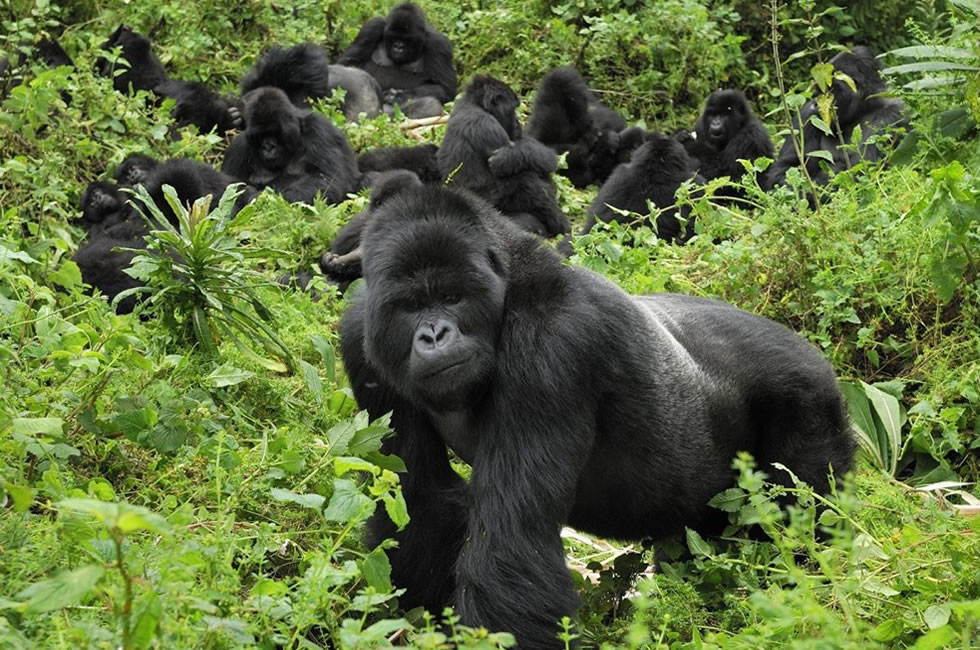
Uganda's gorilla trekking protocols already required face masks and maintained distance from gorilla families as a longstanding conservation measure — these remain in place and serve as an additional layer of protection.
The Smart Traveller's Angle — Why Some People Are Rushing In
Here is something you will not read in a news headline: while some travellers are cancelling their Uganda safaris due to the Ebola advisory, a smarter, quieter group is moving in the opposite direction.
Gorilla trekking permits in Uganda normally cost USD 800 per person and are notoriously difficult to get during peak season. Right now, cancelled permits are being resold at significantly reduced prices as travellers who cancelled prematurely let go of bookings they did not need to release. Reschedules — for those who simply moved their dates rather than cancelling — are being offered free of charge by most reputable operators.
Meanwhile, lodge occupancy has dropped. That means room upgrades, complementary services, and more personal attention from guides and rangers — not because standards have dropped, but because there are simply fewer guests. For a safari that is all about intimacy with nature, fewer visitors means more exclusive wildlife encounters, quieter trekking groups, and a more personal experience overall.
The gorillas are still there. The landscapes have not changed. Bwindi at dawn is still one of the most extraordinary places on earth. And right now, you can experience it without the usual crowds.
Those who understand the Uganda safari Ebola advisory properly — who read the geography, the government response, and the history — are securing permits that would normally be unavailable and enjoying a level of safari exclusivity that money alone cannot usually buy.
If You Already Booked — What Should You Do?
If you have an existing Uganda safari booking and you are concerned about the Ebola advisory, here is our honest advice.
Do not cancel without first exploring a reschedule. Most reputable tour operators, including Tulambule Uganda Safaris, are currently offering flexible date changes without cancellation penalties. Uganda Wildlife Authority gorilla permits, which are normally non-refundable, are being handled on a case-by-case basis during this period.
If you cancel outright, you risk losing deposits and permit fees — and potentially missing out on one of the most exclusive safari windows Uganda has seen in years. If you reschedule, you preserve your investment and give yourself the option to travel when you feel more comfortable, while benefiting from current permit and lodge incentives.
Talk to your operator directly. Ask specifically about the situation in Bwindi or whichever park you planned to visit — not Uganda in general. Ask whether they have had any itinerary disruptions. Ask what happens to your permit if you reschedule. A good operator will give you honest answers.
When would we advise cancelling? Only if confirmed Ebola cases appear in or near your specific destination, or if the Uganda Wildlife Authority formally closes the parks. Neither of those things has happened.
Frequently Asked Questions About the Uganda Safari Ebola Advisory
Is it safe to go gorilla trekking in Uganda right now? Yes. Bwindi Impenetrable National Park and Mgahinga Gorilla National Park are both fully open with no Ebola cases reported in or near either park. The Uganda Wildlife Authority has placed no restrictions on trekking activities. The outbreak zone is over 600 kilometres away.
What does the Level 4 advisory actually mean for safari travellers? A Level 4 advisory is the US State Department's highest warning level and applies to Uganda as a whole country. It does not mean every part of Uganda is equally dangerous. The advisory was triggered by cases near the DRC border in northeastern Uganda — far from any safari destination. It is a precautionary country-wide designation, not a specific warning against visiting Bwindi, Queen Elizabeth, or Murchison Falls.
Has Uganda had Ebola before? Did it affect tourism? Uganda has experienced Ebola eight times before this current outbreak — and contained every single one. None of Uganda's previous outbreaks ever affected the safari corridor in the south and southwest of the country. Tourism at Bwindi and other national parks continued normally during and after previous outbreaks.
How long does it typically take Uganda to be declared Ebola-free? Based on past outbreaks, Uganda has consistently declared the end of Ebola outbreaks within two to four months of the initial declaration. The 2022 outbreak was over in less than four months. The 2025 outbreak was contained in under three months.
Should I cancel or reschedule my Uganda safari? Reschedule rather than cancel if you are uncertain. You preserve your permits, your lodge deposits, and your investment — and you gain the option to travel in a period that may offer more exclusive experiences at lower effective costs. Most operators are currently offering free date changes.
What if I am travelling with a group or family? Is it still suitable? Yes, provided your itinerary stays within established safari destinations in southern and southwestern Uganda. These areas remain safe, operational, and — arguably — more enjoyable right now due to reduced visitor numbers.
What is the one practical thing I should do right now? Confirm that your travel insurance policy covers Ebola-related medical evacuation. This is the single most important practical step any traveller to Uganda should take at this moment.
Our Commitment to You
At Tulambule Uganda Safaris, we will always tell you the truth — even when the truth is complicated. We monitor the Uganda safari Ebola advisory daily through the Uganda Ministry of Health, the WHO Outbreak News, and direct contact with our teams and partners on the ground.
If anything changes that genuinely affects your safety in your specific destination, you will hear from us before you see it in a headline.
Uganda is extraordinary. The mountain gorillas of Bwindi, the tree-climbing lions of Queen Elizabeth, the thundering Nile at Murchison Falls, the chimpanzees of Kibale — none of that has changed. What has changed is the crowd. And right now, that might just work in your favour.
If you have questions about your booking, want to understand your options, or simply need an honest conversation about whether to travel, contact us directly. We are here.
All the Itineraries below and more are very safe for your safari.
Affordable 3 Day Gorilla Trekking Uganda Safari tour
3 Days Fly-In Gorilla Safari Uganda
3 Day Queen Elizabeth National Park Safari In Uganda
3-Day Murchison Falls Wildlife Safari: Big Game & Beautiful Scenery
3-Day Kibale Chimp Trekking Tour, Uganda
4-Day Affordable Uganda Safari: Gorillas, Chimps & Lake Bunyonyi
4-Day fly-in Uganda Safari – Gorillas and Chimpanzees
4-Day Murchison Falls Wildlife Safari: Big Five, Big Game & Chimp
4 Days Safari In Beautiful Queen Elizabeth National Park 2026/27
7 Days Uganda Birding Tour | Shoebills, Chimps, Gorillas, & More
7-Day Uganda Wildlife Safari | Chimps, Gorillas, Big 5 & More!
8 Days Uganda Safari, Big 5, gorillas, Chimps and Tree-Climbing Lions
9-Day Ultimate Uganda Safari: Unforgettable Gorillas, Wildlife & Cultural Encounters 2026
10-Day Uganda And Kenya: Gorilla & Big 5 Safari
10-Day Rwanda and Gorillas of Uganda Safari
11-Day Uganda Tanzania Safari | Gorillas & Big Game Viewing
12 Days Uganda Safari, Big Five, Chimps, Gorillas and Culture
13 Days Uganda, Rwanda and Kenya Safari
14-Day Budget-Friendly Uganda Safari: Unforgettable Gorillas, Chimps & Wildlife Encounters