A Kibale Forest chimp trek is one of the most exciting wildlife experiences in Africa. In the rainforest of Kibale National Park in western Uganda, you walk with a ranger to find wild chimpanzees, our closest living relatives, and spend a full hour watching them feed, groom, play and call through the trees.
Kibale Forest National Park is home to about 1,500 chimpanzees, the largest population in Uganda, and several communities are habituated to people. That makes sightings more reliable here than anywhere else in East Africa.
This guide explains exactly what to expect on your Kibale Forest chimp trek, from the morning briefing to your hour with the chimps, plus fitness, safety, costs, what to wear and how to plan your trip.

Kibale Forest Chimp Trek at a Glance
| Start point | Kanyanchu Visitor Centre, Kibale National Park |
| Trek times | Morning (about 8:00 am) and afternoon (about 2:00 pm) |
| Total duration | 2 to 5 hours, depending on where the chimps are |
| Time with the chimps | 1 hour |
| Chance of sightings | Over 90% |
| Minimum age | 12 years |
| Permit (foreign non-resident) | USD 250 if bought before 1 January 2027, USD 300 from that date |
| Fitness level | Moderate. Mostly flat forest trails |
What to Expect on a Kibale Forest Chimp Trek: Step by Step
1. An Early Start
Your day starts around dawn. After breakfast at your lodge, you drive to the Kanyanchu Visitor Centre, the starting point for every Kibale Forest chimp trek. From the crater lake lodges this takes 30 to 60 minutes, and from lodges near Bigodi only a few minutes.
Arrive about 30 minutes early with your permit and passport, as rangers check them before the briefing.
2. The Ranger Briefing
At Kanyanchu, a Uganda Wildlife Authority ranger gives a short talk about chimpanzee behaviour and the rules of the trek. You learn how the chimp communities live, how habituation works and how to behave around the apes.
The most important rule is to keep your distance. Chimps share about 98% of our DNA and can easily catch human colds and flu, so keeping at least 8 metres away protects them as much as you.
You are also asked not to copy chimp calls. It might seem fun, but it can confuse or upset the chimps.
3. Into the Forest
After the briefing, visitors are split into small groups, each led by an armed ranger guide. The gun is purely a precaution in case you meet a forest elephant.
You then walk into the forest towards the area where the chimps were last seen, often guided by trackers who went out earlier. You duck under low branches, step over buttress roots and listen carefully.
Before long, you may hear the pant-hoot: a loud, rising call that chimps use to announce themselves. It is one of the most thrilling sounds in the African forest. You may also hear chimps drumming on the huge roots of fig trees.
4. Face to Face With Wild Chimpanzees
Once the ranger finds the chimps, your hour begins. They may be high in the canopy feasting on figs, or on the ground grooming, resting and playing.
The best moments come when chimps are on the forest floor. You can watch mothers carrying babies, young males showing off, and older chimps calmly grooming each other. Their expressions and gestures look remarkably human.
Chimps move fast, so you may follow them through the undergrowth for part of the hour. You can take as many photos as you like, without flash.
5. Back to Kanyanchu
When the hour ends, your ranger leads you back to the visitor centre. Most morning Kibale Forest chimp treks finish by late morning or around midday, leaving the afternoon free for the Bigodi swamp walk or a visit to the crater lakes.
Plan My Chimp Trek on WhatsApp
Morning or Afternoon: Which Kibale Forest Chimp Trek Is Better?
Most travellers choose the morning trek. Chimps are usually most active early in the day, calling, feeding and moving between fruit trees, which often makes for livelier sightings.
The afternoon trek is still very rewarding. Chimps may be resting more, but groups are often smaller, and it fits well if you arrive in Kibale late morning after a drive from Queen Elizabeth or Fort Portal.
Chimp Trek vs the Chimpanzee Habituation Experience
| Standard chimp trek | Habituation Experience | |
|---|---|---|
| Time with chimps | 1 hour | Most of the day |
| Chimp group | Fully habituated | Still being habituated |
| Start | About 8:00 am or 2:00 pm | Early morning, before the chimps leave their nests |
| Permit (foreign non-resident) | USD 250, rising to USD 300 in January 2027 | USD 300, rising to USD 400 in January 2027 |
| Best for | Most visitors and shorter safaris | Photographers and keen wildlife lovers |
Both need a permit booked in advance. Read how and when to book in our guide to the chimpanzee trekking Kibale permit.
Are Sightings Guaranteed on a Kibale Forest Chimp Trek?

No wildlife sighting is ever guaranteed, but the success rate for a Kibale Forest chimp trek is over 90%. That is the highest in Uganda and among the best in Africa.
Sightings are less certain than with gorilla trekking because chimps travel much further each day and spend a lot of time high in the trees. Rangers and trackers follow the communities daily, though, so they usually know where to start looking.
If seeing chimps is the main goal of your trip, you can book both a morning and an afternoon trek, or add a second chimp site such as Kyambura Gorge in Queen Elizabeth National Park.
How Fit Do You Need to Be?
A Kibale Forest chimp trek is easier than gorilla trekking. Kibale is a mid-altitude forest, and most trails are fairly flat and well used.
Expect 2 to 4 hours on your feet, first searching for the chimps and then moving with them. Some treks are short because the chimps are close to the trail, while others involve following them through thick undergrowth.
If you can walk comfortably for a few hours, you will manage a Kibale Forest chimp trek. A few walks before your trip will help, and a porter can carry your bag so you can focus on the chimps. Wondering how the two great ape treks compare? Read our gorilla vs chimpanzee guide.
Other Wildlife on Your Kibale Forest Chimp Trek
Kibale protects one of the richest rainforests in East Africa, with 13 primate species, more than 70 mammal species and over 370 birds.
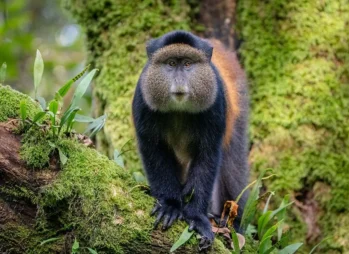
On the way to the chimps, look out for red colobus, black-and-white colobus, red-tailed monkeys, L'Hoest's monkeys and the Uganda mangabey. You may also see forest duikers, giant forest hogs or signs of forest elephants.
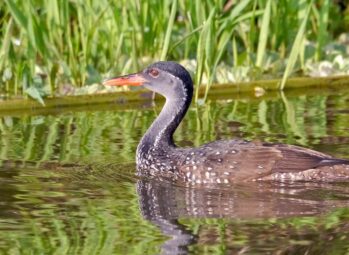
Birders can hope for the great blue turaco, African pitta, blue-breasted kingfisher, dusky crimsonwing and, with real luck, the famous green-breasted pitta.
For more monkeys and birds, add a guided walk at Bigodi Wetland Sanctuary, a community-run swamp on the edge of the park.
Is a Kibale Forest Chimp Trek Safe?
Yes. Chimp trekking in Kibale is very safe when you follow your ranger's instructions. The chimp communities you visit are used to people and generally ignore visitors.
Still, an adult chimp is far stronger than a person, so the rules matter:
- Stay at least 8 metres from the chimps and stay with your group.
- Never feed, touch or make eye-to-eye challenges with a chimp.
- Do not eat, drink or smoke near the chimps.
- If a chimp charges or displays, stay calm, do not run and follow your ranger.
- Do not trek if you have a cold, flu or other illness.
- Cover your mouth and turn away if you need to cough or sneeze.
Children under 12 are not allowed on the trek, both for their safety and because they are more likely to pass on illnesses.
What to Wear on a Kibale Forest Chimp Trek
- Waterproof hiking shoes or boots with good grip
- Long trousers tucked into your socks, against safari ants and nettles
- A long-sleeved shirt in green, khaki, brown or grey
- A light rain jacket, as rain can fall at any time in the forest
- Gardening gloves for grabbing branches on muddy sections
- Insect repellent, water and a small snack
Walking sticks for your Kibale Forest chimp trek are usually available at Kanyanchu.
Photography Tips for Your Chimp Trek
- The forest is dark, so use a high ISO and a fast shutter speed. Never use flash.
- A zoom lens of 70 to 200 mm or similar works well for chimps on the ground and in the trees.
- Bring a spare battery and memory card, as you will take more photos on a Kibale Forest chimp trek than you expect.
- Put the camera down for a few minutes and simply watch. Some of the best memories are not photos.
How Much Does a Kibale Forest Chimp Trek Cost?
The main cost is the chimpanzee trekking permit issued by Uganda Wildlife Authority. It includes park entry for the day and your ranger guide.
- Foreign non-residents: USD 250 if bought before 1 January 2027, then USD 300
- Low season (April, May and November): USD 200
- Foreign residents and East African citizens: lower rates apply
The price depends on the date you buy the permit, not the date you trek, so buying in 2026 saves money on a 2027 trip.
Short chimp tours to Kibale from Kampala or Entebbe generally cost from about USD 750 to over USD 2,000 per person sharing, depending on the lodge, group size and number of days. See the full breakdown in our guide to chimpanzee trekking costs in Uganda.
Best Time for a Kibale Forest Chimp Trek
You can do a Kibale Forest chimp trek in any month, as the chimps live in the park all year.
- June to September and December to February: the drier months, with firmer trails. This is the busiest time, so book permits early.
- March to May and October to November: wetter, with muddy paths, but the forest is lush and quieter, and low-season permits in April, May and November cost less.
Rain showers usually pass quickly, and many guides say the chimps are just as easy to find after rain, when fruit trees are full. Whatever the month, pack a rain jacket for your Kibale Forest chimp trek.
Where to Stay for Your Kibale Forest Chimp Trek

Lodges near Kibale range from simple guesthouses to some of the most beautiful lodges in Uganda. When choosing, think about the drive to Kanyanchu on trek morning.
- Closest to the trek: Primate Lodge Kibale at Kanyanchu, and Kibale Forest Camp near Bigodi.
- Best views: Crater Safari Lodge, Ndali Lodge and Kyaninga Lodge on the crater lakes.
- Good value: Isunga Lodge, Chimpanzee Forest Guest House and hotels in Fort Portal.
Compare all the options in our guide to the best Kibale National Park lodges.
How to Get to Kibale for Your Chimp Trek
Kanyanchu is about 300 km from Kampala, a drive of 5 to 6 hours on tarmac via Fort Portal. From Fort Portal it is about 45 minutes.
You can also fly from Entebbe or Kajjansi to Kasese airstrip and then drive about 2 hours to the park.
Most travellers combine Kibale with Queen Elizabeth National Park, 2 to 3 hours south, and gorilla trekking in Bwindi Impenetrable Forest. Learn more about the park in our complete guide to Kibale Forest National Park.
Kibale Chimp Trekking Tours
These Uganda safaris include a Kibale Forest chimp trek. Use them as a starting point, and we will adjust the days, lodges and activities to suit you.
- 2 Day Chimp Trekking Adventure in Kibale Forest
- 3 Day Kibale Chimp Trekking Tour Uganda
- 4 Day Affordable Uganda Safari: Gorillas, Chimps and Lake Bunyonyi
- 7 Day Uganda Gorilla and Chimpanzee Safari
Looking for chimps elsewhere too? See our guide to chimpanzee trekking in Uganda.
Book Your Kibale Forest Chimp Trek
Tulambule Uganda Safaris is a licensed, 100% Ugandan-owned tour operator, planning chimpanzee safaris since 2014. We secure your permits, book the right lodge and plan your Kibale Forest chimp trek on its own or as part of a longer Uganda safari.
Call or WhatsApp +256 782 915 447 or +256 703 171 855, or email info@tulambule.com.
Book My Chimp Trek on WhatsApp