A few weeks ago, we published Uganda Safari Ebola Advisory — Should You Cancel or Is It Safe to Go?, walking through how this outbreak began and where things stood at the time. Since then, several developments have emerged from official health authorities that deserve a clear, comprehensive update on Uganda safari Ebola safety, one that informs you fully, reassures you with facts, and affirms plainly that safaris in Uganda continue exactly as they always have.
We are a Uganda-based company, and we care about this country beyond our business interests in it. That means we owe our readers an honest, complete account: what has changed, what the data shows, what international health authorities are saying, and most importantly, what all of this means for Uganda safari Ebola safety on the ground today.
Are Uganda's Safaris Still Running? Yes, Without Exception
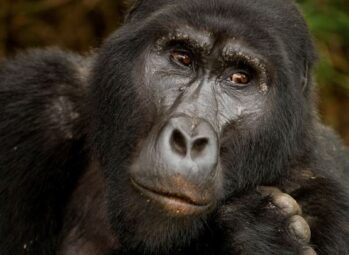
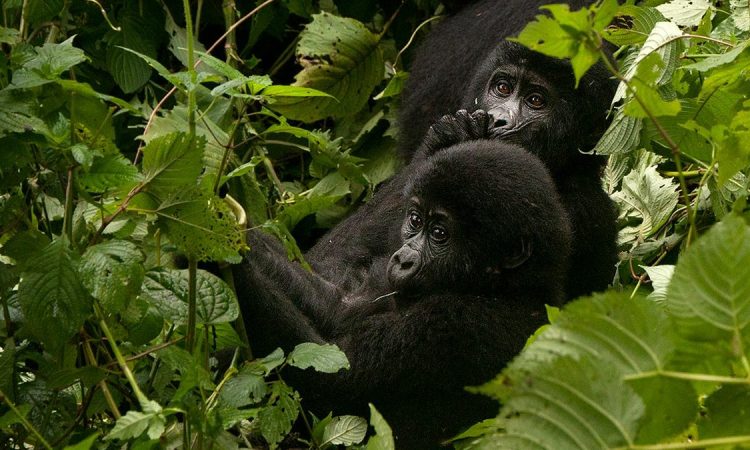
Let's answer the question on every traveler's mind first, clearly and directly. Every major safari destination in Uganda remains fully open. Gorilla trekking in Bwindi and Mgahinga continues without interruption, with permits available and treks proceeding on their normal daily schedule. Queen Elizabeth National Park, Murchison Falls, Kibale Forest for chimpanzee trekking, and Uganda's birding circuits are all operating exactly as they did before this outbreak began.
The Uganda Wildlife Authority has not issued a single restriction on any safari activity throughout the entire outbreak period. This is consistent with what we reported in our earlier advisory, and it remains unchanged today. No park has closed. No trekking permit has been suspended. No activity has been paused. This is the central, unwavering fact underlying every part of our Uganda safari Ebola safety assessment.
Why the Geography of This Outbreak Matters So Much
Understanding distance is essential to understanding risk, so it's worth restating clearly. This outbreak began in Ituri Province, in the far northeastern corner of the Democratic Republic of Congo, well over 600 kilometres from Uganda's southwestern safari corridor. Bwindi Impenetrable Forest, home to roughly half the world's remaining mountain gorillas, sits in an entirely separate region of the country, with no shared population corridor connecting it to the outbreak zone.
This isn't a reassurance we've invented to ease your mind. It's the same geographic reasoning that underpins official risk assessments from the international health bodies managing this outbreak, who distinguish carefully between a country-level emergency declaration, which applies administratively across an entire nation, and the actual epidemiological footprint of where an outbreak is occurring.
What the World's Health Authorities Are Actually Recommending
This is the most important update since our last post, and arguably the single most reassuring fact for anyone assessing Uganda safari Ebola safety today. The World Health Organization's IHR Emergency Committee, in its formal recommendations issued 22 May 2026, explicitly advised against any restriction of travel to, or trade with, the Democratic Republic of Congo or Uganda based on currently available information. This is the same technical body coordinating the entire global response to this outbreak. WHO
That position is shared independently by other major health authorities. The US Centers for Disease Control and Prevention has noted that travel bans during outbreaks like this can be counterproductive, since they interfere with the movement of medical supplies and response personnel needed for containment. The European Centre for Disease Prevention and Control has separately assessed the infection risk for people living in the EU and EEA as very low, based on the same transmission requirements we outline below.
Three major, independent health authorities, each working with their own data and methodology, have arrived at the same conclusion. That convergence carries far more weight than any single headline, and it's exactly the kind of cross-verified evidence that should inform your own view of Uganda safari Ebola safety.
How Ebola Actually Spreads, Explained Simply
An accurate sense of risk depends on understanding transmission, not just case counts. A person can only transmit Ebola once they are showing symptoms, and the incubation period after exposure typically runs between two and twenty-one days. Transmission requires direct contact with the blood, secretions, or other bodily fluids of a symptomatic person, or unsafe handling of remains during burial. WHOReliefWeb
In practical terms, the disease does not spread through air, water, shared meals, or casual proximity to others. Standard safari activities, guided game drives, forest treks, gorilla encounters, and evenings spent at lodges, simply do not involve the kind of direct contact this disease requires to transmit. This is the scientific foundation underlying every claim about Uganda safari Ebola safety in this piece, not an assumption, but a documented fact about how this specific virus behaves.
Uganda's Response: Fast, Thorough, and Ongoing
Uganda's containment measures have continued to develop since our last report, and they reflect a country that has handled outbreaks like this before. The government closed its border with DRC for at least four weeks from 27 May 2026, requiring anyone entering from DRC to complete a 21-day isolation period, a decisive, early step taken before the outbreak had a chance to expand.
Surveillance has remained extensive in the weeks since. By 30 June, Uganda had tested 1,869 people nationwide, followed up with 831 contacts, and screened 5,465 travellers at points of entry, including 2,105 arriving and 1,714 departing passengers. These figures are published openly on the Ministry of Health's live Ebola dashboard, updated daily, and we'd genuinely encourage any traveler to check them directly rather than relying on secondhand summaries.
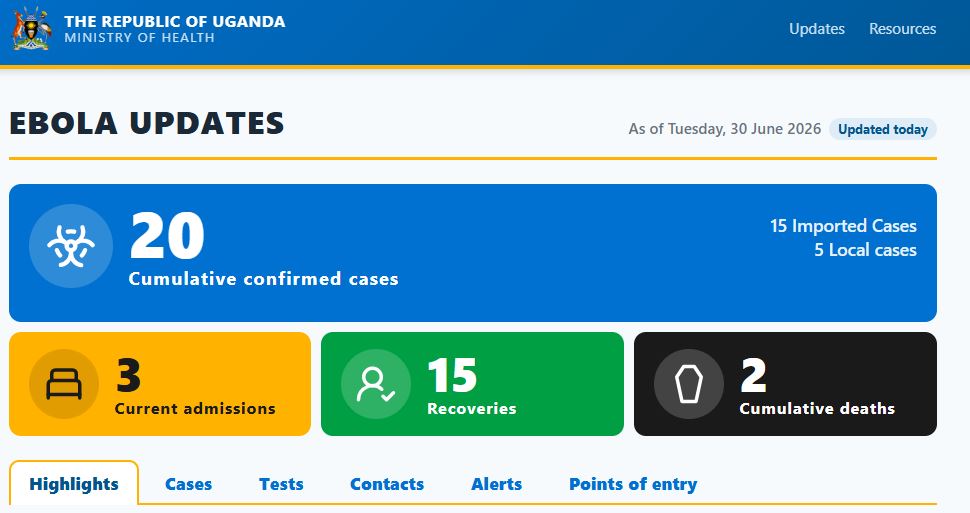
Two developments since our original advisory deserve specific mention. On 24 June 2026, Uganda and DRC launched a joint cross-border Ebola response, directly addressing the transmission corridor between the two countries rather than treating each nation's response separately. And the Ministry of Health confirmed on 16 June 2026 that no Ebola-free certificate is required to enter Uganda, resolving some of the confusion that had circulated among travelers and agents earlier in the outbreak.
A Coordinated, Well-Funded Regional Effort
Uganda's own efforts sit within a much larger, internationally backed strategy. On 5 June 2026, Africa CDC and WHO jointly launched a six-month continental preparedness and response plan, running through November 2026, targeting US$518 million to support African countries in detecting and responding to the outbreak. The plan covers emergency coordination, disease surveillance, laboratory testing, infection prevention, clinical care, and community engagement across the affected region. European Commission
Notably, the plan also maintains support for other ongoing regional health priorities, including mpox, cholera, and measles, ensuring this response doesn't come at the cost of broader public health resilience. This kind of structured, multi-month, internationally funded effort is consistent with how Uganda has managed previous Ebola outbreaks, several of which were contained within three to four months of being declared.
Where the Numbers Actually Stand
Numbers offer the clearest, least debatable picture available for assessing Uganda safari Ebola safety. As of 30 June 2026, Uganda has recorded 20 cumulative confirmed cases since the outbreak began, comprising 15 imported cases and 5 local cases. Only 3 patients remain under active medical care, 15 have already recovered, and the cumulative death toll stands at 2.
For meaningful context, it's worth comparing this to the outbreak's point of origin. As of 25 June 2026, the Democratic Republic of Congo reported 1,155 confirmed cases and 304 deaths, with Ituri Province alone accounting for 1,054 of those cases across 22 health zones. Uganda's numbers, by contrast, have stayed small, well-traced, and clearly linked to cross-border travel rather than an independent local outbreak. Active cases in Uganda have declined steadily since our last update, and recoveries continue to climb, a measurable, encouraging trend rather than an assumption. health
What This Means for Your Specific Trip
Bringing all of this together: if you have a Uganda safari booked, planned, or simply on your wish list, nothing about the facts above changes what's true for your trip. The parks remain open, the gorillas remain accessible, the wildlife remains exactly where it has always been, and the world's leading health authorities are actively recommending against the kind of travel avoidance that headlines might otherwise suggest is warranted.
Health protocols already standard across Uganda's tourism sector, handwashing stations at trekking points, temperature screening at lodges, and daily health checks for guides and drivers, remain in place as routine good practice, not panicked new additions. Gorilla trekking's long-standing requirement for masks and maintained distance, originally adopted to protect the gorillas from human respiratory illness, now offers travelers a sensible extra layer of reassurance as well, all part of the broader Uganda safari Ebola safety picture we want you to fully understand.
Sensible Precautions Worth Taking Regardless
Standard health precautions remain worthwhile for any traveler to the region, independent of this specific outbreak. Regular handwashing, avoiding direct contact with anyone visibly unwell, and following screening procedures at airports or border points are simple, low-effort habits that meaningfully reduce risk on any international trip.
We'd also recommend confirming that your travel insurance includes medical evacuation coverage, sound practice regardless of destination. And if you have specific questions about your itinerary, speak directly with your tour operator about your actual route rather than the country as a whole. A reputable operator should be able to confirm plainly and specifically whether any disruption has occurred along your particular destinations, and for us, none has.
Our Continued Commitment to You
Tulambule Uganda Safaris has operated in this country since 2014, and our position throughout this outbreak has remained consistent: report verified facts from credible health authorities, update that information as it genuinely changes, and avoid both unnecessary alarm and false reassurance. Our ongoing assessment of Uganda safari Ebola safety is supported by official government data, independent international health assessments, and the simple reality of our own teams working in these parks every single week.
This country has weathered Ebola outbreaks before, and on every previous occasion, its safari corridor came through entirely unaffected. That pattern is holding again now, and the trajectory, a shrinking active caseload in Uganda, a well-funded six-month regional response already underway, and explicit guidance against travel restrictions from WHO itself, all points toward continued resolution rather than escalation.
Looking Ahead With Reasonable Confidence
As this outbreak continues to be managed, we'll keep watching the same official channels referenced throughout this update, and we'll continue reporting honestly as the picture develops, whether that news is reassuring or not. We won't speculate on an exact date for an official end-of-outbreak declaration, since that determination rests entirely with the Ministry of Health and WHO, working from confirmed data.
What we can tell you with full confidence, backed by everything outlined above, is this: Uganda's parks are open, its wildlife is thriving, its government has responded swiftly and transparently, and the world's health authorities agree there is no reason to avoid this extraordinary country. Uganda safari Ebola safety, based on every available official source, is not in question for the destinations our guests actually visit.
For the fuller background on this outbreak's origins, our original advisory post remains accurate and worth reading alongside this update. For ongoing official guidance, see WHO's Africa regional outbreak page. If you have questions about your specific trip, our team is available to discuss it directly, with honest answers, not a sales pitch.
Uganda remains exactly what it has always been: a country of extraordinary wildlife, warm hospitality, and a safari experience worth taking, supported now by clear, verifiable evidence that this outbreak has not changed any of that. Your gorillas, your sunrise over the savannah, and your Nile sunset are all still waiting for you.
Uganda Safaris that travellers are currently booking;
9-Day Ultimate Uganda Safari: Unforgettable Gorillas, Wildlife & Cultural Encounters 2026
10-Day Uganda And Kenya: Gorilla & Big 5 Safari
10-Day Rwanda and Gorillas of Uganda Safari
11-Day Uganda Tanzania Safari | Gorillas & Big Game Viewing
12 Days Uganda Safari, Big Five, Chimps, Gorillas and Culture
13 Days Uganda, Rwanda and Kenya Safari
14-Day Budget-Friendly Uganda Safari: Unforgettable Gorillas, Chimps & Wildlife Encounters
10 Uganda Safari Forests and Bushes Worth Exploring
More to know about Your East African Safari.
Uganda Lion Tracking Safari Tours: The Complete 2026/2027 Guide
Guided Uganda Gorilla Safari Tours: Everything You Need to Know Before You Trek
Bwindi vs Mgahinga: Which Uganda Gorilla Park Should You Choose in 2026?
East Africa Safari Cancellations 2026: Why Smart Travellers Are Booking Uganda & Rwanda Right Now